
Argentine national capital, the city of the fair winds
The capital city of Argentina sprawls back from the south side of the River Plate, and is where its inhabitants, the porteños, dance the tango, chomp on steak and party ’til dawn. The city is the second largest in South America, with something over sixteen million inhabitants. It is centred around the 9 de Julio Avenue, umpteen lanes wide with a landmark obelisk standing in honour of Argentine independence in 1816.
We visited Buenos Aires as part of our 2005 South America tour, arriving on the fast boat “Buquebus” from Colonia, Uruguay and staying for three nights before flying back home via Paris. Highlights included dancing the tango, chomping on steak and partying ’til dawn. It wasn’t particularly warm as it was the middle of June, but the atmosphere and architecture of the city made me feel much closer to home than the preceding week in Brazil – I almost could have imagined I was walking around Madrid at times.
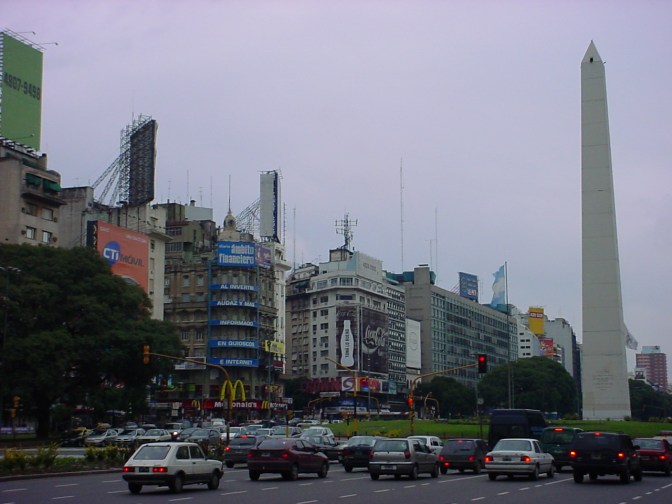
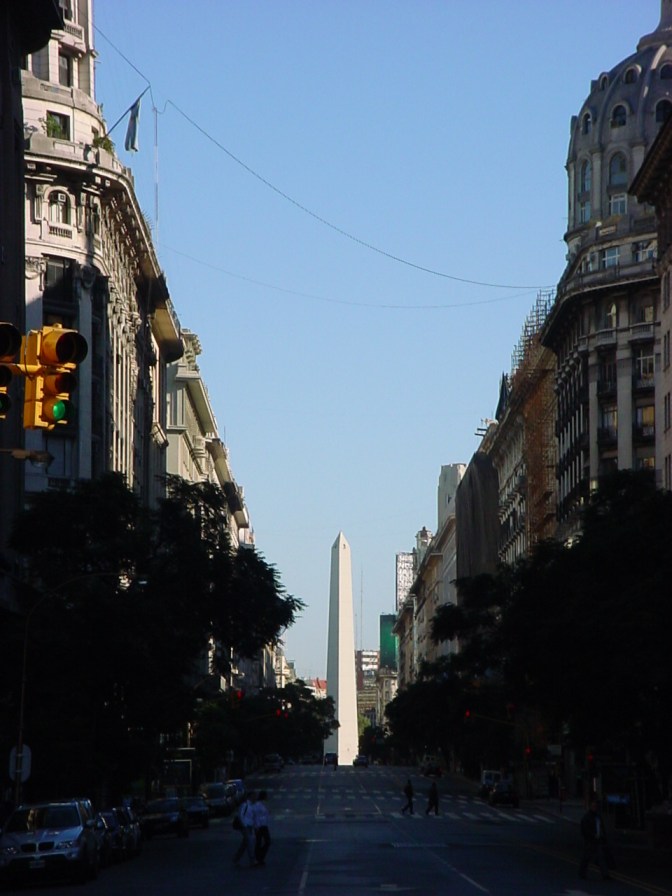
Avenida 9 de Julio is one of the widest avenues in the world, with up to twenty-two lanes of traffic flowing (or not). An entire axis of city blocks was demolished for its construction from the 1930s to the 1960s. In the centre stands the white Obelisk of Buenos Aires, completed in 1936 and creating a handy landmark to navigate by.
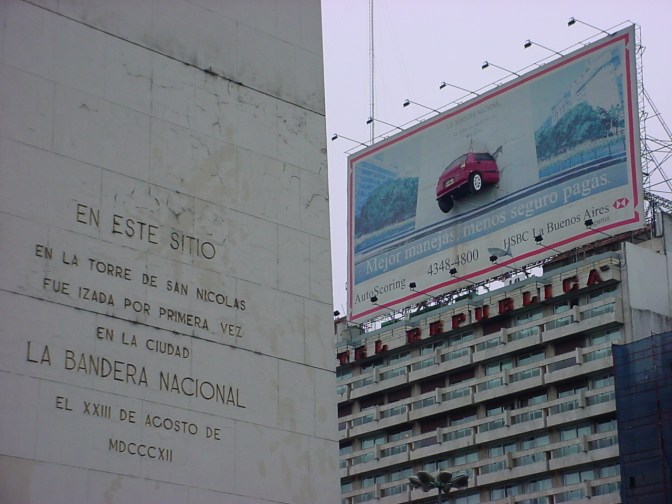
A close up of the obelisk shows the text describing how the Argentine national flag was first flown on this site back in 1812, as the country gained its independence from Spain. The monument also appears in the billboard to the right, having been hit by a typical porteño driver.
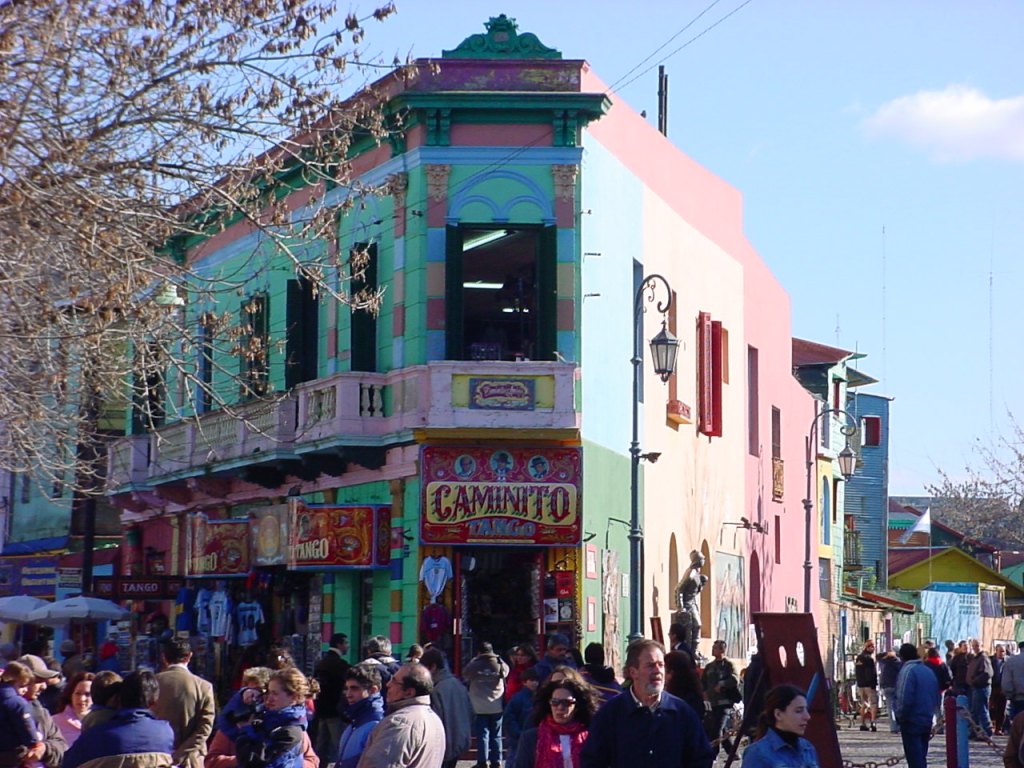
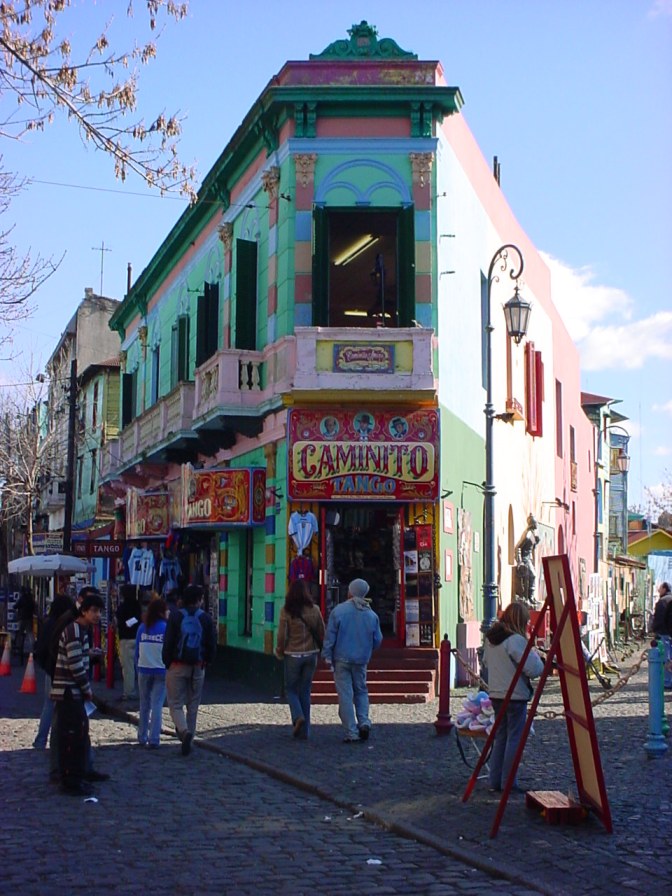
The tango originated here in Caminito, and we saw many postcards around the city showing dancers in front of this particular wedge-shaped building. The district of Caminito is in La Boca, a fairly rough area with the exception of these streets which sport brightly coloured houses and cafes.
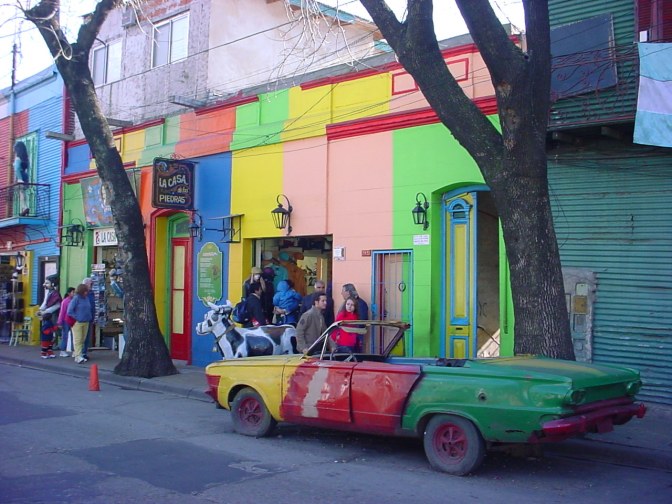
A stylish porteño’s house and matching car in the Caminito area.
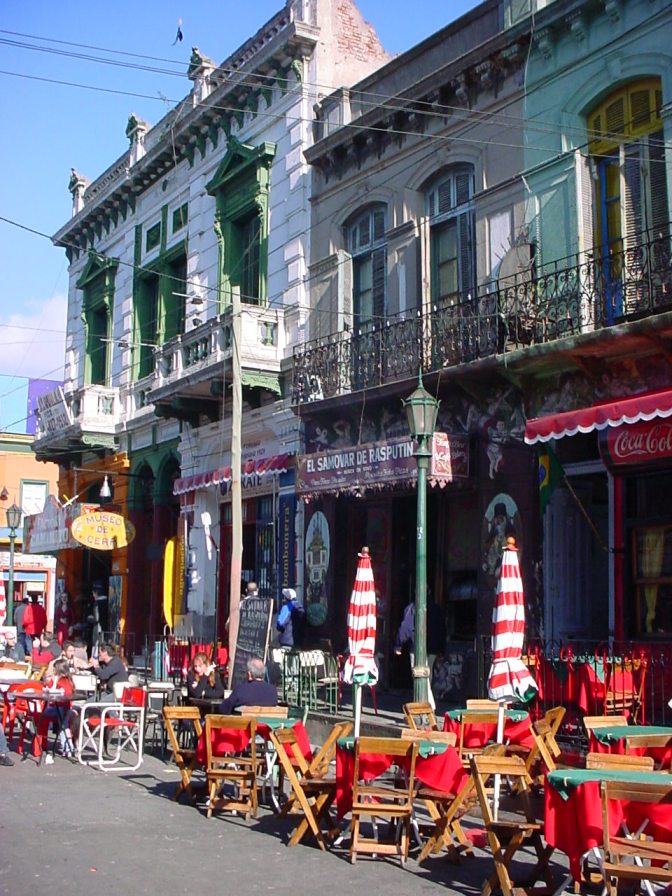
Cute cafes in Caminito, perfect to sit in and watch the tango dancers during summer – alas we were there during the height of the winter season so there wasn’t much dancing, but the cafes were still going.
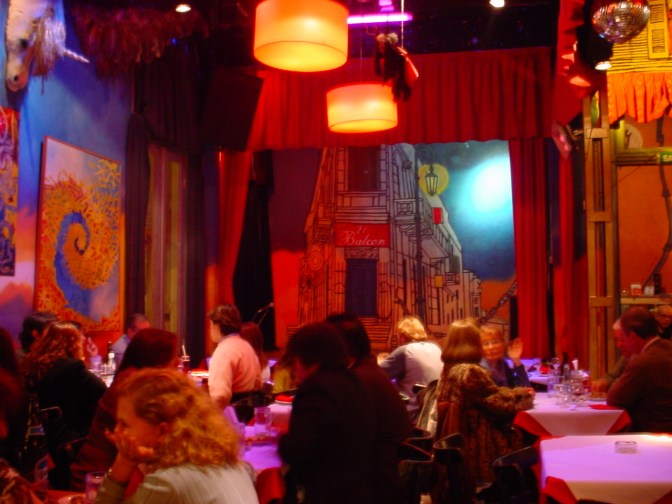
We went to see professional tango on stage in San Telmo, near our hostel, to soak up a bit of the traditional culture and alcohol. The emblematic Caminito wedge building forms the backdrop. The tango dancing couple put on a great show, after which members of the audience were invited to have a shot – but I’m not showing the pictures of that!
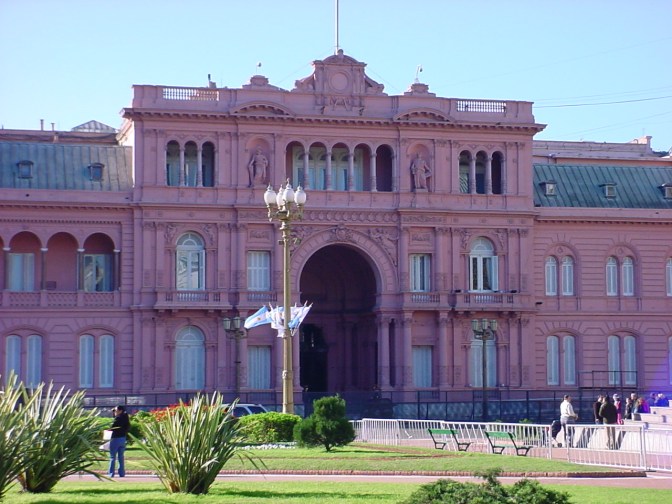
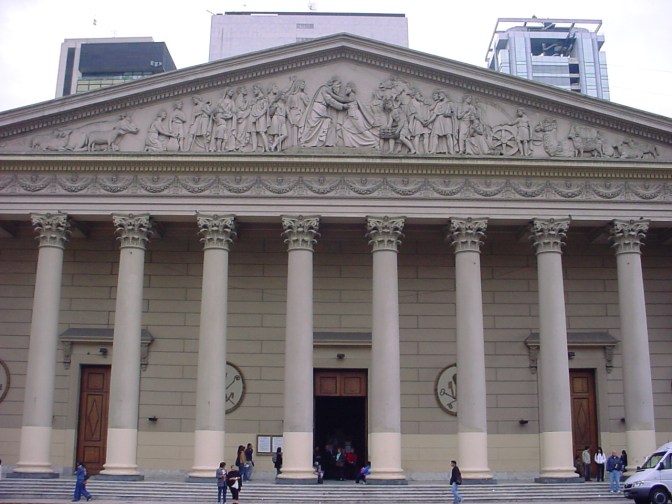
Buenos Aires Cathedral looks a bit more like a bank than a place of worship to me, with these austere columns and portico. It sits on the Plaza de Mayo along with the Casa Rosada, and was completed in 1822.
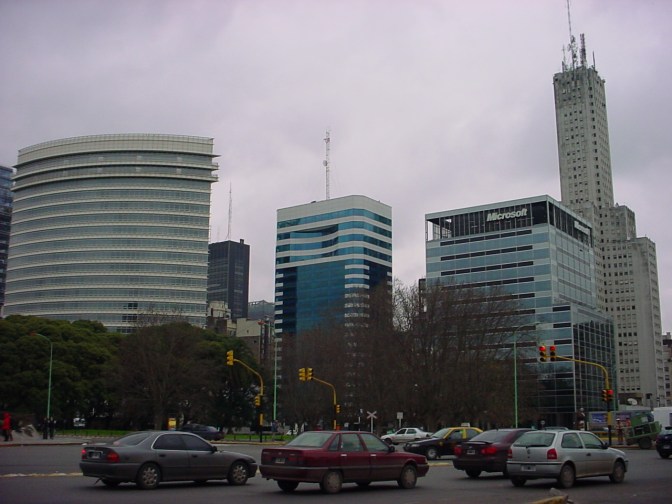
Argentina’s economy struggled in the early part of the 21st century, however commerce did appear to be picking up during our 2005 visit. Prices in general were still very cheap, it was like being in a first-world country but with third-world prices. The skyline continues to spring up.
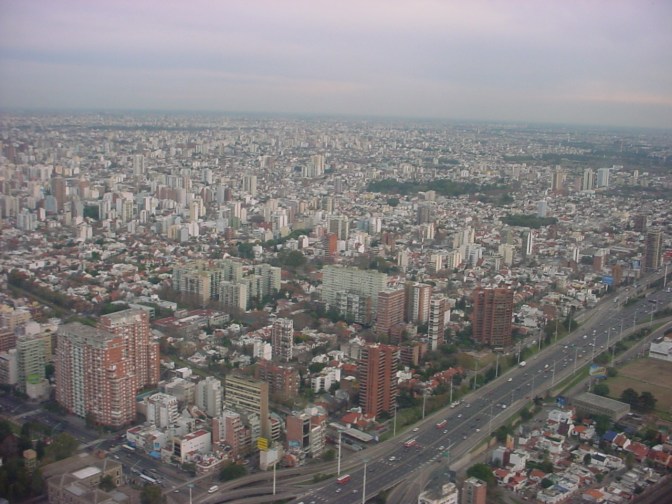
From the air, the scale of the city is most readily apparent. This was the view coming in to land at Jorge Newberry airport on a flight from Puerto Iguazu, with the cityscape spreading out as far as the eye can see.
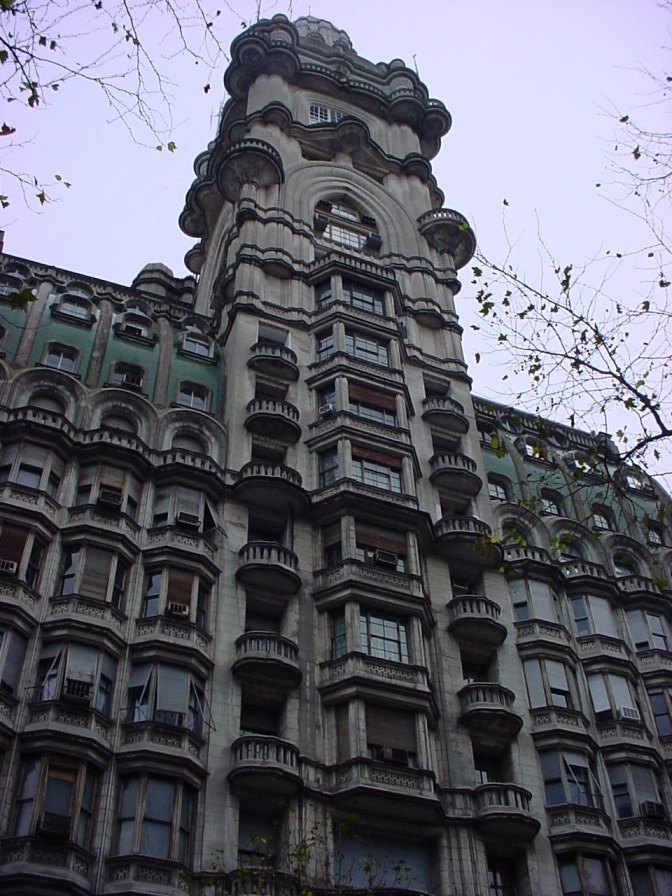
Palacio Barolo is a 1920s skyscraper which very closely resembles Palacio Salvo in Montevideo, having been designed by the same architect as it was. It was once the tallest building on the continent, at 100 metres.
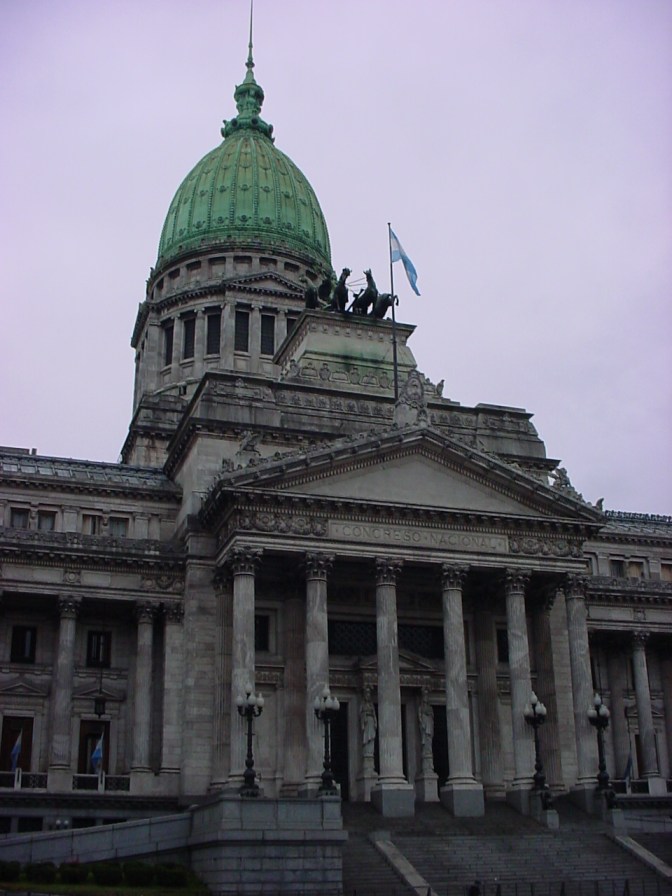
The Palace of the Argentine National Congress is built in a similar style to the Capitol Building of the United States or indeed, Cuba. It was constructed around the turn of the 20th century, and I was pleased to find during my re-write research of 2015, that the stonework had been nicely cleaned up since my visit.
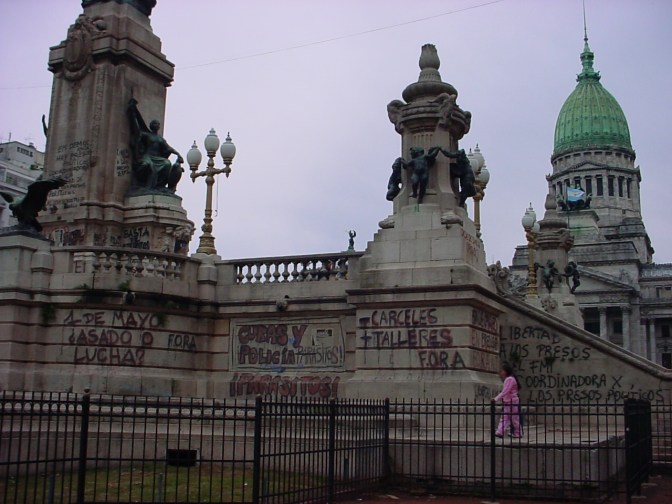
I was surprised at the amount of graffiti in the city, which even adorned the statues and monuments outside the seat of government. Either the porteños like writing on walls, or they were somewhat discontent. Again though, before 2015 everything had been nicely cleaned up and these statues had been securely fenced off.
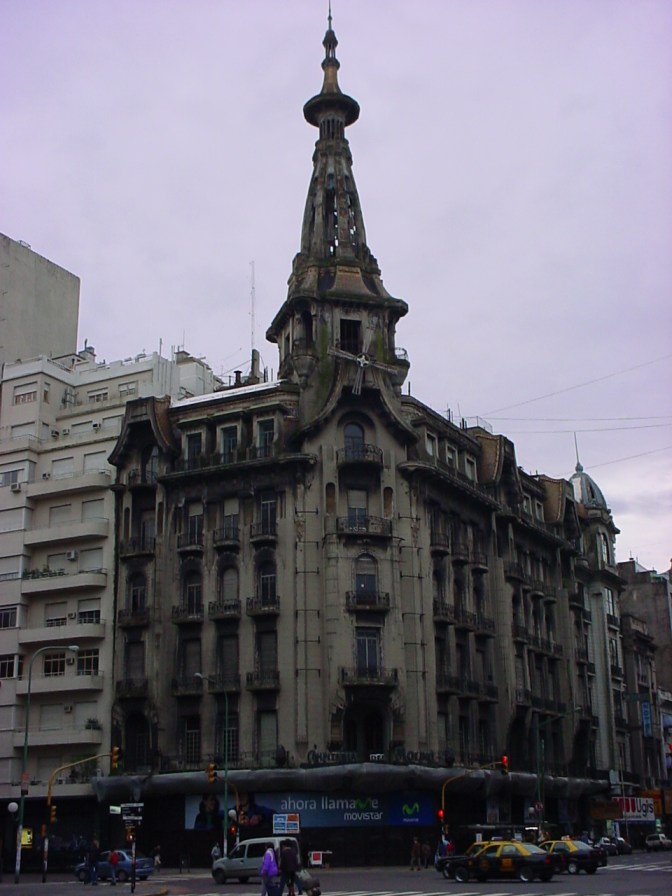
Opposite the Congreso stood this very interesting and creepy-looking abandoned Art Nouveau edifice. It is the Confitería del Molino, the windmill coffee house, during its approximately 25-year-long abandonment before restoration in 2022.
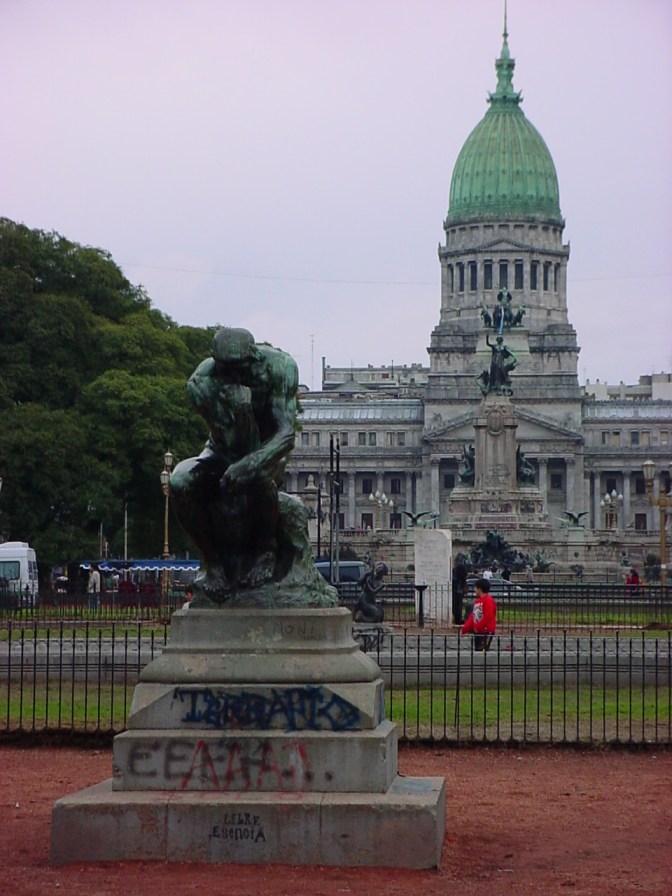
I like a good statue and this one is no exception, a full-sized replica of Rodin’s The Thinker, one of many spread about the globe based on the original in Paris. This one was notably cast from the original mould during Rodin’s lifetime. He had not escaped the graffiti either, and has since been cleaned up, mounted higher and fully fenced off.
Another shot of the Obelisk in the sun, looking along Avenida Roque Saenz Pena. It stands 71 metres tall.
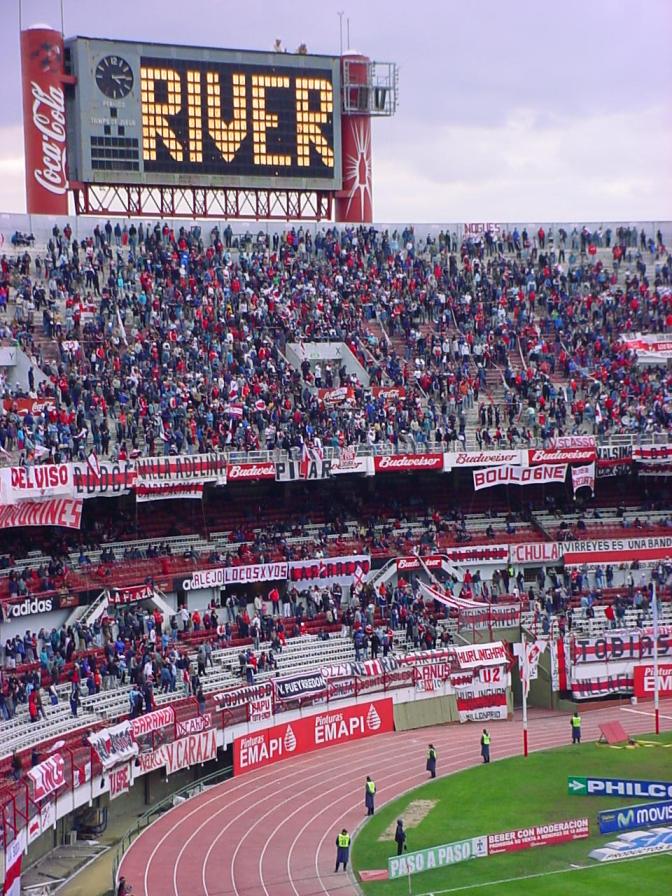
River Plate, along with Boca Juniors, are one of the most successful football teams in Argentina. We went to see them play at their home ground, where the Vélez Sarsfield opposition fans were kept behind a barbed wire fence and had fun setting off fireworks and smoke bombs.
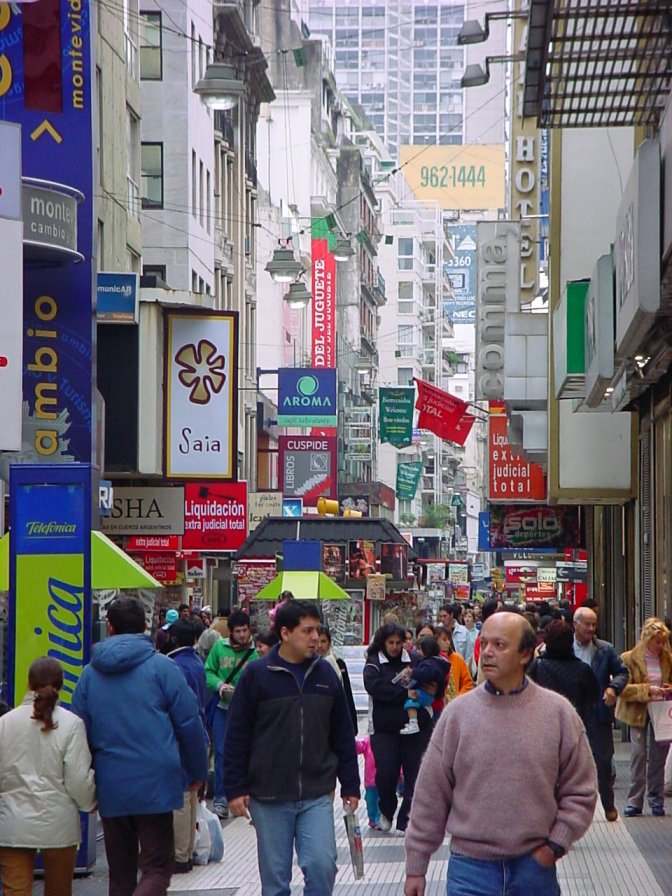
Shopping in Buenos Aires was excellent, mostly due to the low, low prices following the economic collapse and debt default of 2002. This is a view up Calle Florida, one of the city’s major shopping areas.
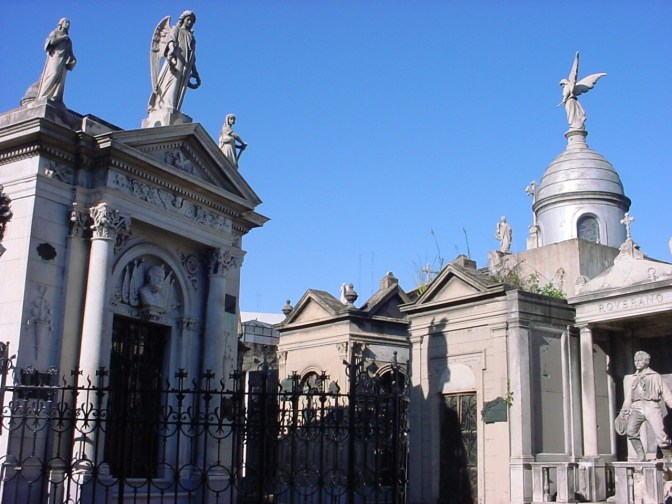
Recoleta cemetery is the dead centre of Buenos Aires, a little tomb town with many marvellous mausoleums. The tomb of Eva Peron lies amongst these monuments to influential and well-known porteños.
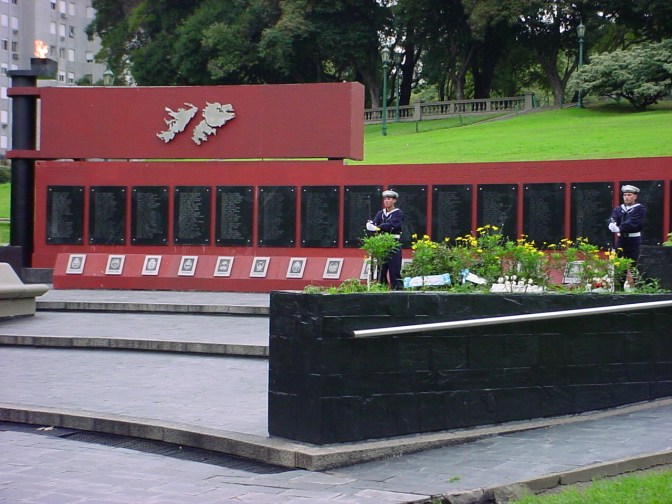
The memorial to the Argentine soldiers lost to the British during the Falklands war, or Islas Malvinas as they are known down here. When entering Argentina by bus from Brazil, one of the first things we saw was a sign announcing the ownership of the Falklands by Argentina – this was repeated outside military bases and other important sites we passed.
Created 2006 | Updated 2015, 2025
 SnapHappyRoss
Leave a comment