
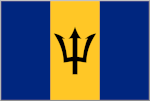
Caribbean capital named for its indigenous bridge
The capital of Barbados and the nation’s only city is home to just under half of the country’s 280,000 residents. It lies at the southern end of the tourist-friendly Platinum Coast, with the international airport a few kilometres to its east. Named after an indigenous bridge across the Constitution River (or possibly Sir Tobias Bridge), the city grew around that point and is today an easily navigable but bustling regional centre. Bridgetown is well connected with the UK, US and the rest of the Caribbean, serving as a transport hub for some of the neighbouring islands.
Although we flew into the nearby international airport, our taxi bypassed Bridgetown on our way up to the Colony Club where we stayed for the week, so we only visited Bridgetown properly for an afternoon. Travelling in and out by reggae bus (an experience in itself), we wandered the town for a while before seeking shelter from the heat and humidity in a branch of Chefette, the Bajan answer to McDonald’s and KFC. We visited markets, churches, historic buildings and the careenage area, which were all well worth a look.

The local market was in full swing on Swan Street, even on a weekday afternoon. We picked up some mangoes but were surprised to find that prices even here weren’t cheap – maybe they saw us coming and we just paid the tourist rate.
The Parliament Buildings of Barbados are right in the centre of Bridgetown, dating from the 1870s and featuring this distinctive clock tower. This is the west wing and is built from a mixture of coral and limestone.
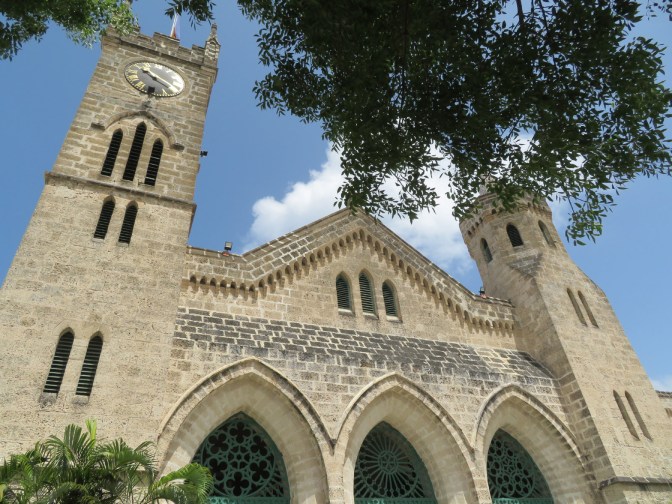
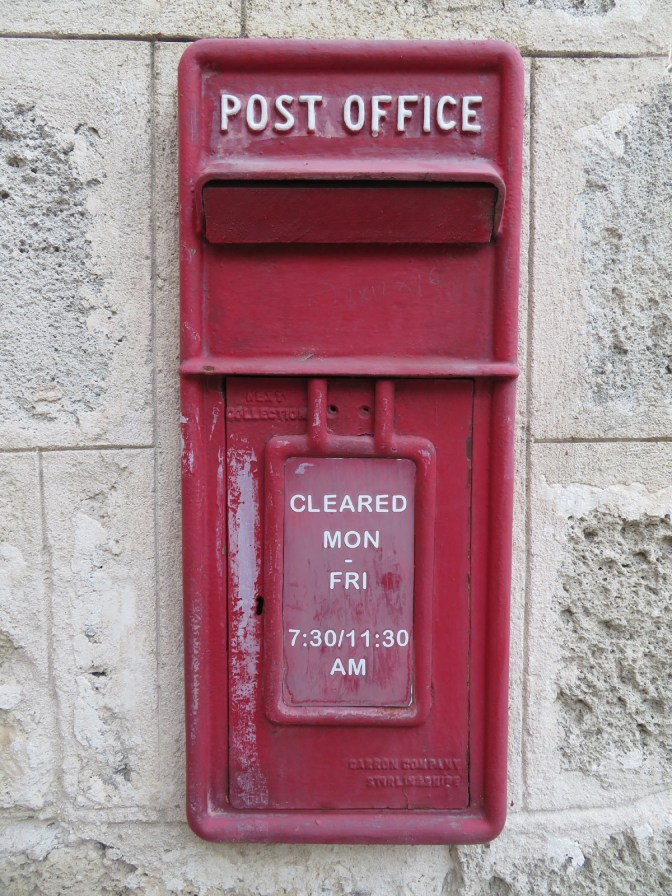
Wider view of the Parliament Buildings, with the east wing on the right.


Just to the north of the Parliament Buildings lies the architectural contrast of the Old City Bar. Banks is the local brew, and highly refreshing too.
National Heroes Square sits opposite the parliament, and while it has a pleasant fountain in the middle there were a few dodgy geezers hanging around, so we didn’t stay for long.

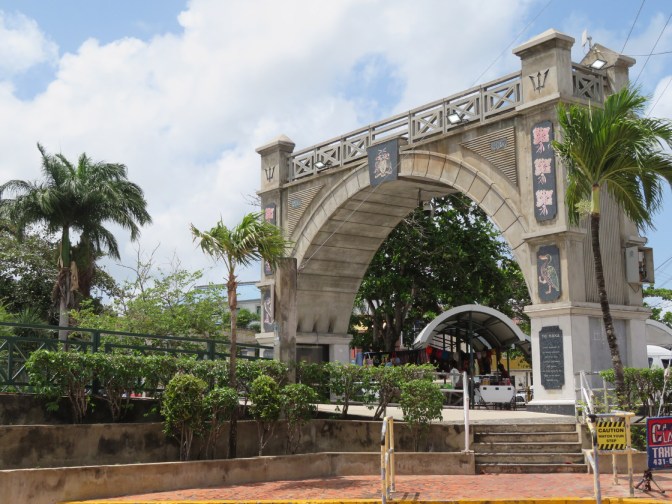
The Independence Arch is another of Bridgetown’s landmarks, on the south side of the river. It was built in 1987, to celebrate 21 years of independence from Britain.
Detail of the arch and one of its national symbols, the pelican, which is represented along with the flying fish on the other side.

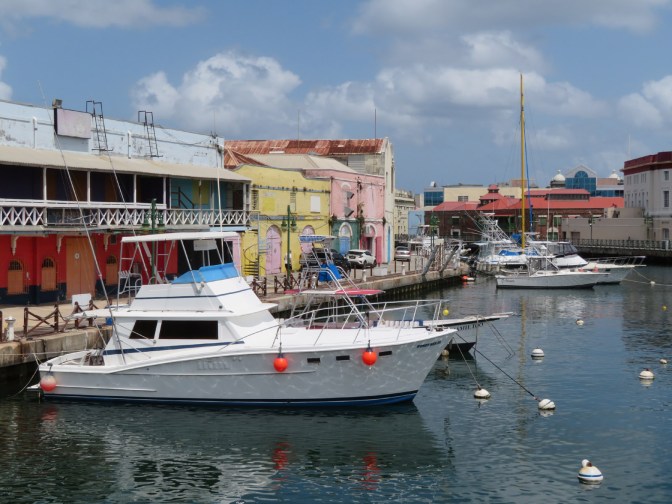
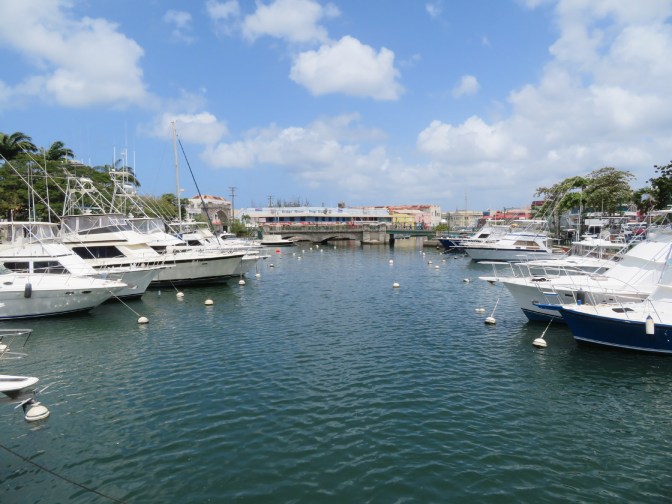
Bridgetown docks and the careenage, with some of the mildly dilapidated buildings surrounding.
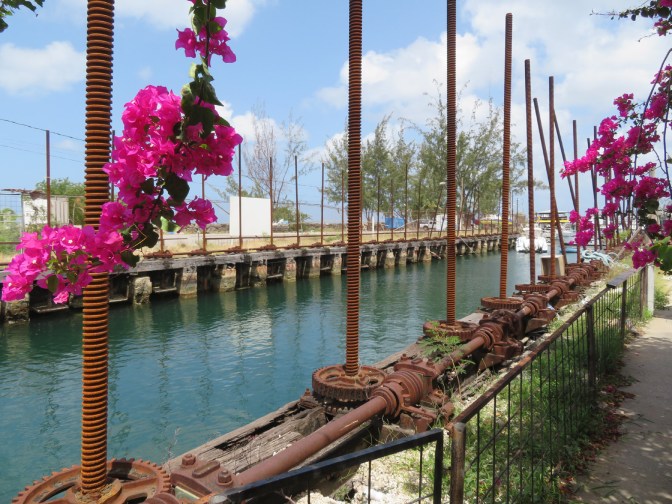
Speaking of mildly dilapidated, Blackwoods Screw Dock is another ageing industrial feature of the port area, and just the kind of thing to satisfy my engineering curiosity. It’s the world’s oldest surviving ship lift, capable of raising 1,200 tonnes out of the water from 1893 to 1984.

There were many heritage buildings around the port area at the time of our 2023 visit, although it appears that some significant redevelopment has started since. This one is a former credit union.
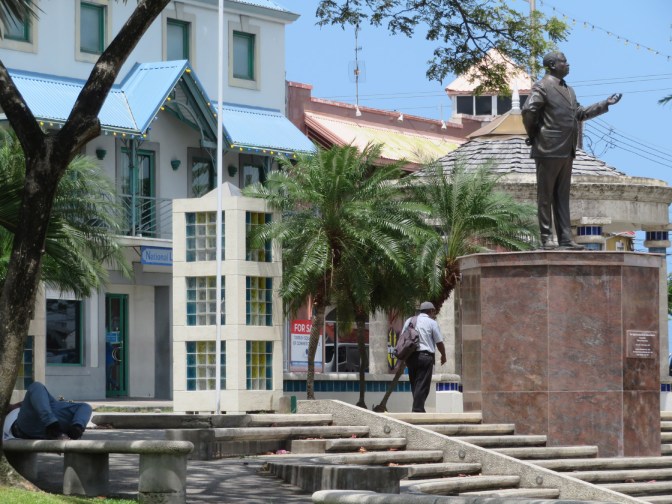
Independence Square is presided over by Errol Barrow in effigy, the Father of Independence and first Prime Minister of Barbados from 1966. Just off camera to the left is Speedbird House, connected to the time that Concorde regularly flew to Barbados, with its callsign being Speedbird 1. There is a Concorde nearby at the international airport but it closed to visitors in 2018.
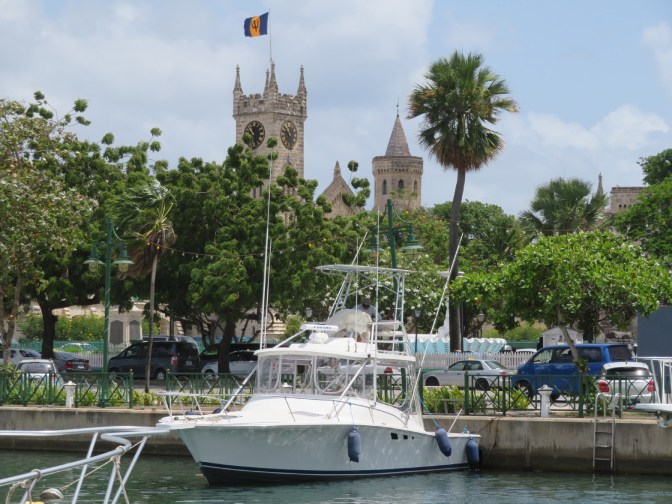
Looking back across the marina area to the Parliament Buildings, with the national flag flying proudly.
Another view of the marina and careenage area. Until writing this page, I didn’t know that a careenage was where they would tip ships onto their side for access to clean up the hull, before the advent of widespread drydocks.

This ostensibly abandoned building next to National Heroes Square is the Treasury Building, still apparently in use but it’s clear where the Treasury’s money wasn’t spent.
Bridgetown’s primary place of worship is the Cathedral Church of Saint Michael and All Angels, nestled in amongst a tropical garden mere steps from the careenage. It dates back to 1665 but was rebuilt in its current form after the hurricane of 1780.
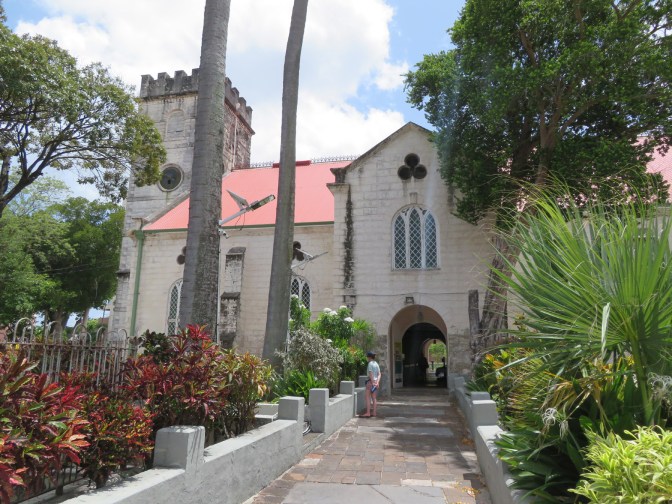
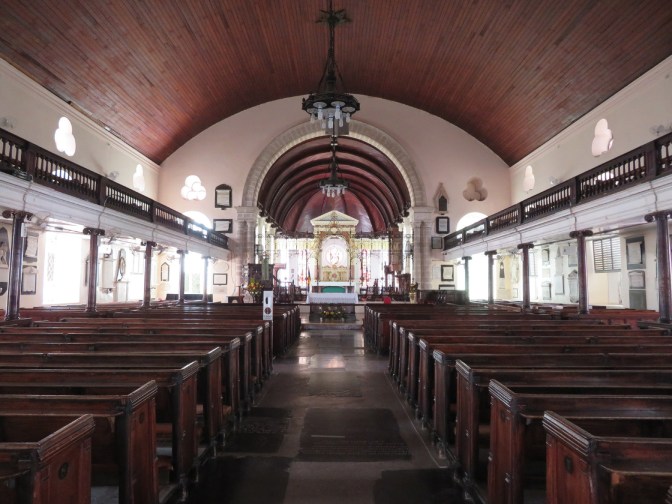
The cathedral’s tropical graveyard is weathered by the Caribbean rains, making it quite atmospheric.


The tombs are overlooked by the Central Bank of Barbados in its quite uncharacteristic style of 1980s modernism.
The Colonnade Mall is housed in this pleasantly pink former department store on Broad Street.
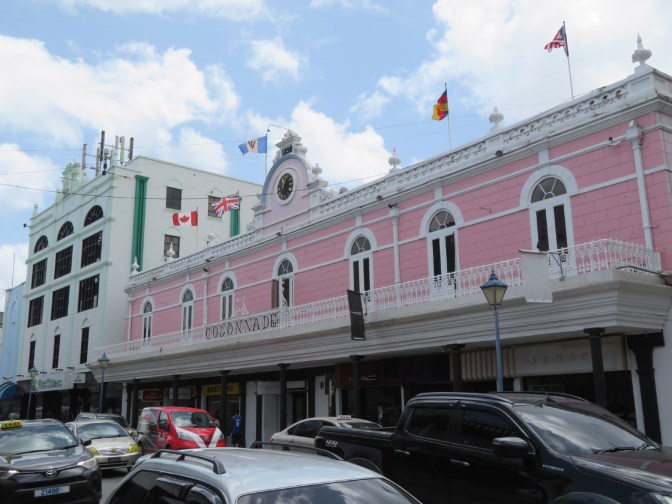

Another grand colonial building is the Barbados Mutual Life Assurance Society building, just along the road. It now houses a campus of the University of the West Indies.
Another reminder of former British influence can be found in the still-operational chain of Woolworth shops. This is a separate entity from the also-still-operational chain of Woolworths in Australia and New Zealand, which is in turn separate from its high-end namesake in South Africa.

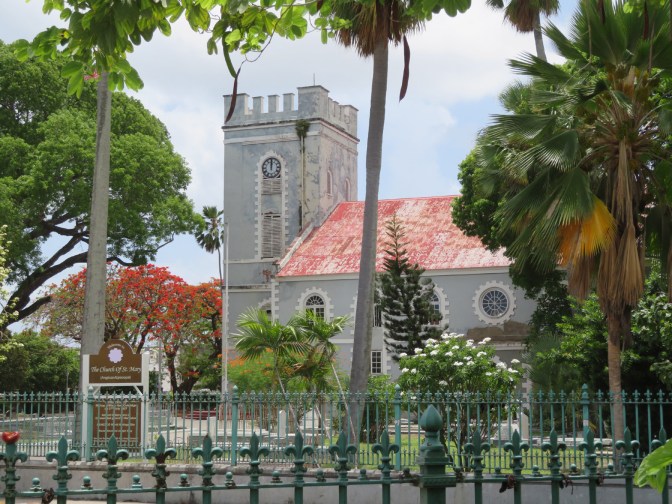
We chanced upon a smaller but very pretty church nearby, that of St Mary’s. It was around this point that we had to abandon our sweaty trek to seek air-conditioned shelter and sustenance.
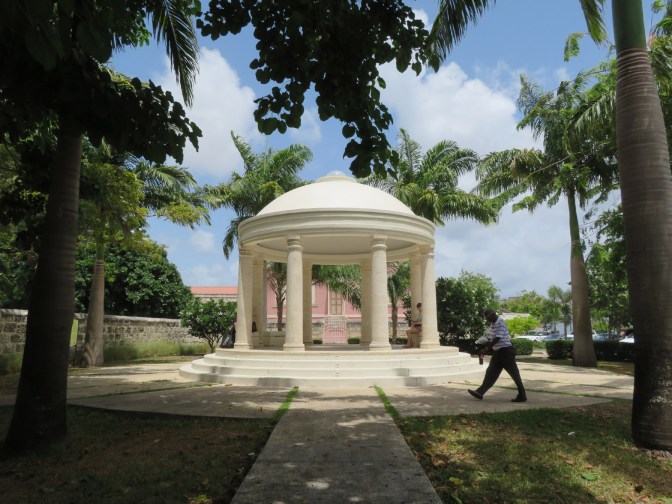
Suitably refreshed, one of our last points of interest was the Bridgetown Synagogue, and over the back this pleasant bandstand offering further respite from the sun.
Created 2025
 SnapHappyRoss
Leave a comment