

Spectacular city in one of the world’s most photogenic settings
Without a doubt Rio de Janeiro is one of the most photogenic, dramatic and beautiful cities I have ever visited, with its spectacular setting and views of the city itself being one of its biggest draws. Rio was the capital of Brazil until the government was transferred to purpose-built Brasilia in 1960, but it remains Brazil’s second largest city with something between six and twelve million inhabitants, depending on where you stop counting. Other major attractions include the beaches at Copacabana and Ipanema, the statue of Christ the Redeemer atop Corcovado, and Sugarloaf Mountain complete with cable cars. Plus of course, carnival, the annual event for which we arrived several months late.
We spent three nights in Rio during summer (Brazil’s winter) 2005, staying in a hostel in Ipanema, the safest part of the city. We were well aware of the high crime rate and risk of mugging or worse, taking plenty of precautions e.g. avoiding the beaches at night. We never saw any signs of trouble or felt threatened at any point, and had a great time. The weather was glorious, the steaks were delicious and the people were beautiful – and I’m not just talking about us.

The view from Sugarloaf Mountain to Botafogo district, with the same in reverse as viewed from the top of Corcovado in the header image. The cable car took us about four hundred metres up to the top of the mountain in two stages, where we sat on the terrace, drank beer and watched the sun go down.
Cristo Redentor, the statue of Christ the Redeemer, stands on top of Corcovado watching over the City of God. (Having done our research, we knew to steer well clear of the actual City of God, itself a notorious favela.) The statue was completed in 1931 to bestow upon he city a distinctive international landmark, and is now as synonymous with Rio as the Eiffel Tower is to Paris, or the Burj al Arab to Dubai. It is 30 metres tall and commands one of the best views in the city from its 710-metre high perch.

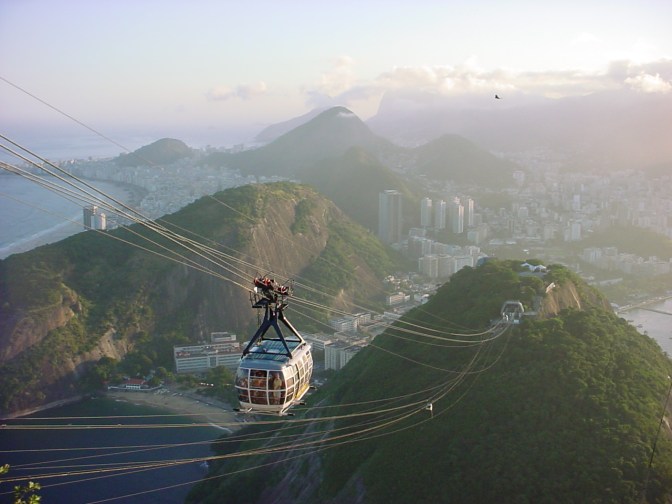
The cable car which takes passengers up to the top of Sugarloaf Mountain, as ridden by James Bond in Moonraker, prior to its demise at the hands of Jaws. A student project had left a Vauxhall Nova hanging from one of the redundant cables, you can see it about halfway down. On the far left of the photo is the crescent expanse of Copacabana Beach.
I was giddy with excitement to spot this ring-tailed lemur on Sugarloaf, until I was reliably informed that it was nothing of the sort, as they are endemic to Madagascar. Clearly being nothing of a zoologist, I had no idea what it is, but it was having fun hopping about the trees. My subsequent research tells me that it’s a common marmoset


We were treated to a full sunset view from Sugarloaf Mountain towards Botafogo. The highest peak in the background is Corcovado, with the statue of Christ the Redeemer floodlit against the glowing sky.
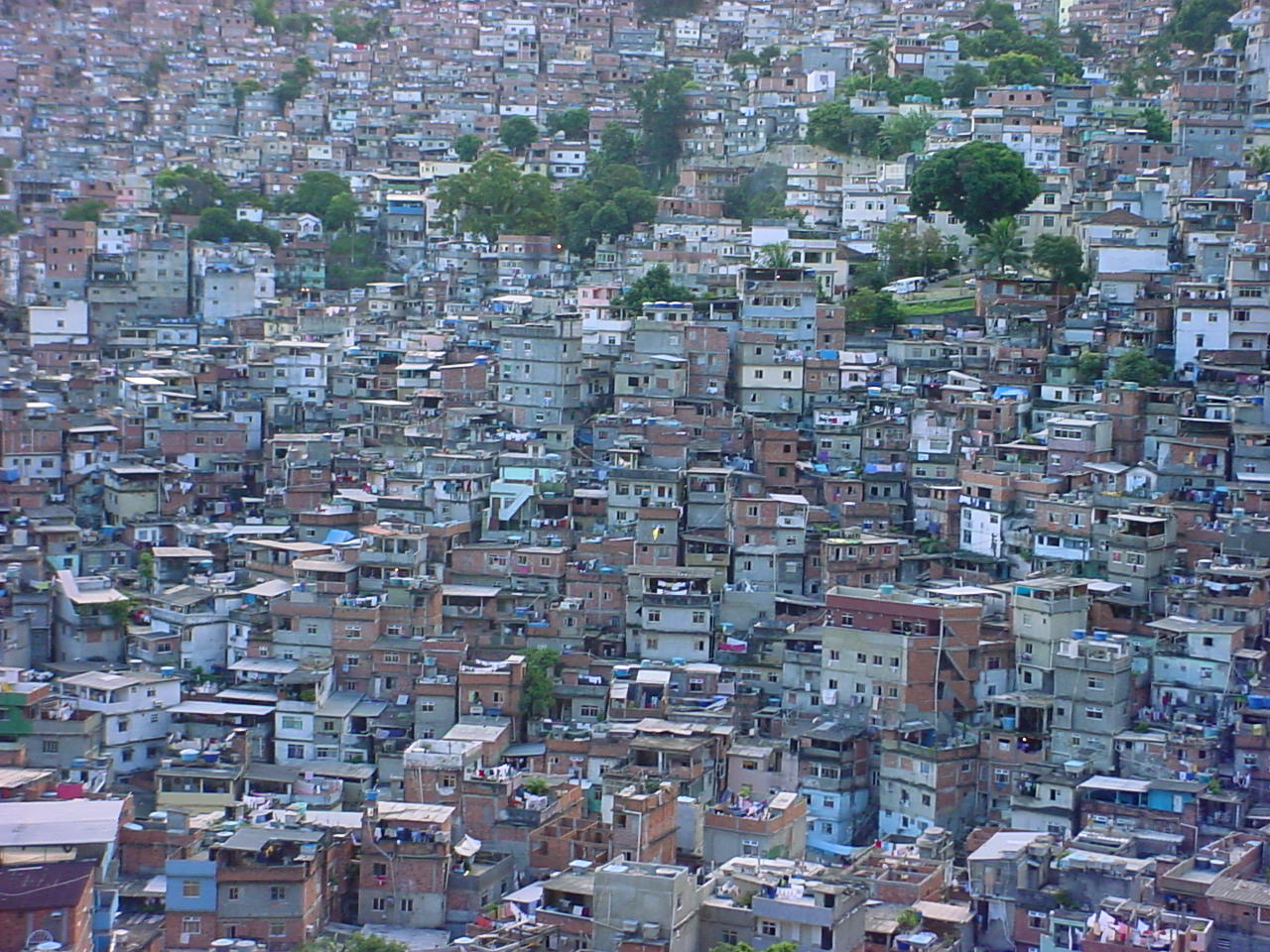
Brazil’s favelas or shanty towns sprang up with the huge numbers of people migrating to the cities, and are notoriously dangerous. At the time of our visit there was only one which we could venture into and expect to come back in one piece, with a guide of course. Rocinha is home to over 250,000 people, and is the only favela to be officially recognised as a district of the city proper.

In Rocinha this cheery chappie played “The Girl From Ipanema” for us, and then he sold us his CD.
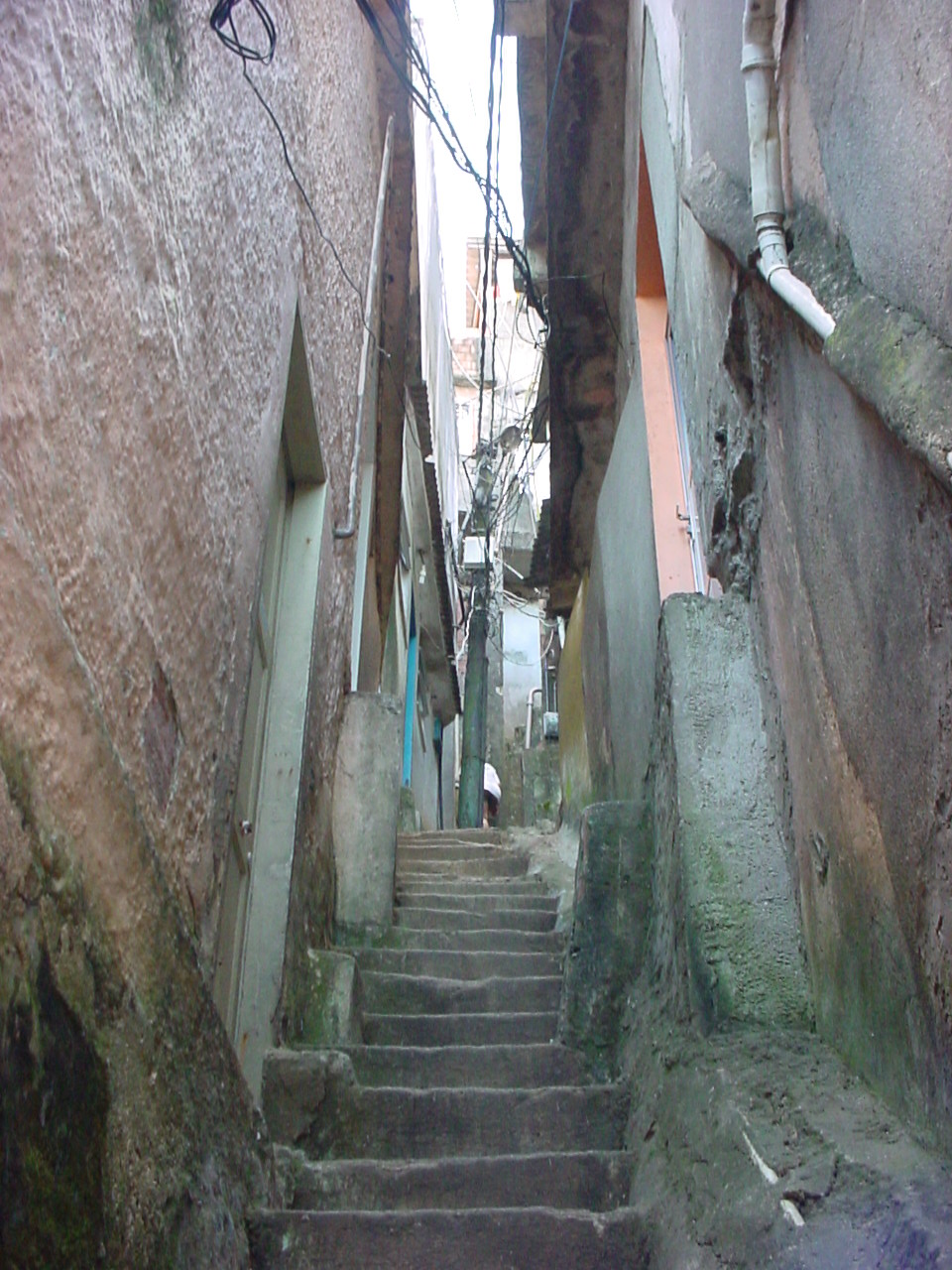
Close view of one of the narrow passageways in the favela – there is only one main road which snakes up the hill providing motorised transport, everywhere else cargo is carried by mule or by hand. We rode to the top on the backs of motorbikes as part of the tour.
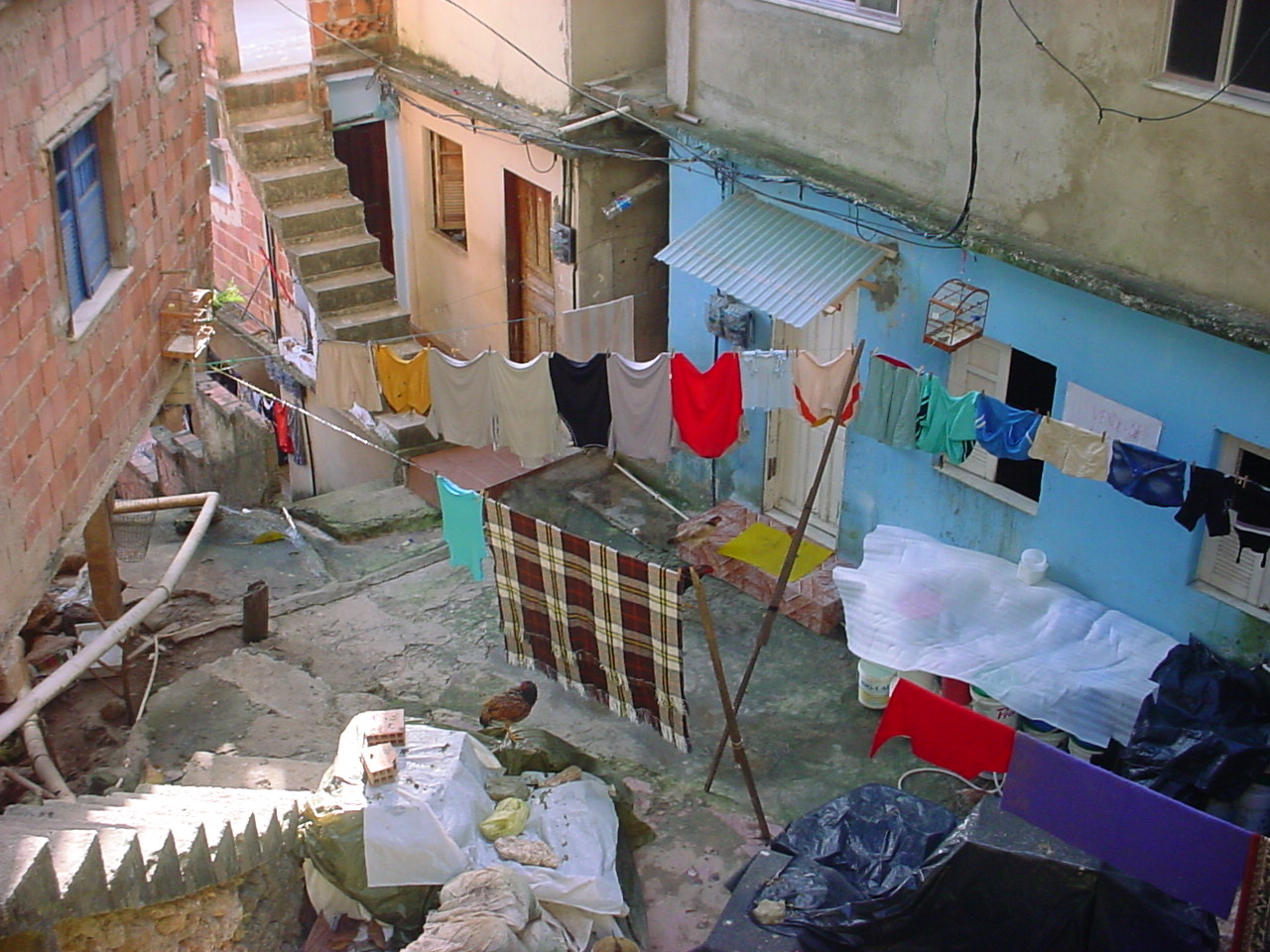
A typical courtyard in Rocinha – while it was clearly poor it was quite clean and very well organised, most properties we walked past had electricity and television. What most impressed me about the district was its construction with no planning regulations, an absolute labyrinth yet communities were fully functional and everyone knew where to go.
At the top of Rocinha we could see right down to São Conrado, one of the richest districts in the city and quite a contrast. During the tour we saw several people flying kites but were advised not to photograph them – it’s how the drug gangs communicate with each other.

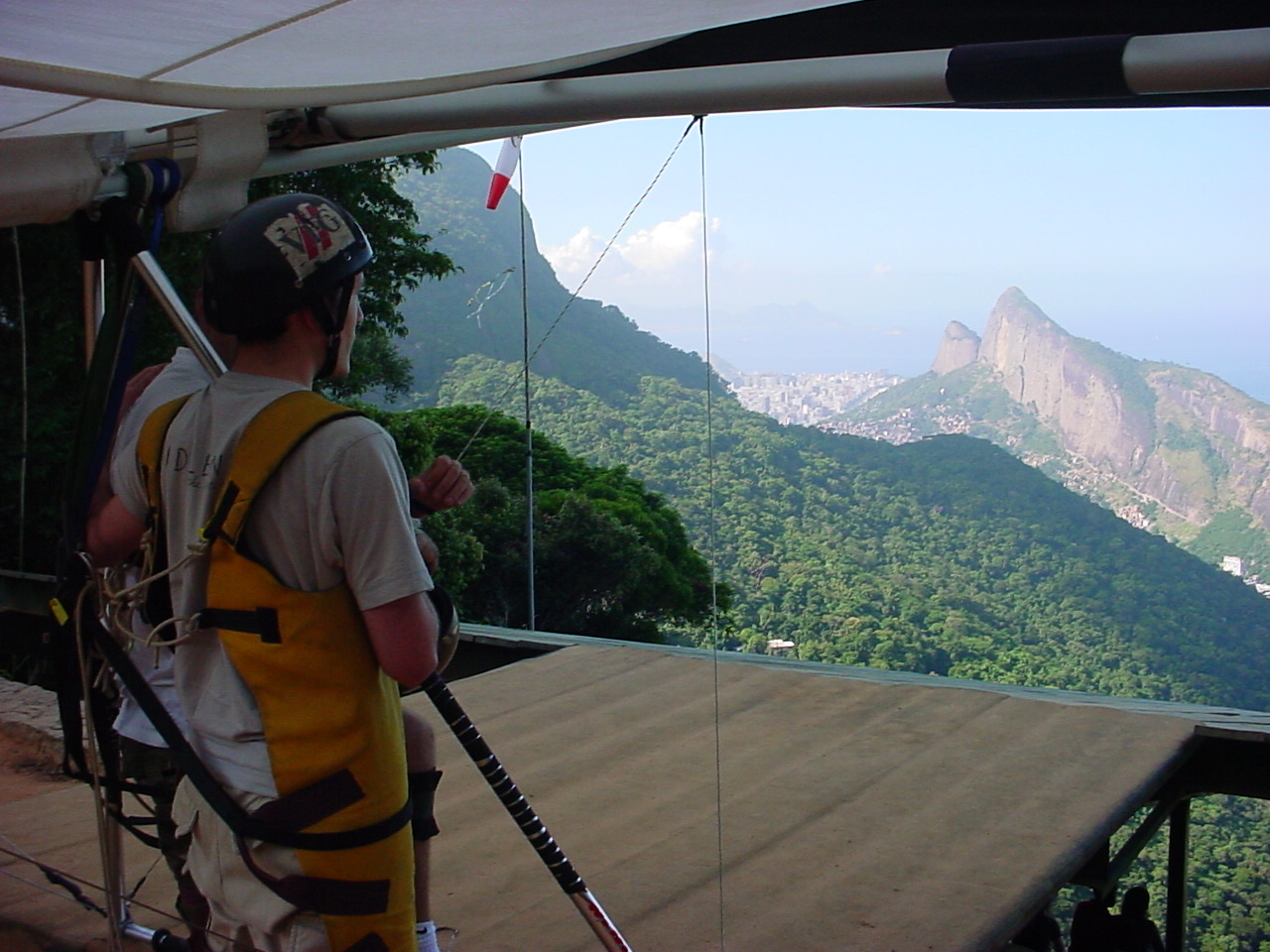
In order to get a better view of São Conrado, we leapt off a five hundred metre cliff and glided over the top of it, naturally. It takes some psychological effort to run full speed at a cliff edge! This is one of few activities I’ve taken part in where signing a death waiver was required, the next was visiting the North Korean border from Seoul.
The jumping off point is called Rampa de Voo Livre da Pedra. Of course I flew with my camera, snapping a few shots of the fancy houses and swimming pools down below.

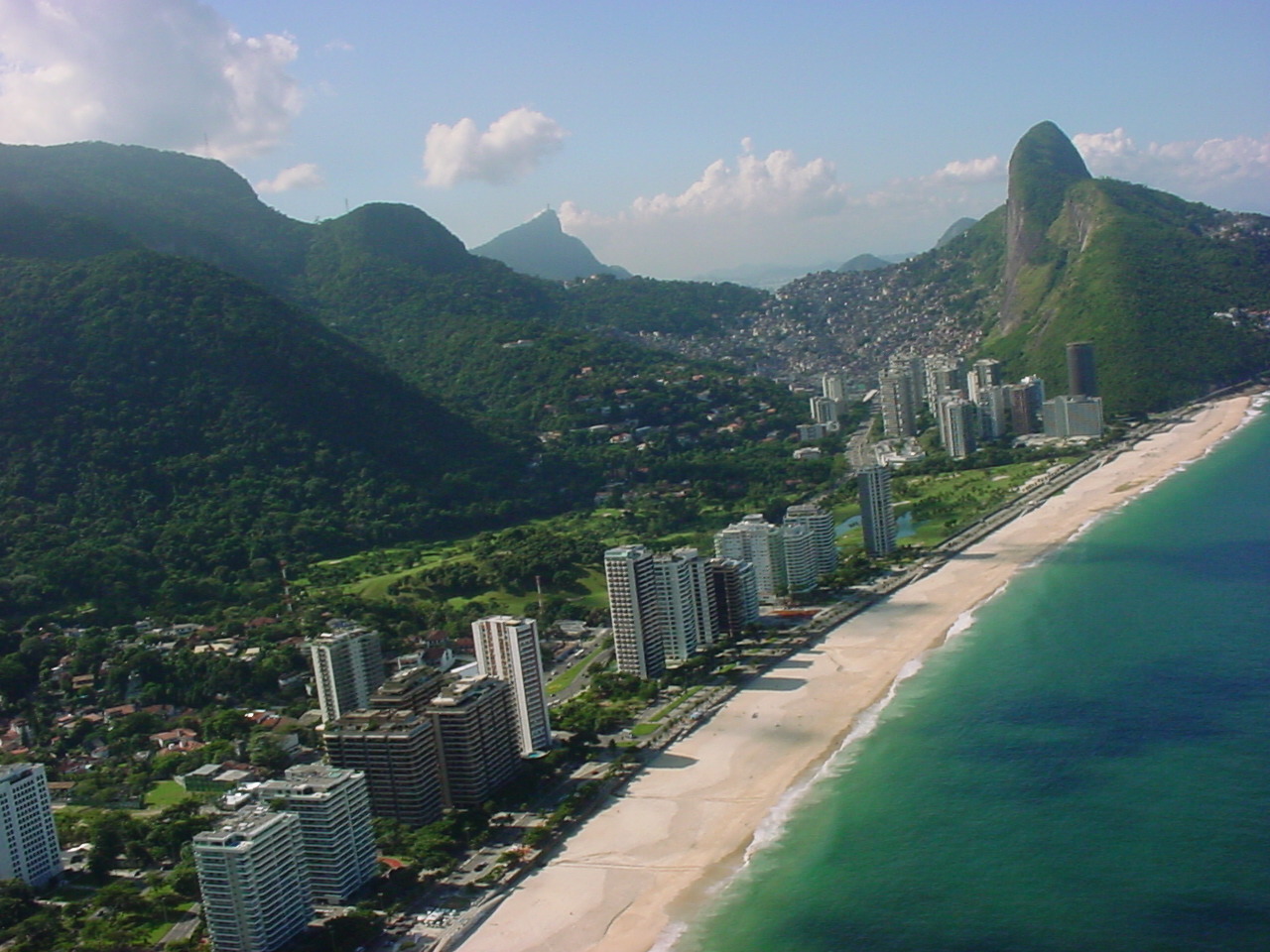
This is about the only other half-decent snap I managed to get from the hang glider, but I was more pleased about not dropping my camera as we swung right out over the Atlantic. São Conrado beach below was our landing strip, with Rocinha stretching up the hill in the distance, and the statue of Christ the Redeemer visible atop Corcovado.
Back on solid ground and on Ipanema beach, four blocks from our hostel, with one of the many Rio mountains in the background. These peaks are Morro dois Irmãos, the Two Brothers Mountain. The tower of the Sheraton Grand helps give a scale of the mountains – they are big, with these ones reaching 533 metres.


The view from Corcovado back down to Ipanema, being the stretch of land between Lagoa Rodrigo de Freitas and the Atlantic Ocean. A canal divides Ipanema from Leblon on the right. Ipanema is the safest place to stay in Rio, much more so than Copacabana which is a favourite spot for muggers, due to the large number of tourists!
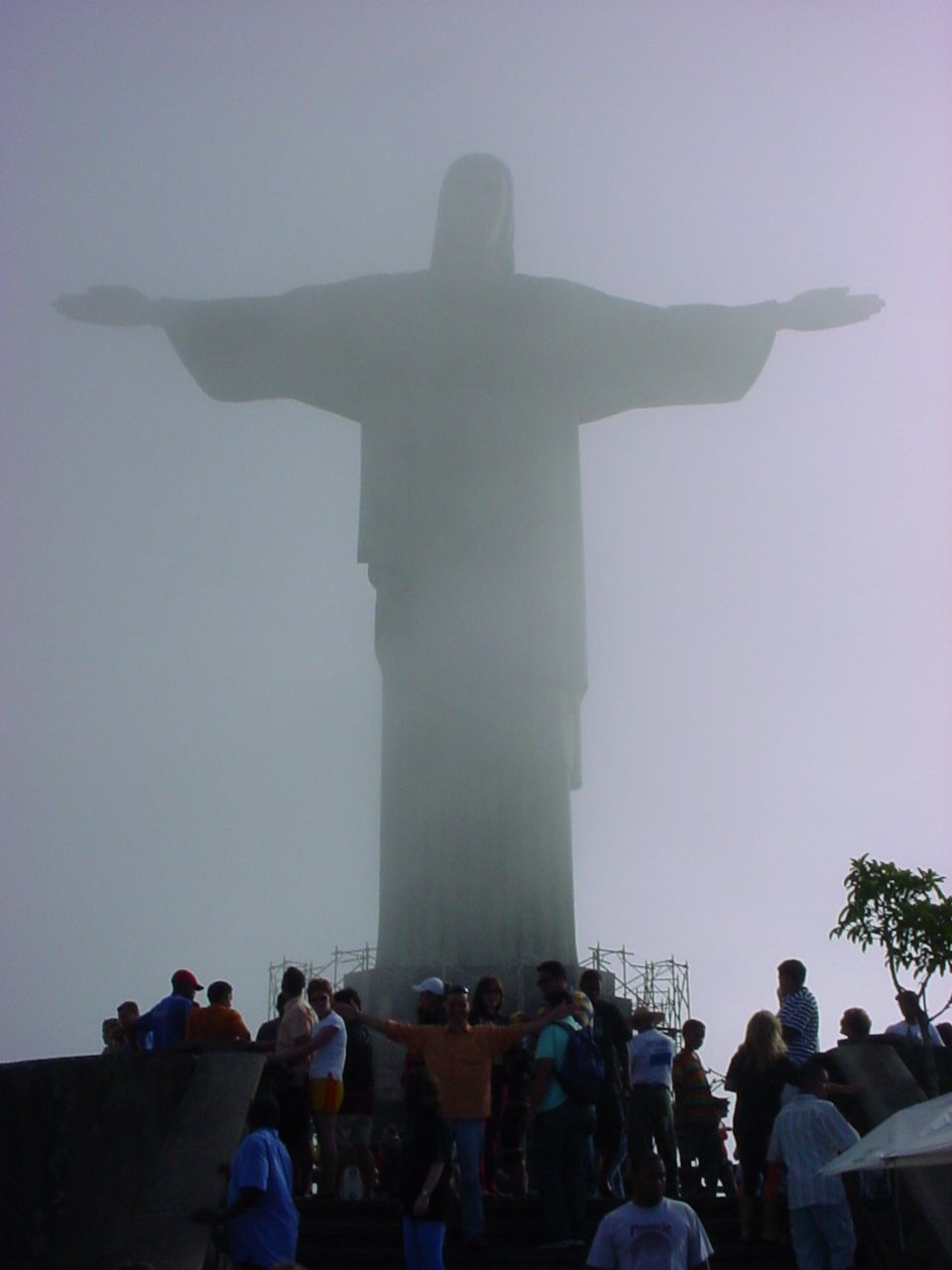
A final shot of the statue of Christ the Redeemer, who kept fading in and out of view with the cloud. It was a lot colder up here than down at beach level, and there was always some clown doing the arm thing in front of the statue, myself included. I would see a very similar statue several years later, when visiting Lisbon.
Created 2006 | Updated 2018, 2025
 SnapHappyRoss
Leave a comment