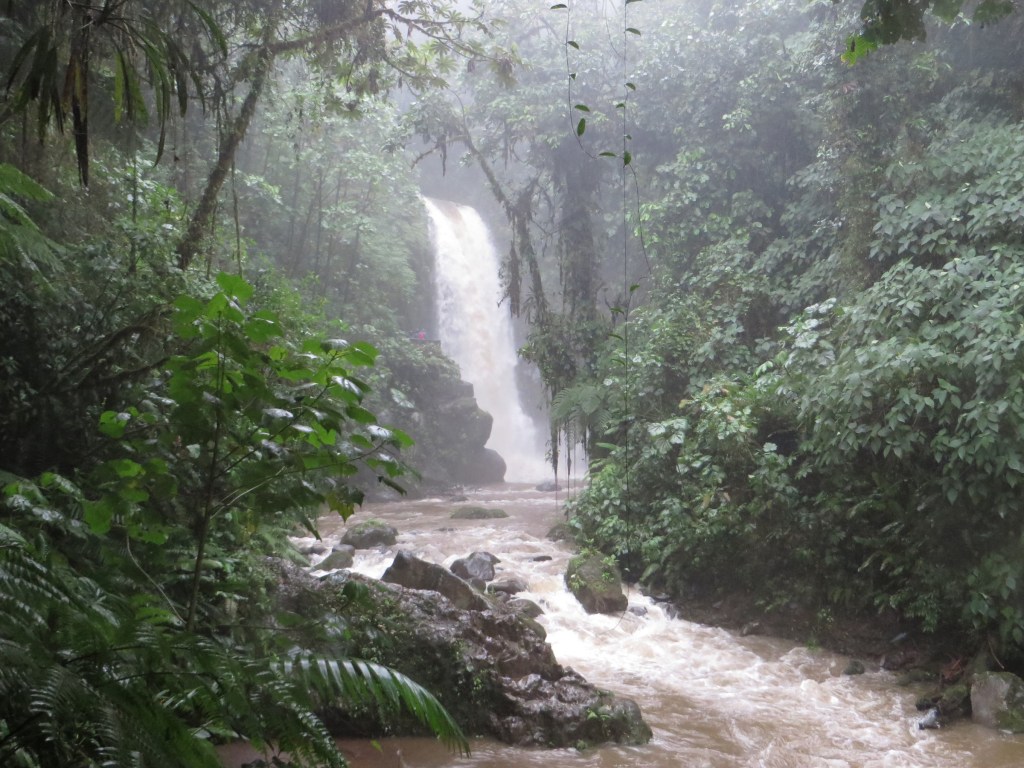
Cloud forests, wildlife and waterfalls
The jungles, waterfalls and wildlife that Costa Rica is famous for
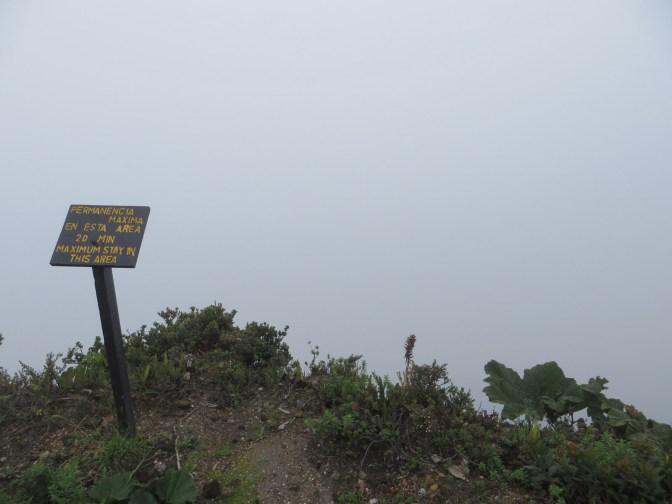
Poás Volcano is one of the most famous and most visited volcano reserves in Costa Rica, easily visited on a day trip from San José as part of a circuit amongst coffee plantations, nature reserves and waterfalls. Being an equatorial rainforest however, the weather can be hit or miss, and on the particular day we went, it was a big miss – mist, indeed. The park closed just four months after our visit of late 2016, when the volcano erupted, and didn’t reopen for a year and a half.
The volcano’s crater was fully shrouded in mist, although we were assured that it obscured what was doubtless a spectacular view. As the day went on the rain built up too, which while not great for the tourists, made for some roaring waterfalls that we stopped by towards the end of the tour.
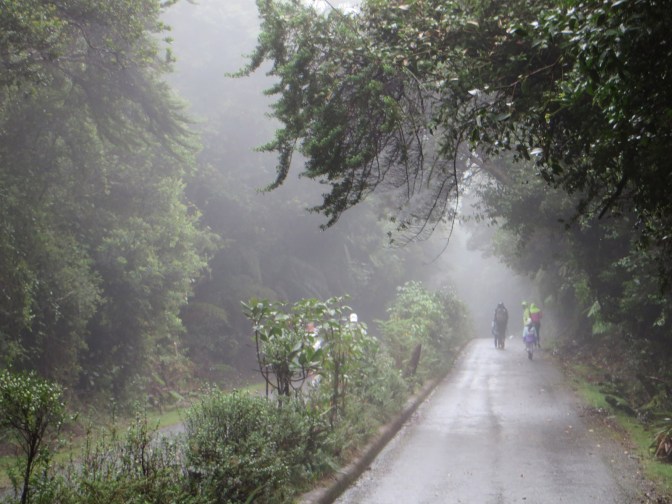
Costa Rica is famed for its cloud forest tours, so where the views were obscured we had the bonus first hand experience of literal cloud forest instead, on the short walk up to the Poás Volcano crater.
When the cloud lifts, the view into the Poás Volcano is stunning, with multi-coloured chemical deposits on the rocks, and a shining blue lake. Or so I gather from searching the web for it – since the April 2017 eruption the park had not fully reopened as of 2025, so it may be a while before I can try visiting again.
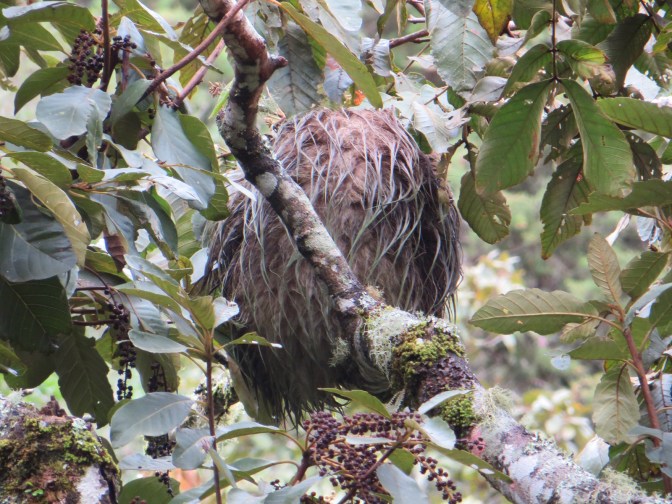
With one of the most diverse ecosystems in the world, it wasn’t long before we spotted something interesting from our tour bus – this hairy coconut is a sloth, although we didn’t get any more of an indication of his slothfulness beyond his refusal to move.
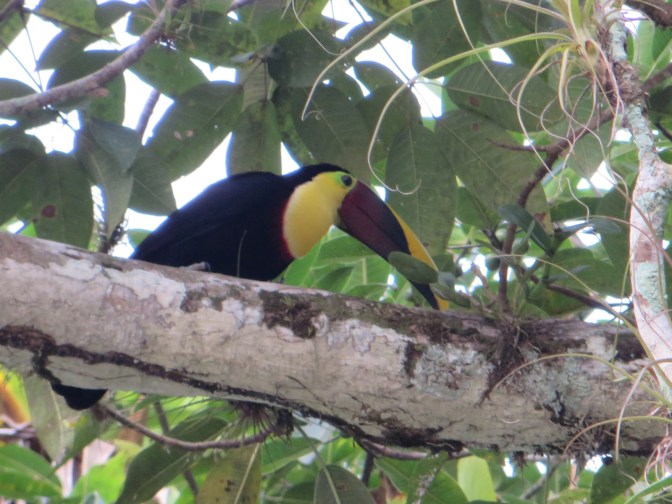
Toucans are one of my favourite tropical birds to see, and it had been a while – the last ones I spotted were in Brazil over ten years earlier. This one was just in a tree near a ziplining centre. While I took better pictures at the nature reserve, nothing beats seeing them randomly in the wild.
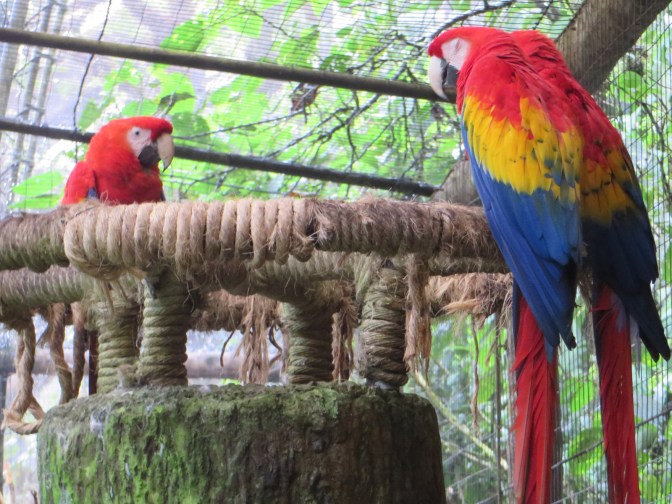
These parrots were not spotted in the wild, quite evidently, although they are very bright and colourful. They didn’t seem to mind the rain very much either. I believe these are scarlet macaws.
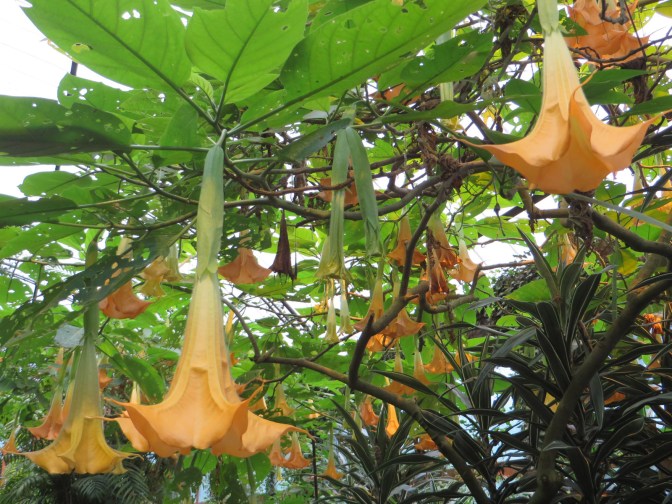
Yellow flowers hang upside-down from these bushes. I’m no botanist, so I can’t tell you any more about them than that, but would guess that maybe hummingbirds can get at their nectar.
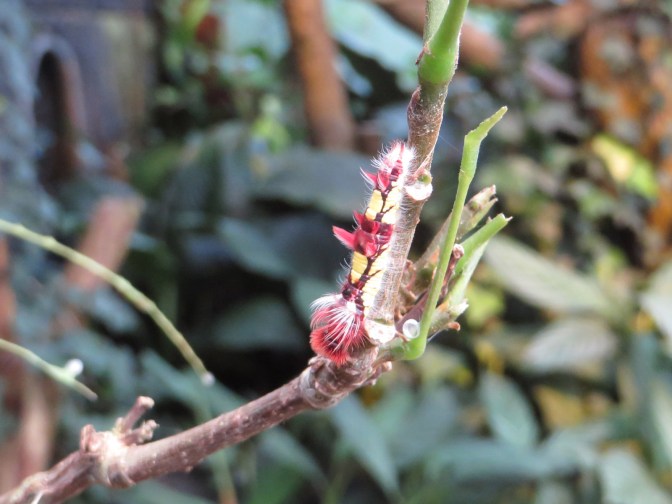
A colourful hairy caterpillar finds a comfortable spot on a twig. This was inside a butterfly and moth enclosure, where there was no shortage of either.
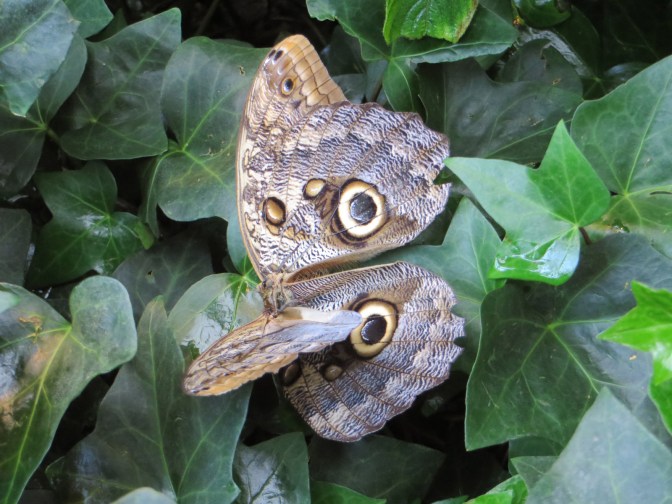
A very large moth displays its wings and its false eye patterns to ward off predators.
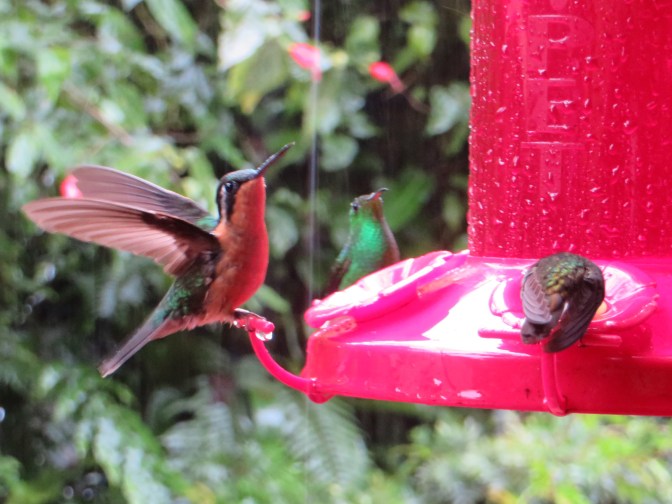
Hummingbirds drinking from a nectar feeder at La Paz Waterfalls nature reserve. Hummingbirds just won’t sit still so are very difficult to photograph, especially in the low light of a rainstorm, therefore this was as good as I could manage.
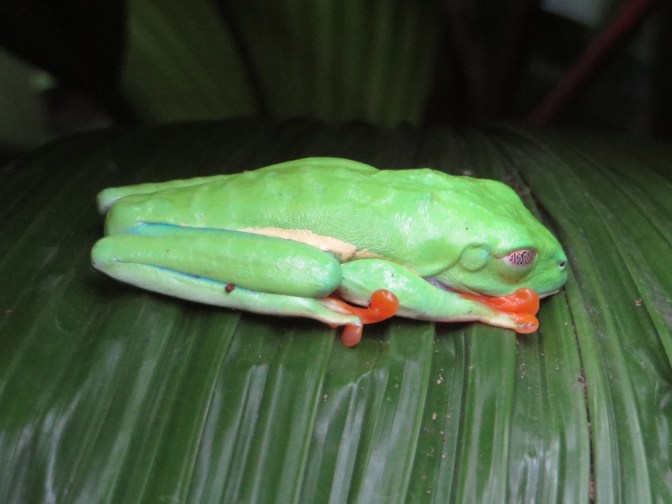
A red eyed tree frog takes a break on a leaf. I think he must be asleep, or at least have his eyes closed, for that strange pixelated effect on his eyelids.
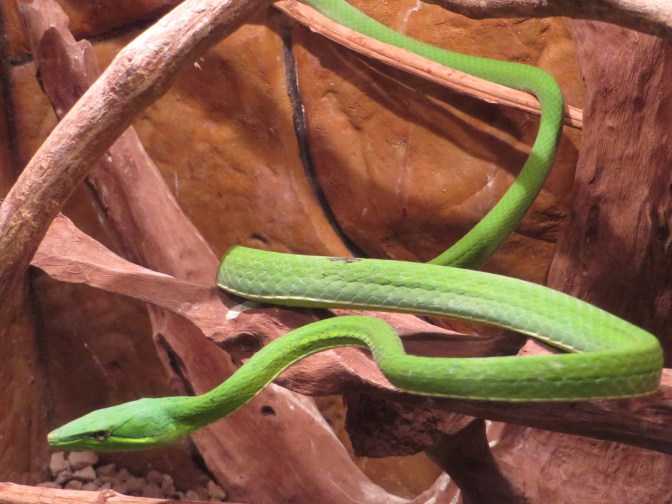
My only encounter with snakes in Costa Rica was the ones behind glass windows, thankfully. This is a common green tree snake, but impressively bright.
Out into the rainforest and along a very sanitised walkway to the waterfalls. The rain kept getting heavier, to the extent that I had nothing left that was dry – my phone got soaked and conked out too.
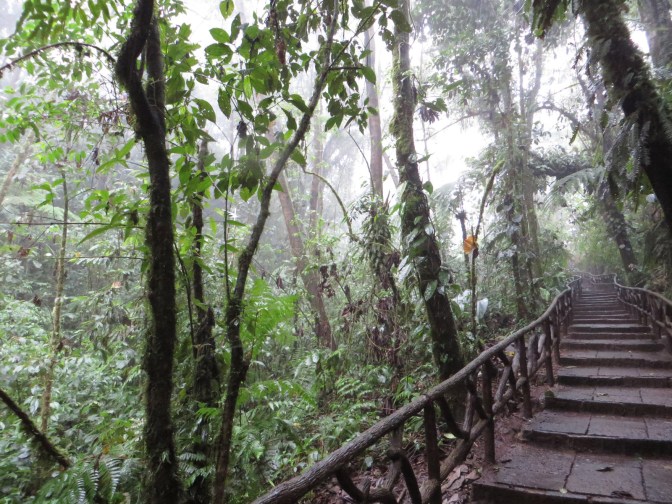
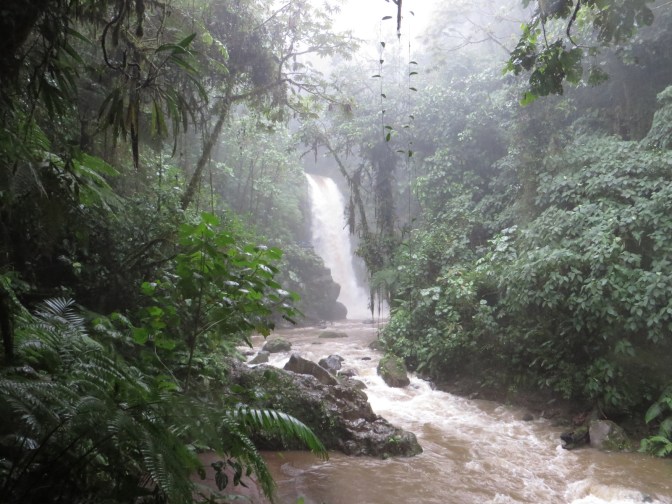
La Paz Waterfall is a series of falls, a couple of which we could get right underneath where it was thunderously loud, and even wetter than being in the rainforest itself, as if that were possible.
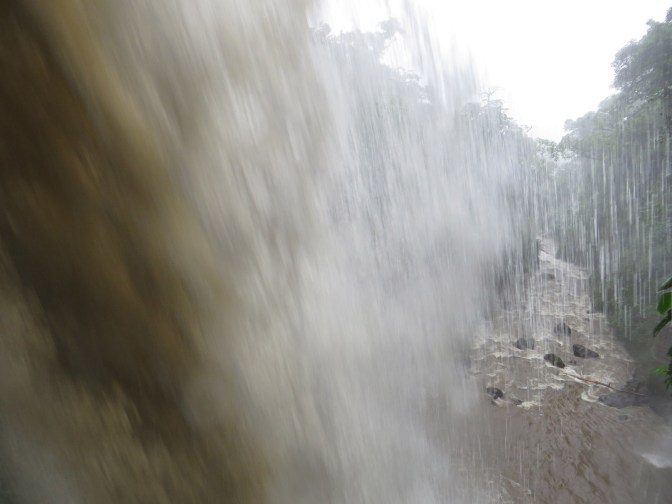
Naturally we went for a look behind the waterfall, although it wasn’t this specifically that killed my phone – turns out that the rain in a rainforest shouldn’t have come as a surprise.

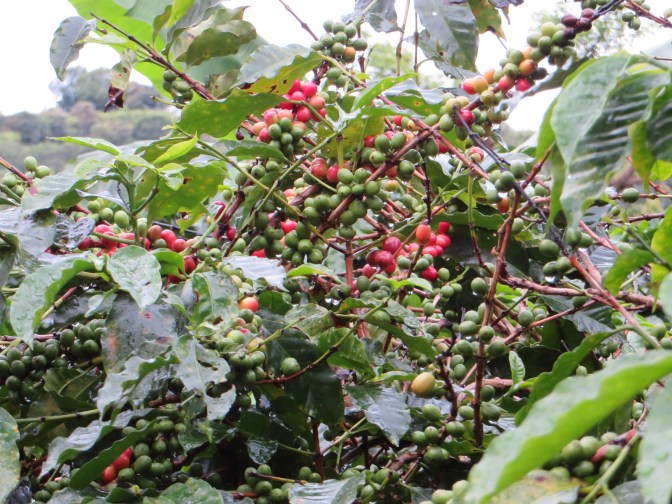
We visited a coffee plantation where they talked us through the whole process, and of course managed to sell us some locally produced ground coffee at the end of the visit.
Coffee beans growing on a bush at the plantation – much processing still required before a cuppa can be had!
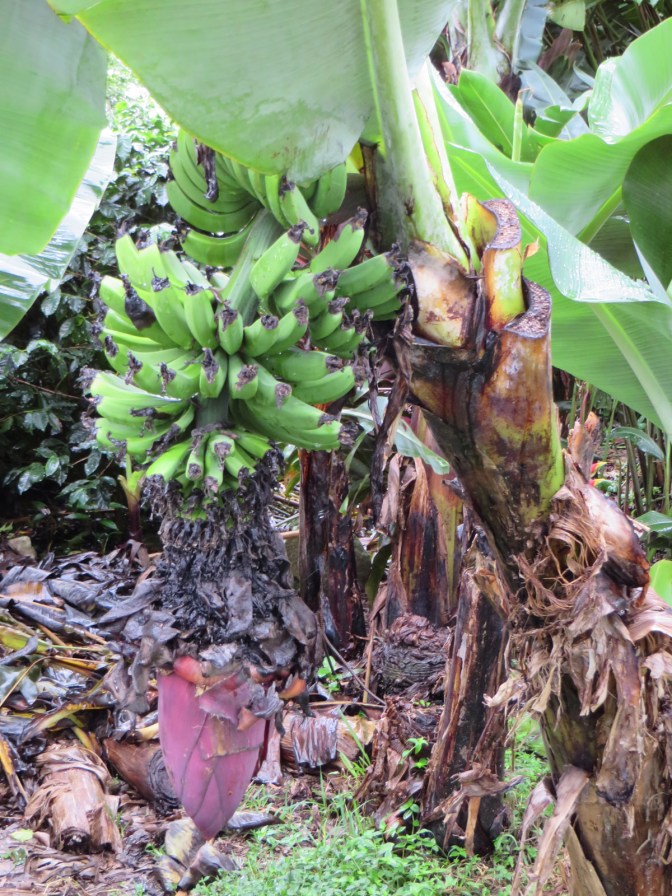
Banana trees also abounded, although this one appears to have been easy pickings for the local monkeys.
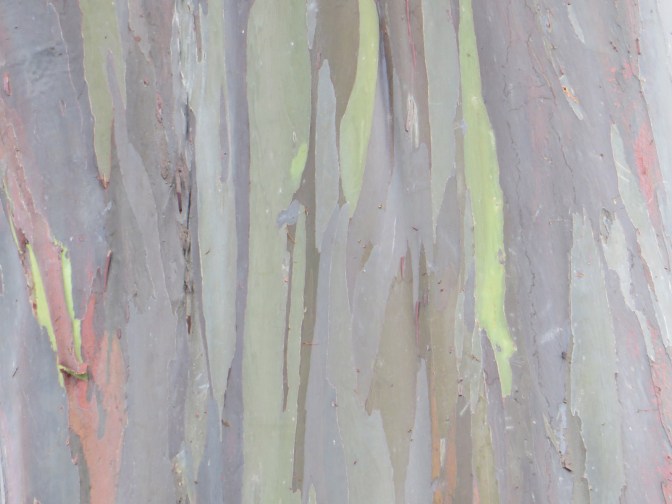
Eucalpytus trees showed up occasionally on our trip, with their distinctive shiny multi-coloured bark. I’ve also seen such trees in Hawaii, but never close enough to photograph like this.
Created 2018 | Updated 2025
 SnapHappyRoss
Leave a comment