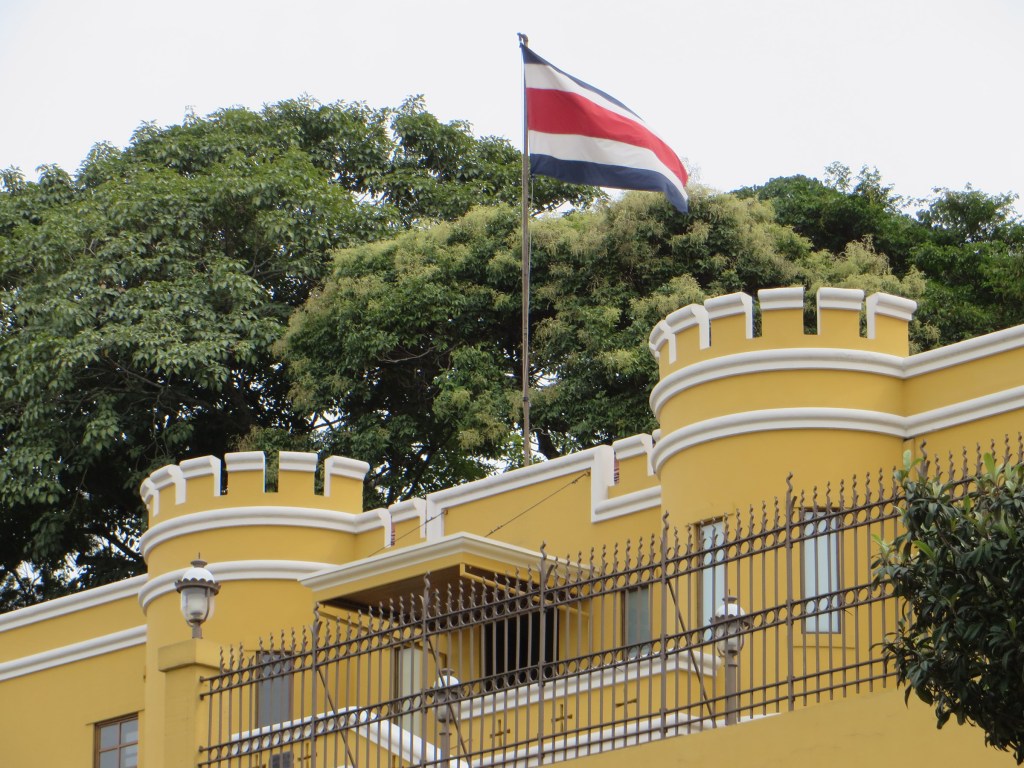
Costa Rican capital high in the central mountains and clouds
The original San José, capital of Costa Rica and unlikely metropolis of over two million people in the middle of the mountainous spine of Central America, nearly four thousand feet up. Dating back to 1736, it is one of the safest cities in the region with a very high standard of living, and while it’s perhaps not the prettiest or most charming, it still offers sufficient diversions for a few days. Traffic was expectedly very heavy, travelling between the airport and the city centre took at least an hour each way, and the street grid numbering system is unusual in starting from the centre, with even numbered streets and avenues to the south and west, and odd numbered to the north and east.
San Jose was the start and end point of my trip through Costa Rica and Panama in late 2016, we stayed the first few nights in an Air BnB in the Dent district near San Pedro Mall, within walking distance from the centre proper. For the last night we were in a hotel just off Plaza de la Cultura. The weather was refreshingly cool, in contrast to the heat of the coast, but it did rain a lot. I didn’t see much direct sunlight for the whole time I was in the country, hence the overcast nature of the photos!
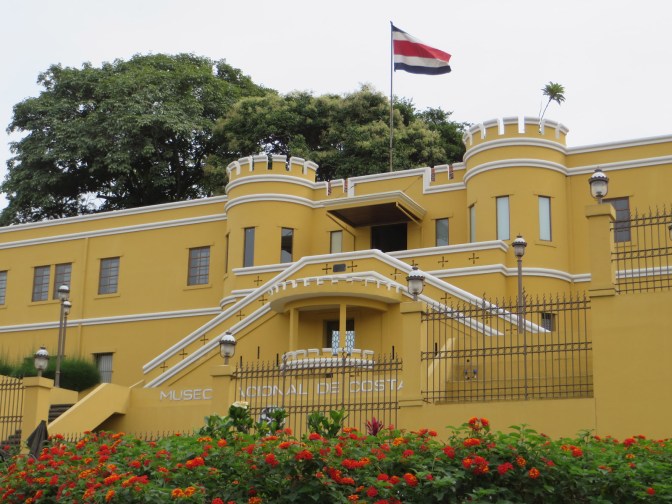
San José’s National Museum of Costa Rica, in the former military barracks of Bellavista Fortress, dating back to 1917.
El Teatro Nacional is a quite splendid affair, dating from 1897 and just next to Plaza de la Cultura. Although we didn’t catch a show, we did stop in for afternoon tea.
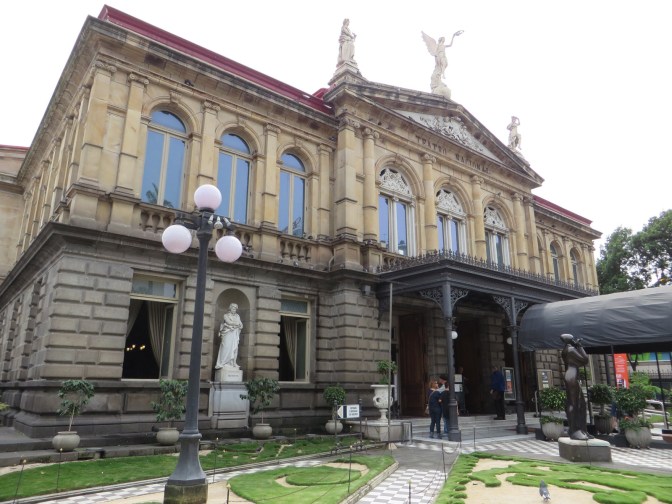
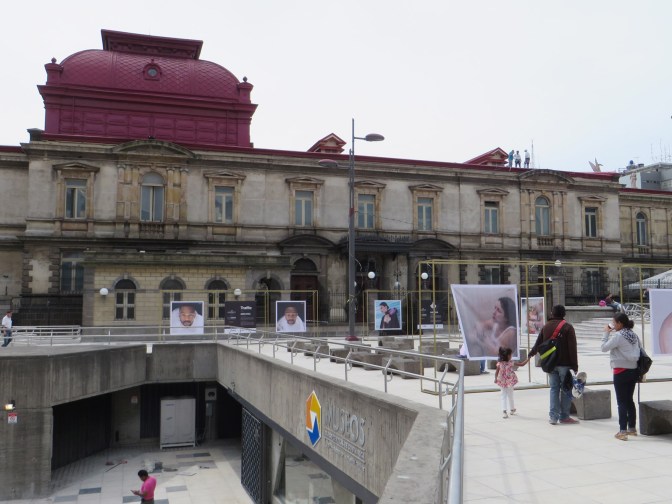
Plaza de la Cultura itself, with the National Theatre behind, and the new museum underneath.
The Cronos building is a nice example of Art Deco construction, on the corner of Plaza de la Cultura.
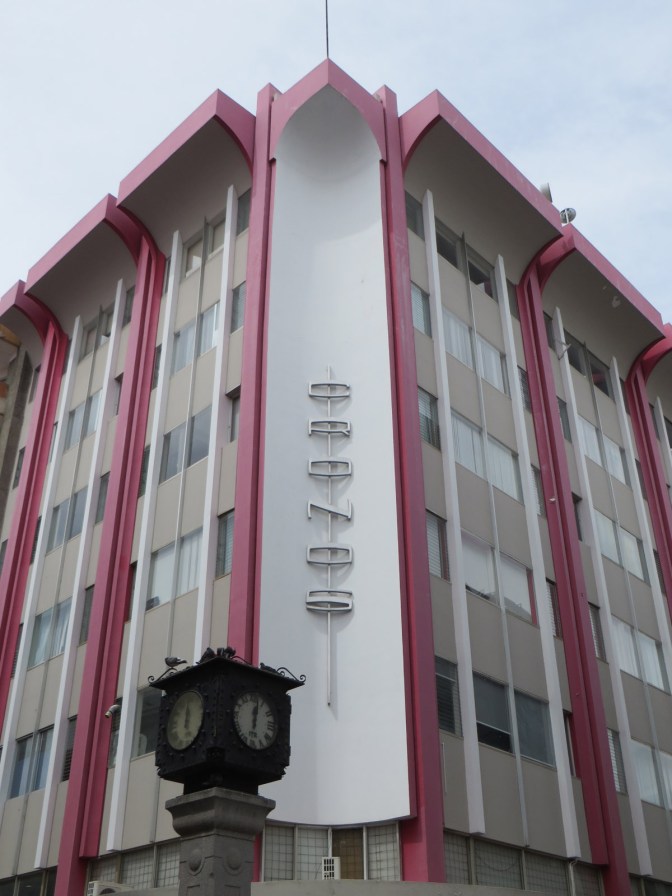
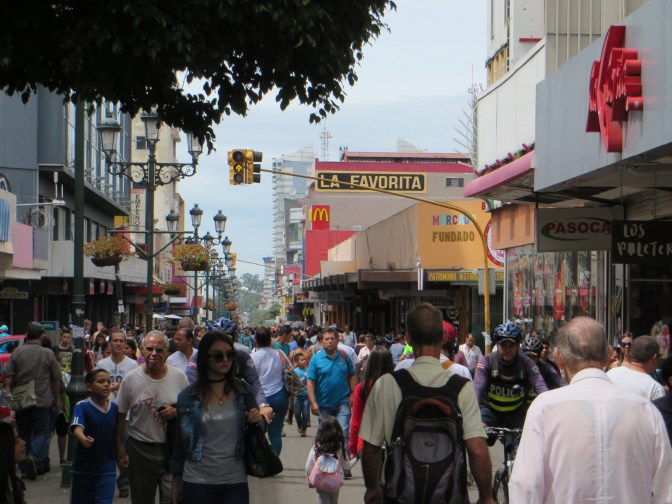
Avenida Central is the pedestrianised axis of the city, running east to west with parallel avenues being numbered oddly to the north, and evenly to the south. Although this sounds simple, it caused me significant confusion when first trying to navigate around the city, without it having been explained.
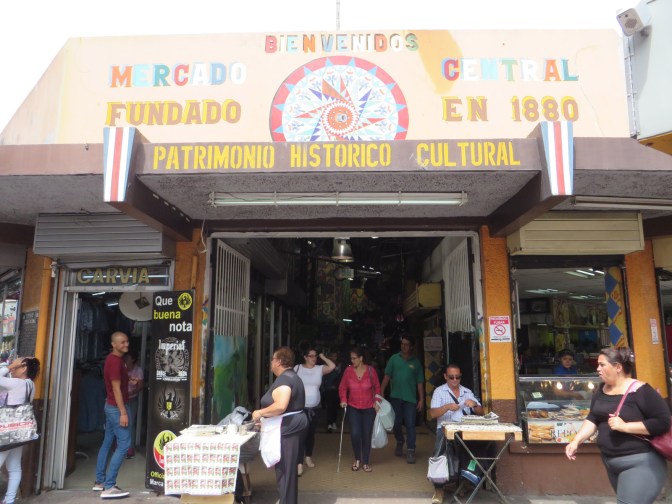
The central market is always worth a visit in Latin American cities, and San José’s was no exception. It’s conveniently located on Avenida Central.
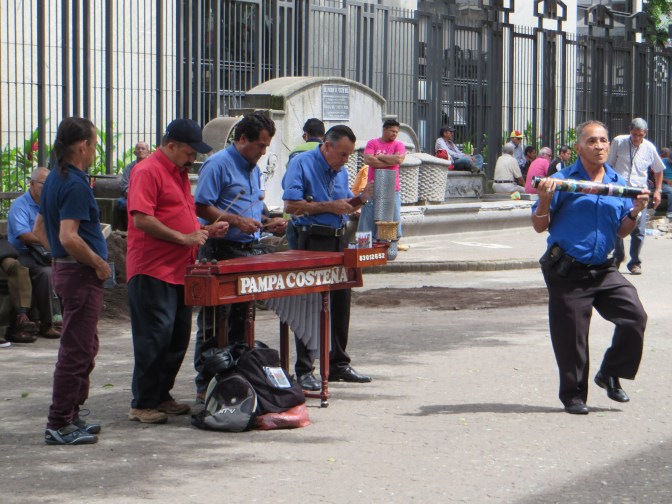
Street musicians on Avenida Central. Photography doesn’t do the shaker man justice, as he had some very smooth moves.
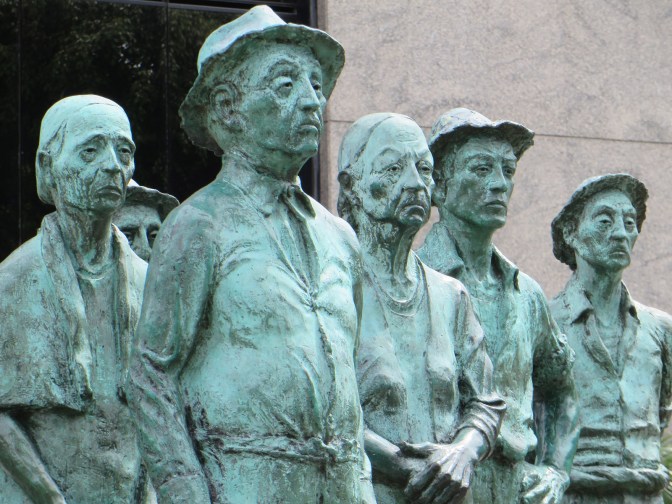
Monument to the Farmer stands outside the Central Bank of Costa Rica downtown. San José has a wide range of statues throughout the city, celebrating the ordinary people of Costa Rica.
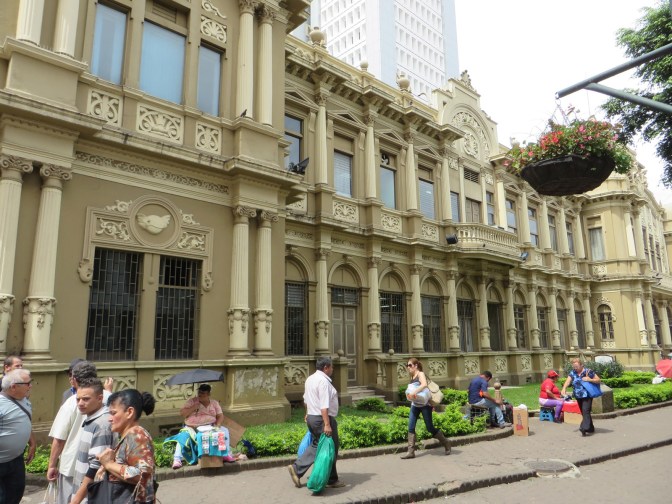
The old post office is now a postal museum, another of the grand old buildings in central San José. It is largely original inside.
The old post office interior features large banks of little lockers and drawers, and reminded me of similar buildings in Cuba.

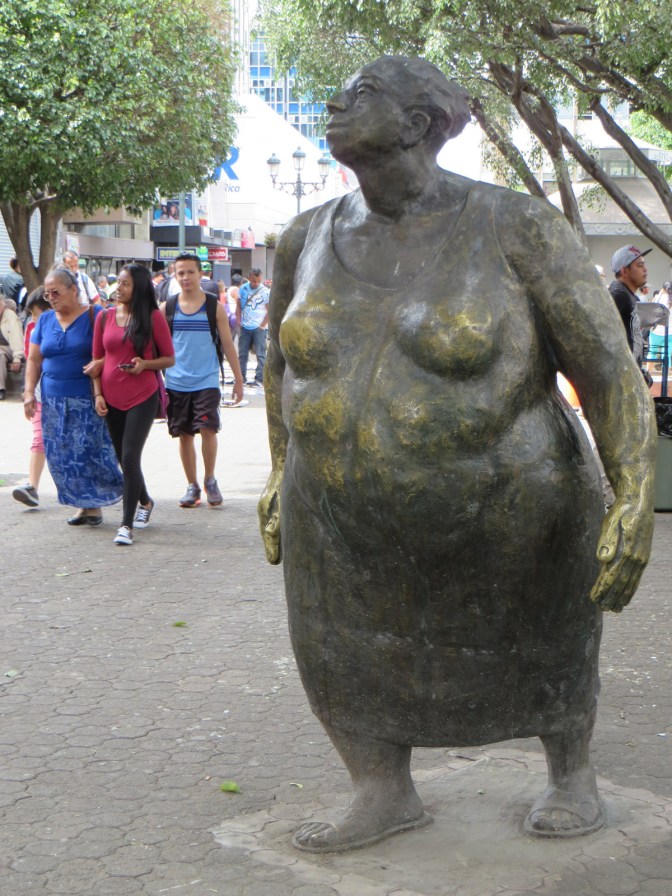
Estatua de la chola, another of San José’s monuments to the ordinary people, this one features a jolly and corpulent middle-aged woman.
The Metropolitan Cathedral of San José stands at the edge of Parque Central, which is less of a park and more of a square. The cathedral was completed in 1871.


A muscular hammer-wielding worker stands in Parque Central with a concrete bandstand behind, gifted by the erstwhile dictator of Nicaragua, no less. It was on this spot that Central American independence was declared in 1821.


One of San Jose’s historic old houses, there are several dotted about the city centre.
Parque Morazán and its bandstand, there was even a little amateur live music going on one time we passed through.


Edificio Metálico, the Metal Building, is a school just opposite Morazán park and was built in the late 1800s with Belgian steel, when steel structures were particularly in vogue, such as the Eiffel Tower or Forth Bridge. Officially it is called Escuela Buenaventura Corrales. The statue of former president Daniel Oduber Quirós stands resolutely in front.


Urban railway lines snake through the inner city residential districts of San José, with occasional clanking trains rumbling through.
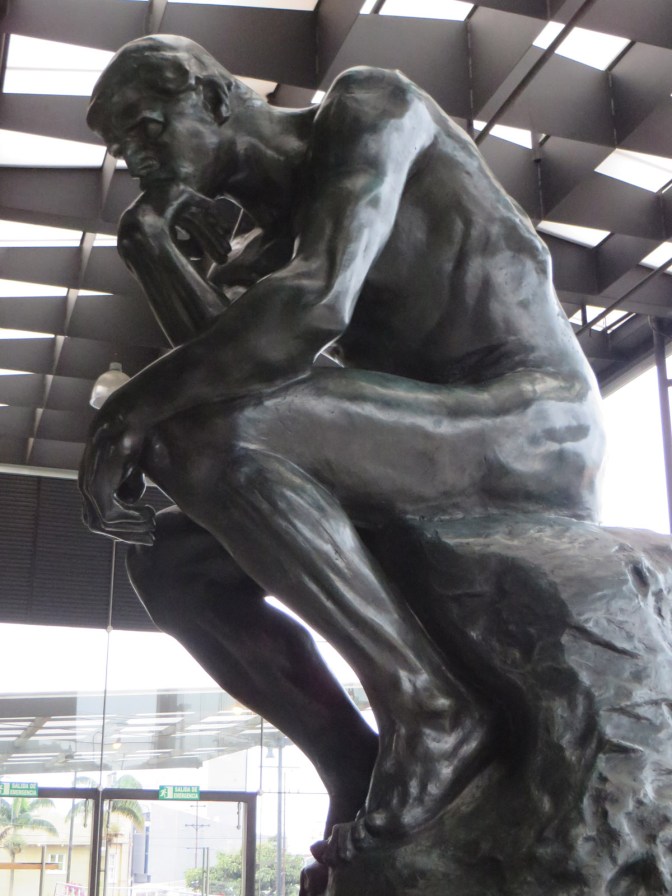
The Thinker ponders how he ended up in San José, here cast in bronze (I think), but protected from the elements. Re-castings of the original Thinker can be found around the world including in Buenos Aires, but I suspect this reproduction is much more modern.
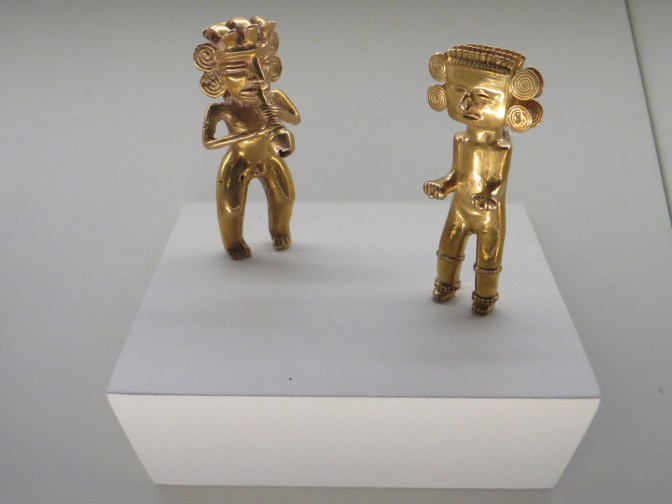
Underneath Plaza de la Cultura lies the vast Museum of Pre-Columbian Gold , featuring amongst other artefacts a treasure trove of over a thousand golden delights, such as this musician and dancer. These items escaped the plunder of the Spanish and are preserved for the nation.
Independence Monument in Parque Nacional, celebrating secession from Spain in 1821. Costa Rica is one of very few nations that does not maintain a standing army, having abolished it in 1948.

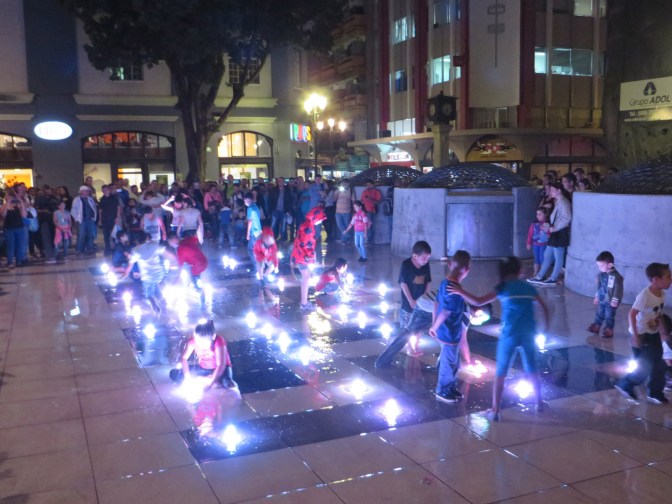
Plaza de la Cultura was remodelled and unveiled in 2016, including a dancing lit fountain, which is hugely popular with the local kids.
Our last night in Costa Rica was in early December, and the Christmas spirit was certainly picking up, with school choirs singing carols in the street, and even El Cascanueces on show. For those uninitiated in Spanish, this is The Nutcracker!


A view of San José from the sky, with the wings of the National Stadium of Costa Rica clearly visible, in business since 2011.
Created 2018 | Updated 2025
 SnapHappyRoss
Leave a comment