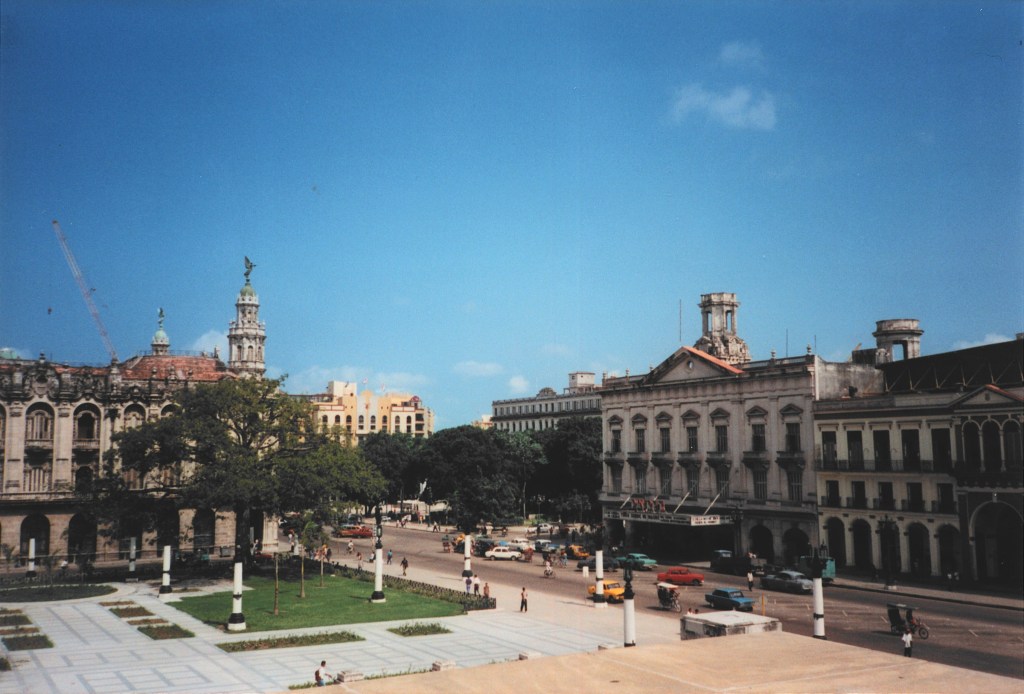
Havana

Rum, cigars, classic cars and revolutionaries
Cuba is the largest Caribbean island, full of colour and music everywhere you go. It is well known for its exports of rum, cigars, and revolutionary politics in the forms of Castro and Che. It is one of the last remaining truly communist countries, and has suffered under United States government sanctions since 1959. There are no flights connecting Cuba with the US and very little trade, leading to quirky side-effects such as the continued prevalence of American cars predating the embargo. In recent years things have begun to look brighter for the people of Cuba, but it remains one of only two countries where Coca-Cola is not officially sold, along with North Korea.
We visited Cuba in October 1999, to find that our hotel had been damaged by a recent hurricane, so we stayed at the adjacent hotel “El Viejo y El Mar” at Marina Hemmingway. I realised the following year that old Havana’s architecture is very much like Miami’s South Beach, but with decades of neglect. Unfortunately being the recalcitrant teenager that I was at the time, I had neither the means nor the appreciation to take decent photos, but this does give me another excuse to return someday soon.

The centre of La Havana appears in the featured image, taken from these steps of Cuba’s Capitol Building, which was built in the 1920s to roughly resemble the United States Capitol in Washington, D.C. Another similar example can be found in Buenos Aires. Inside resides the world’s third largest indoor statue, with the second being within Washington’s Lincoln Memorial, and the largest in Nara, Japan.
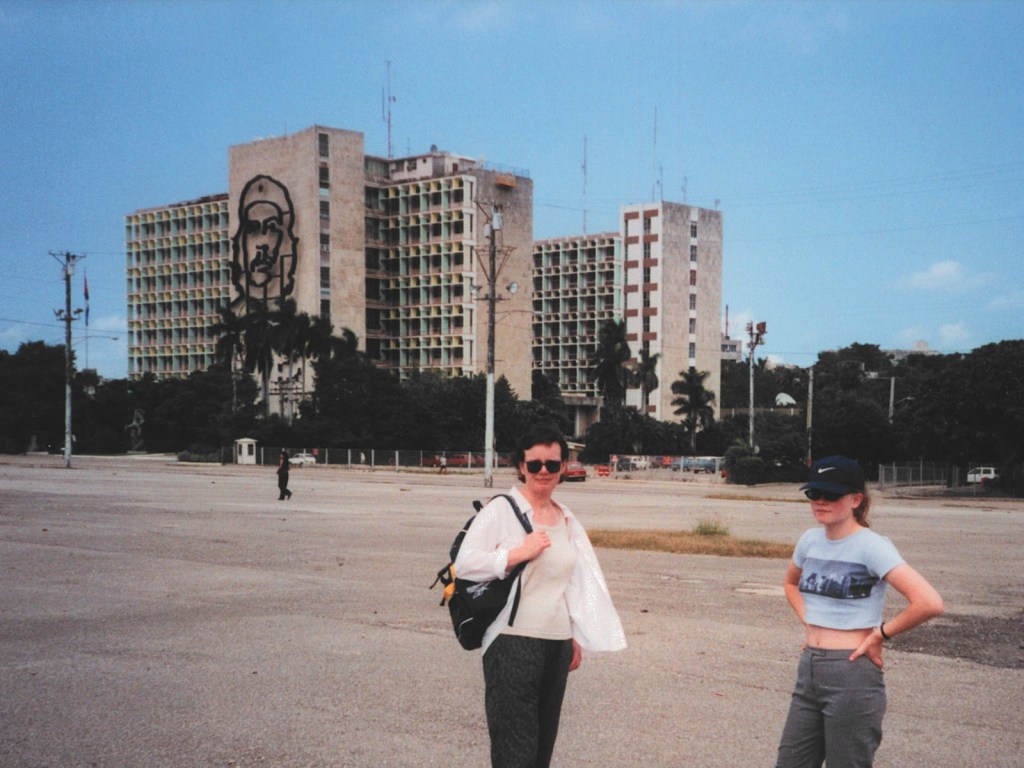
Plaza de la Revolución still sports the portrait of Che Guevara in the background, on the Ministry of the Interior. Here, the rallies take place and Fidel Castro would address the crowds. This particular image of Che is world famous, appearing on t-shirts and the walls of student flats the world over.

Also in the Plaza stands the monument to national hero José Martí, who died in 1895 and is seen in effigy at the foot of the tower. The monument was completed in 1958 (just in time for the revolution), and at 109 metres tall it is the world’s largest monument to a writer, surpassing even Edinburgh’s Scott Monument.
Since the US trade embargo began in 1959, Cuba found that its supply of cars rapidly dried up, and they had to make do with what they already had. That, coupled with the price of imported Russian and European vehicles, means that Cuba still sports a huge fleet of pre-1960s American cars, largely decrepit and powered by Lada engines, but some gold dust can be found too.

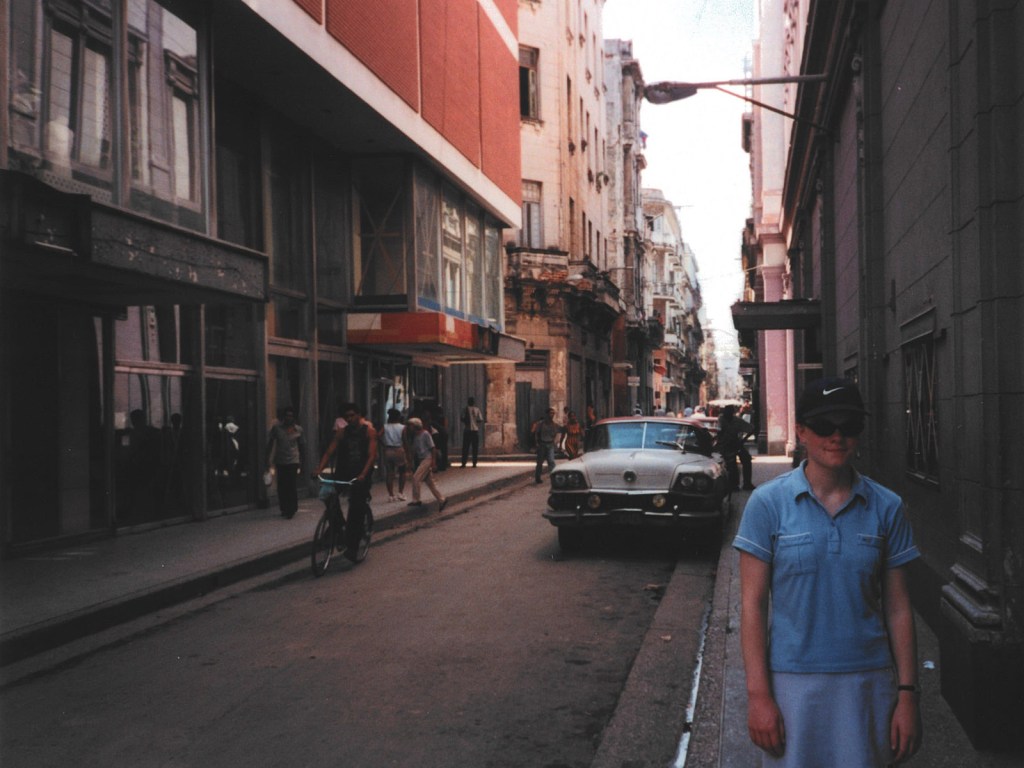
Another example of a quietly ageing American automobile in the narrow streets of old Havana. This was near La Bodeguita del Medio, the purported birthplace of the mojito, which we visited and added our names to the walls already fully inscribed with signatures.
Political signage and the ubiquitous Lada somewhere within the city, decrying the American embargo as genocide against Cuba, and calling out the US government for damage to the Cuban people.


Out of town, the Mural del la Prehistória was painted by students at the behest of Castro in the 1960s, on a rock face at Viñales to the west of Havana. Although colourful, it doesn’t necessarily have significant artistic merit. Viñales is a tropical jungle area, and there were dozens of eagles soaring around.
While on our day trip to Viñales, we also went on a boat trip through the limestone Cueva del Indio cave behind us in this photo, and drank the juice straight out of coconuts split by local vendors.


It wasn’t all murals and propaganda though, back at our hotel “El Viejo y El Mar” (The Old Man and The Sea) in Marina Hemmingway, there was time to splash around at the pool.
Created 2003 | Updated 2015, 2023, 2025
 SnapHappyRoss
Leave a comment