Mérida and the Yucatán
The United Mexican States
Mexican influence extends the world over, with its cuisine, music, style and traditions. With well over one hundred and twenty million people, it is a rapidly developing nation and in 2015 had the second largest economy in the Hispanic world, behind only Spain itself. It also has its fair share of history, with the well-preserved ruins of various indigenous peoples such as the Maya, Aztec and Olmec dotted about the country.
Our family visited Mexico for just a long weekend during our move back from Houston to Dubai in 1990. We stayed in Mérida, capital of the Yucatán Peninsula, an area of land perhaps more famously known for Cancun and partying Americans. The highlight of our trip was a visit to the ancient city of Uxmal.
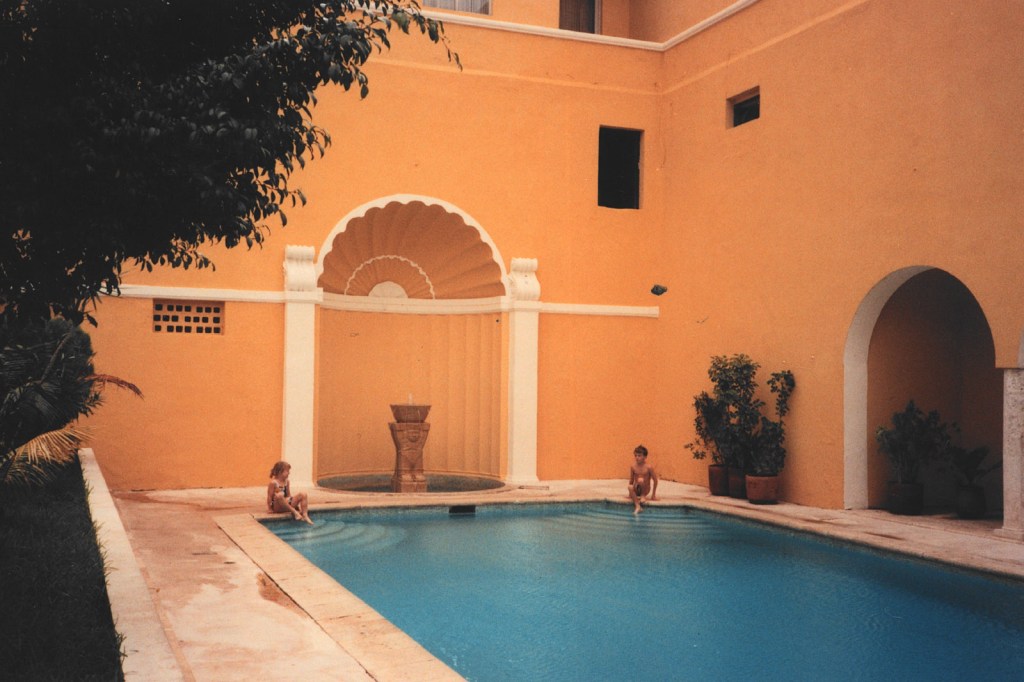
Our hotel in Mérida was a classical colonial Mexican affair, a fairly simple place but with lots of charm. Here my sister and I brave the cold waters of the pool. I’ve never been able to figure out the name of the hotel since, or even if it still exists.
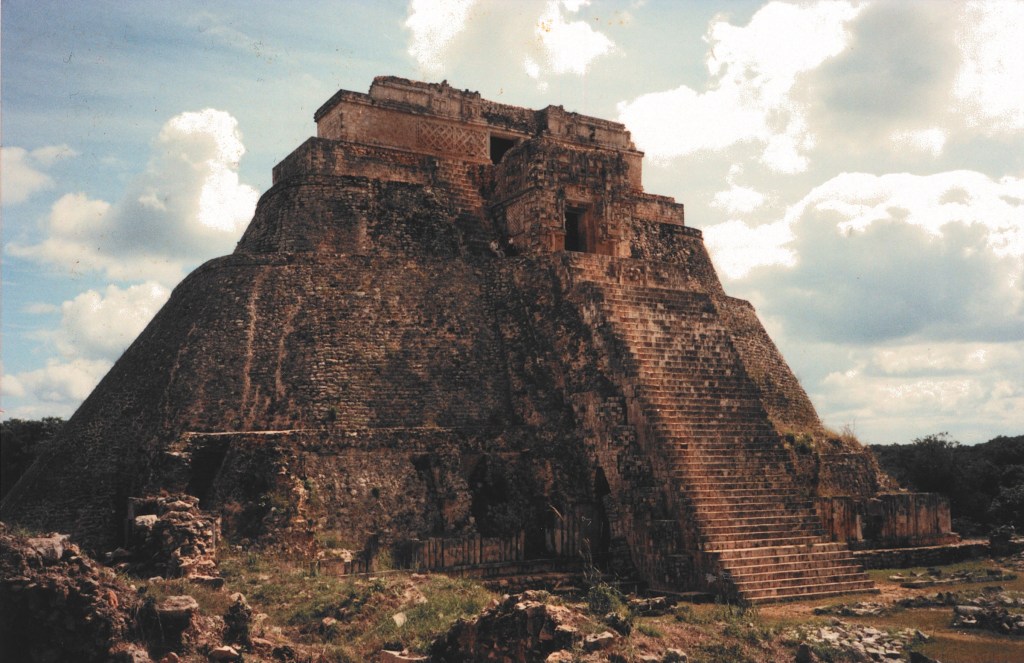
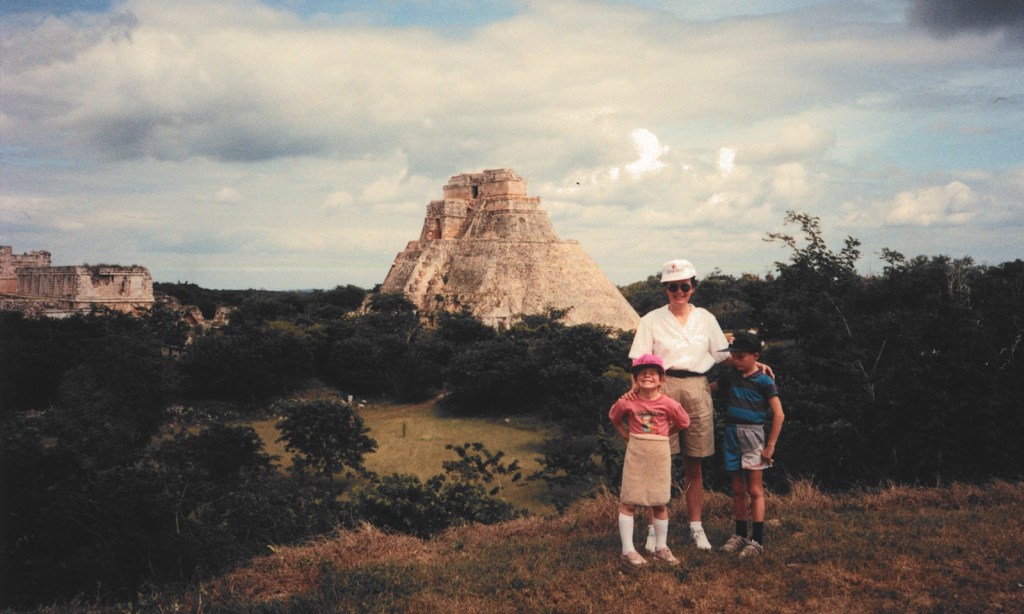
The ancient city of Uxmal, deep in the Mexican jungle. Perhaps not as widely known as nearby Chichen Itza, but nevertheless impressive, the city sports the curved-wall Pyramid of the Magician. I felt like a miniature Indiana Jones exploring around.

Looking overheated and bored in the Nunnery Quadrangle, with the top of the pyramid rising above one of the intricately carved buildings. The quadrangle was built in the 10th century AD.
Detail of the sculptural carvings on the corner of one of the buildings surrounding the Nunnery Quadrangle, with its traditional Mayan faces and symbols.

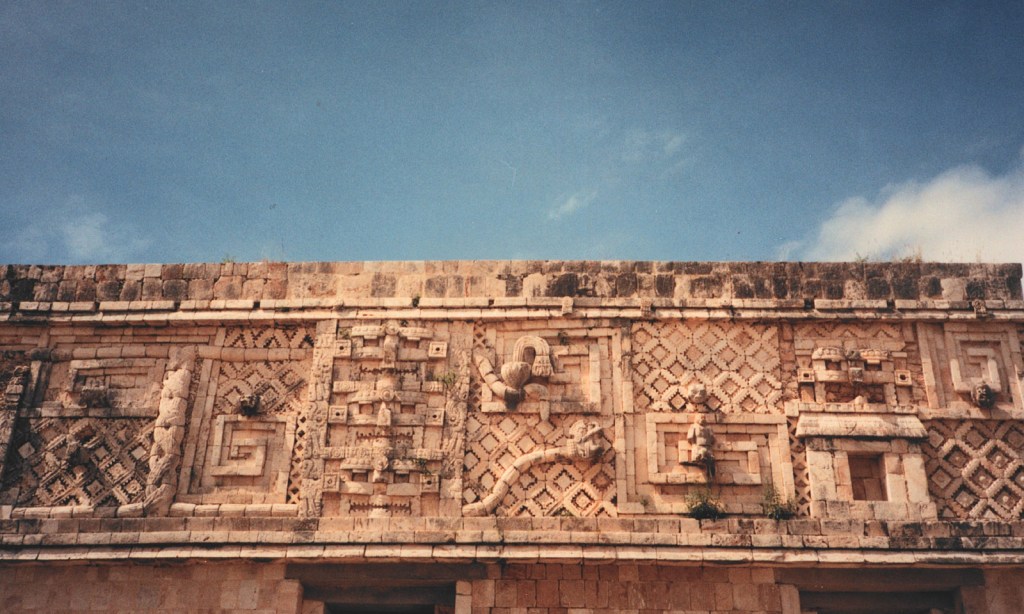
Uxmal is famous for its detailed friezes, particularly those facing inside the Nunnery Quadrangle such as shown here. Visible amongst the lattices are faces and animals, including snakes, sometimes with two heads. This frieze is on the west side of the quadrangle.
Closer view of Mayan mask carvings on the north side of the quadrangle.


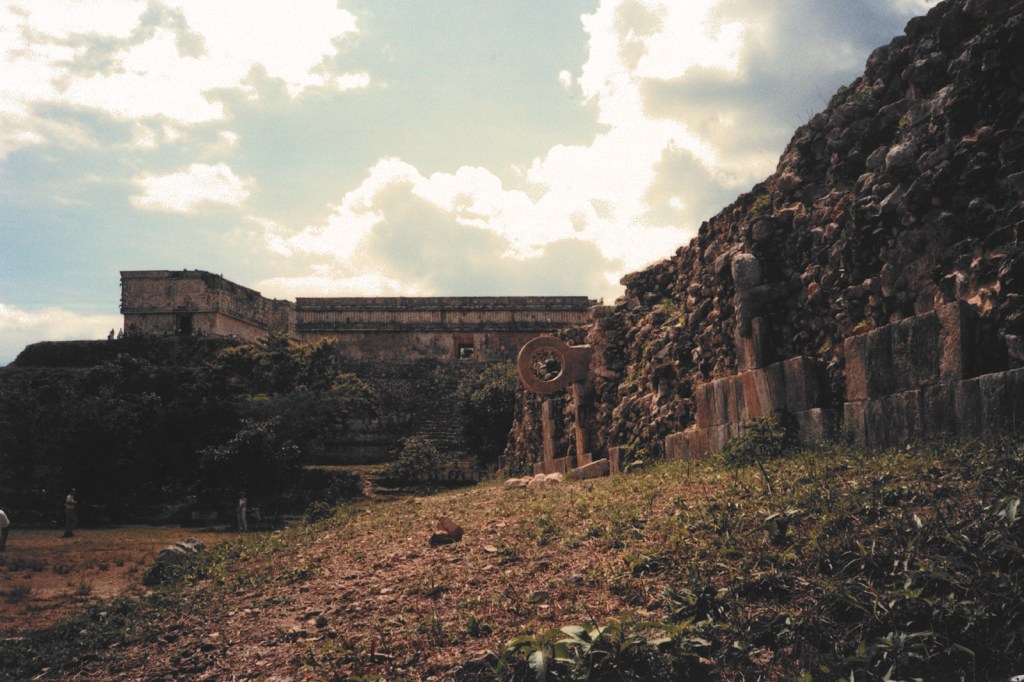
From the Nunnery Quadrangle we headed towards the Governor’s Palace on the hilltop, through the famous ballcourt in the middle distance.
The Mayans knew how to enjoy themselves during their downtime, having built a number of Mesoamerican ball courts, in popular use during the late first millennium. The original vertical hoops are in a museum for safekeeping, with replicas installed here. Records of the rules are sketchy, but happily, this lets us postulate that the losing team’s captain would be decapitated and his head lobbed through the hoop in celebration. Probably.
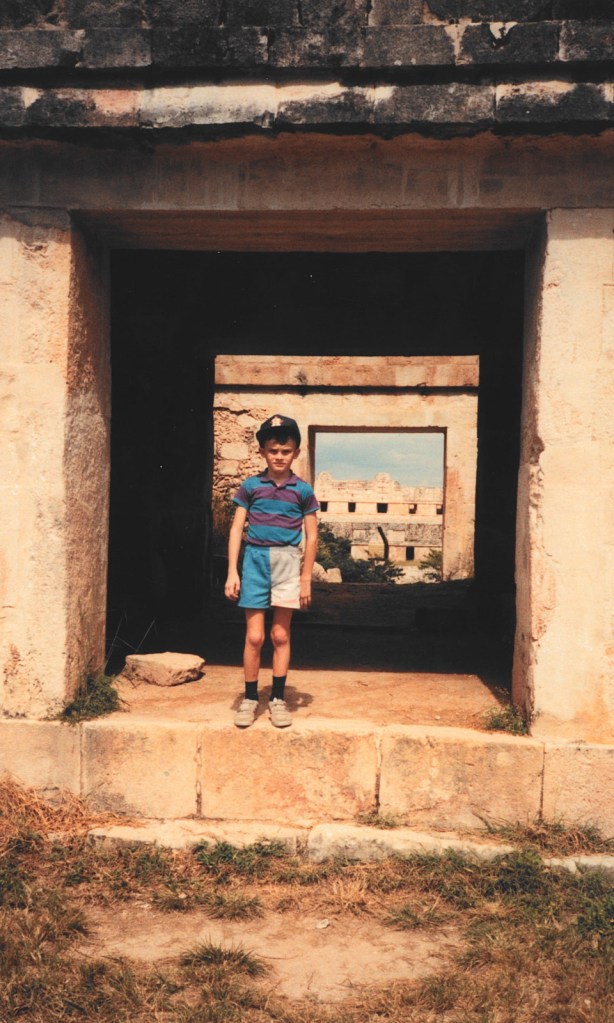
I still wasn’t looking especially cheerful inside the House of Turtles, with the view back to the Nunnery Quadrangle behind.
The Pyramid of the Magician was built around the sixth century, and saw continued use until being abandoned around the turn of the second millennium. This makes it considerably younger than its Egyptian counterparts, although it is quite unique among pyramids the world over for having rounded sides and being extremely steep.
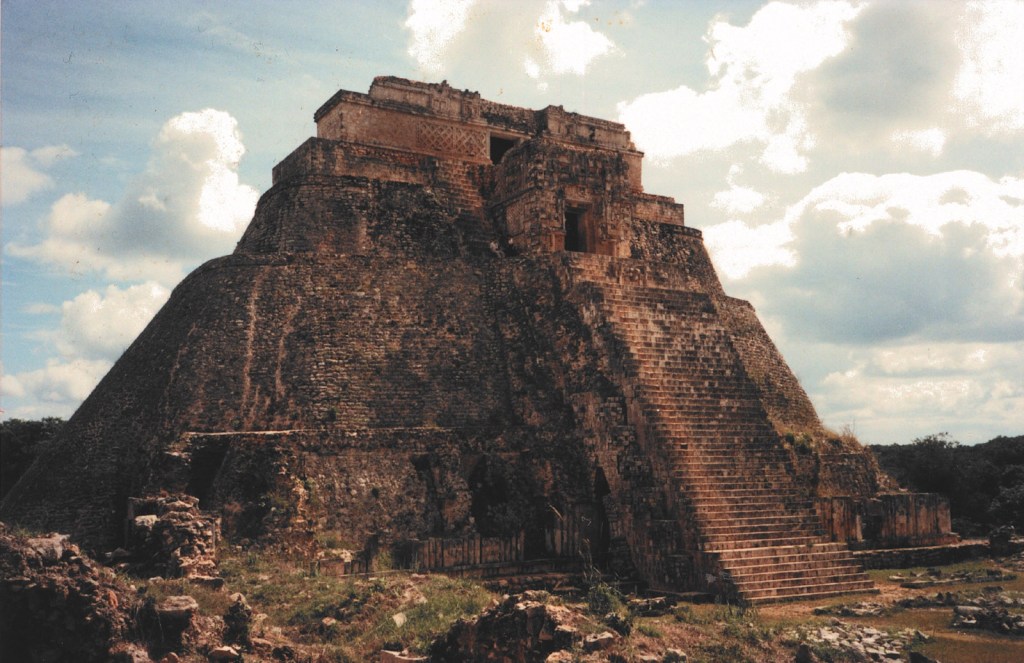

Also known as the Pyramid of the Dwarf, in 1990 it was possible to climb up the east face of the structure, with the aid of the rope visible on the left. The west stairway had been damaged by Hurricane Gilbert in 1988 and was out of use.
On approach to the pyramid it became increasingly clear how very steep it is indeed, all the way up its thirty-five metre height. The smaller figure at the top is me.

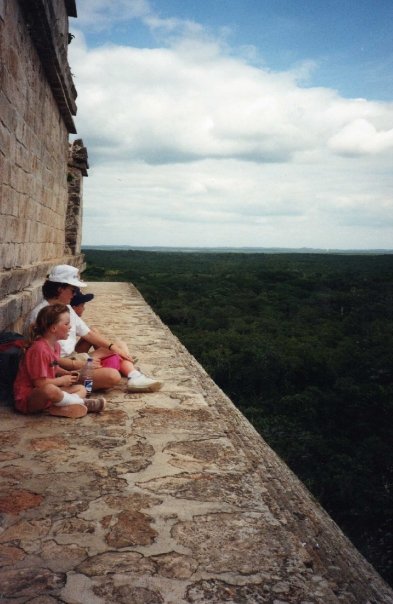
We took a well-deserved break at the top of the pyramid, to gaze across the Mexican jungle. Since our visit in 1990, the whole city has been designated a UNESCO World Heritage site, and in order to better preserve it, tourists are no longer permitted to climb the pyramid.
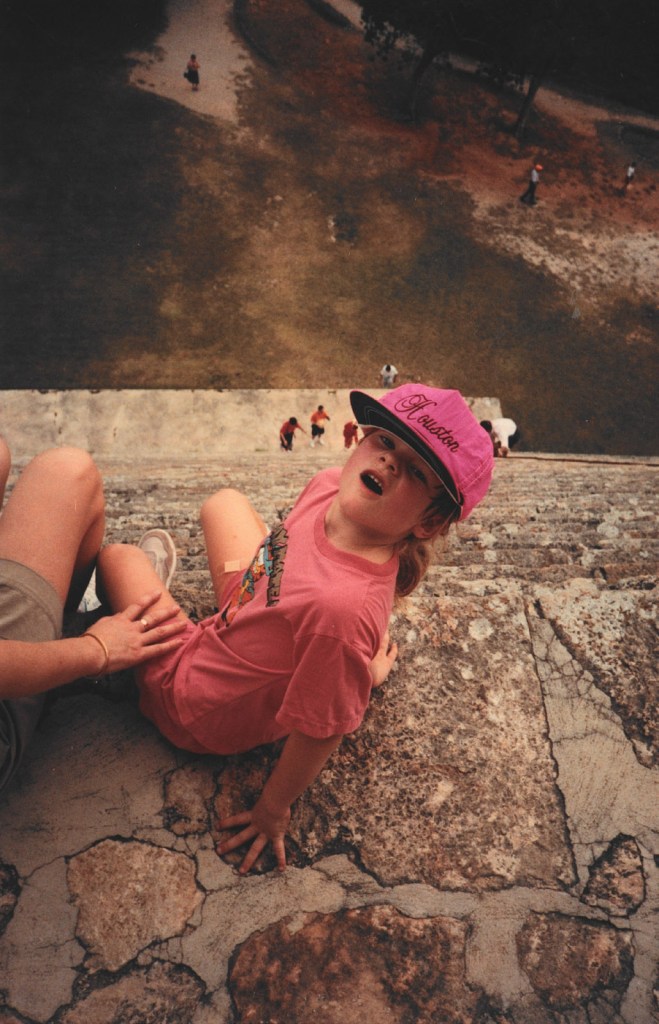
The no-climbing rule doubtless has the double benefit of reducing the annual number of casualties tumbling to their deaths, because good grief, it was steep. Complete madness taking two kids up there!
Created 2003 | Updated 2015, 2023, 2025
 SnapHappyRoss
Leave a comment