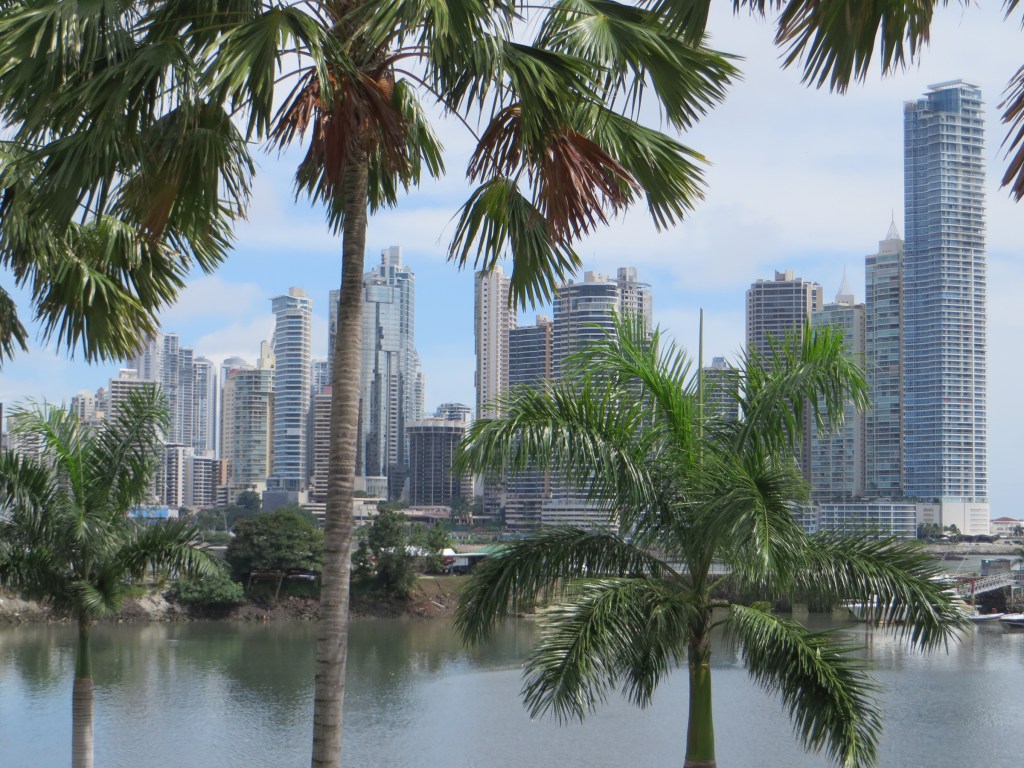
Shining city on the Pacific Coast, guarding the mouth of the canal
Hot and humid, Panama City straddles the canal that divides the Americas, and has grown off the back of the significant chunk of the world’s trade that passes right by. Particularly in the 21st century, the city has boomed to become one of the highest developed in Latin America. It has seen its fair share of turmoil too, with the American invasion and deposing of former dictator Noriega marking the latter part of the last century.
I arrived into Panama City’s domestic airport on a propeller plane from San Jose, to find a country that was notably hotter and brighter than the cloudy Costa Rica I had left behind. This quickly became a disadvantage as I wandered the Cinta Costera, and I was glad when I could check in to my hotel, Le Meridien, halfway along the seafront strip. I was very impressed with the skyline and also enjoyed wandering the Casco Viejo in the evening.
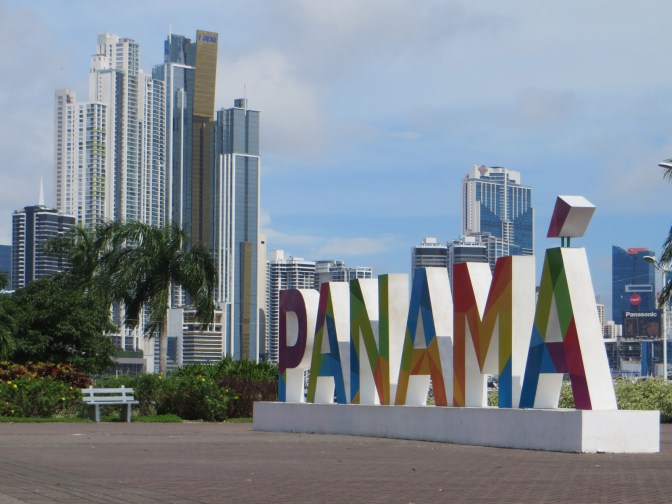
Like all good cities of the FaceGram generation, Panama has its own selfie sign. I couldn’t get a decent shot of it with the skyline directly behind as they’ve built it at an awkward angle, but I certainly wasn’t going to ruin the view with my own fizzog.
Downtown Panama City has been built up enormously since control of the canal was handed over from the United States in 1999. Towering luxury condominiums abound, a testament also to the banking industry which forms another of the backbones of the country.

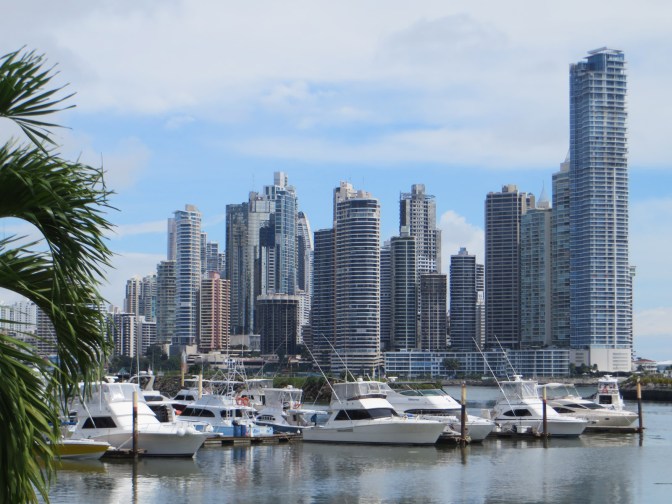
The marina as viewed from the Cinta Costera, the coastal belt which was reclaimed from the Pacific in the 2000s, providing much-needed traffic relief and more space for landscaping and pleasant strolls along the front.
Colourful glass balconies on one of the towering apartment buildings on the Cinta Costera. This one is called Element Tower and is relatively small at 38 storeys – several buildings reach over seventy floors.


The distinctive twisted shape of the F&F Tower is achieved by partly offsetting the angle of each floor from the one below. At 52 storeys and 243 metres, it was the seventh tallest in the city at the time of my visit.
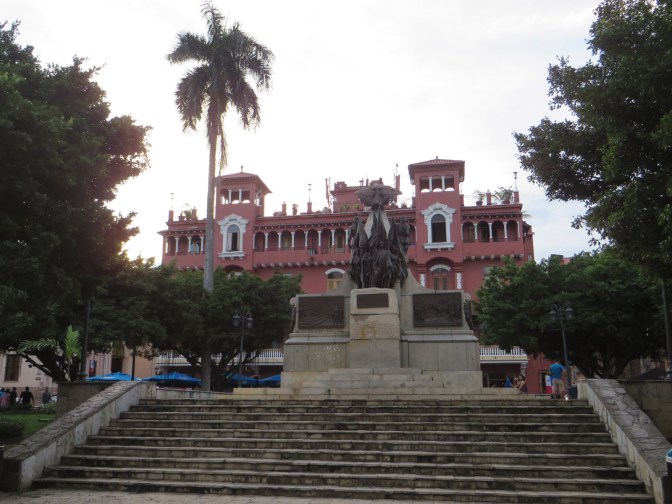
Vasco Núñez de Balboa was the first European to cross from the Atlantic to the Pacific, when he traversed what is now the Panama Canal in 1513. Panama City itself was founded only four years later, and his legacy includes not only this statue in the park of his name, but the national currency, the Balboa.

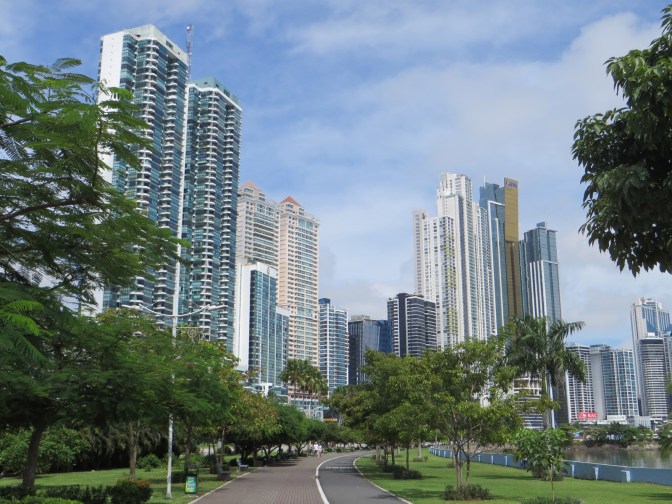
Another skyline view from the Cinta Costera running route. My lodgings at Le Meridien are in one of the salmon pink towers in the centre.
Panama’s natural diversity is well known, being fully tropical and adjoining both Costa Rica and Colombia. My bird-spotting skills leave a lot to be desired, but internet sleuthing tells me this is a saffron finch. It is not native to Panama, but was introduced.


Panama’s Casco Viejo or old quarter is the active part of old Panama City – there is an actual “old town” but there is very little left, and largely ruined. Notable chunks of the Casco Viejo also remained in ruins, but the area seemed to be undergoing something of an urban revival and gentrification, with dilapidated structures shoulder-to-shoulder with shiny refurbished places.
Avenida B was lined with properties which for the most part were still in need of some TLC.

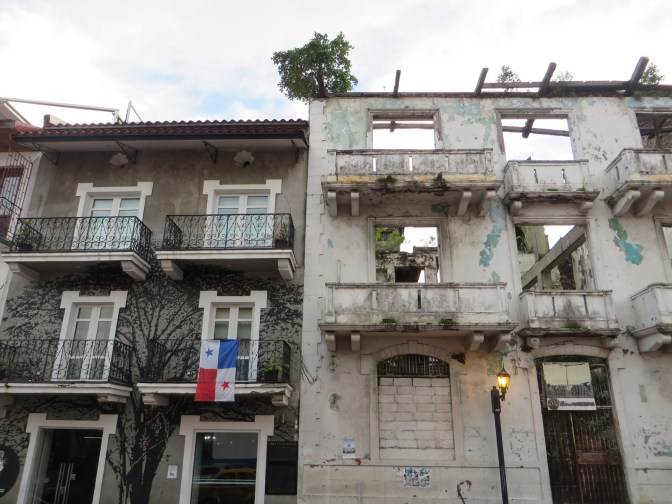
Renovations and preservation were progressing apace, I expect much more has been achieved since my 2016 visit.
Calle Tercera looks spiffing with its colourfully-rendered homes and businesses.
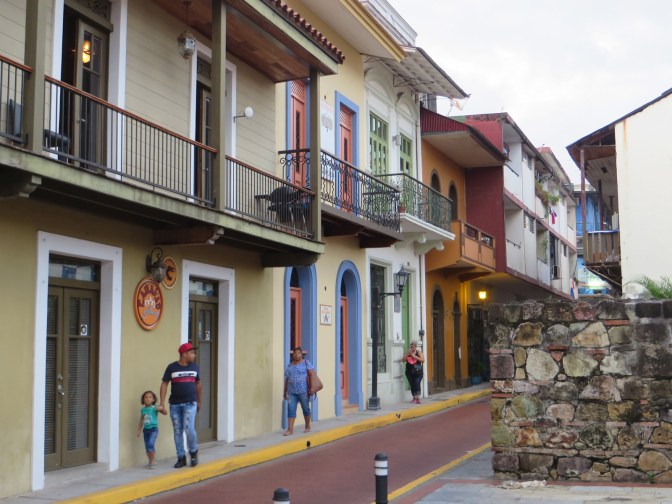

The monastery of Santo Domingo was unfortunately closed when I arrived, but I could still see in to its famous flat arch, Arco Chato, partly visible through the doorway. It was built in 1678 and survived several fires in the 18th century, but had to be rebuilt following its collapse in 2003.
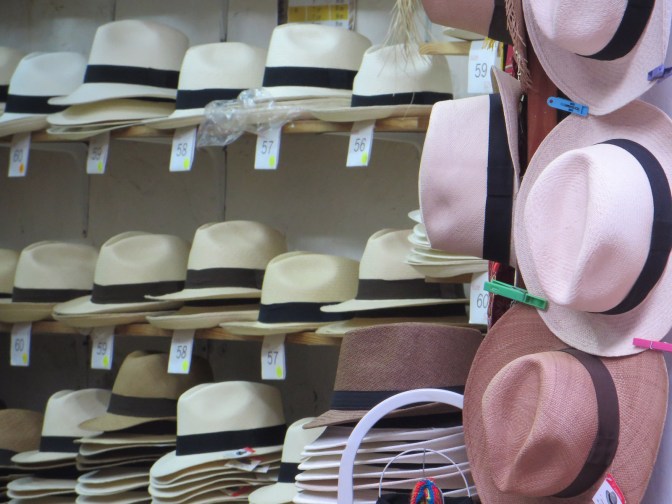
No trip to Panama would be complete without checking out the Panama hats, which to my surprise are in fact from Ecuador. If it’s the genuine article you’re looking for, the brand of choice is the Montecristi – nothing to do with Cuban cigars.
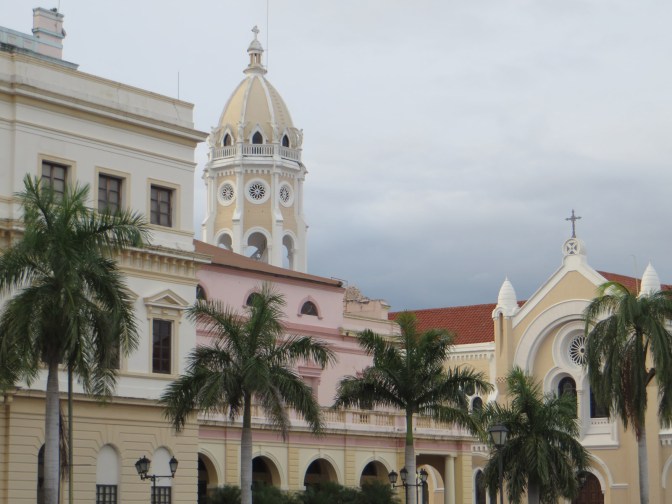
The Church of St Francis of Assisi, one of the Casco Viejo’s more polished places of worship.
Plaza Simón Bolivar is where I found myself for dinner on my first night in Panama City, at an outside table in a restaurant so busy, that I found myself sharing with a KLM flight attendant.
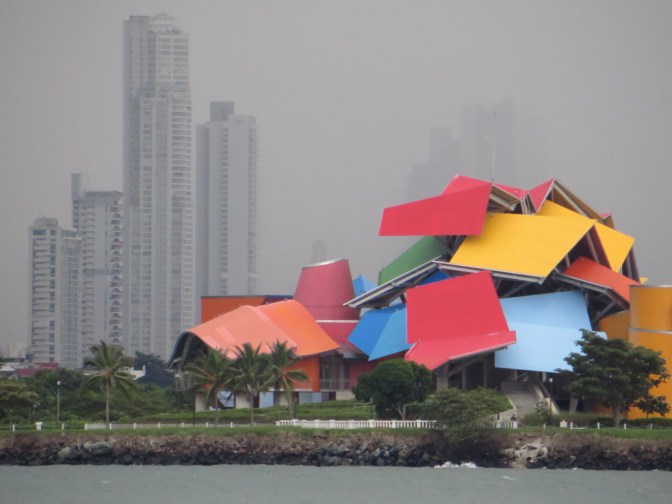
The zoology museum, “Biomuseo” is Frank Gehry’s rainbow creation, adding to his portfolio which also includes works I have witnessed in Los Angeles and Seattle.
There is a panoramic view of the city skyline from the spit of land near Biomuseo, once the tropical weather had cleared up.
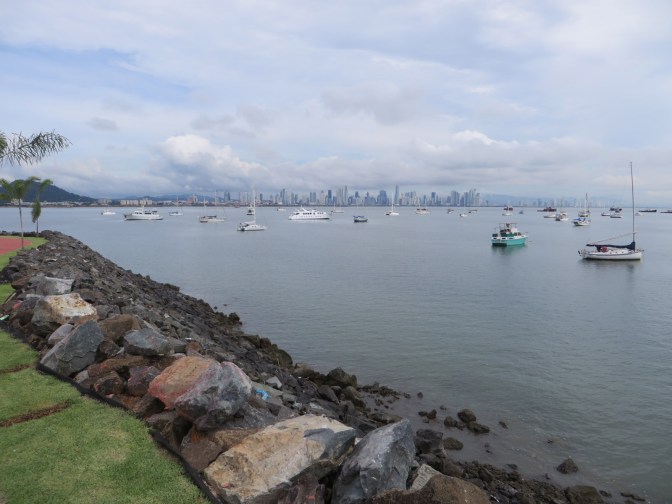

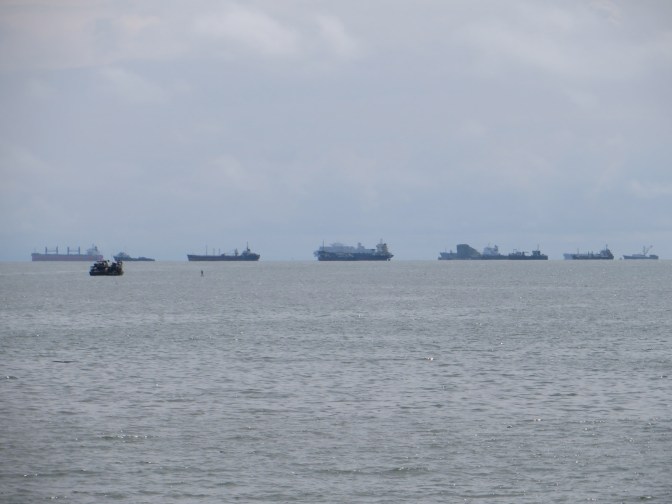
The Pacific Ocean was studded with giant ships awaiting transit through the canal. Perhaps unintuitively, the Pacific entrance to the canal is in fact further east than the Atlantic entrance.
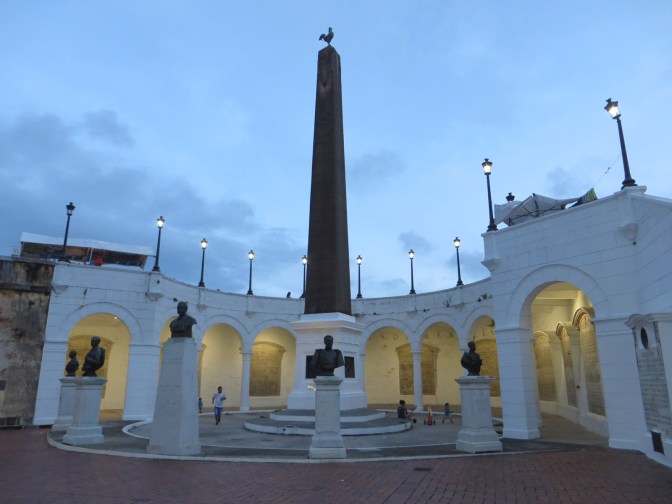
Plaza de Francia commemorates the sacrifices of the people of France in their attempts to build a canal linking the Atlantic to the Pacific. After their success in Suez, the same contouring techniques were employed – but the jungle is a very different beast to the desert, and over twenty thousand workers died, largely due to yellow fever.
Hotel Centrál sits on Plaza de la Independencia and is one of the grander historical establishments in town.

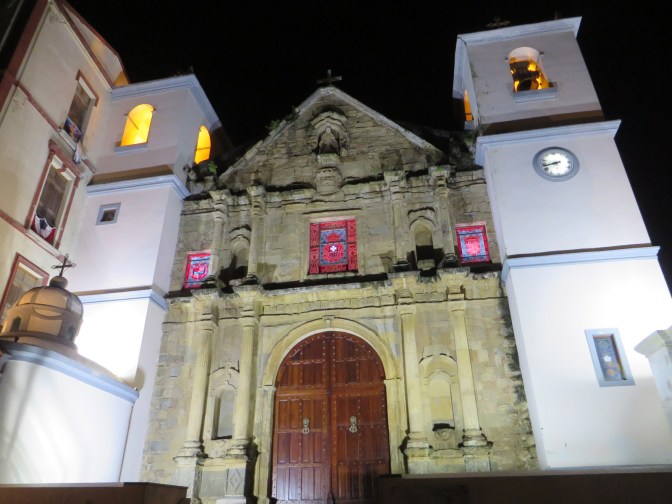
Church of the Mercy pre-dates the Casco Viejo by over one hundred years, having been originally located in Panama Viejo, the first city in the area, dating from 1519. That city was destroyed in 1671 and what was left was moved to the current, more defensive site, this church included, brick by brick.
The shining skyline of Panama City is testament to the success the country has made of itself in the first decades of the 21st century. Also visible is the extension of the Cinta Costera, the six-lane highway that was built elevated over water in a giant loop all the way around the old town, half a mile out. Much better than cutting straight through it.
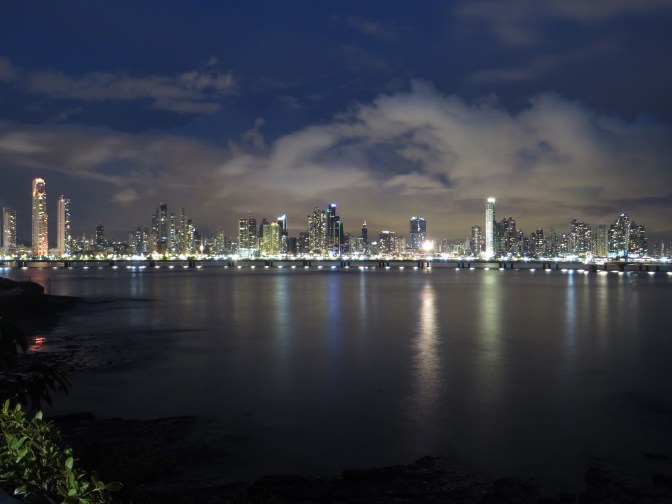

Back at my hotel, the view was just as spectacular as I looked up the coast towards some of the grandest apartments, with the traffic relentlessly ploughing on below.
Created 2017 | Updated 2025
 SnapHappyRoss
Leave a comment