Budapest

Grand historic national capital on the Danube, merged from Buda and Pest
A stunning European capital on the banks of the continent’s greatest river, Budapest has a long history but only became known thusly in 1873 following the unification of Buda on the west bank of the Danube, and Pest on the east bank. Together with similarly grand Vienna upriver, the two cities ruled the Austro-Hungarian Empire for around 50 years until its demise in 1918 at the end of the First World War. During the Second World War Hungary was allied with Germany (although not very willingly towards the end) and the Soviet advance left the country in the hands of communism until 1990. Today, Budapest is a tourism hot spot, building on its spectacular architecture, café culture and history both ancient and recent, not to mention its array of naturally-heated geothermal baths.
We paid a long weekend visit to Budapest from Edinburgh in the spring of 2024, when the weather was just turning for the better and before the arrival of the summer hordes and stag parties. We stayed for three nights on the banks of the Danube at the Intercontinental Hotel, its 1980s architecture strongly out of keeping with the surrounding classical buildings, but with a great view of Chain Bridge and over to Buda Castle. I had been keen to visit Budapest for several years and was not at all disappointed with what the city has to offer, although the days of super-cheap beer and eats had unfortunately already elapsed. As a photographer it was fantastic, with a new sight around almost every corner.
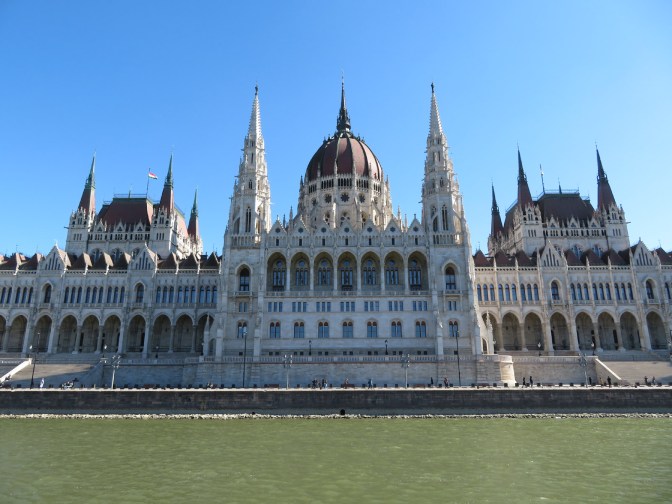
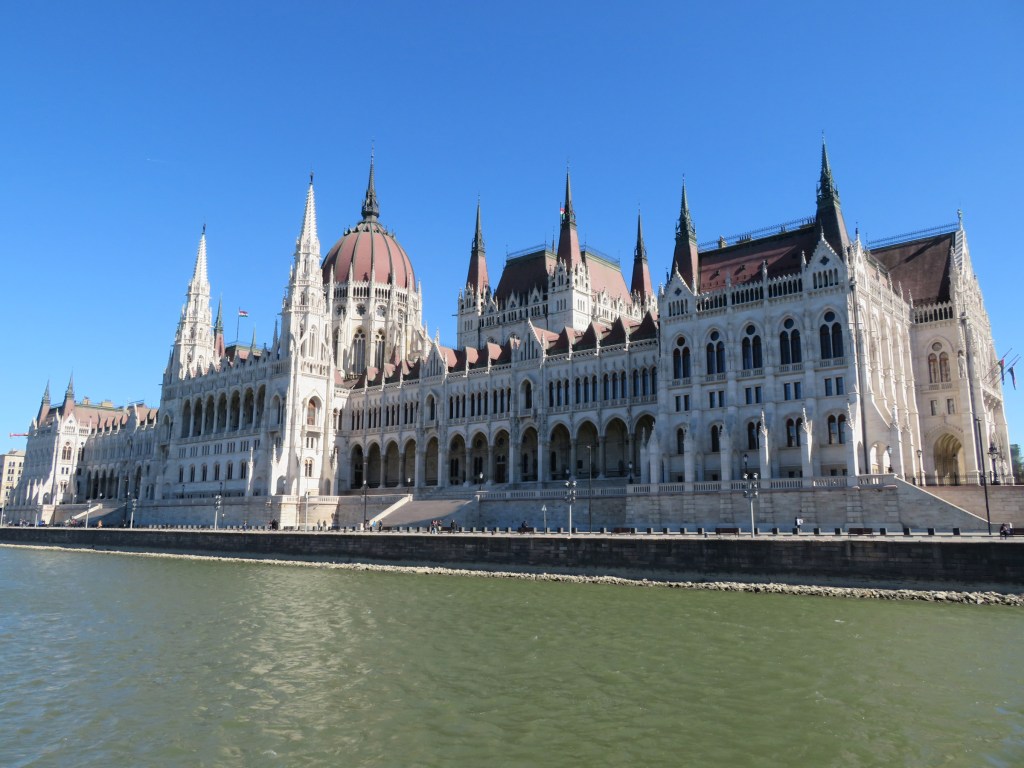
The Hungarian Parliament building, Országház (House of the Nation), can’t be missed in its prominent position on the banks of the Danube. Opening in 1902 and as obsessively gothic as anything in Prague or Vienna, it is the largest building in the country and hosts 691 rooms. As viewed from a river cruise here, this is in fact the back of the building, with the front facing onto Kossuth Square.
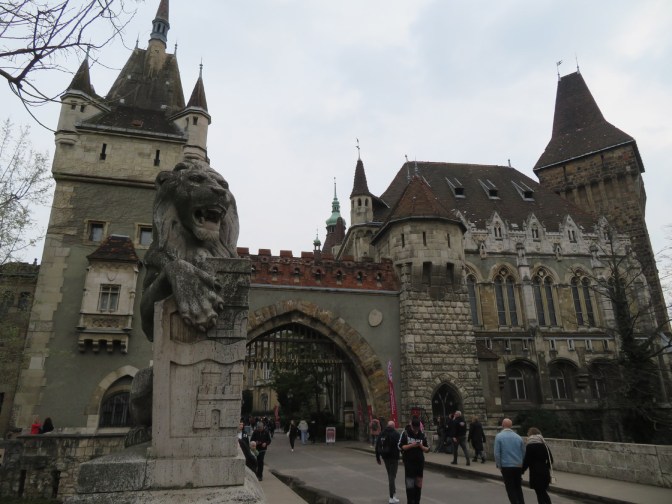
Vajdahunyad Castle presides over the City Park to the north, with this impressive lion guarding the entrance bridge over the moat, which at the time of our visit was dry. The castle is not especially old, having been completed in 1908, and features a range of architectural styles. It was built to celebrate the first thousand years of Hungary.
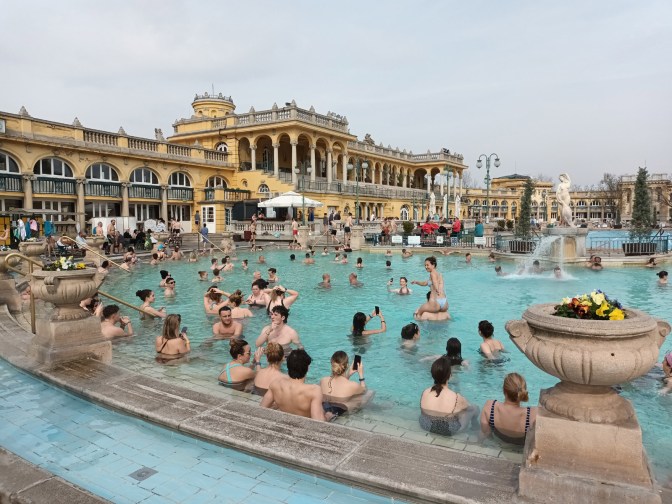
Just across from the castle is perhaps Budapest’s best known thermal bath, Széchenyi. It’s the largest in Europe and certainly the most impressive I’ve visited, ahead of those in Japan, Andorra, Canada and England. The baths opened in 1913 following the drilling of a well under the park nearly a kilometre down, and feature three outdoor and fifteen indoor pools of varying temperatures. There were no online tickets left when we arrived in country, but fortunately no queue at the baths themselves so it was easy to enter.
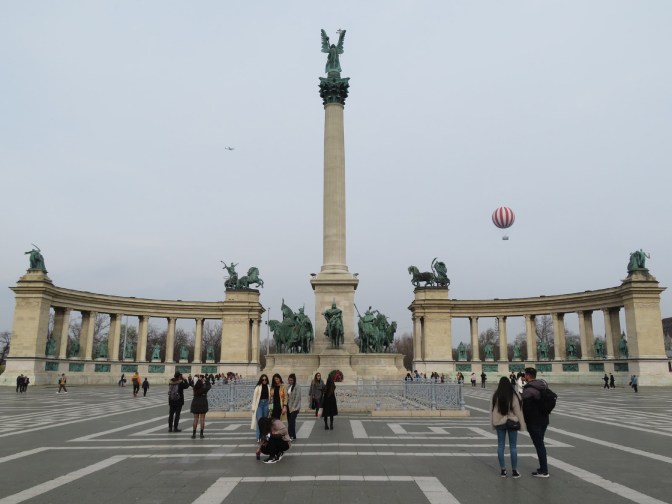
Heroes’ Square or Hősök tere at the edge of City Park, commemorates the national heroes including the Seven chieftains of the Magyars who led the tribes that formed Hungary in 896 AD. It’s a UNESCO World Heritage Site and was completed in 1900, shortly after the Millennium Underground Railway metro line 1 directly beneath it, the world’s second oldest after London, and just months ahead of that in Glasgow.
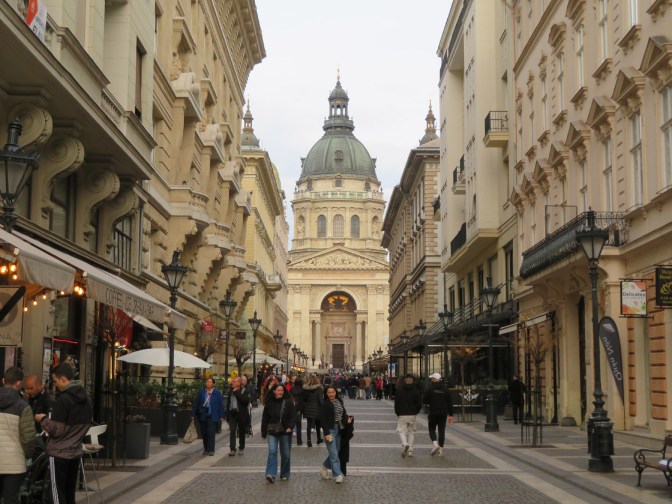
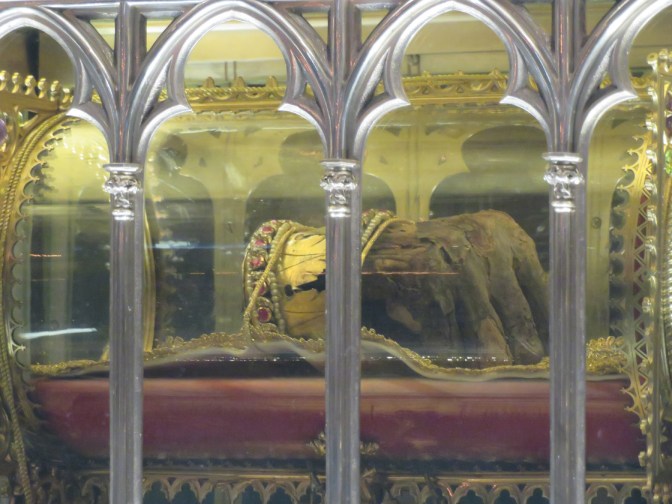
Saint Stephen’s Basilica is in a prominent position at the head of Zrinyi utca, lined with cafes and bars. It required two shots at construction, after the dome collapsed in 1858, but was finally completed in 1905 and is well worth a look inside, plus the climb up to the top of the dome which we did.
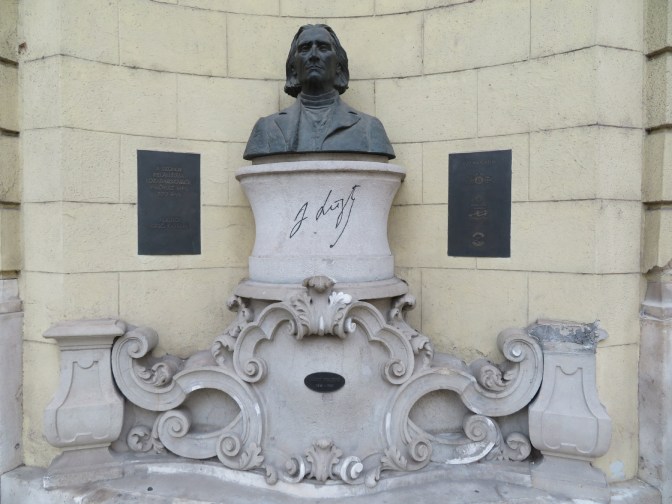
One of Hungary’s most famous sons, Franz Liszt, is commemorated in bust form on a corner of Zrinyi utca. His works are famous the world over, and fiendishly difficult to play on piano, as I can attest having tried some myself with little success.
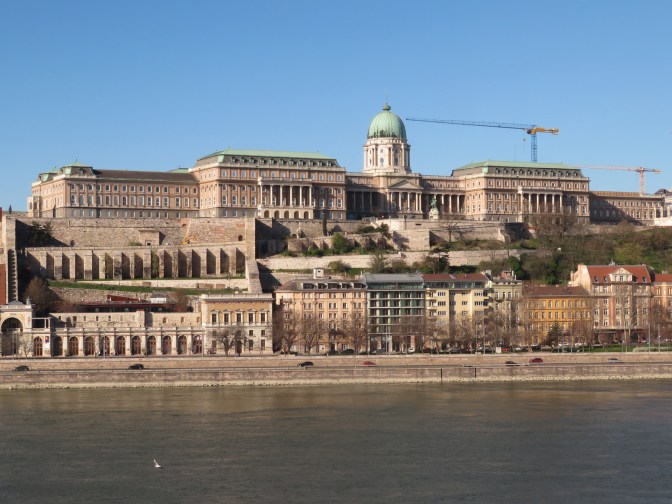
Buda Castle sits high on Castle Hill conveniently across the Danube from our hotel room, an excellent view that I was very pleased to have forked out the extra for. It was the residence of the Hungarian kings since 1265 but now hosts a series of museums and galleries following its rebuilding after the war, although much of the classical styling was lost.
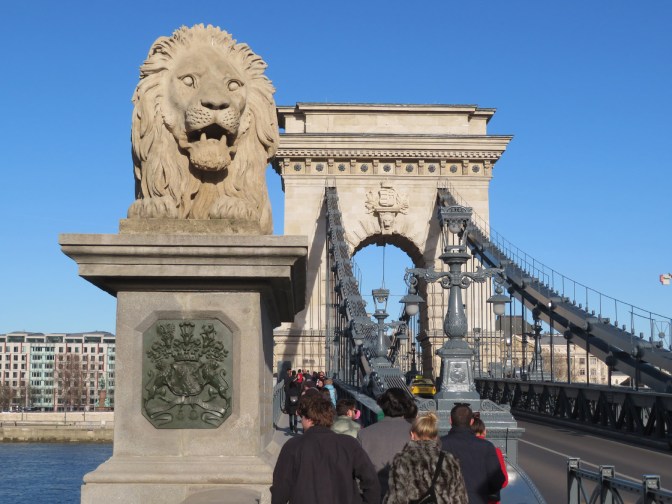
Buda Castle District is accessed from Pest by Chain Bridge, another of the city’s most famous sights and seen here looking back towards Pest. It was completed in 1849 by a Scotsman, the first river crossing in Budapest and one of the world’s longest bridges at the time. Unfortunately it had to be almost completely rebuilt following the war, during which the road deck and chains were blown up by the fleeing Germans.
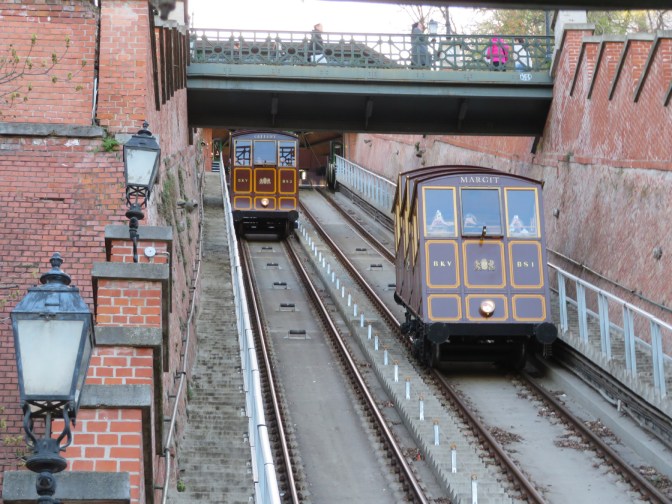
Why walk up to Buda Castle, when one can glide up by funicular? Because it costs £9 a ticket, that’s why. But we still did it as the queue was short, and it was mildly fun. The funicular was also bombed during the war and only rebuilt in the 1980s, following consideration of its replacement with escalators – a narrow escape. I’ve also enjoyed funiculars in Lisbon, Istanbul, Hong Kong, Cape Town and Kyiv, amongst others.
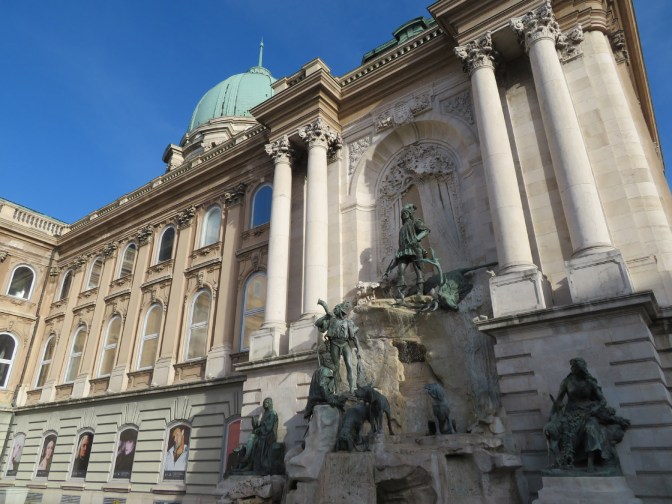
Within the grounds of Buda Castle is Matthias Fountain, built into the side of the castle itself, not unlike Rome’s Trevi Fountain but on a smaller scale. Matthias was king of Hungary until 1490, although the fountain is much more recent (1904) and miraculously survived the war almost unscathed.
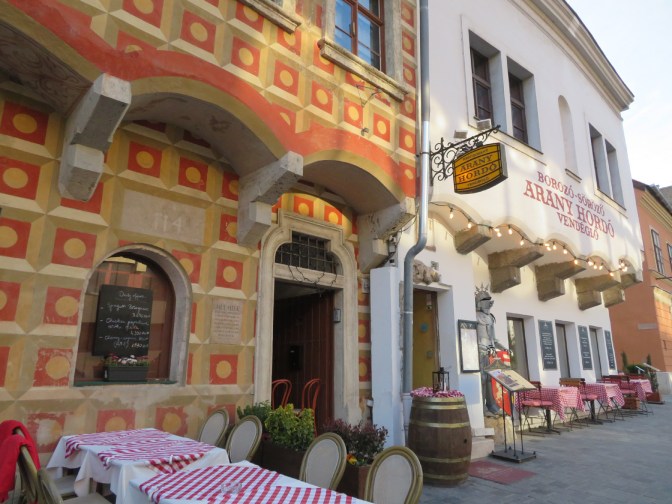
Heading up through the Castle Quarter we spotted these charmingly welcoming restaurants, but as it wasn’t yet tea time, we pressed on.
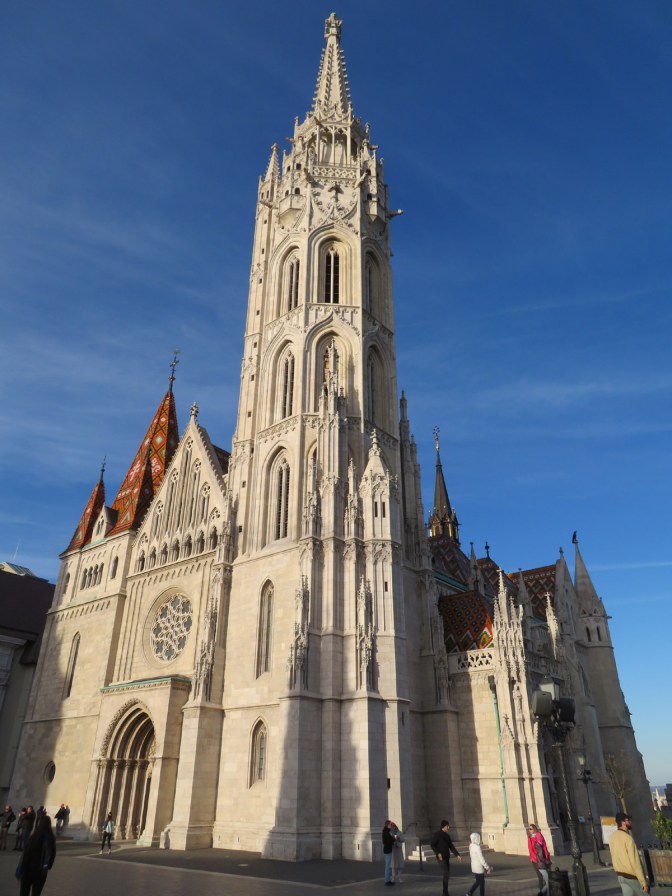
The Church of Our Lady of Buda Castle, or Matthias Church, crowns the hilltop to the north of the castle and dates back to the 13th century in its current form, but has been extensively renovated and restored since the war.
The view from Fisherman’s Bastion back down towards the Danube, with its distinctive pinnacled turrets. It’s one of Budapest’s most popular sights, and I had to wait a while to get this photo with the Insta-posers at least in the middle distance.

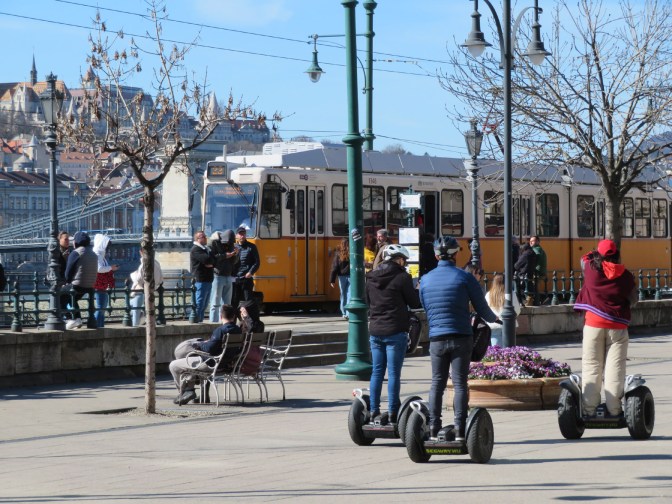
Stepping outside of our hotel the next morning, with one of the communist-era trams passing by a decidedly-capitalist Segway tour. The tram network is extensive, and although it was reduced in the 1970s, its fortunes have since reversed and it has had many extensions in recent years.
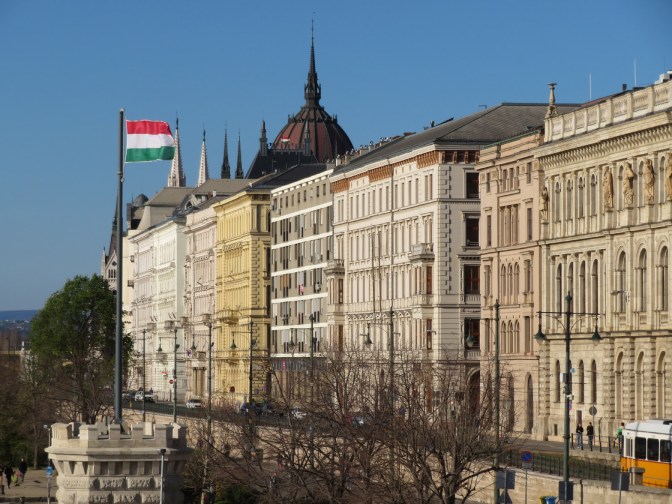
Looking upriver from Chain Bridge at examples of typical Budapest street architecture, together with the national flag.
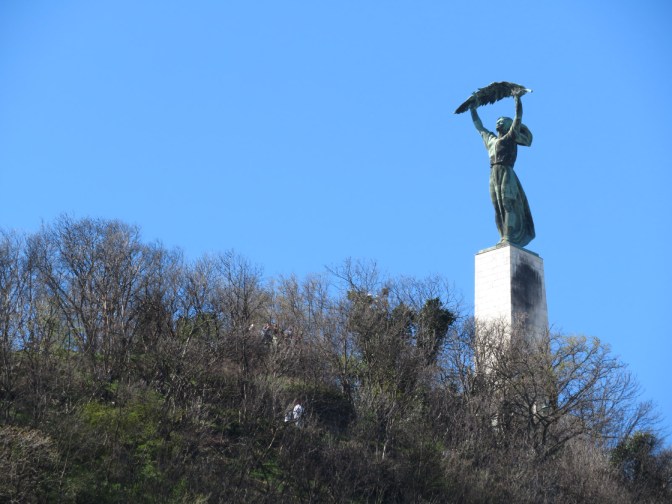
Budapest’s Liberty Statue may not be on the scale of its namesake in New York, but strikes a commanding pose atop Gellért Hill. Somewhat ironically, it was erected in 1947 to commemorate the city’s recent liberation by the Soviets, leading to severe restrictions of liberties all round. It has since been repurposed to the memory of all those who made the ultimate sacrifice for freedom.
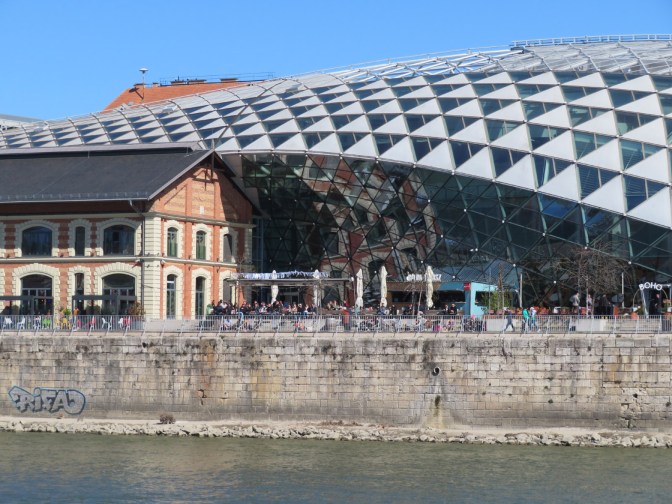
A cruise up the Danube took us past several more interesting sights, including the Bálna conference centre, built to resemble a modern architecture whale atop restored warehouses.
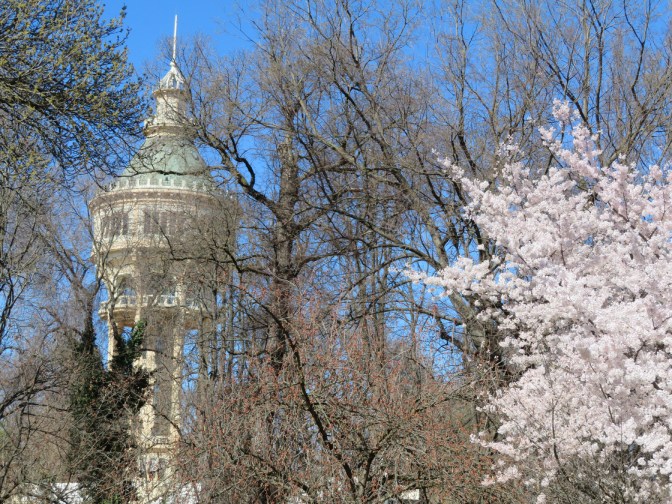
Our boat tour took us to Margaret Island, one of the most popular parks in the city, recognisable by this distinctive water tower in the centre. We rented a pedal rickshaw and spent a pleasant hour exploring in the spring sunshine.
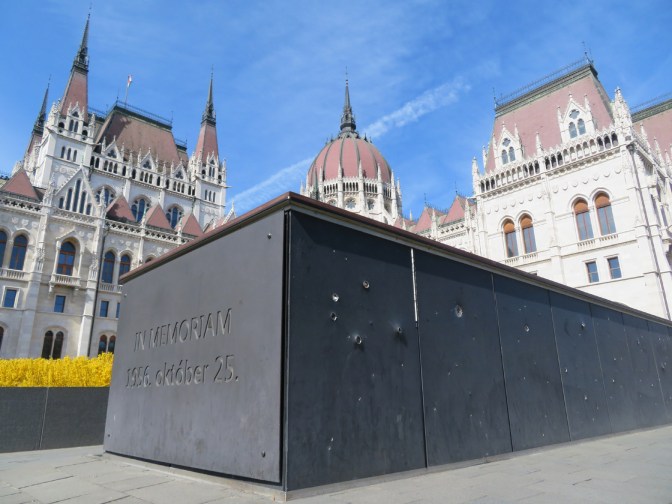
At the front of the Parliament building is the underground museum to the Hungarian Revolution of 1956, the uprising against the Soviets which almost succeeded before being crushed with the loss of several thousand lives. This is the entranceway although I’m uncertain whether the bullet holes are historical.
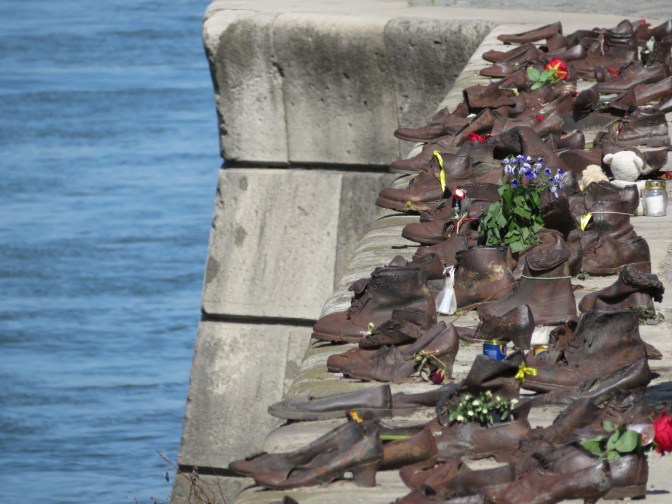
Shoes on the Danube Bank memorialises the thousands of people, many of whom were Jewish, who were forced to remove their shoes before being shot and falling into the water during the late stages of the Second World War. It is just south of the Parliament building.
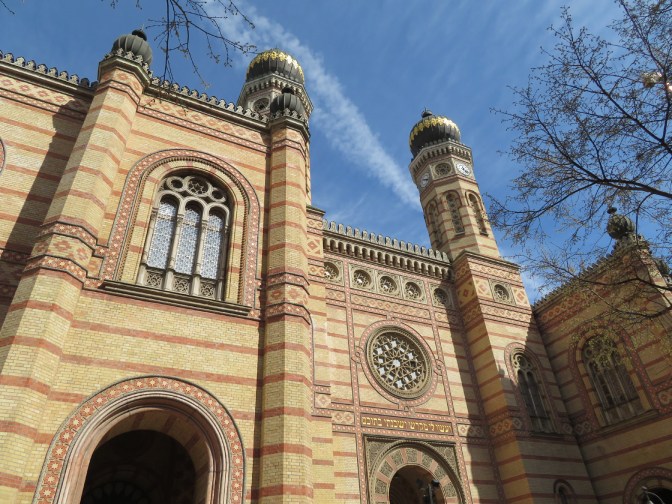
Budapest’s Dohány Street Synagogue is the largest in Europe and was completed in a Moorish style in 1859. It sits at the edge of the city’s Jewish Quarter which we wandered through, and was in varying states of restoration.
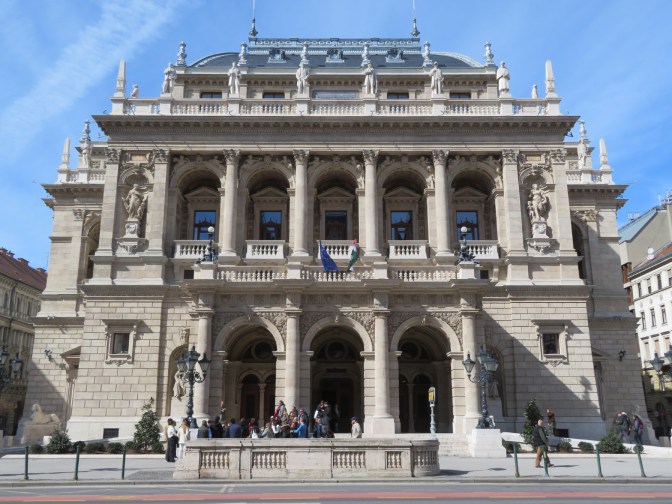
The Hungarian State Opera House presents another grand form not far from Saint Stephen’s Basilica, and was built at the time of the Austro-Hungarian Empire, opening in 1884.
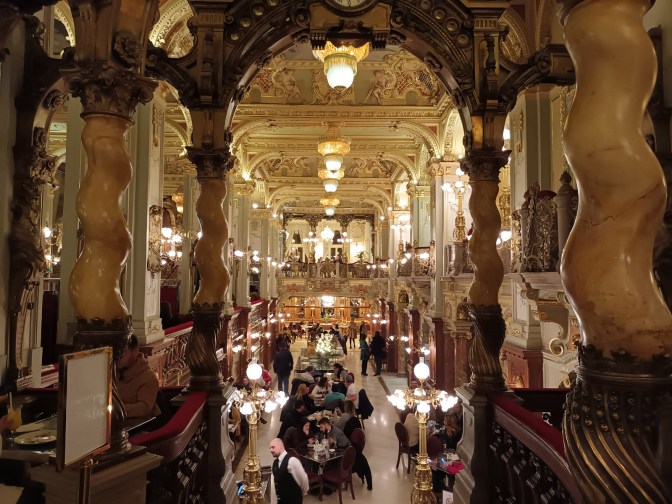
Another Hungarian institution, the New York Café at the Anantara New York Palace Hotel is the place to go for fancy cakes and tea, so we did. The building was originally a branch of the New York Life Insurance Company, hence the continued American connection. During communism, it was renamed the Hungaria Café, naturally.
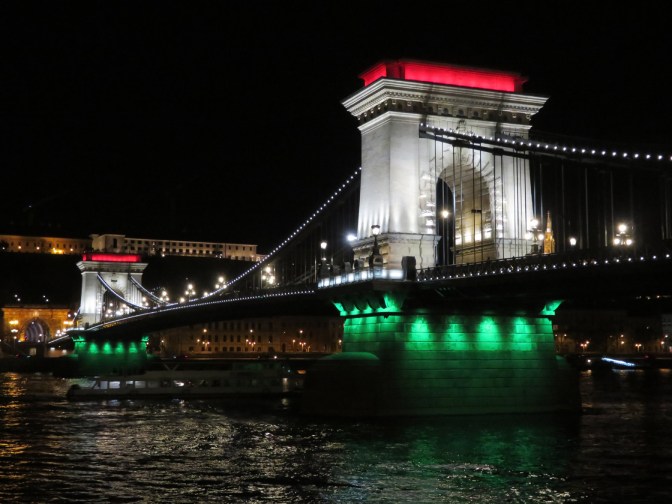
A final view of Chain Bridge as we wandered back to our hotel, lit up in the national colours. We also enjoyed the view from the nearby Marriott rooftop bar, although my photos from that vantage point were not as good.
Created 2025
 SnapHappyRoss
Leave a comment