Củ Chi and Cao Đài Holy See
Infamous tunnel network under Vietnam, plus the centre of one of the world’s newest religions
Cu Chi District lies to the northwest of Ho Chi Minh City, and is most famous for the network of tunnels that runs beneath it, used by the Viet Cong during the American–Vietnam war. Many hundreds of miles of tunnels were carved out by the VC, and they were an instrumental strategy in determining the final outcome of the war, despite the grim conditions for the residents. The tunnels were rigged with traps and vents to variously stymie the progress of American GIs, and release smoke from cooking or gas attacks. The section at Cu Chi has been somewhat sanitised and converted into a tourist attraction, a key stopping point on the backpacker trail, not least for the opportunity to offload some surplus ammunition with a variety of machine guns at the shooting range.
I visited two separate sections of the tunnels several times which have been adapted for tourists, and each time I told myself I wouldn’t go back down inside the tunnels, yet still I did – a glutton for punishment. Although enlarged for tourists, the tunnels are still small and claustrophobic – I found that it was easier to crawl than shuffle, and with the number of dark passageways leading off into oblivion, I wonder how many tourists have to be rescued each year. On my first visit, we also went to the Tay Ninh Holy See, the centre of Caodaism, one of the world’s newest religions.
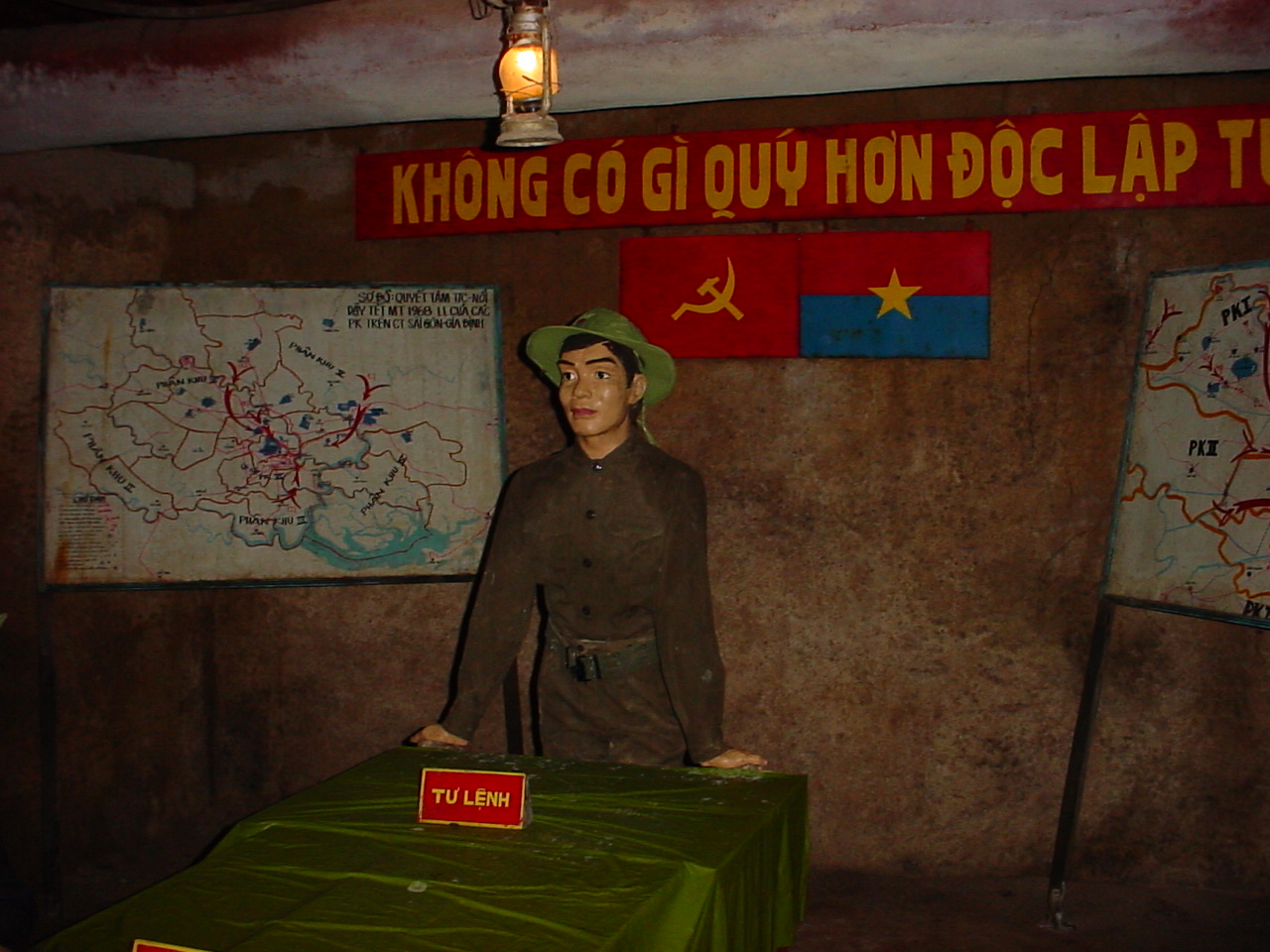
Inside one of the military strategy rooms just beneath ground level. The text on the wall translates as ‘nothing is more precious than independence and freedom’. I had crawled through around sixty metres of tunnel to reach this room, mostly shallow level at around three metres below grade. There are two further levels below, down beyond ten metres to exceed the range of B-52 bombing raids.
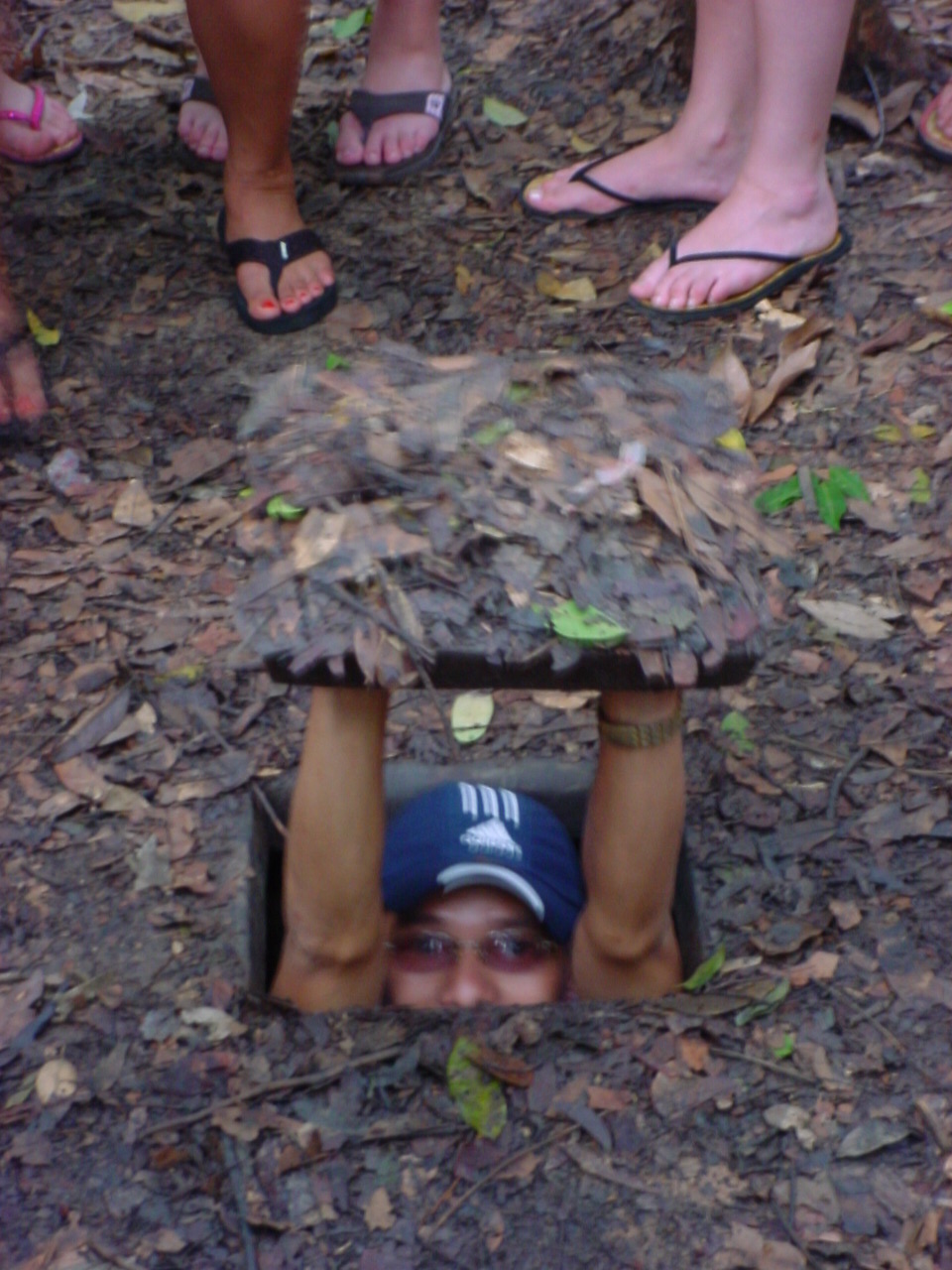
A guide demonstrates entry to the tunnels by a standard hatch – hidden in the forest floor and too small for a GI to enter, but perfect for the lighter VC. I had a shot at getting in, and got stuck at my chest. At least it wasn’t my waist.
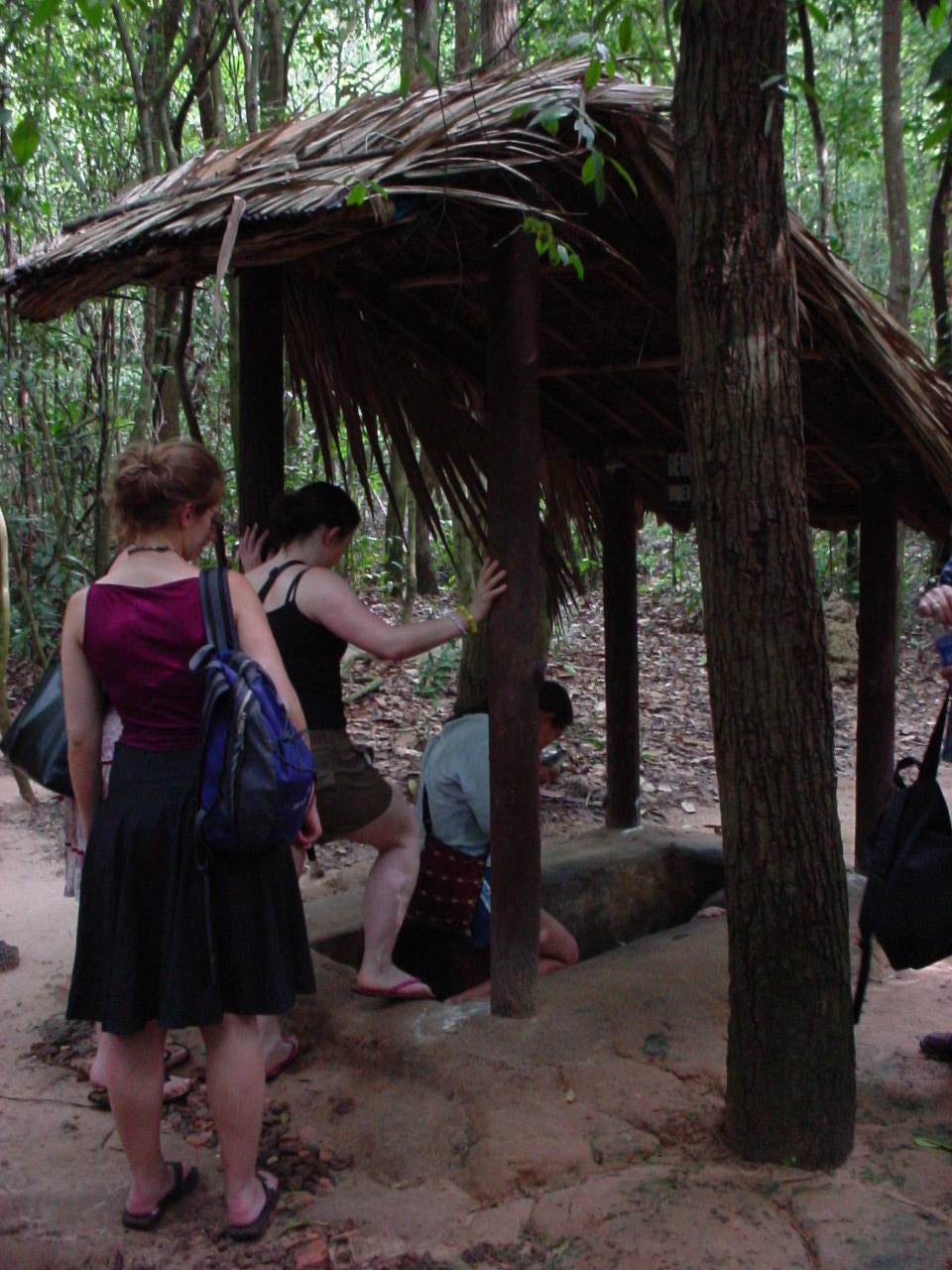
A more reliable form of entry for today’s well-fed tourist is this stairway, which was much more civilised.
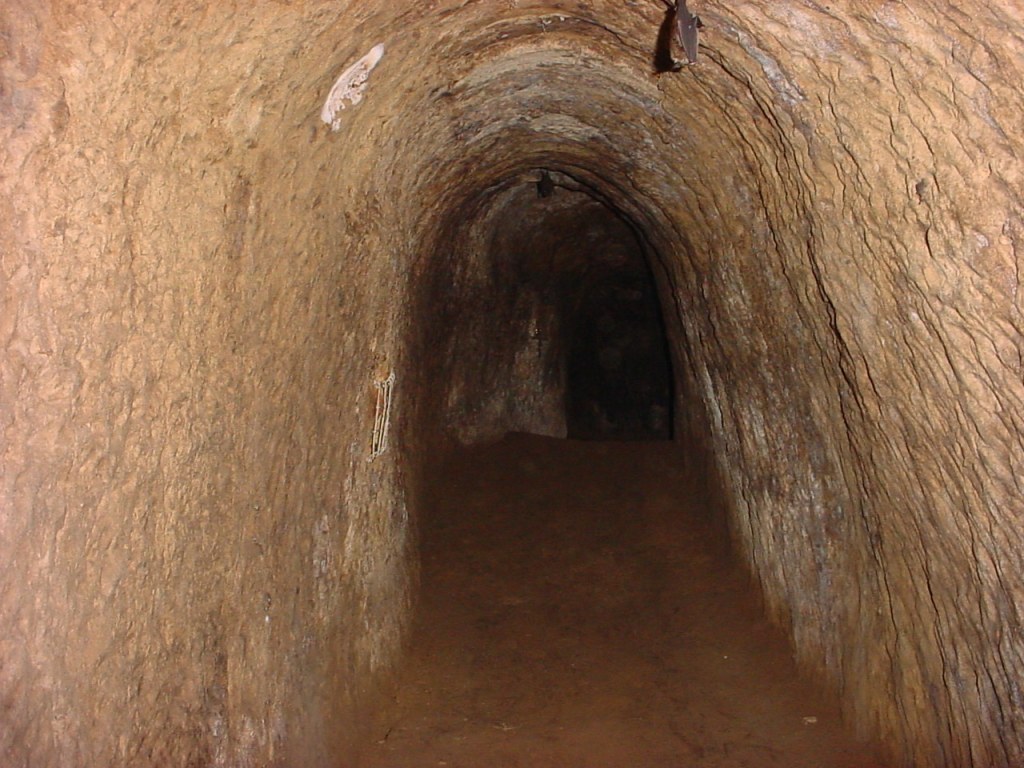
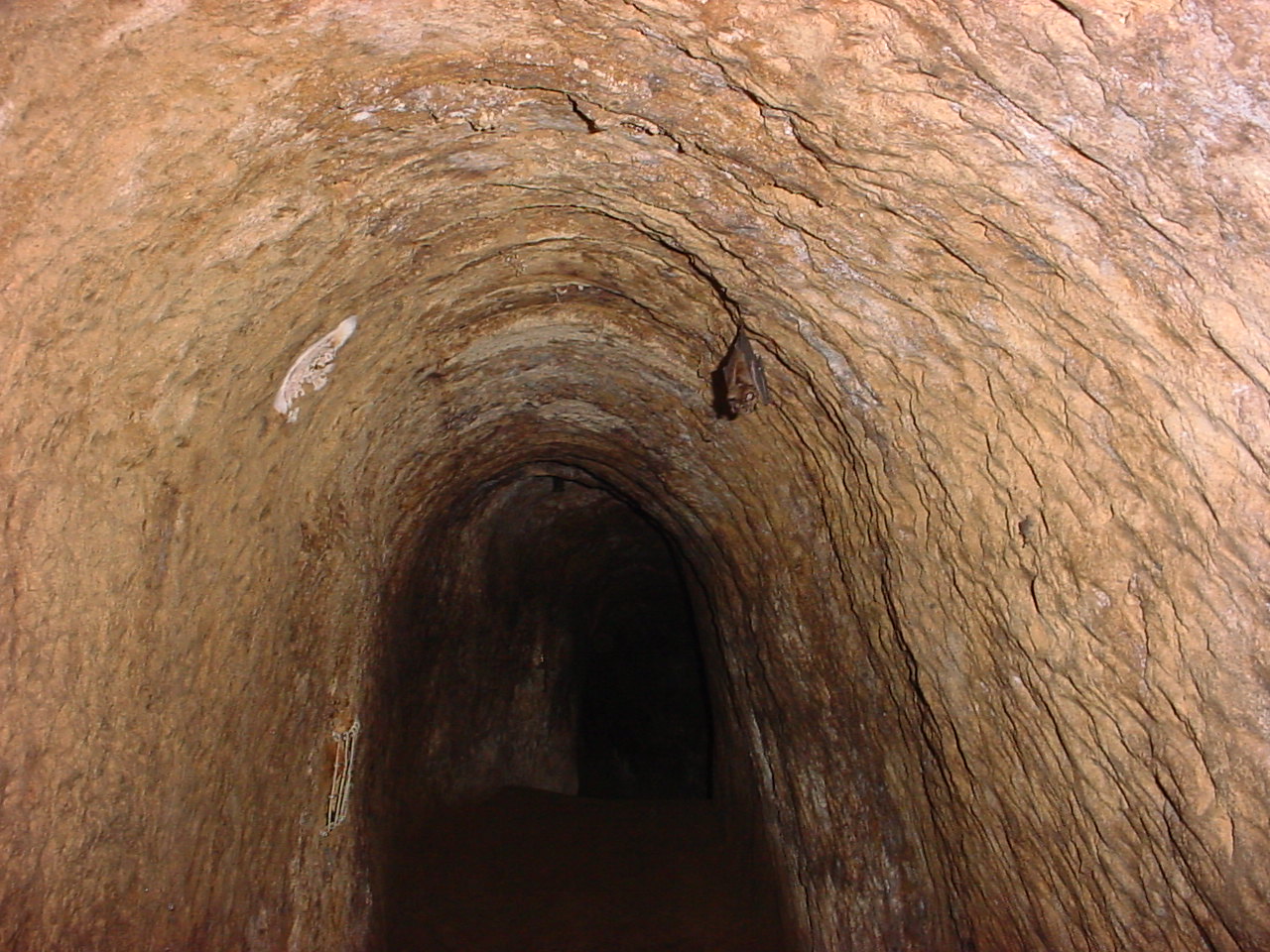
Inside one of the passageways. They were about as wide as my shoulders and perhaps three feet high, it was possible to squat and shuffle along but easier just to crawl. It was even hotter down here than the 30 Celsius on the surface, and when you have a portly tourist in front of you and another behind, you’d better not be claustrophobic, entombed in the rock. Spot the bat.
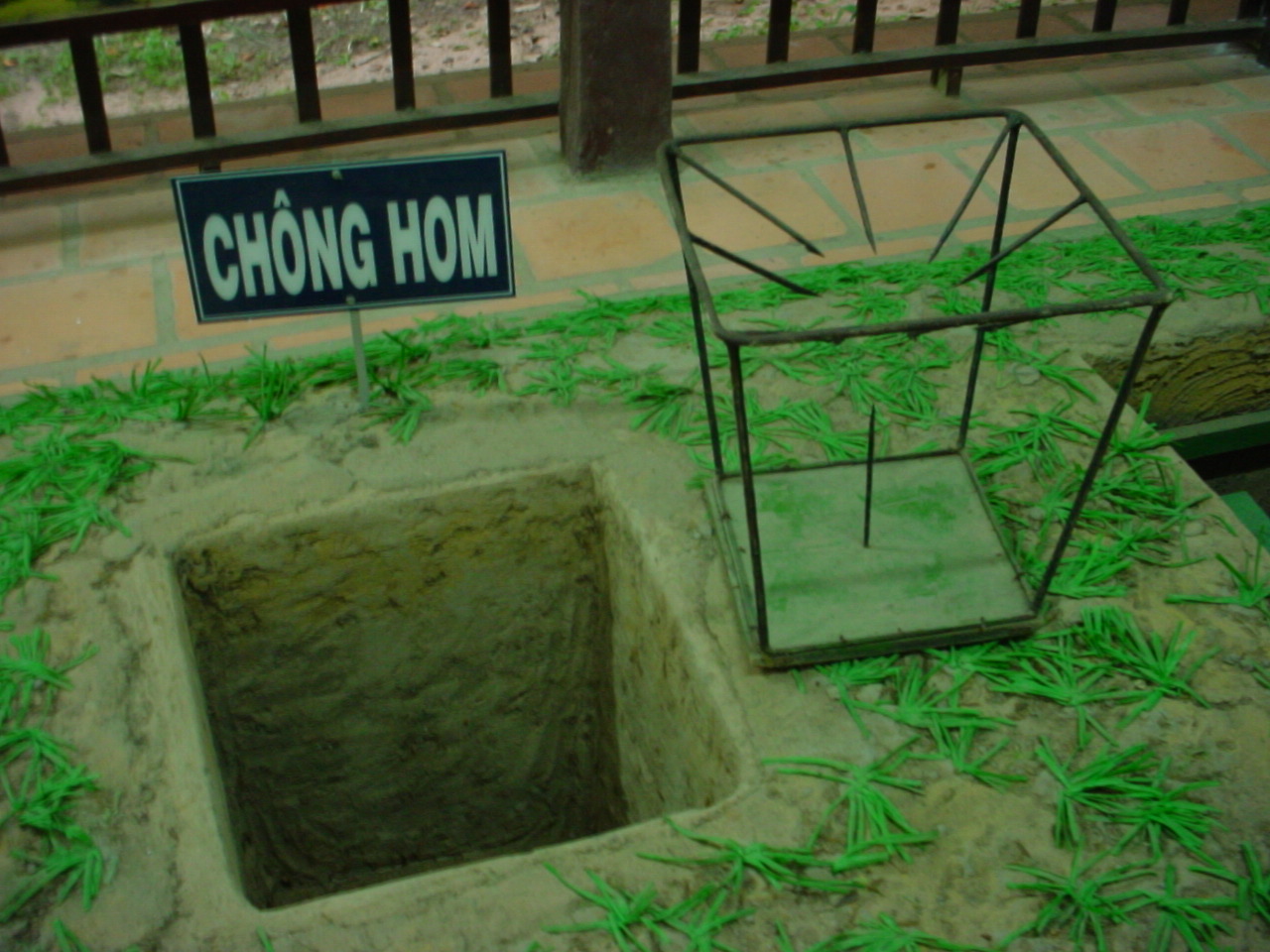
After squeezing along the tunnels, we were shown some of the traps the VC would set for the Americans – this stiff wire frame would be set in a cube-shaped pit and covered with leaves, when a GI stepped on it the diagonal spikes would guide his foot to the single vertical spike, and all are barbed to inhibit removal. Terrifying in its simplicity, ‘chông hom’ simply means ‘thorny’.
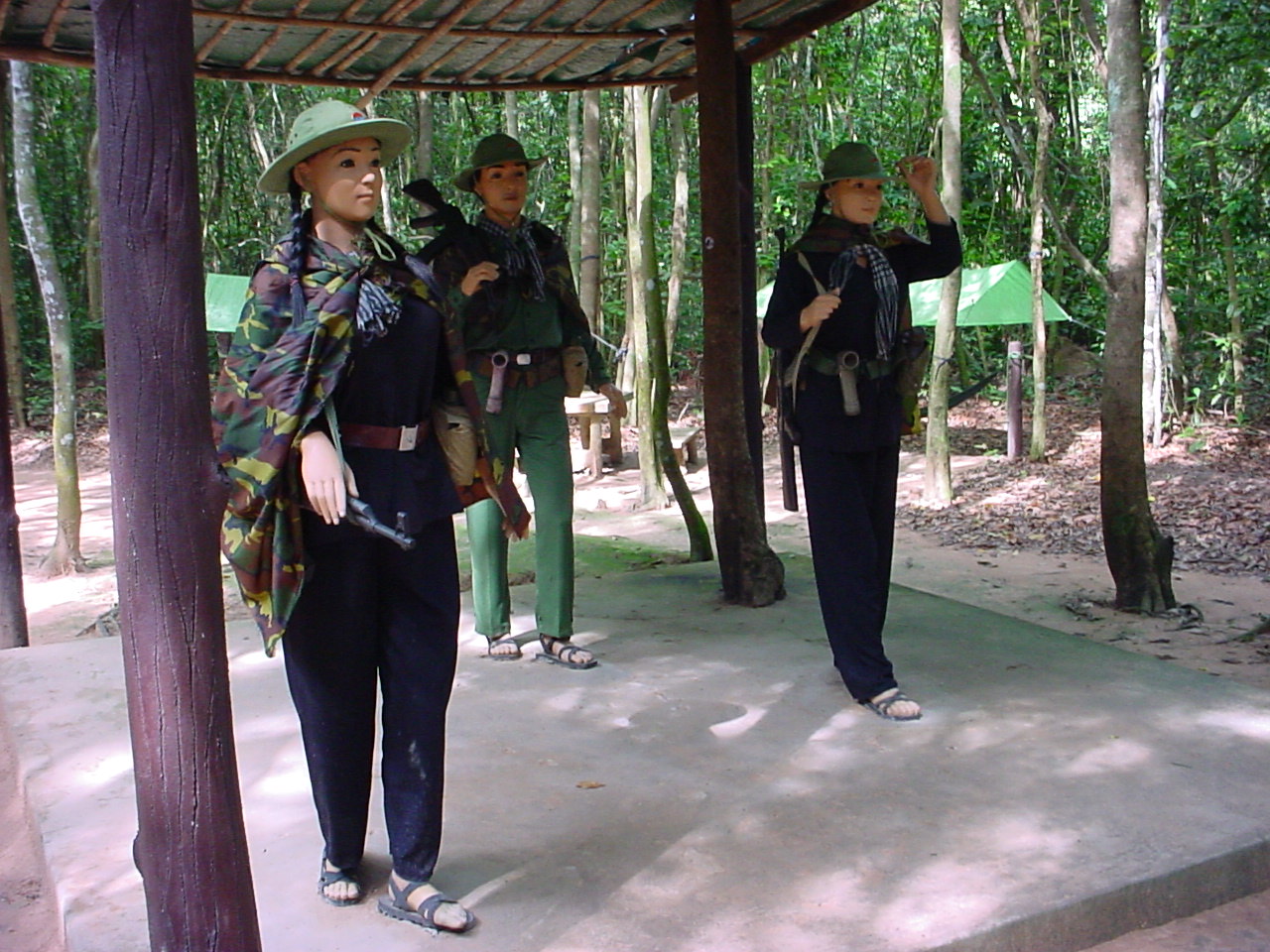
A display example of what the VC wore; their weapons and training were very basic compared to that of the Americans, but this was more than compensated for by their ingenuity and tenacity.
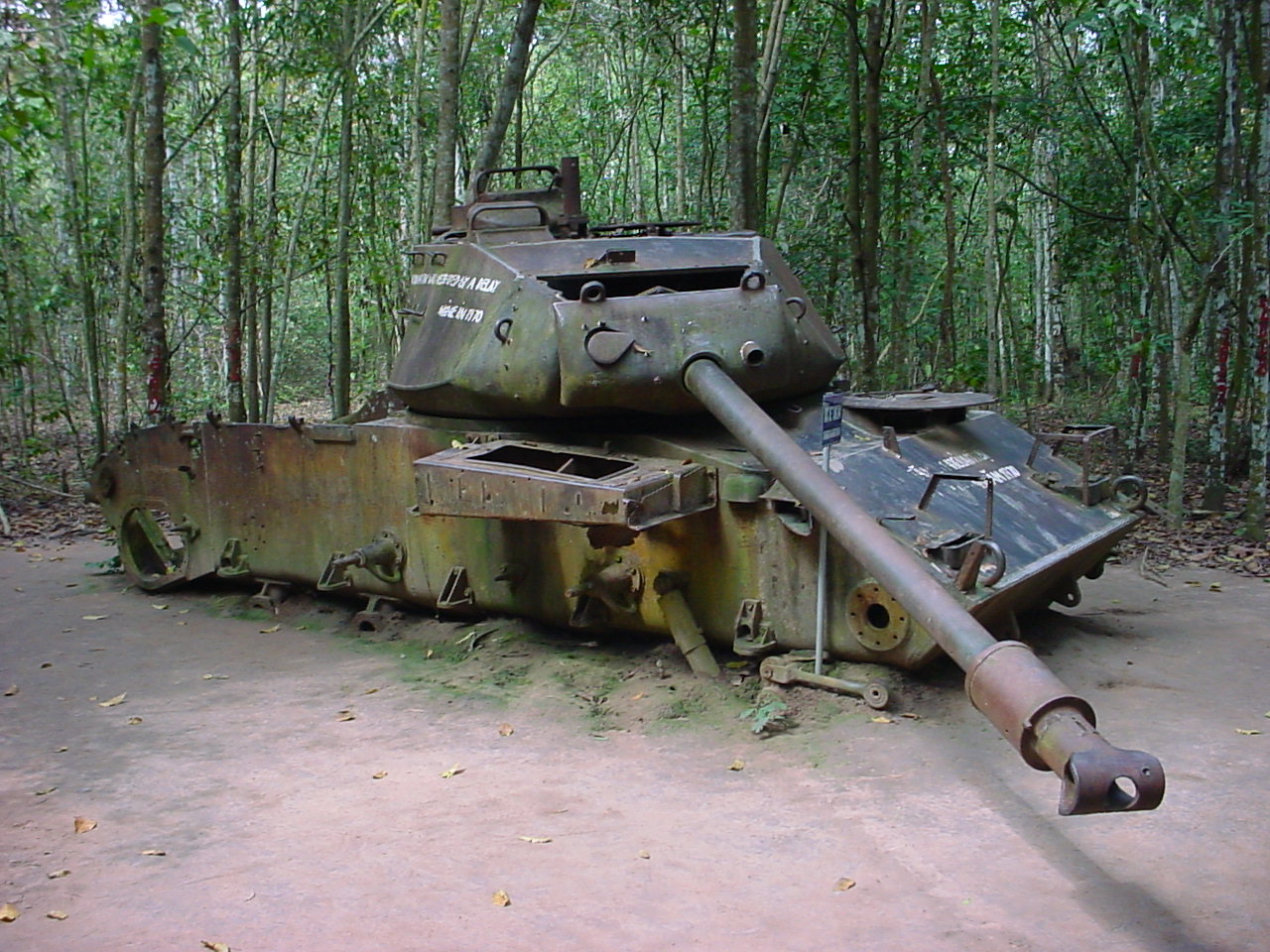
The ruins of an American M41 Bulldog tank sit where it met its end several decades prior. Since I took this photo, the tank has been cleaned up, mounted on a plinth and set under a canopy, quite disappointingly.
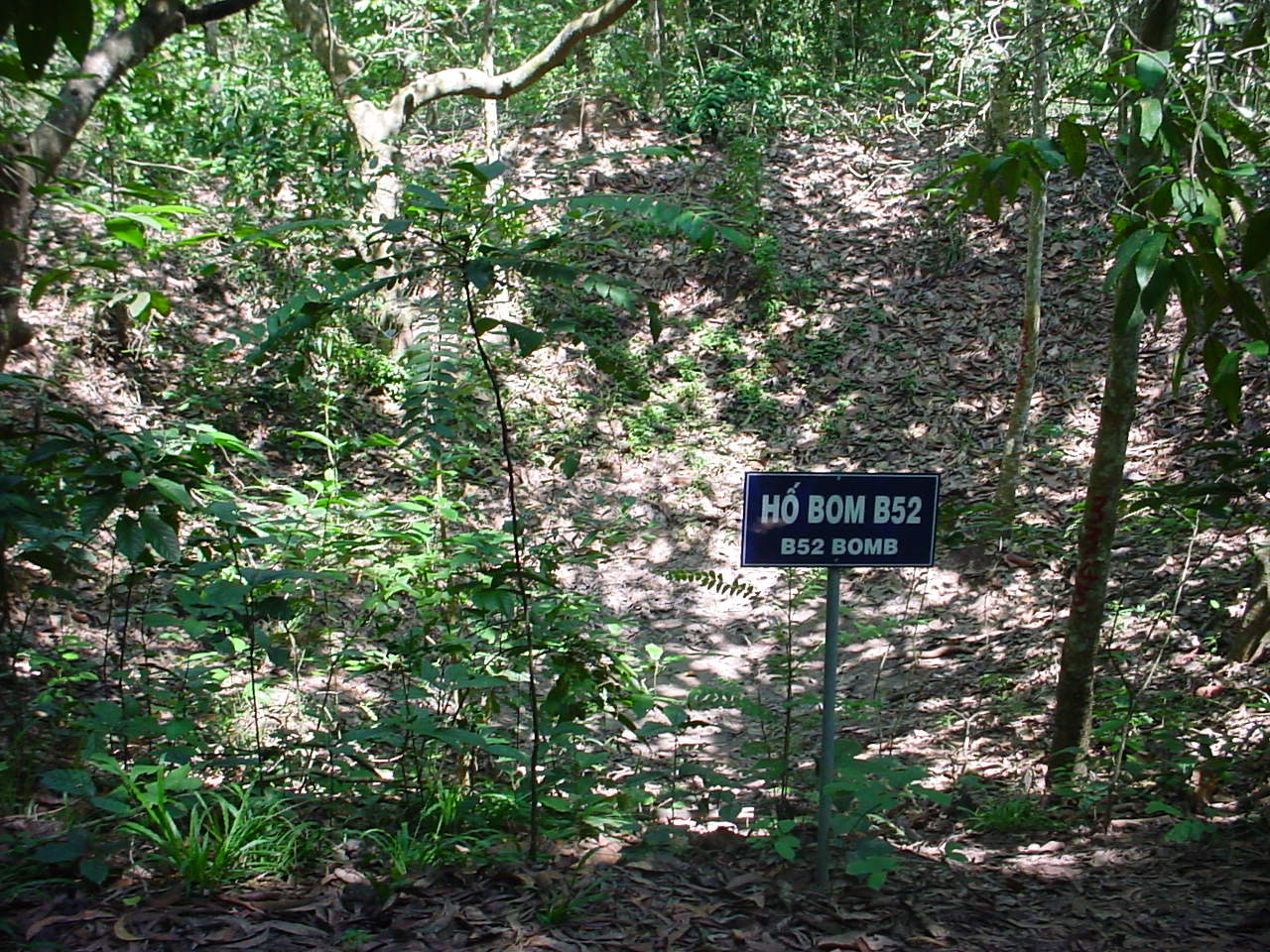
More bombs were dropped on Vietnam during the American war than across the whole world during the Second World War. The B-52 was capable of dropping the heaviest, and its marks remain today, with craters blasted up to ten metres deep. Not deep enough to reach all the tunnels, however.
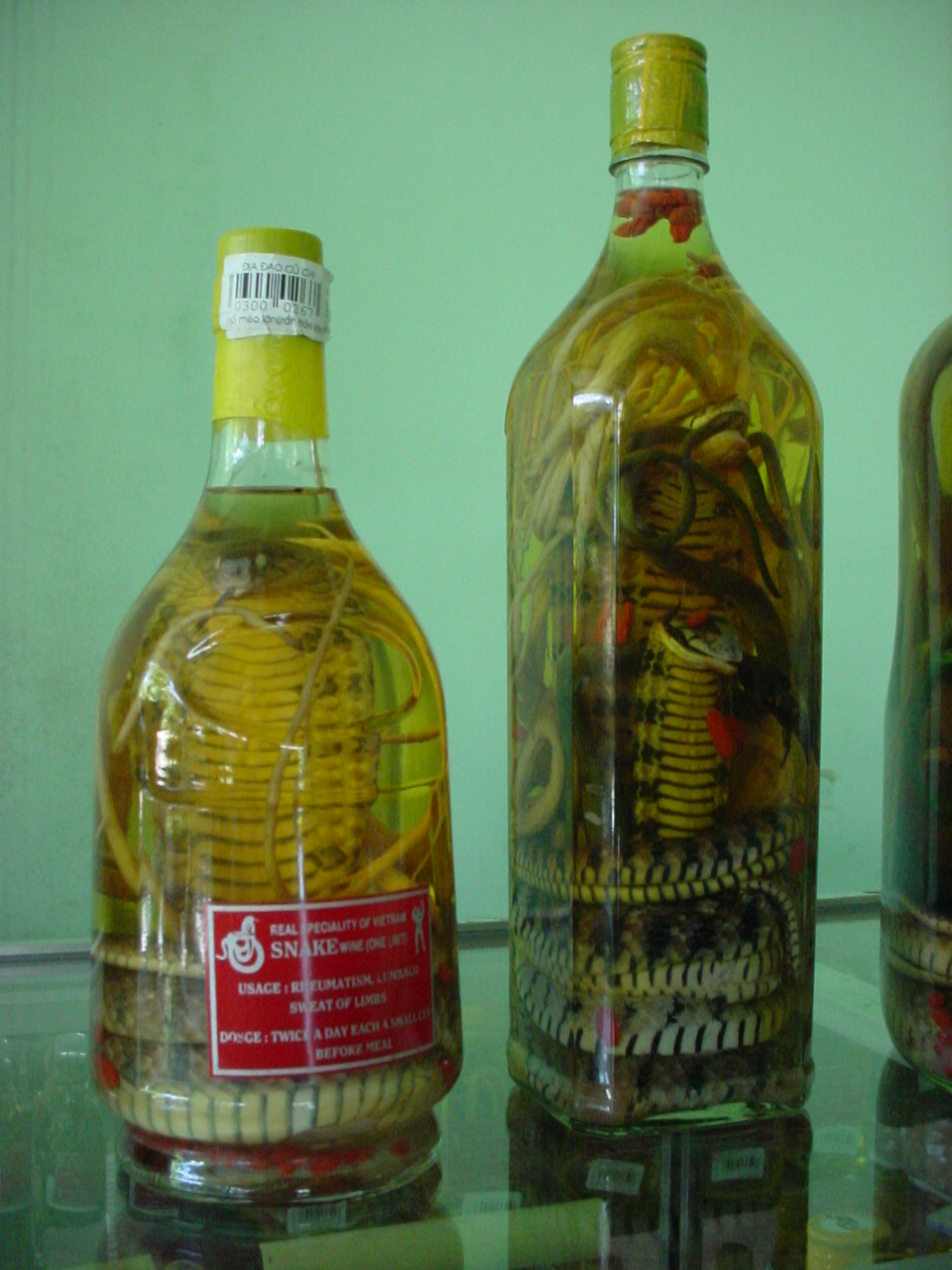
A traditional Vietnamese delicacy, or quite literally snake oil for the tourists. Either way, snake wine sold at the tunnels tastes just as unpleasant as it looks and sounds – one free sample was more than enough.
On to a more pleasant aspect of the area, the Great Divine Temple of Caodaism. This is the Holy See of the Cao Dai religion and is located in Tay Ninh, not far from Cu Chi. We visited both sites in a single day trip from HCMC, hence combining both on the same blog page.
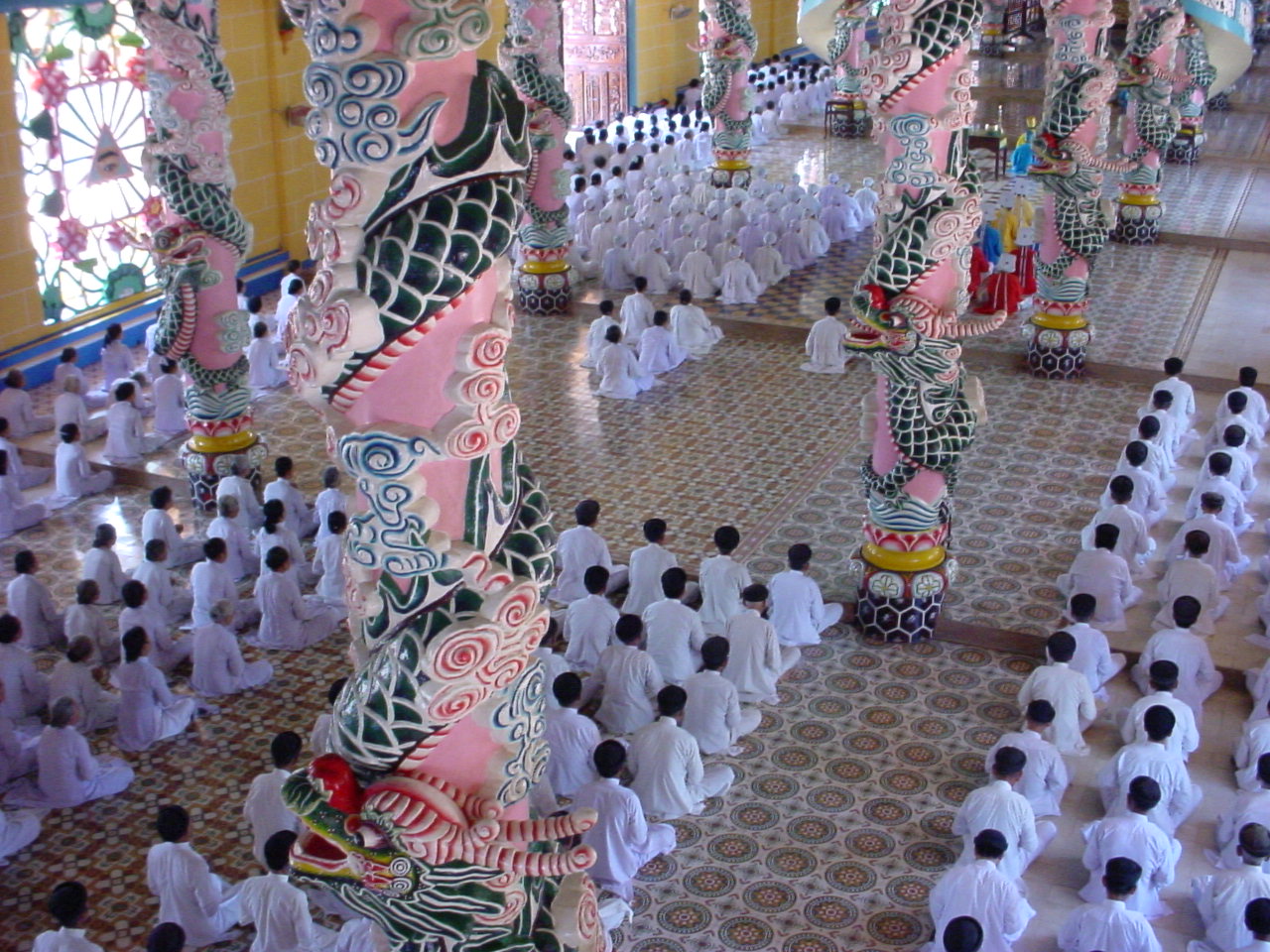
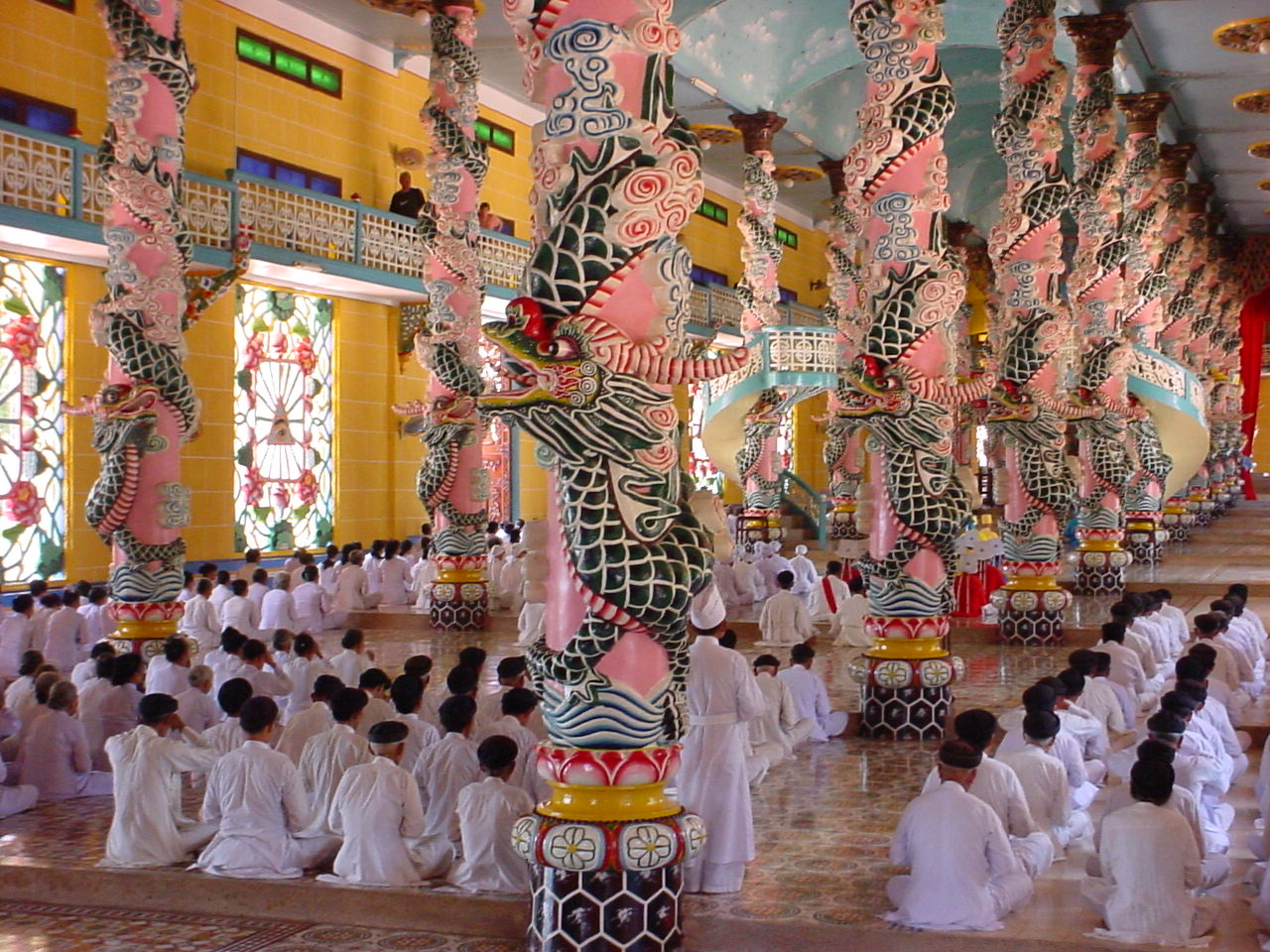
The interior of the temple is very colourful, in contrast to the worshippers who mostly dress in white. During a ceremony, tourists are permitted to wander the upper gallery. The temple was completed in 1947, and the religion of Caodaism itself was founded in 1926.
Caodaism combines aspects of several other systems of belief, including Buddhism, Catholicism, Taoism and Confucianism. There are around six million followers in Vietnam today.
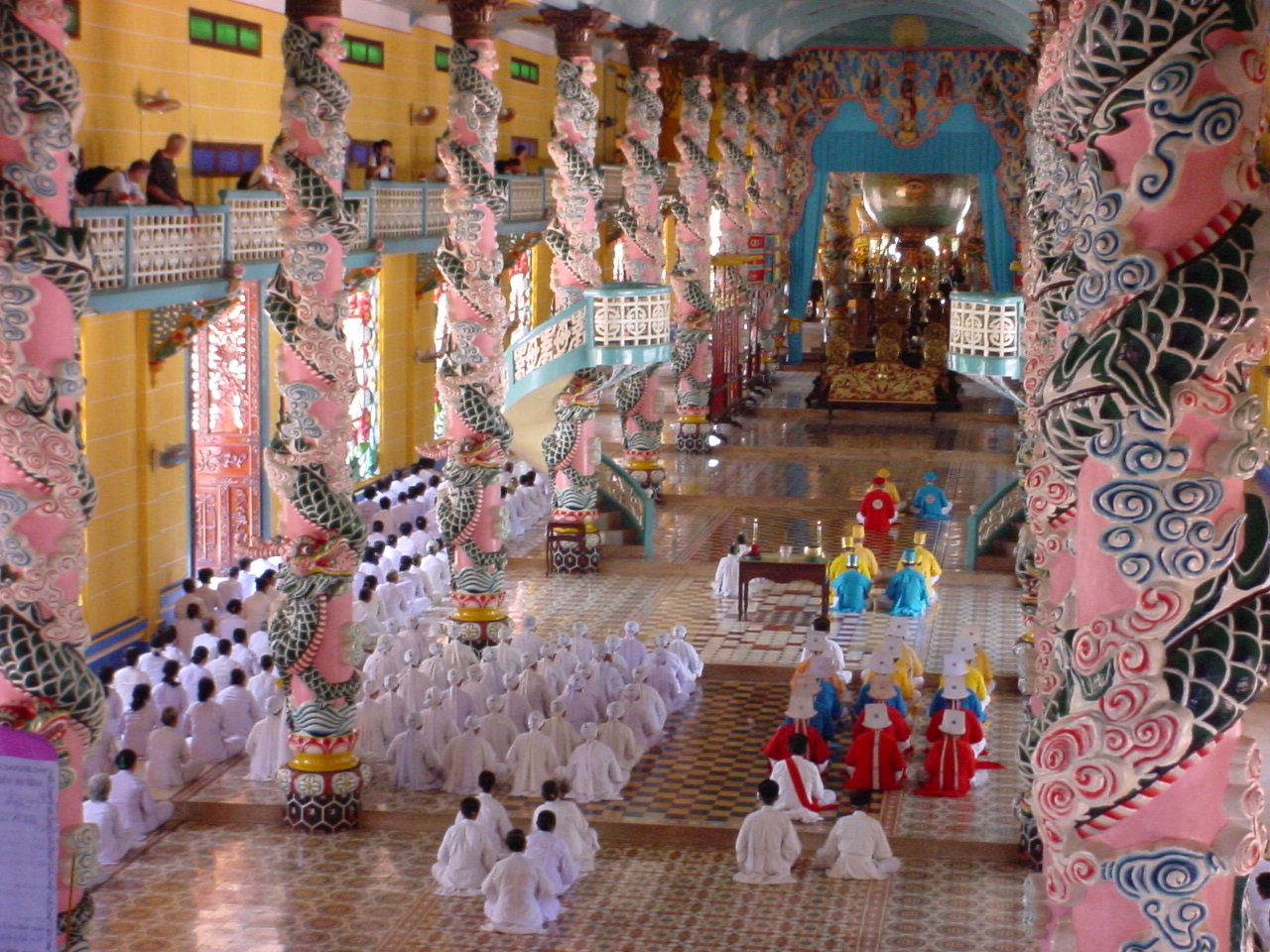
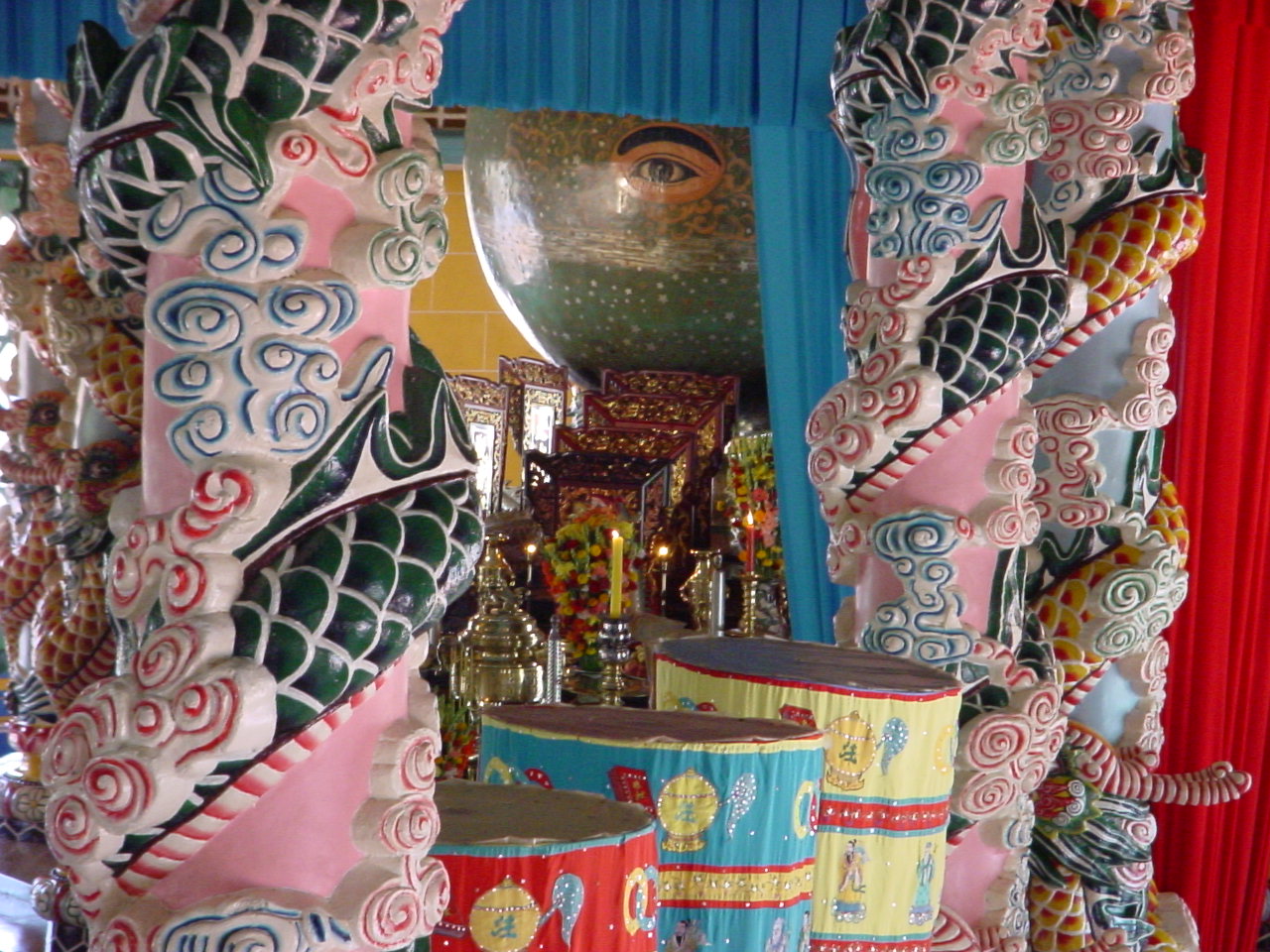
In Caodaism, the one God is represented by the Divine Eye, here painted on the Qian-Kun ball, watching over the ceremony.
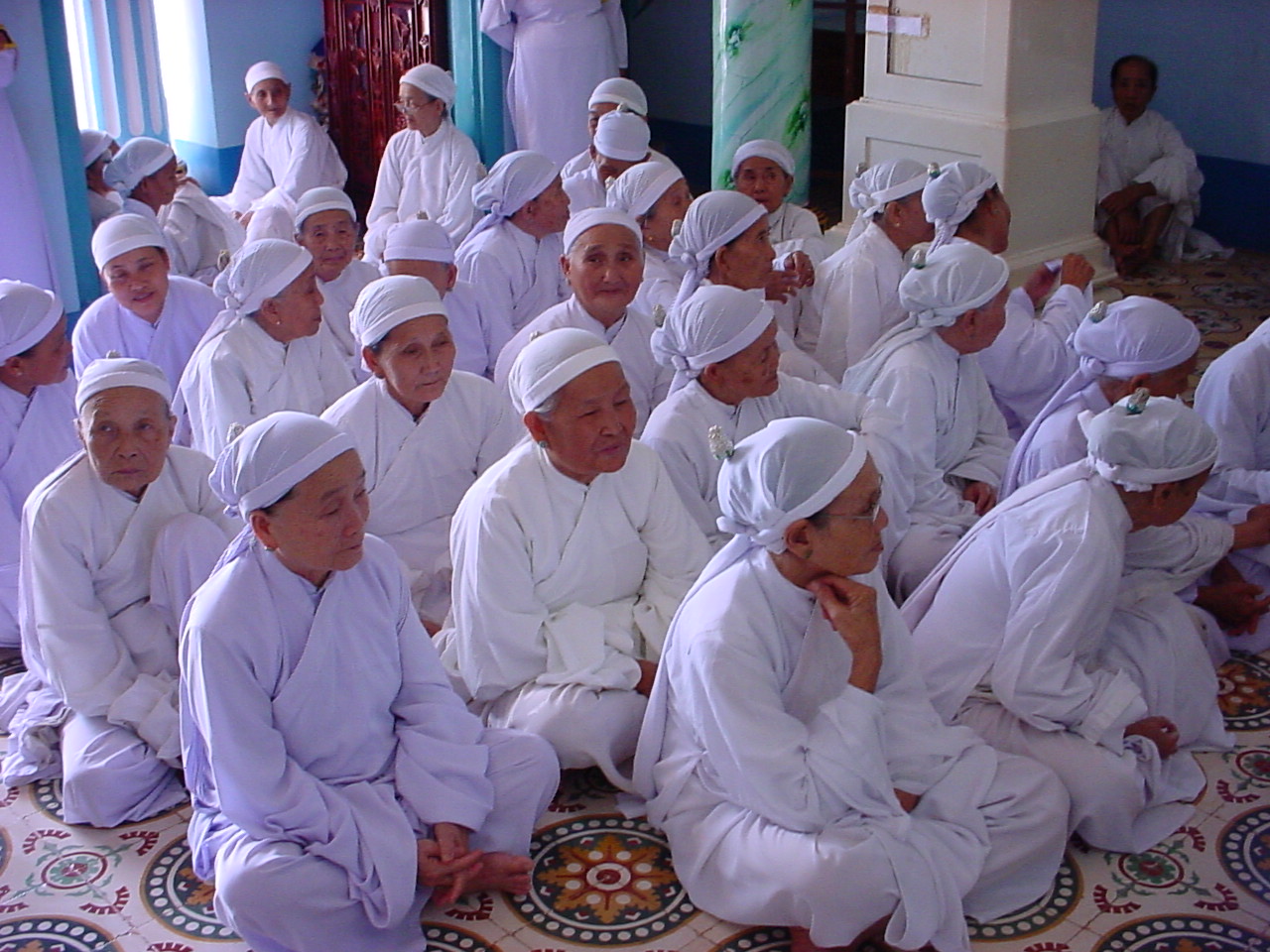
Some of the elderly female worshippers – men and women are segregated.
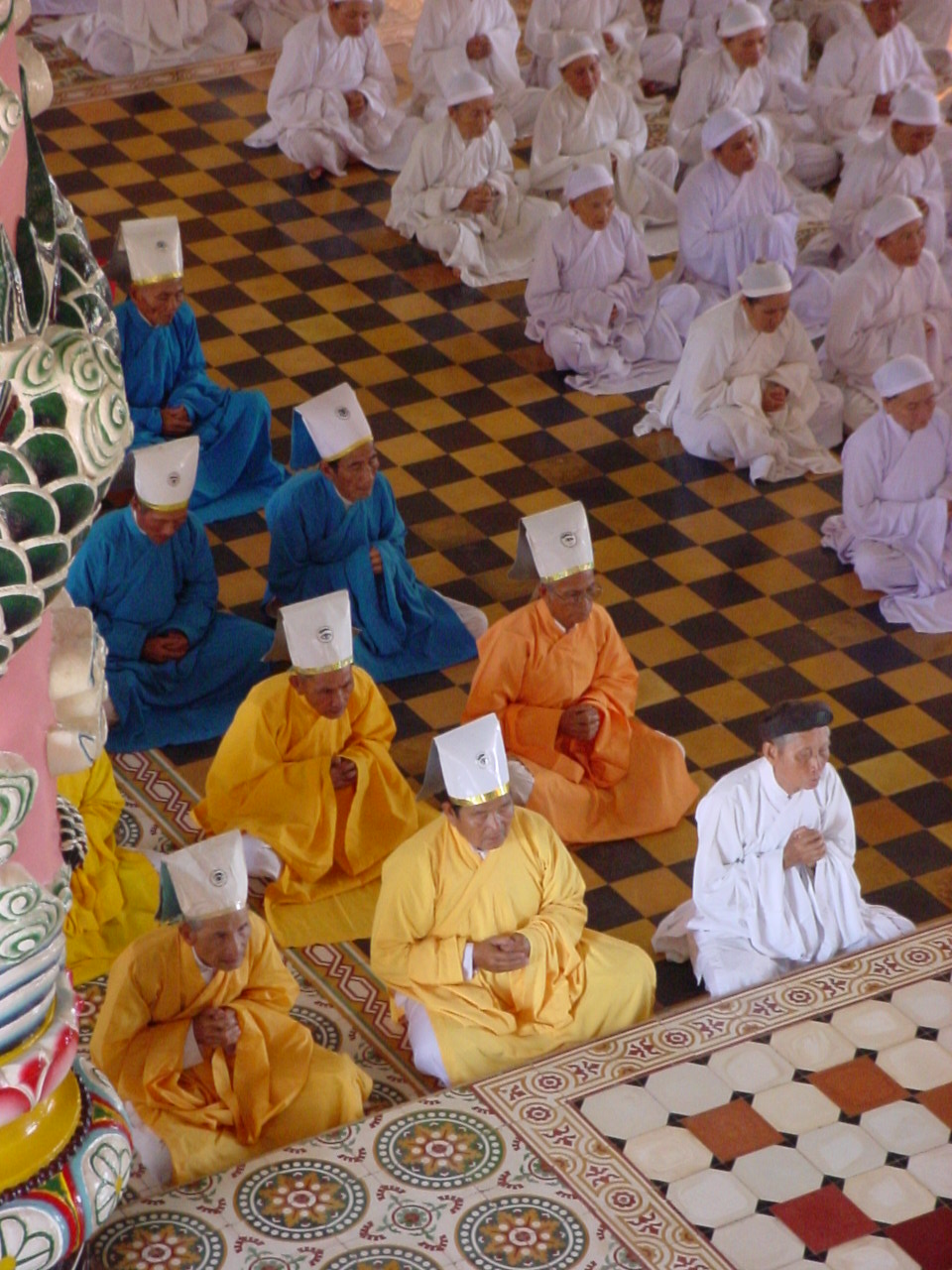
While the followers dress in white, the priests have a more colourful wardrobe denoting which of the three influencing religions they are allied to – yellow symbolises Buddhism, blue for Taoism and red for Confucianism. The Divine Eye on the headdress indicates the rank of bishop or cardinal.
The temple is nearly one hundred metres long, and features intricately-carved dragons adorning its pink interior columns. We spent around an hour quietly inside while the ceremony continued.
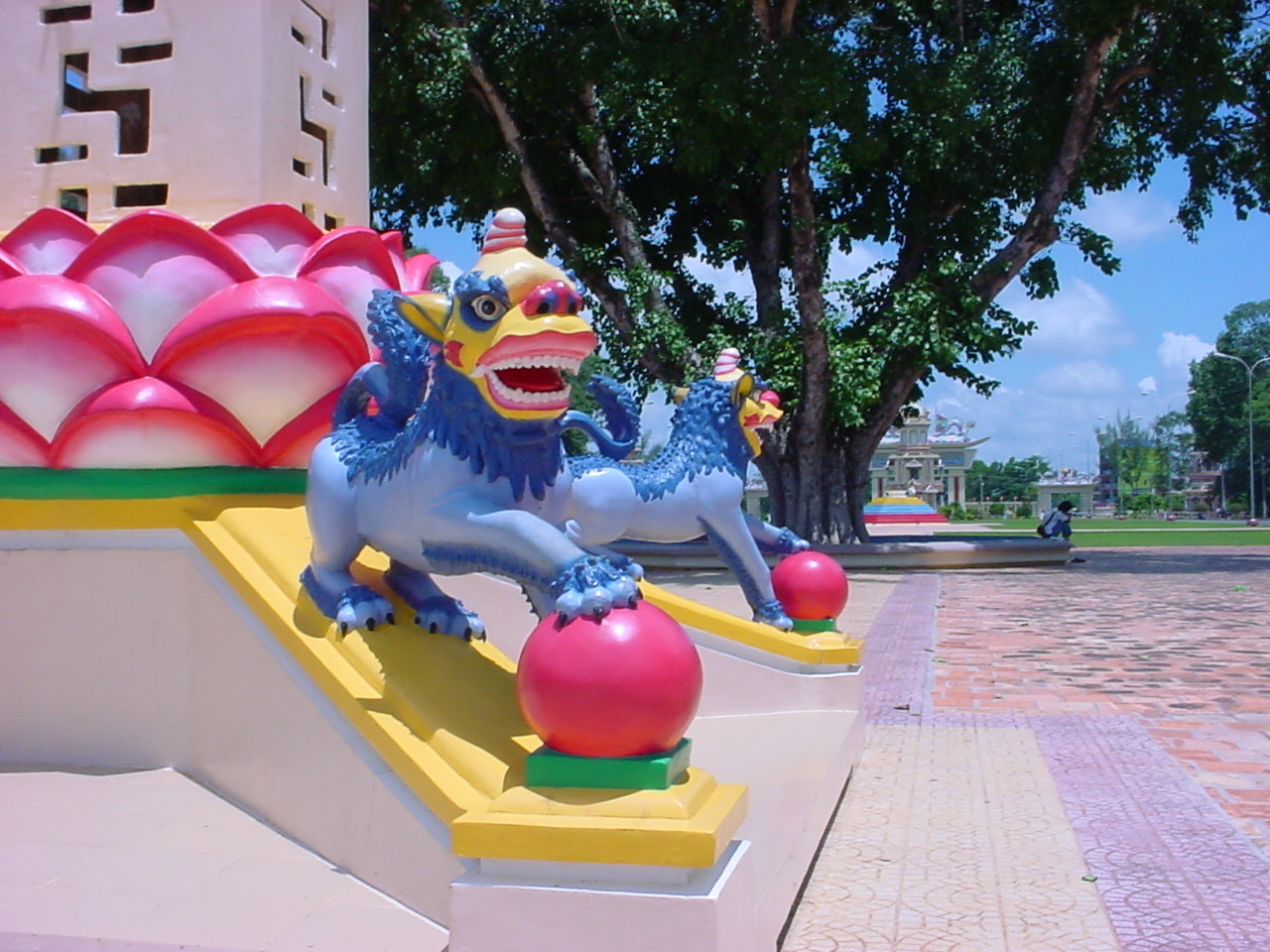
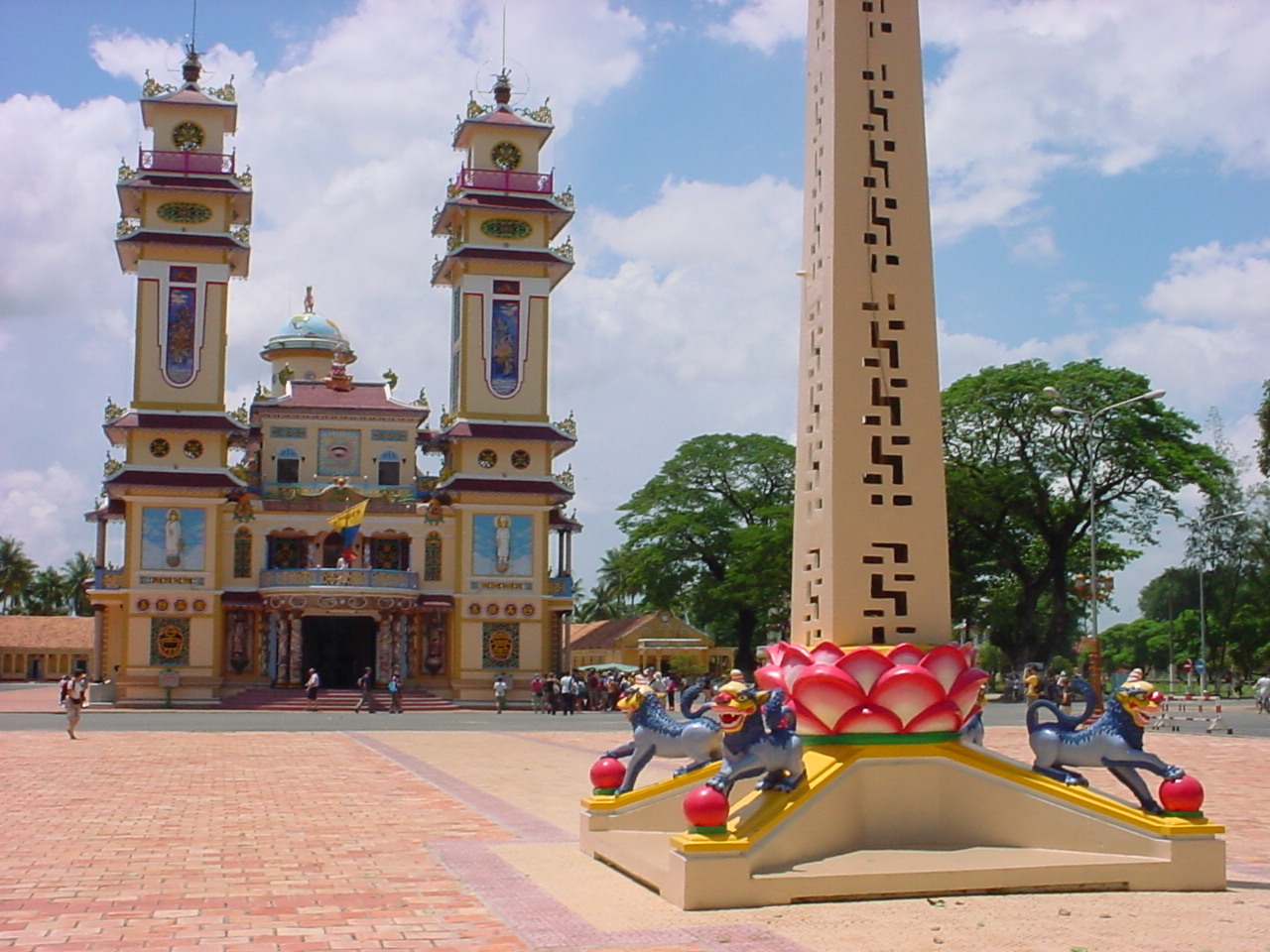
A very colourful image of the lion statues outside the temple, as spotted before we headed home.
Created 2006 | Updated 2026


Leave a Reply