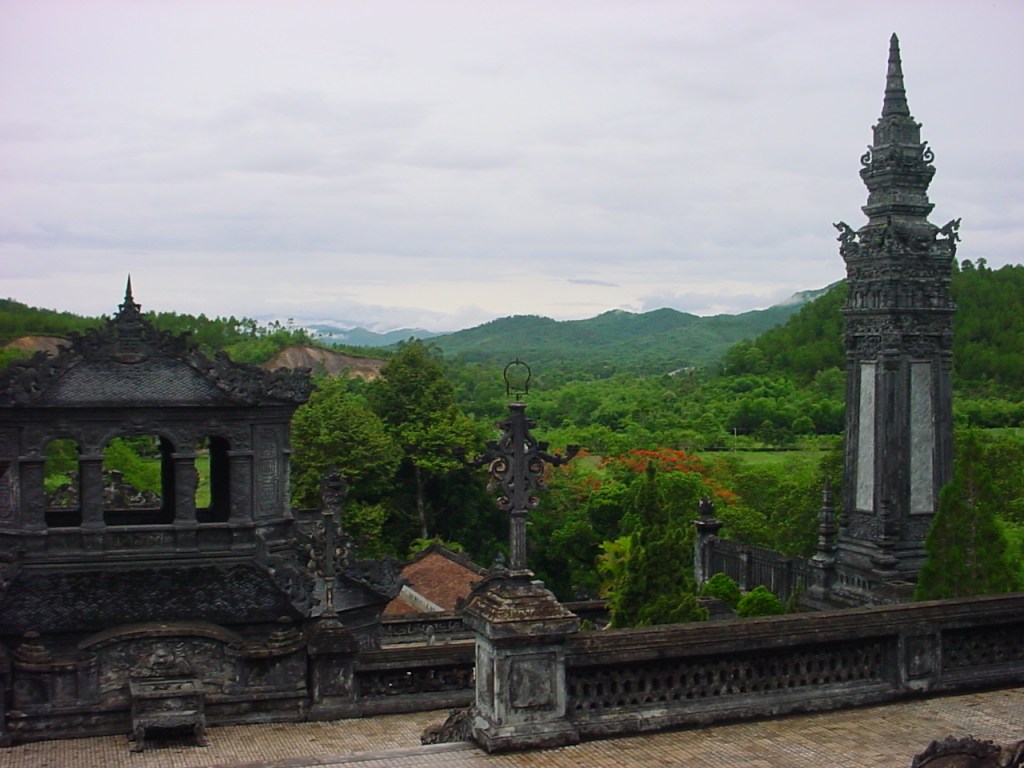
Huế
Ancient capital and centrally-located historical city
The ancient capital of the Champa Kingdom from the 2nd to the 7th century, Hue was also the capital of Vietnam during the Nguyen dynasty for nearly 150 years until 1945, towards the end of the French occupancy. Much of the city was trashed during the Vietnam-American war, particularly during the Tet offensive of 1968. Only recently has the cultural significance of the area been fully recognised, and efforts are underway to restore and maintain its heritage. The series of tombs of emperors long departed, plus the Imperial City, the Citadel and the Purple Forbidden City, together form a vast UNESCO World Heritage Site from the centre to the edges of the modern city.
I visited Hue as part of our family trip to central Vietnam in 2005, during which we also visited the nearby tourist town of Hoi An. Although we only had time to stay in the city for one night, we had a full day of wandering the temples and citadel with plenty of history and guided touring to keep us happy. The whole trip was organised through a travel agency in Ho Chi Minh City, from where we flew up to Da Nang for our visit to Hoi An, then travelled overland to Hue and flew back to HCMC from there. Several local guides were assigned to point us towards the places of interest, and although the sky is cloudy in all of these photos, it was hot and humid the whole time.
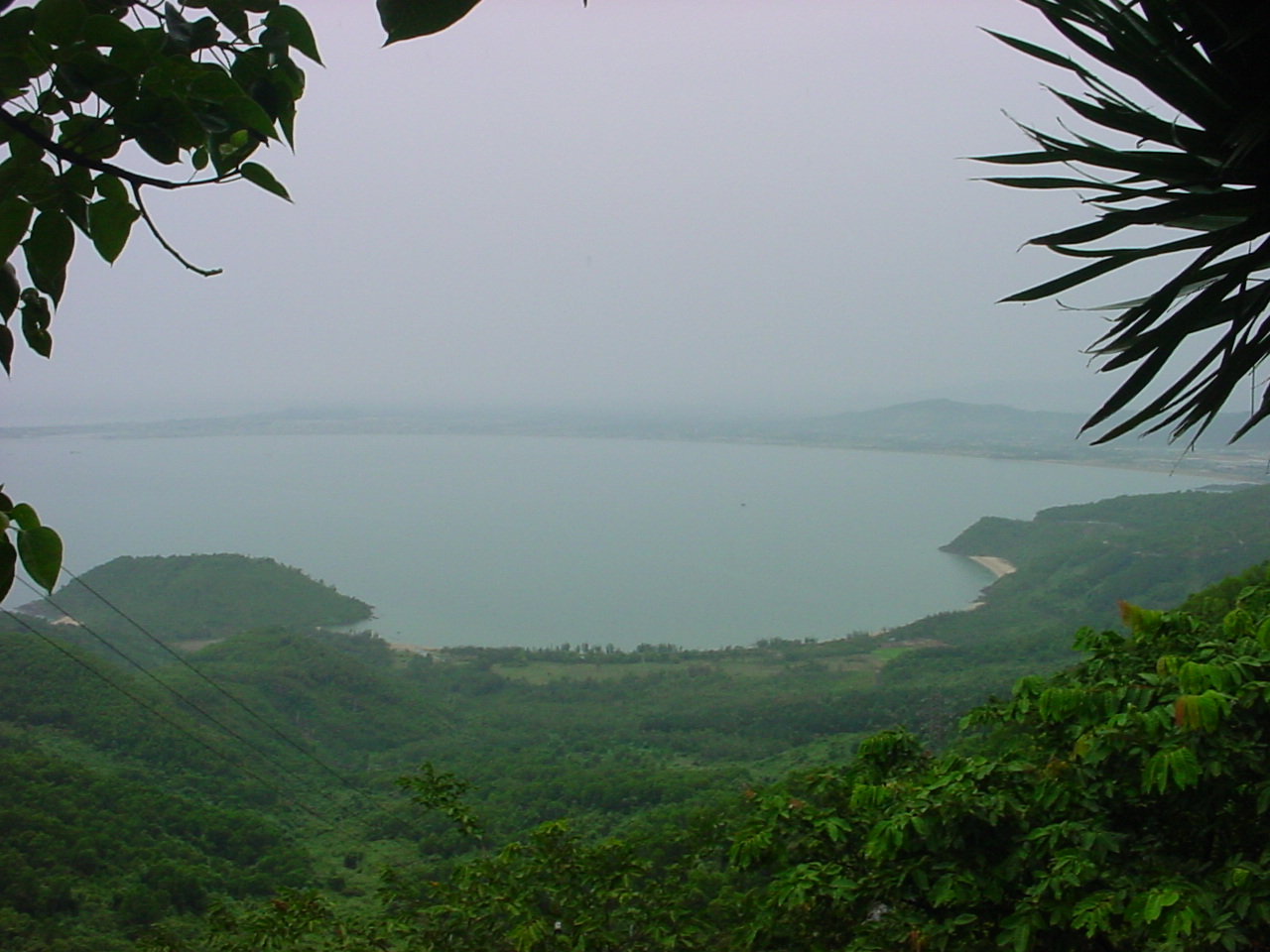
View from the summit of Hai Van Pass nearly 500 metres up, on the journey by road from Hoi An north to Hue. We had no option but to traverse the winding roads up and down through the jungle, while present-day travellers short on time can zip through the twin 4-mile tunnels which bypass it.
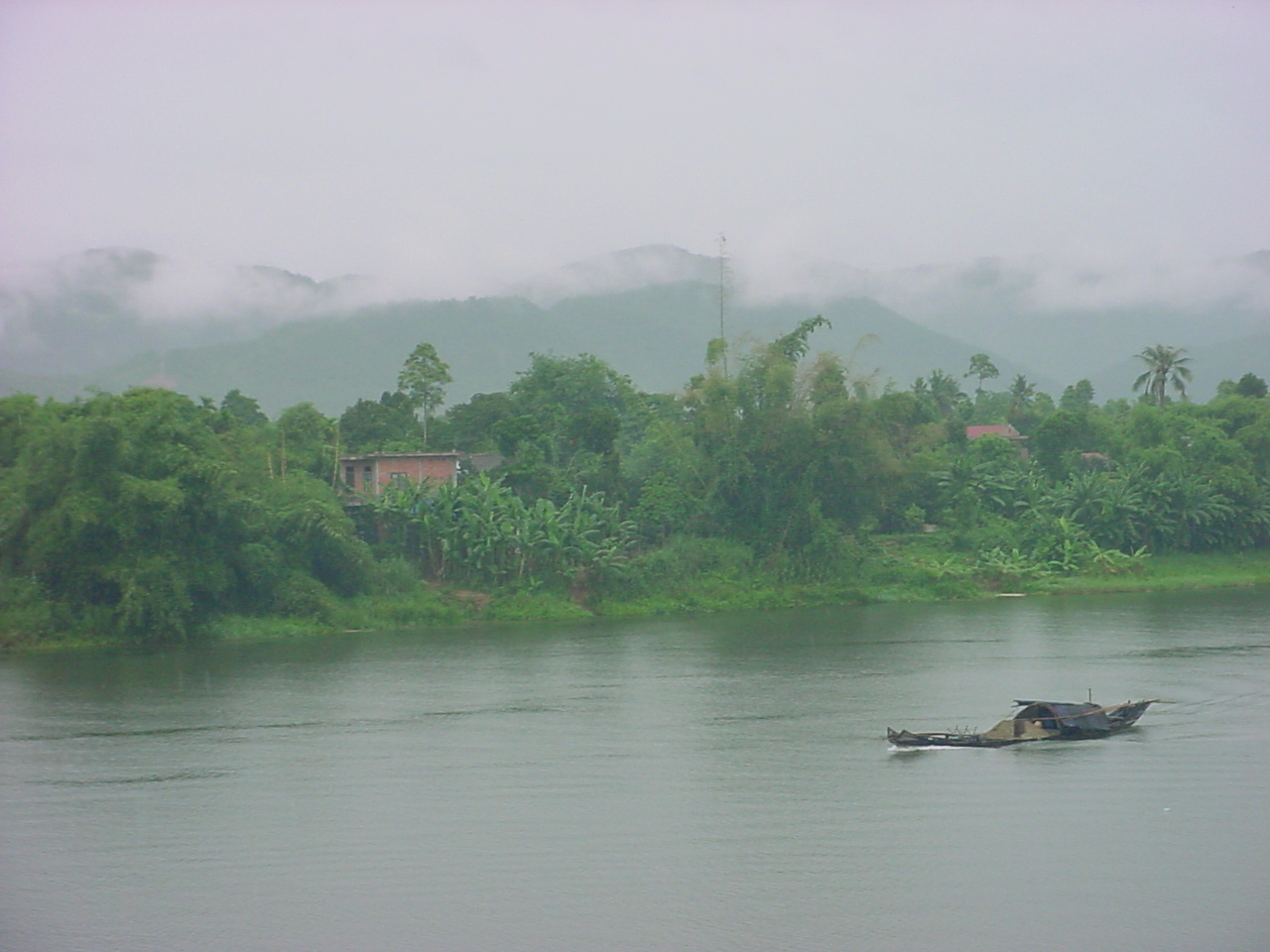
Near Hue itself, looking down to the Perfume River from Thien Mu Temple, this scene looks very stereotypically South-East Asian to me, with the jungle, boat and mist. I like it.
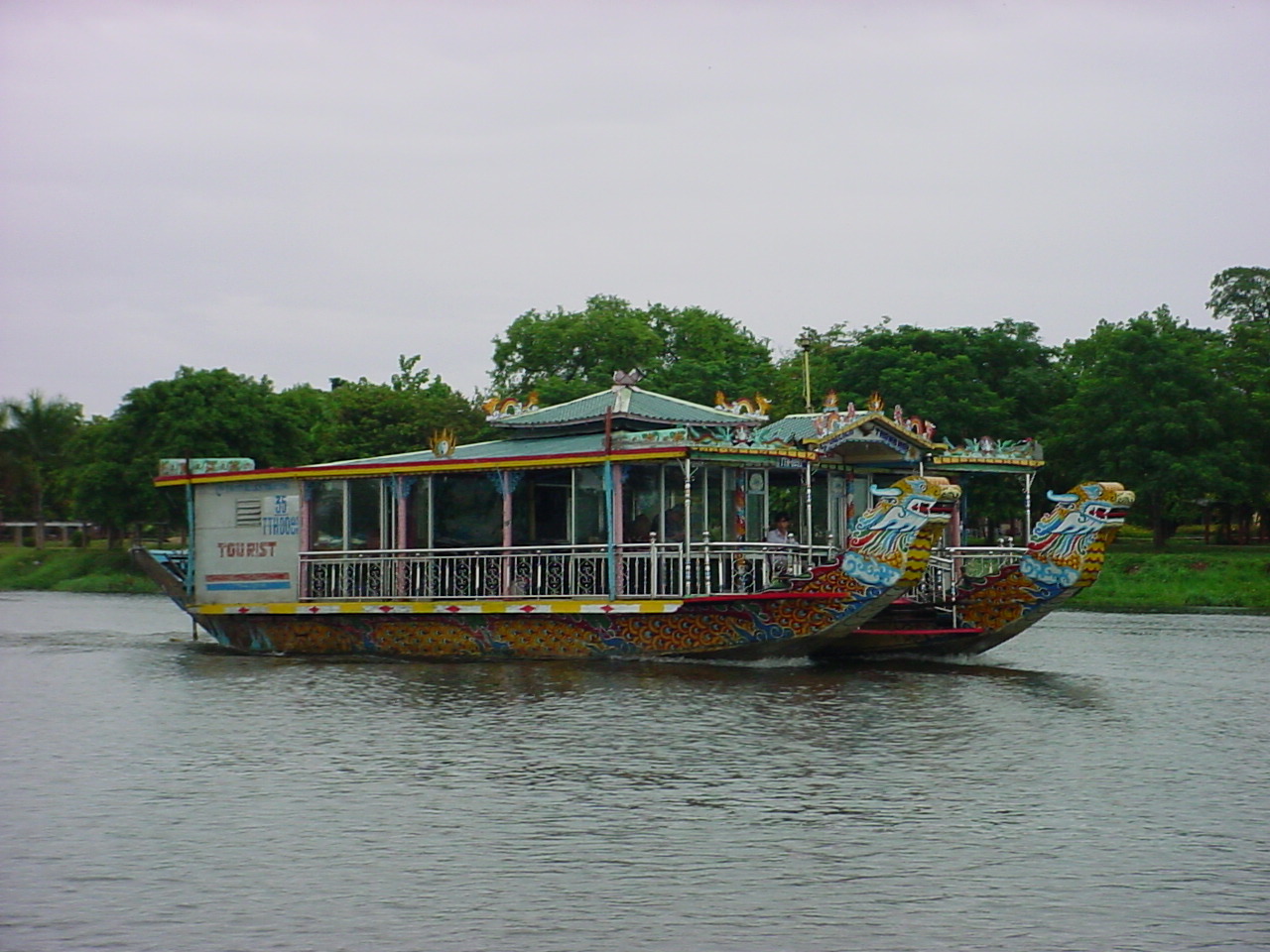
We cruised the Perfume River in one of these dragon boats, which took us from near our hotel in the city centre, up to Thien Mu Pagoda.
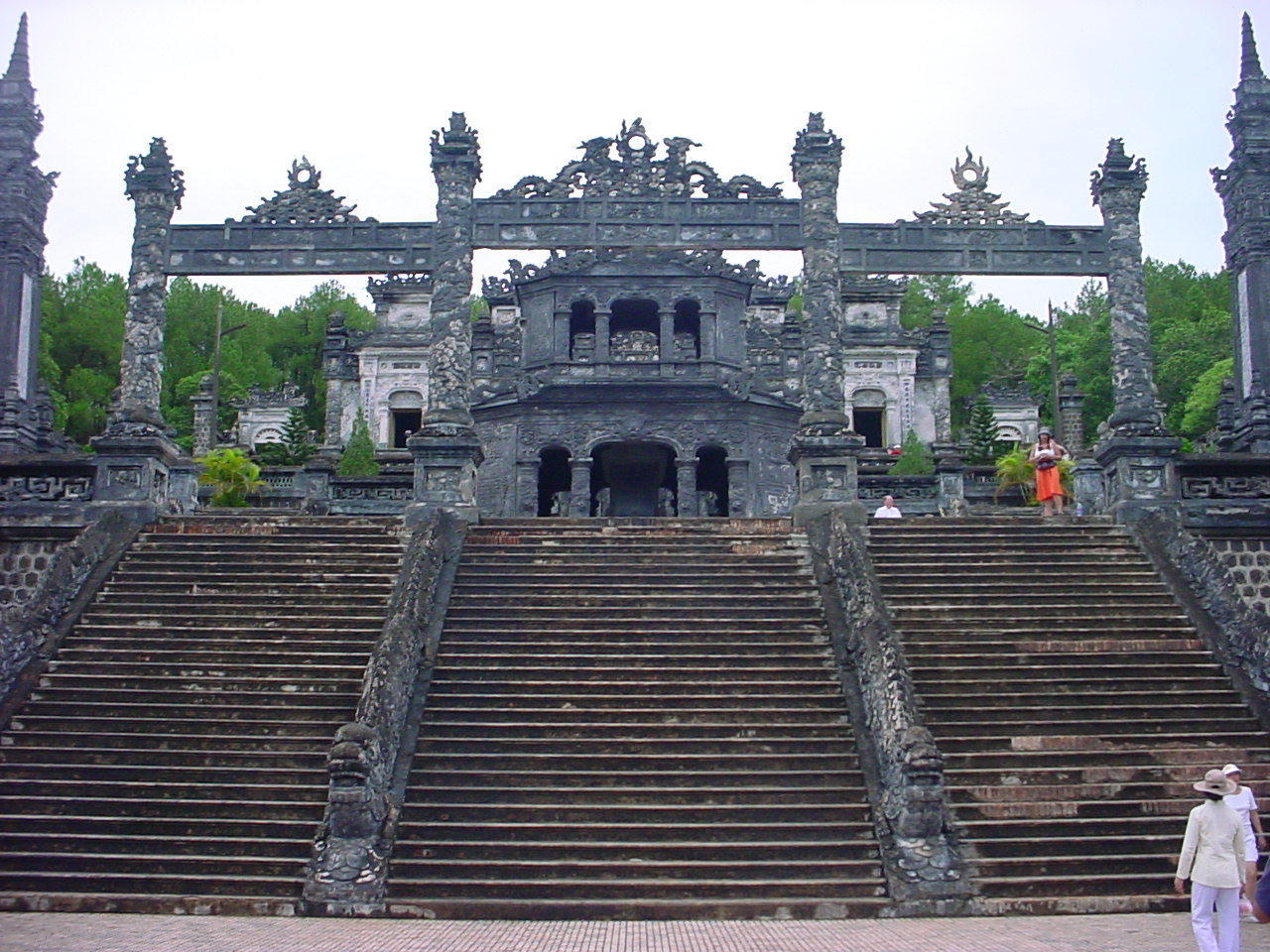
The Tomb of Khai Dinh is set a short distance outside the city, and is the resting place of Emperor Khai Dinh who died in 1925, despite the ancient look of his tomb. He was friendly with the French but not particularly great at keeping his own people happy, and died quite unpopular, not least because he jacked up taxation to finance the construction of his fancy mausoleum several years before his actual demise.
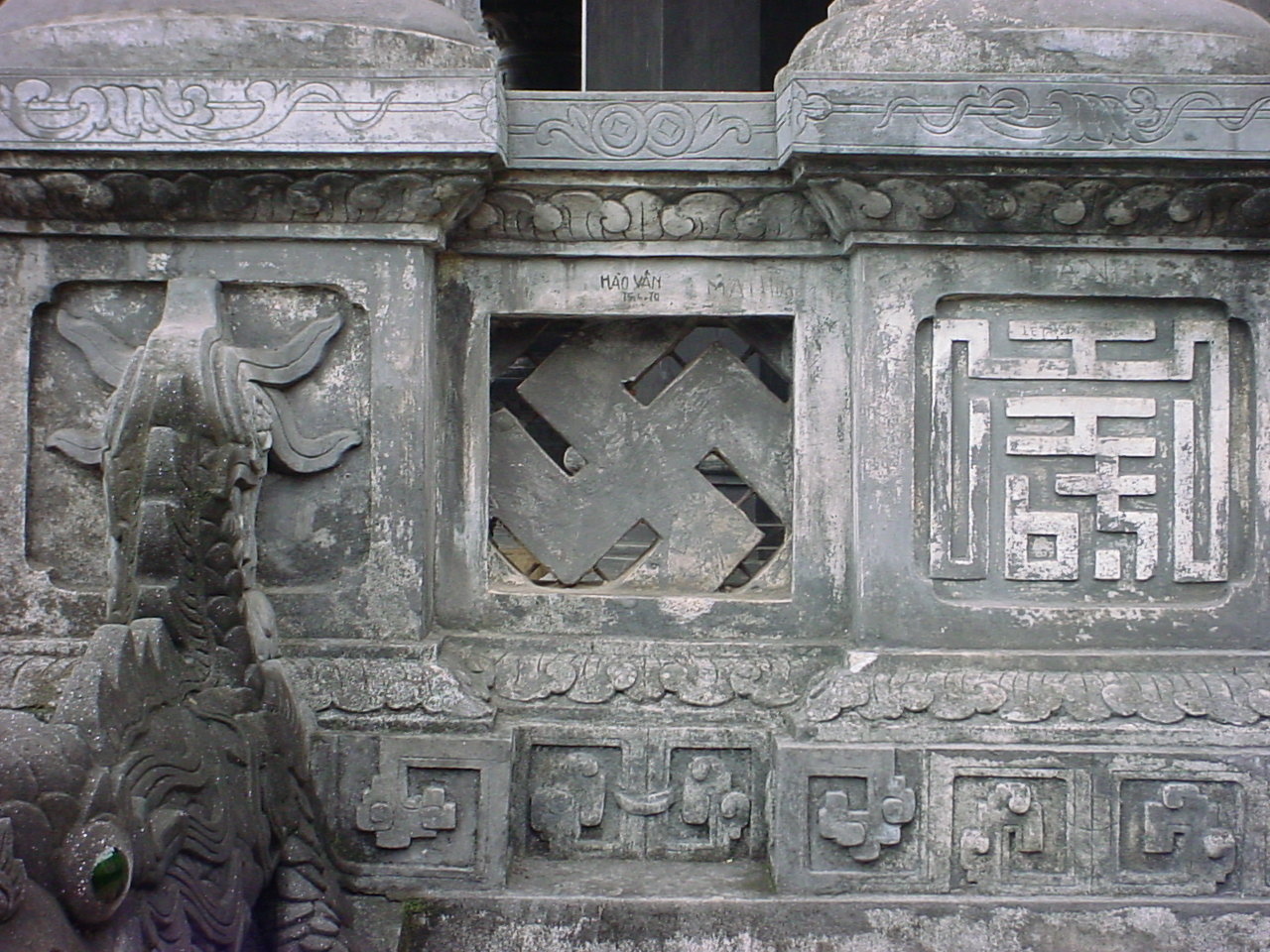
The swastika is an ancient symbol used by many groups, infamously appropriated by the Nazis who associated it with being Aryan. However, it has been widely used in other religions for thousands of years, notably Buddhism where it faces to the left. This example within the Tomb of Khai Dinh would appear either way around depending on which side of the wall you happen to stand.
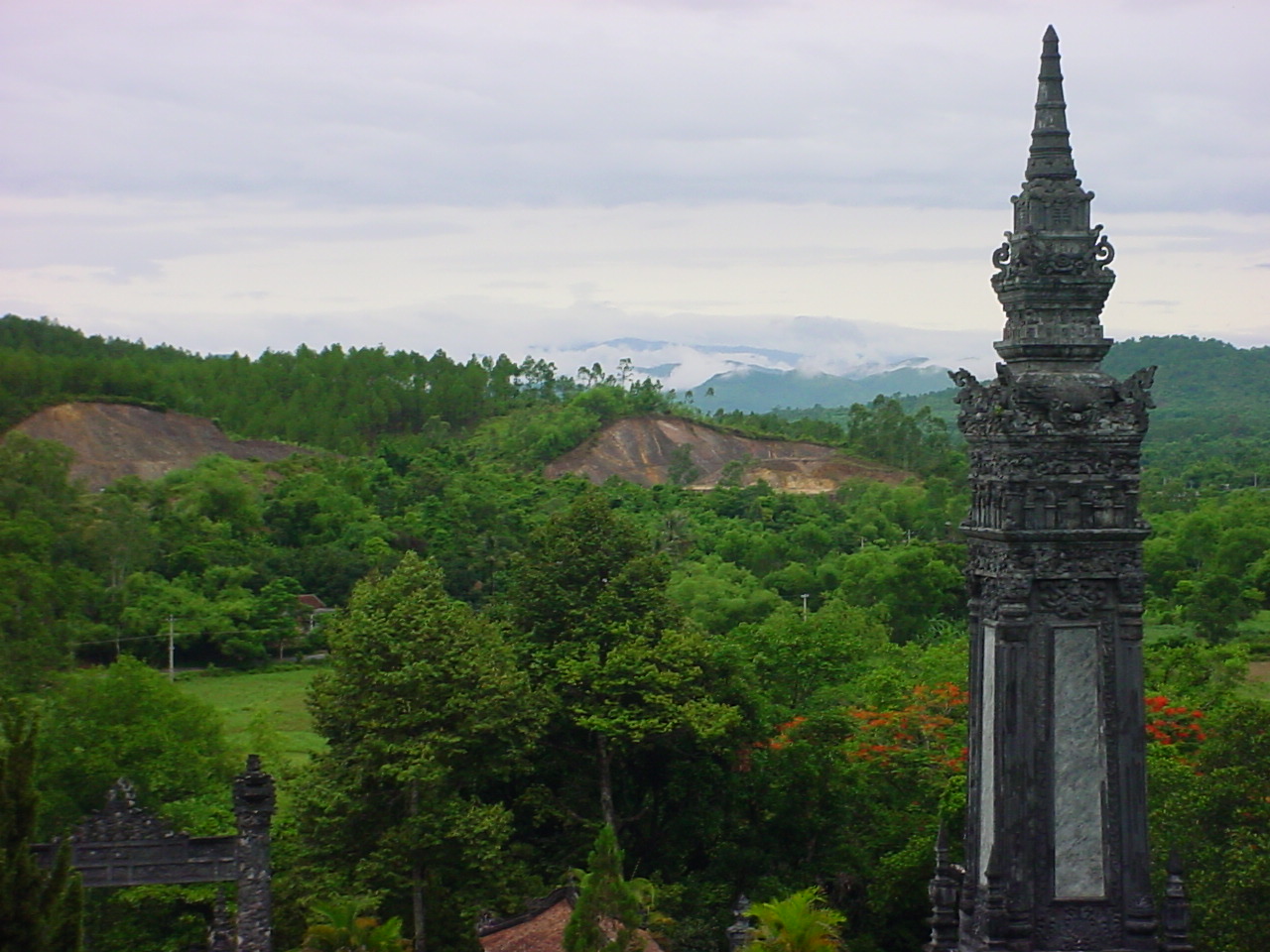
Another very Vietnamese scene. I had to wait a while to get this shot to avoid seeing any of the traffic moving on the road which is itself just out of sight. This was taken from the Tomb of Khai Dinh.
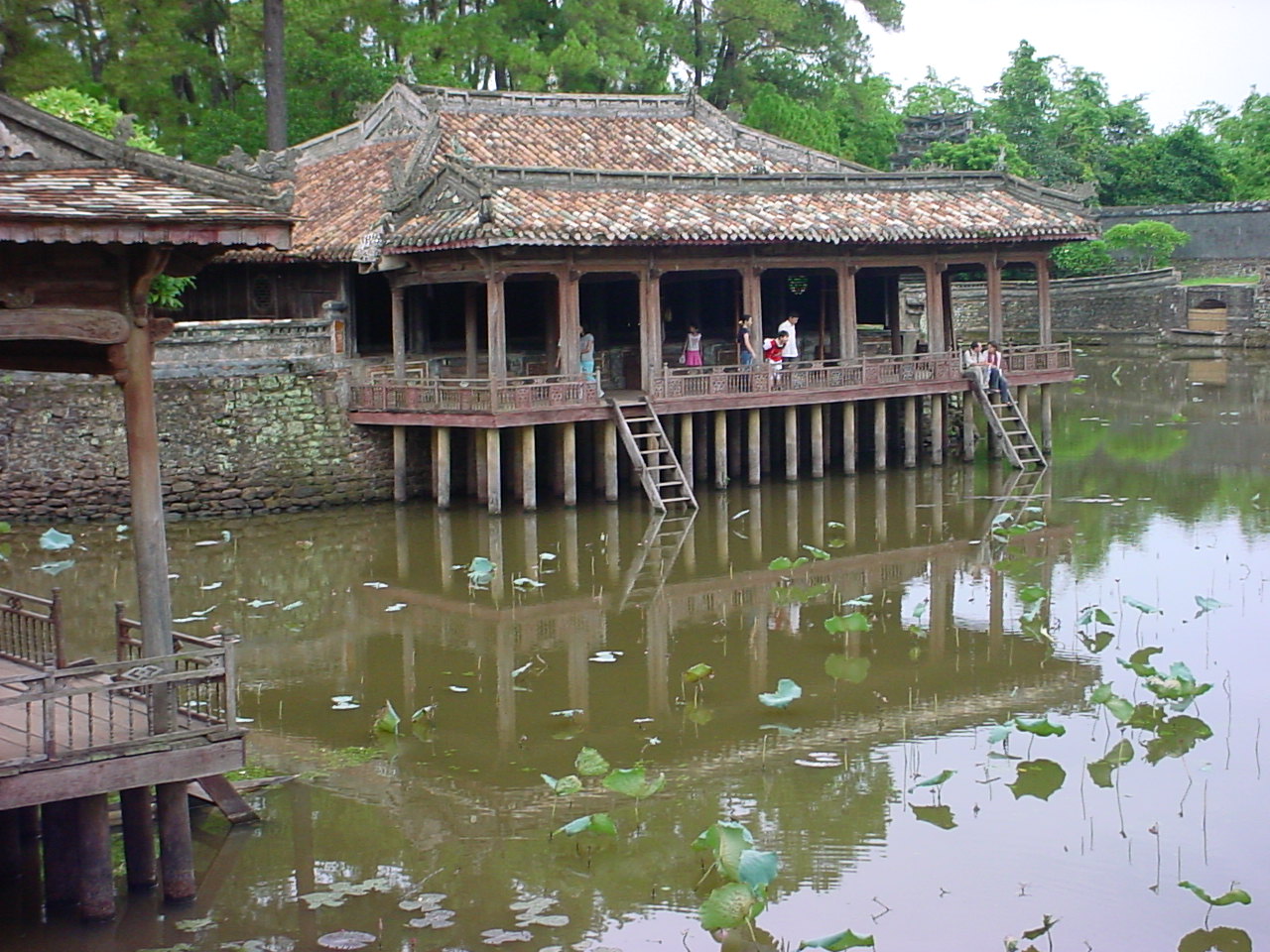
Onward to a different tomb, that of Tu Duc, an Emperor who ruled in the mid 19th-century, and whose final resting place was completed in 1867. He was the fourth emperor of the Nguyen dynasty (approximately pronounced “whin”). Such was the longevity and influence of the family that around one-third of the population of Vietnam still bears the surname Nguyen today – not due to furious reproduction, but in order to please the ruling dynasty and not look out of place.
Rooftop detail of Tu Duc Tomb – this is Khiem Cung gate as seen from the lagoon pictured above.
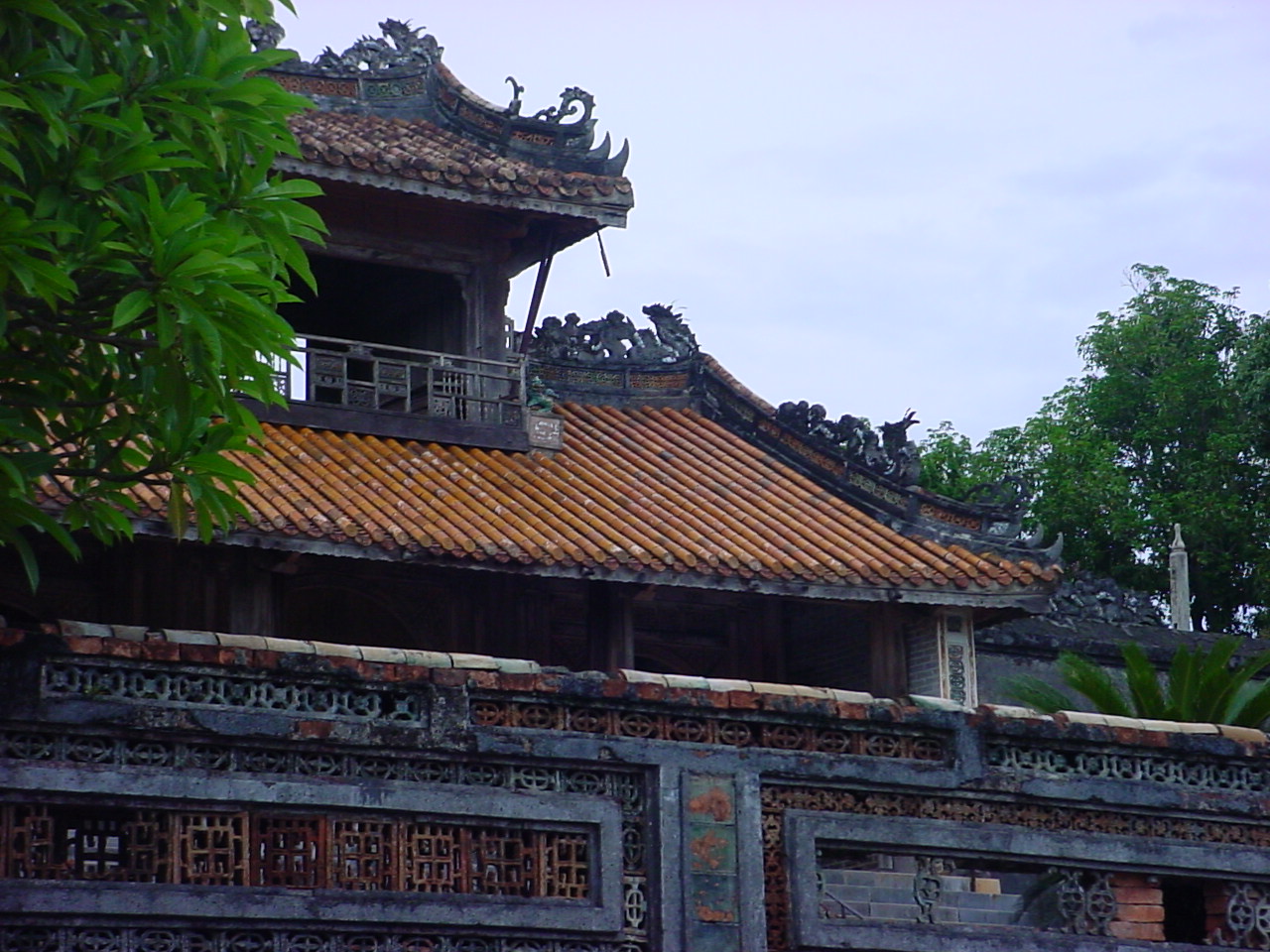
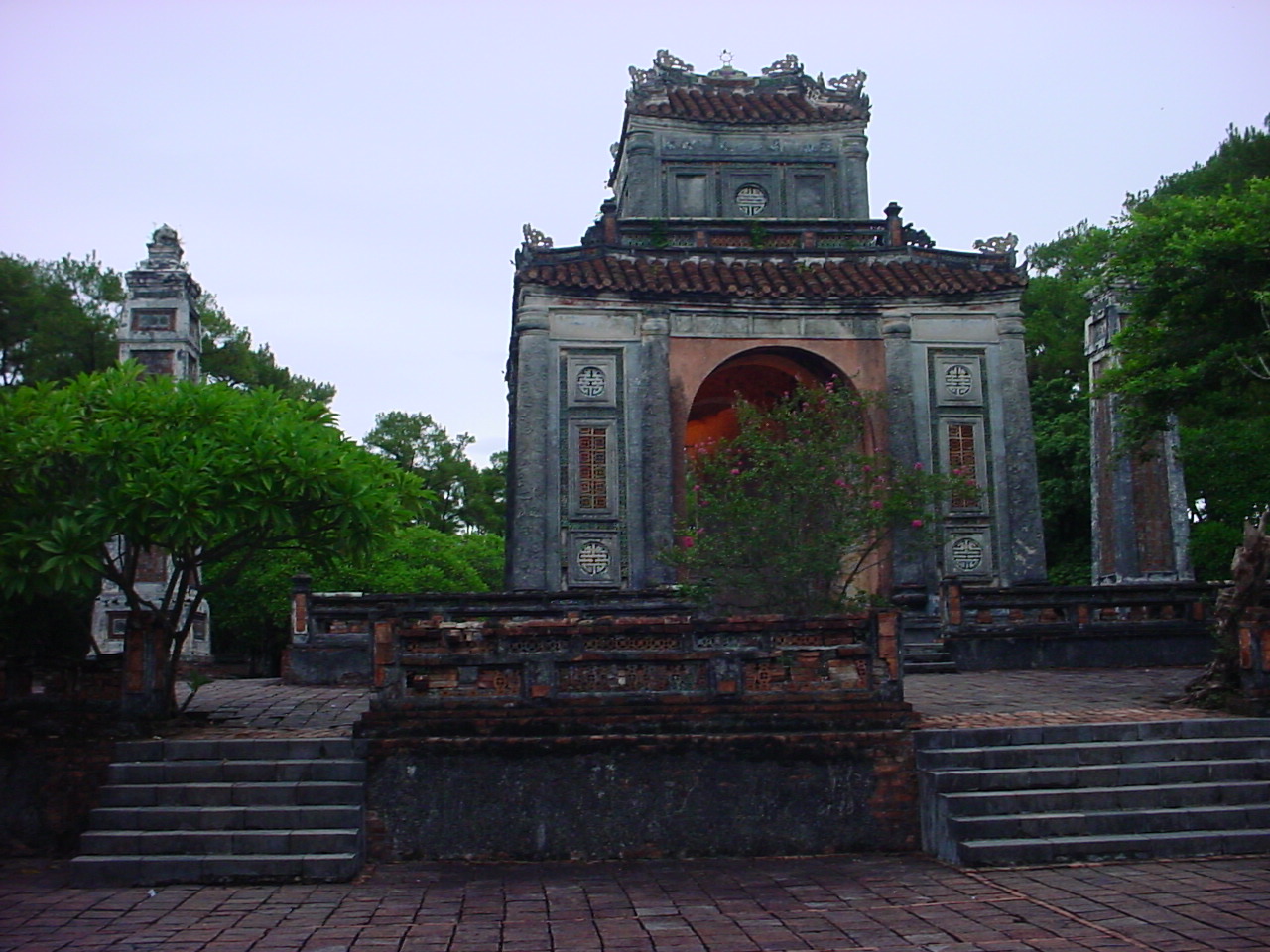
The tomb was planned by Tu Duc, and completed in plenty of time for him to enjoy it before he turned up his toes sixteen years later in 1883.
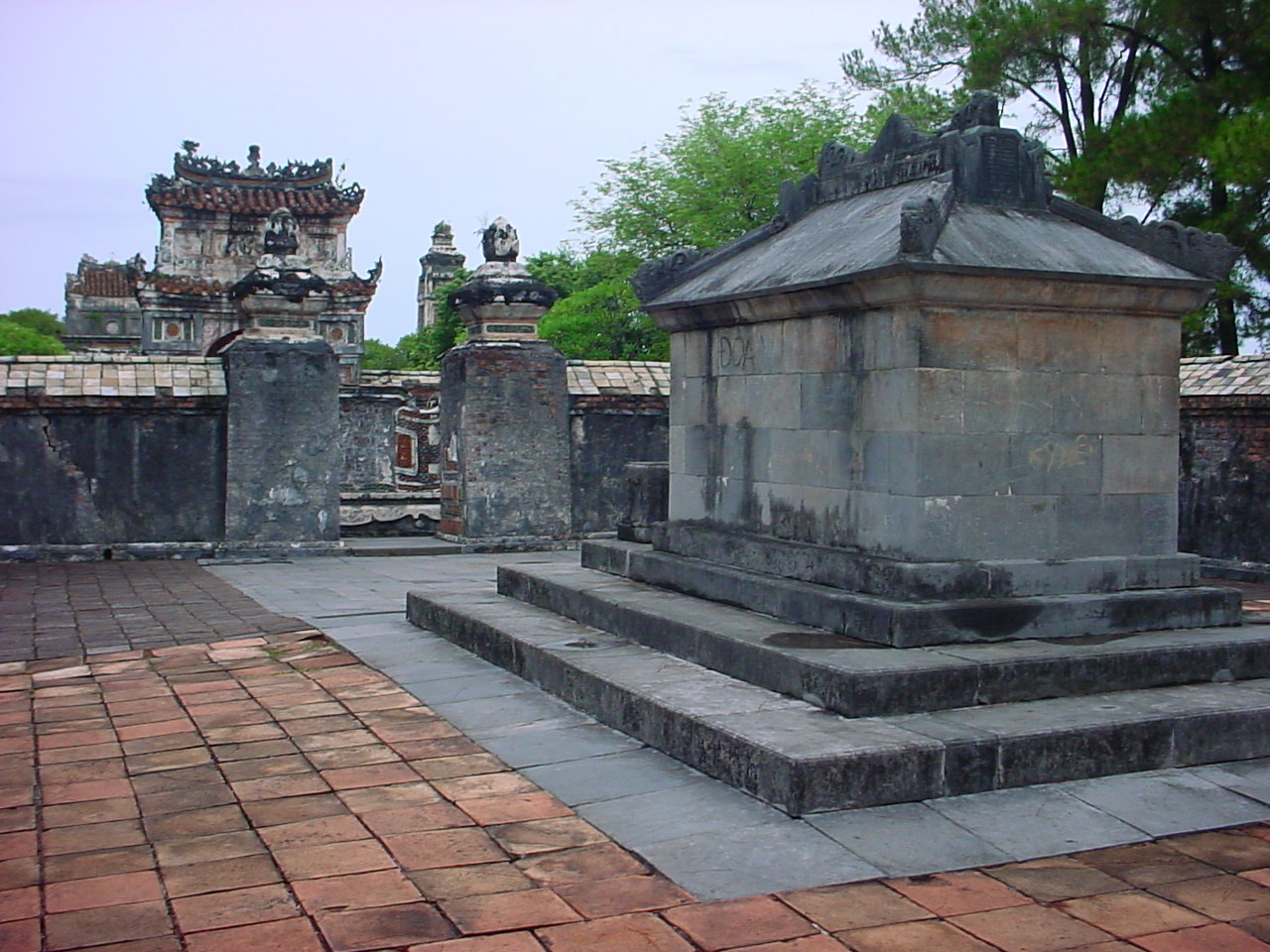
Tu Duc’s reliquary, which at the time of visiting was where I assumed he was interred. He is in fact not buried here, with the real location of his final resting place being taken to the grave by the workers who buried him, all of whom were swiftly executed in order to keep the location secret. Happy times.
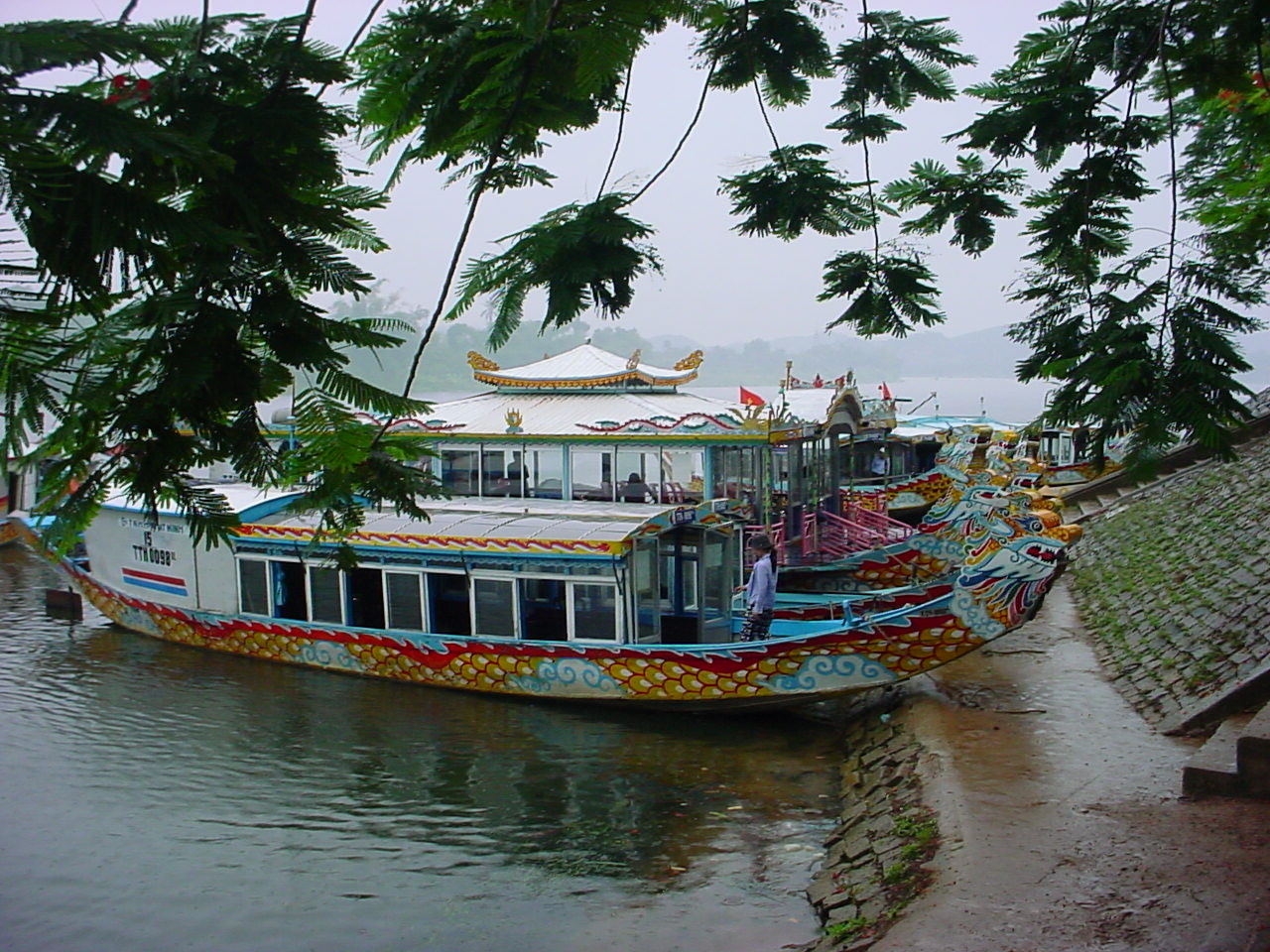
Back to the Perfume River and the dragon boats, which took us to Thien Mu Pagoda.
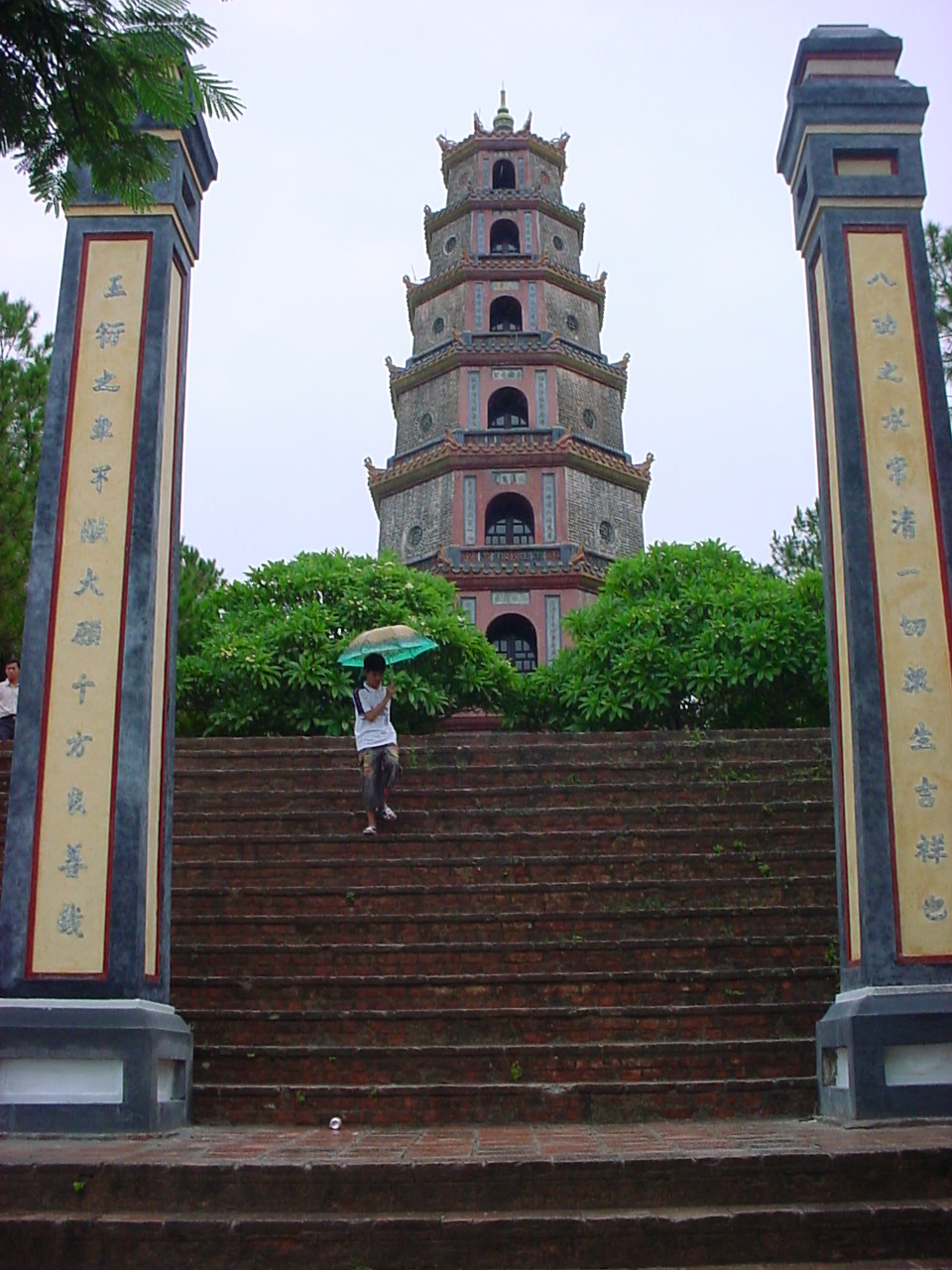
Thien Mu Temple, a couple of miles upriver from the city of Hue, and its iconic pagoda. This is much older than the imperial tombs we had visited, dating back to 1601, with the seven-storey pagoda being built in 1844. The importance of a pagoda is indicated by its number of levels, up to a maximum of seven. This one has a full complement, with the lowest one hidden by the steps.
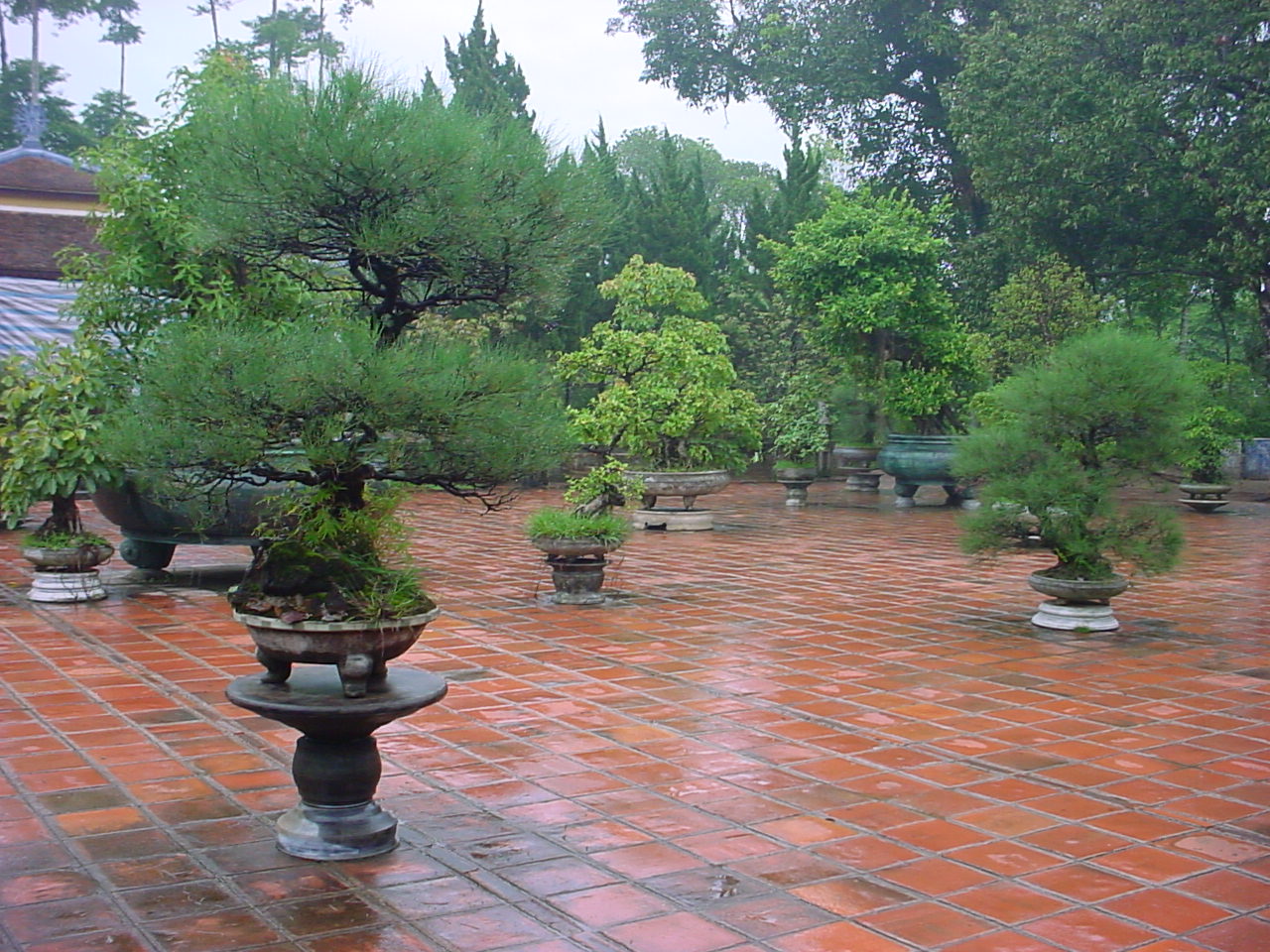
Bonsai trees! I wish I’d had someone stand next to them for scale when I took the photo – the closest one is perhaps about three feet high.
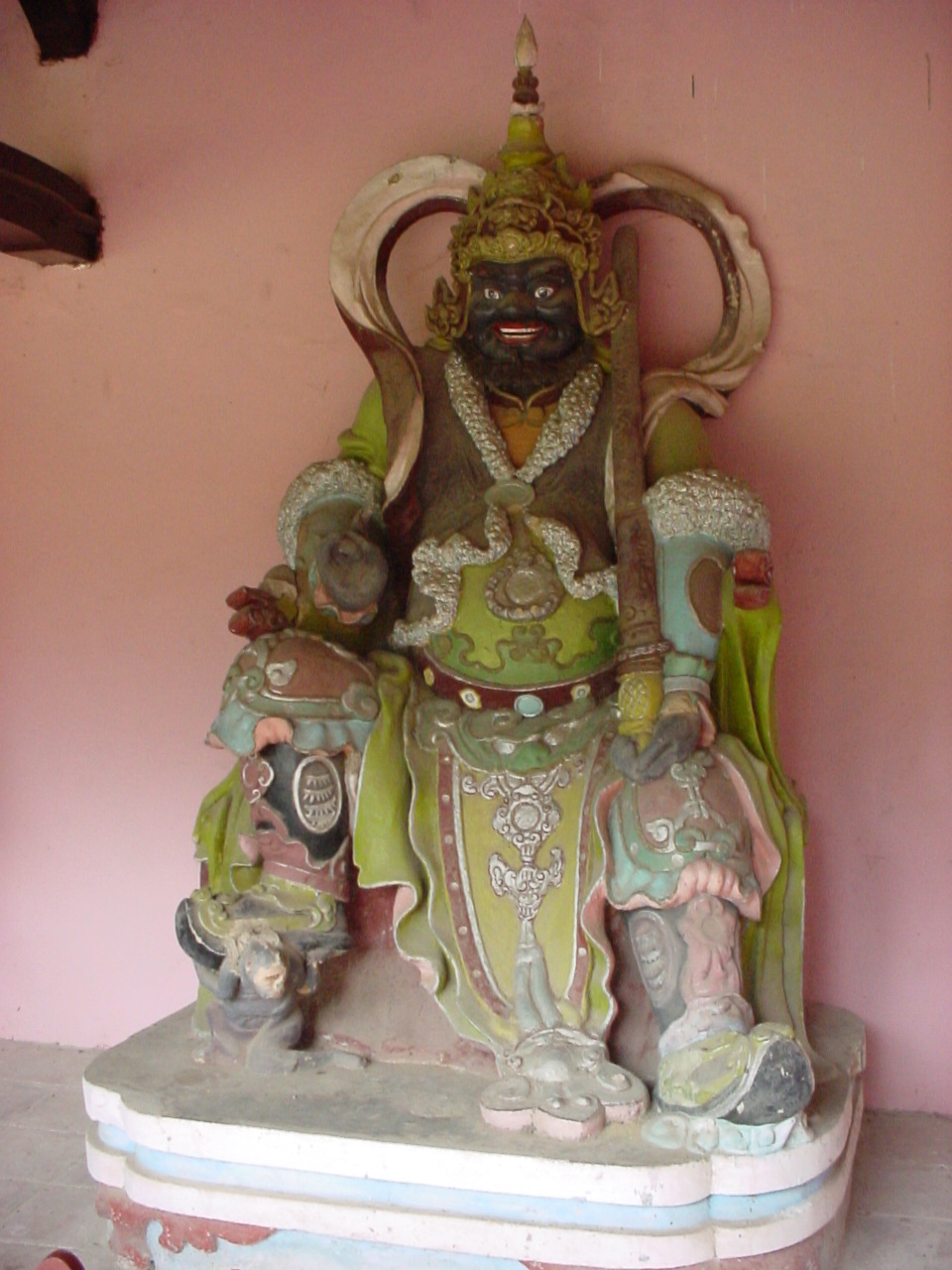
One of several cheerful warrior-types in effigy at Thien Mu Temple.
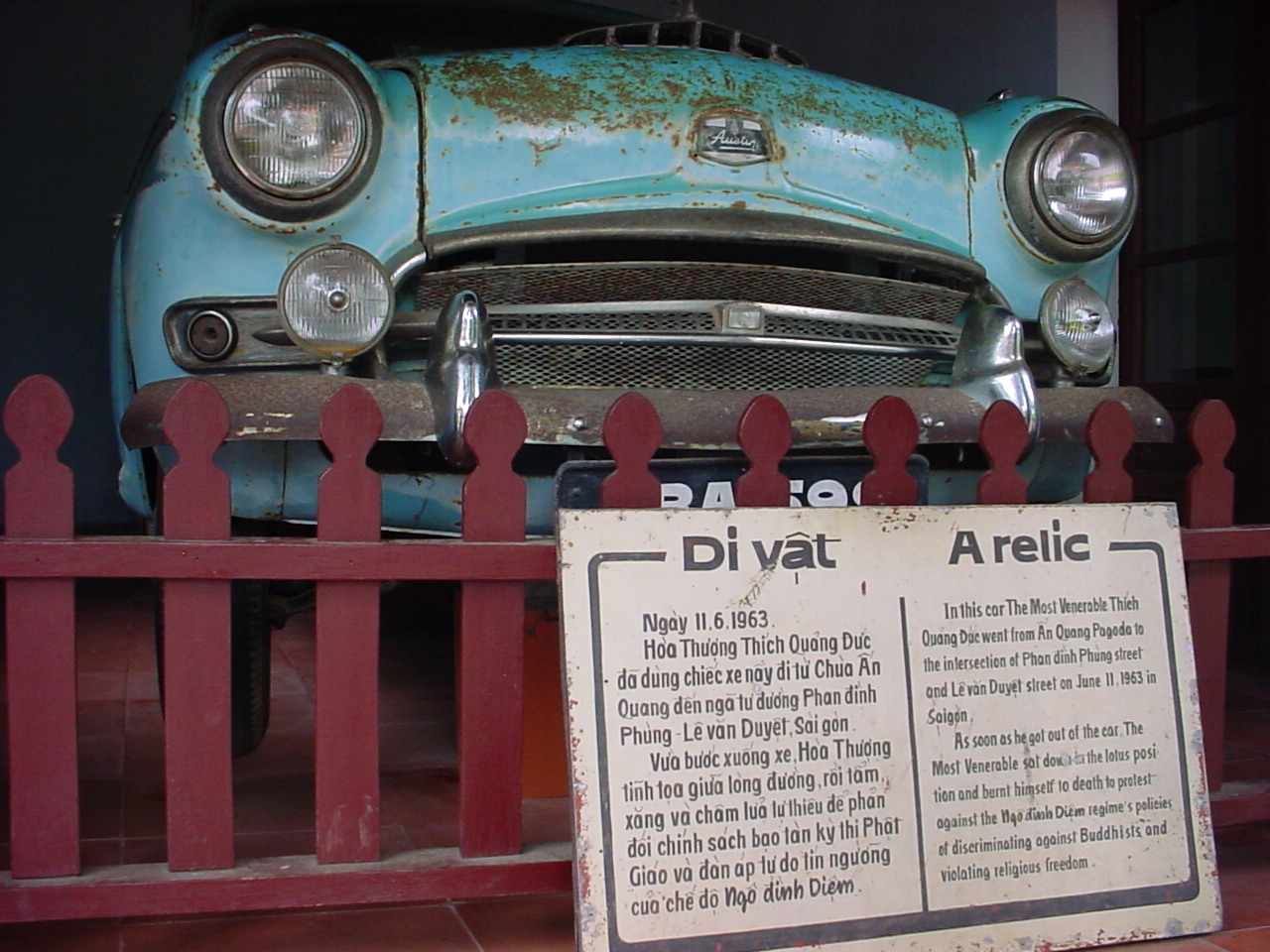
There is a very famous photo of the owner of this car, monk Thich Quang Duc, who in protest at the persecution of Buddhists by the South Vietnamese government during the early 1960s, drove this car to Saigon, stopped in the middle of the street, sat on the road in the lotus position and burned himself to death. Upon re-cremation at his funeral, his heart remained intact and was declared a holy relic. The car itself has, quite unfortunately, been fully restored and painted since my visit.
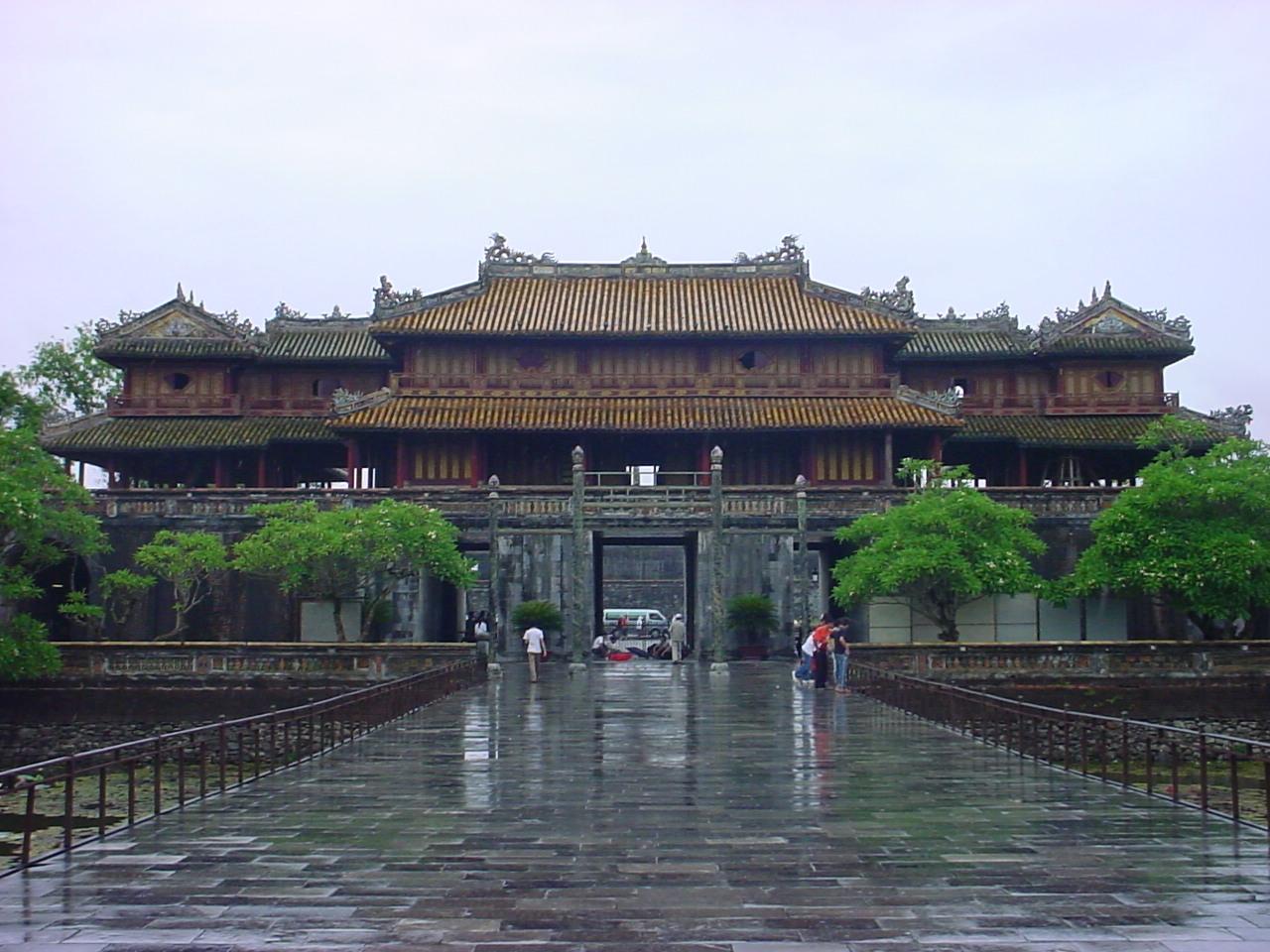
In the centre of Hue itself, stands the Imperial Citadel, with its main entrance on the south east side, the Meridian Gate. There is an enormous moat running eight kilometres around the citadel, within which much of the modern city has been built, but the most central part through the gate is subject to preservation.
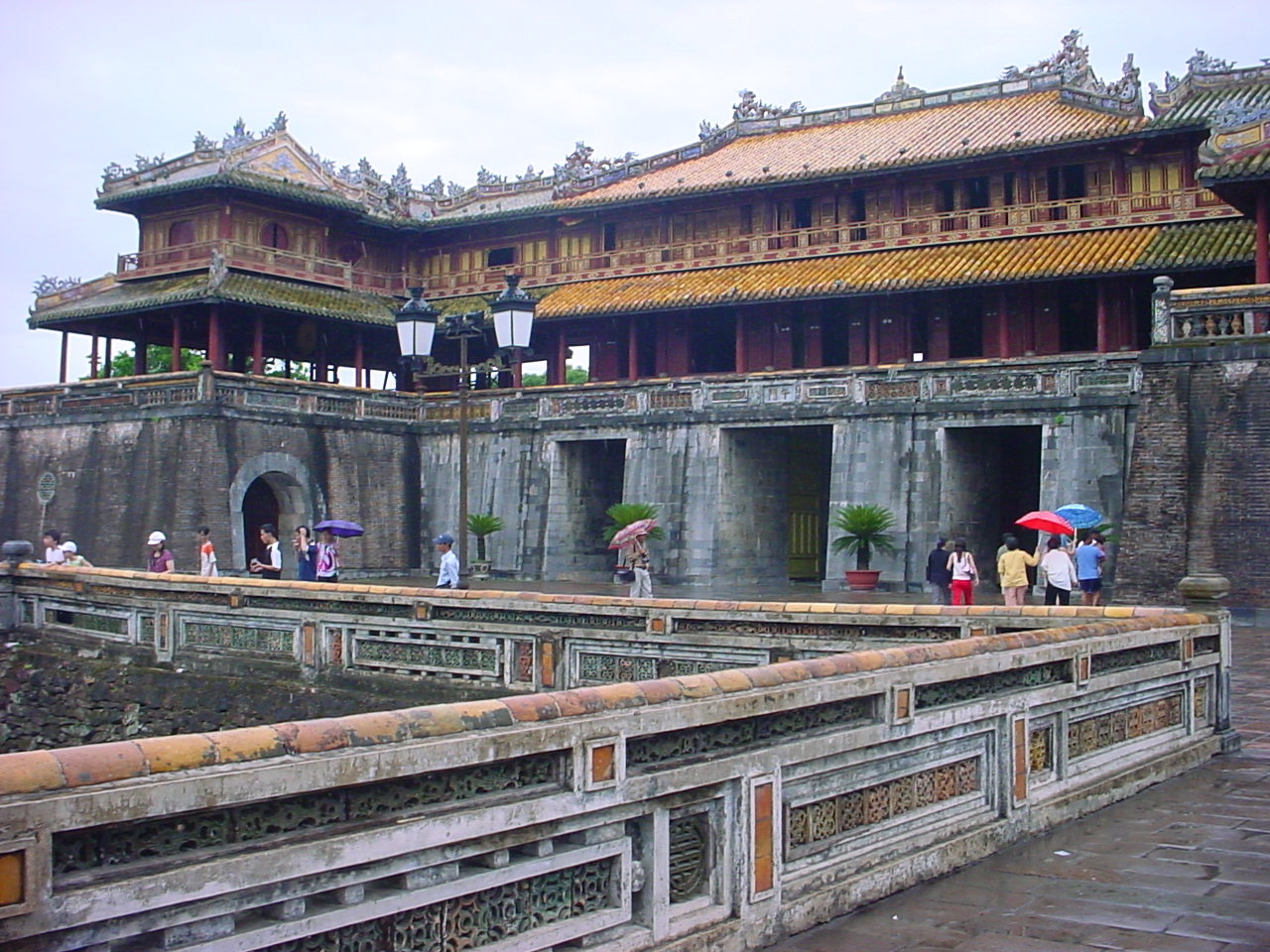
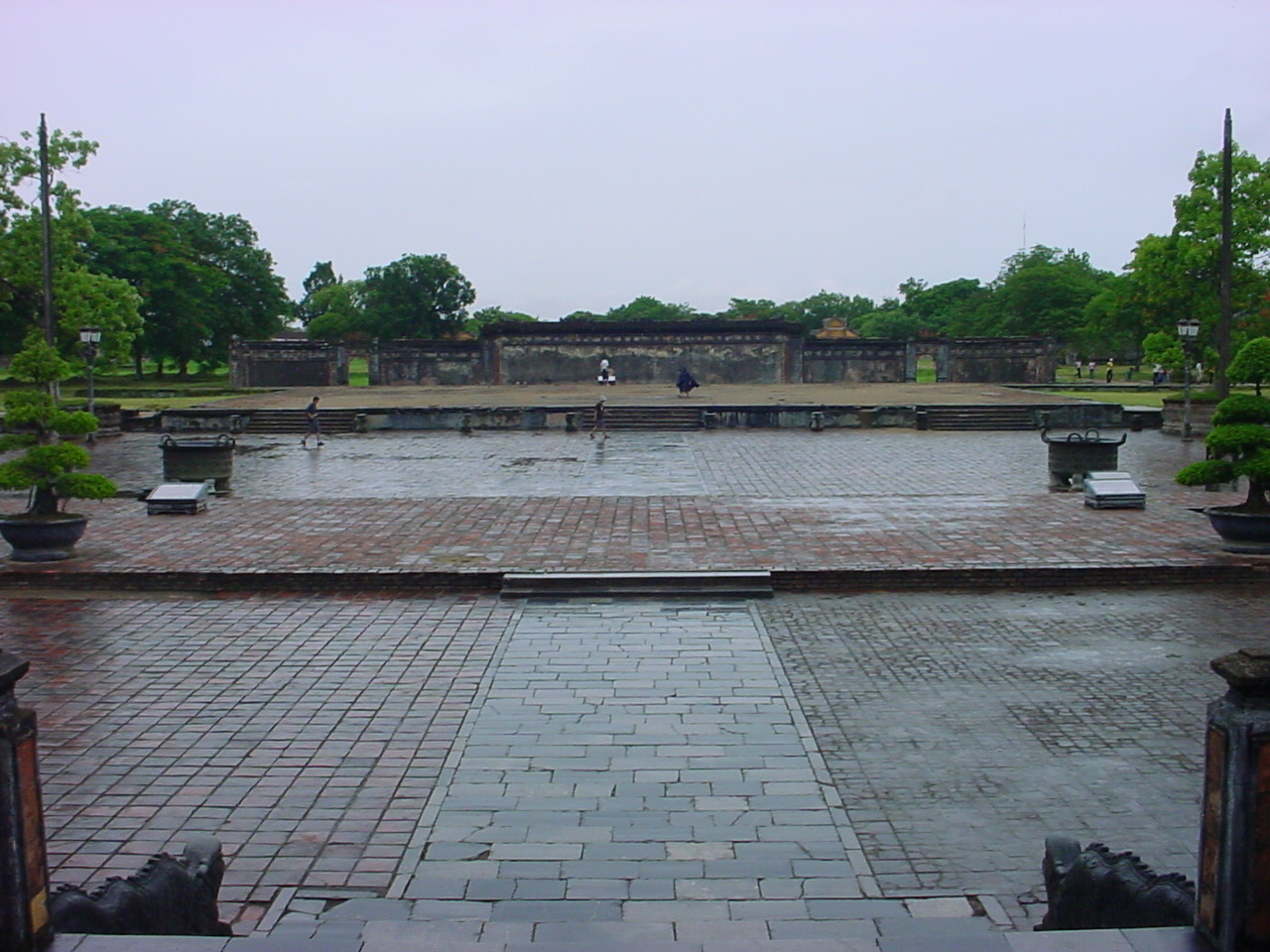
Alas, the preservation efforts of the Imperial City began only after the series of 20th century wars in Vietnam, during which time most of the structures were destroyed, first by the French and then by the Americans. Becoming a World Heritage Site in 1993 has preserved what remains, and some restoration has also taken place.
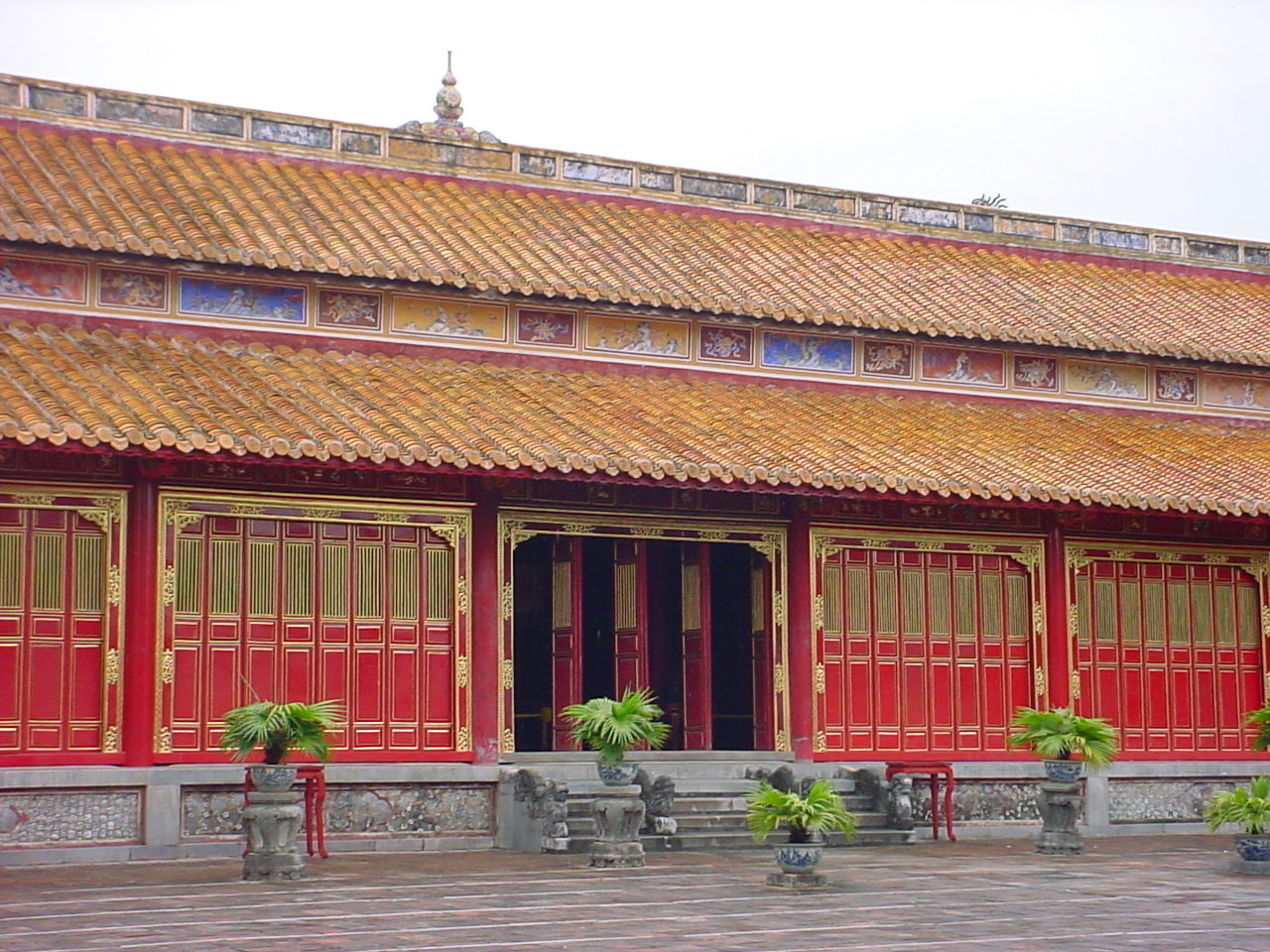
The Forbidden Purple City of Hue forms the centrepiece and residence of the emperor. The Imperial City began construction in 1804, and was mostly complete by 1833. This building is the To Temple.
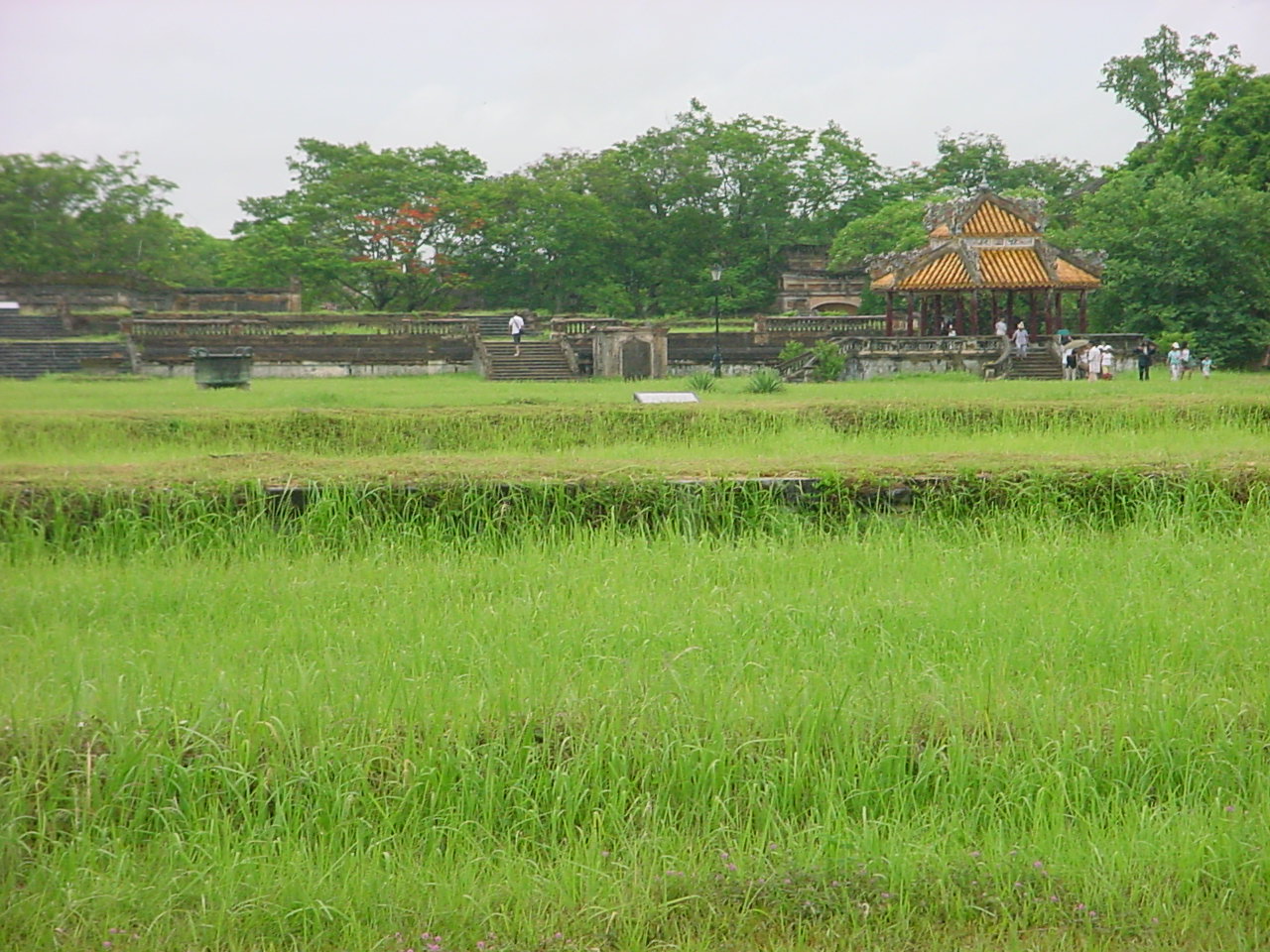
Another area of the Imperial City where what little remained had been overgrown and flooded. Since my visit in 2005, the entire Kien Trung Palace has been rebuilt on the pad accessed from the steps in the centre, completed in 2023 and looking splendid.
Looking back out of the main entrance of Hue Imperial City. It is similar in scale to Beijing’s Forbidden City, and was similarly forbidden throughout its functioning existence.
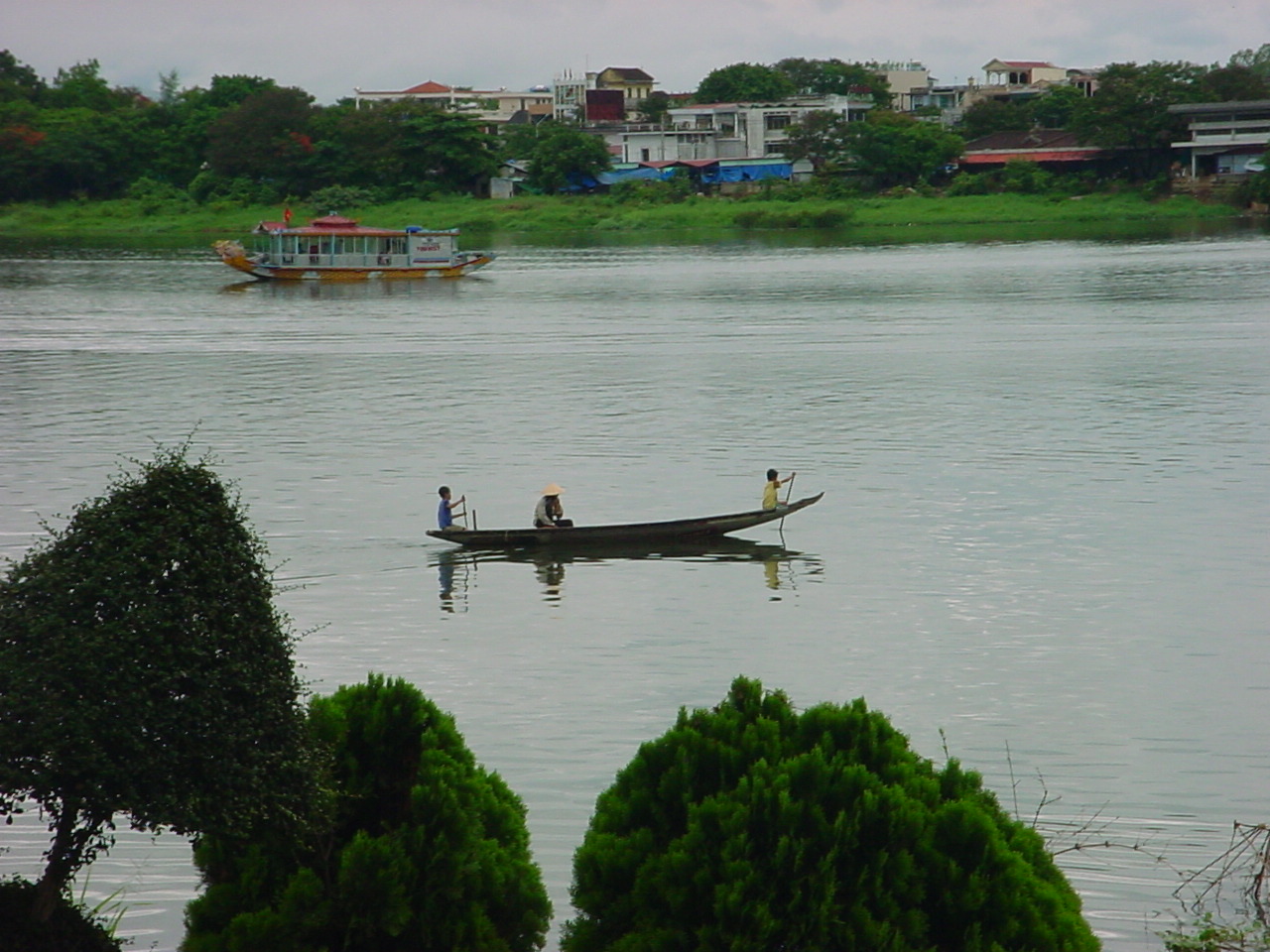
Another view of the Perfume River. This old chap has the right idea, why have a dog and bark yourself?
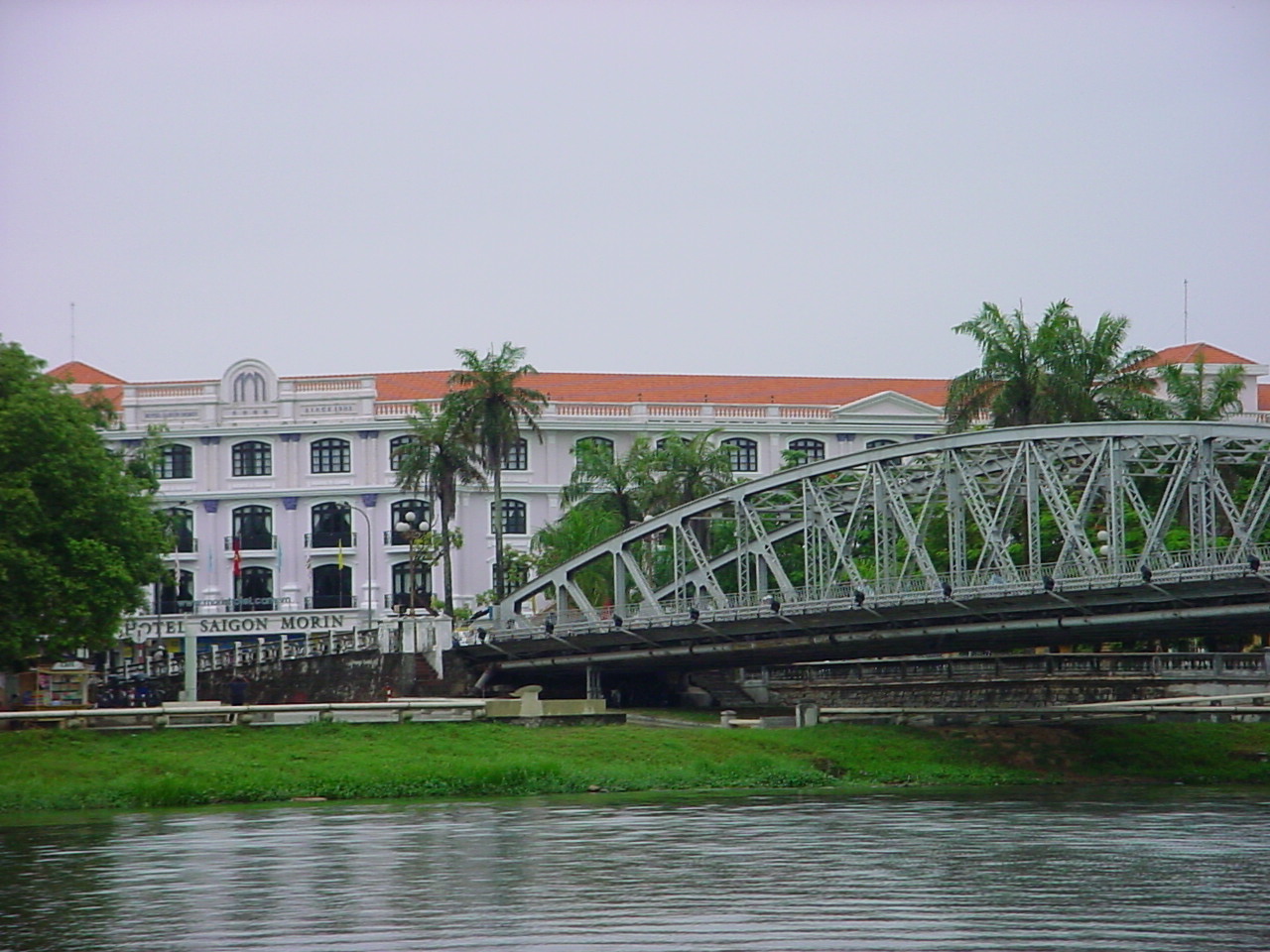
Our hotel, the Saigon Morin, was a very comfortable French colonial affair, facing the Perfume River. It is conveniently located at the south side of Truong Tien Bridge and opened its doors in 1901.
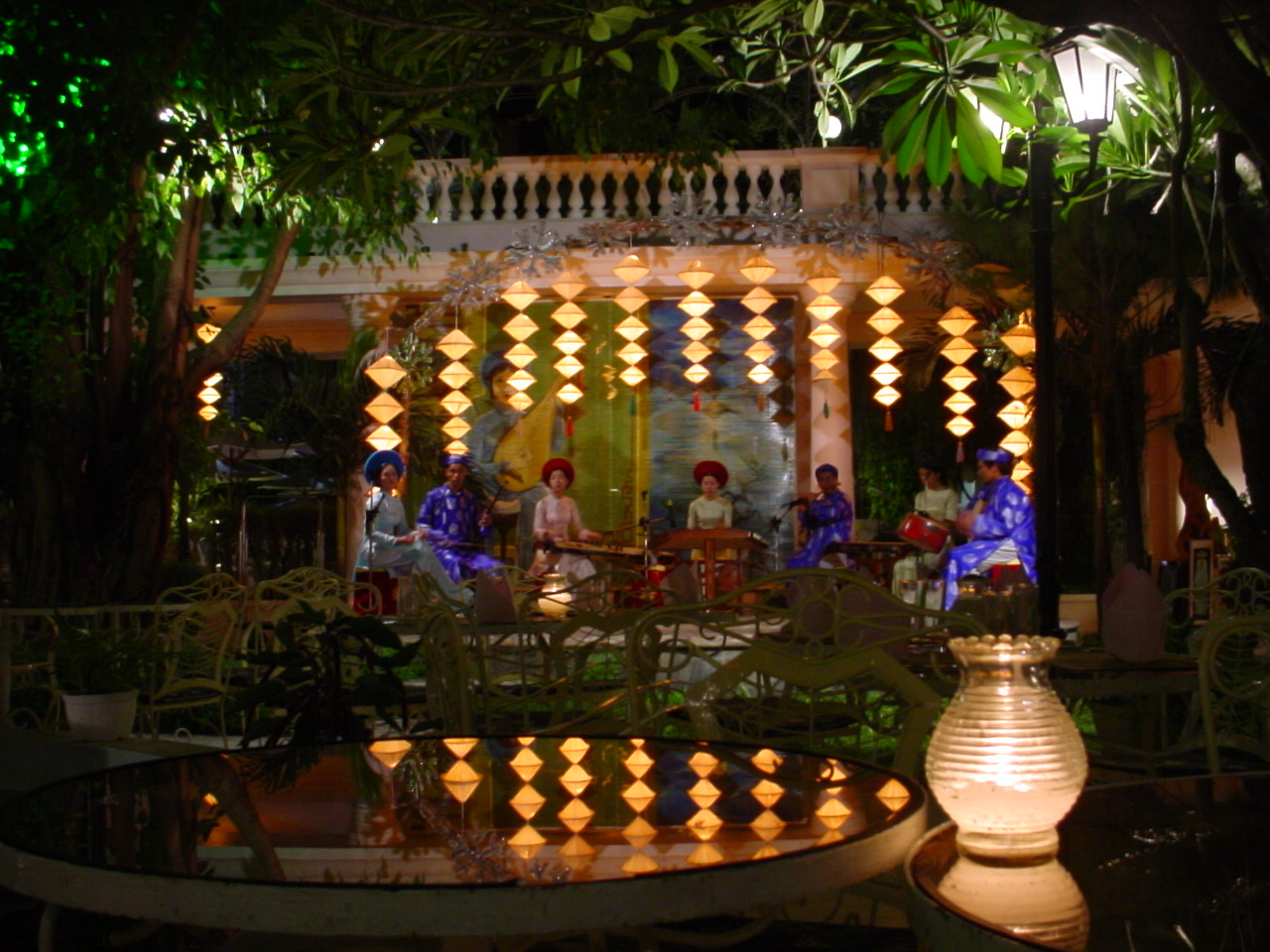
The hotel’s interior courtyard was lovely and highly atmospheric. I enjoyed listening to the strange music this band were playing, and I was also pleased with the effect I captured here, with the nón lá hat lanterns reflecting in the table.
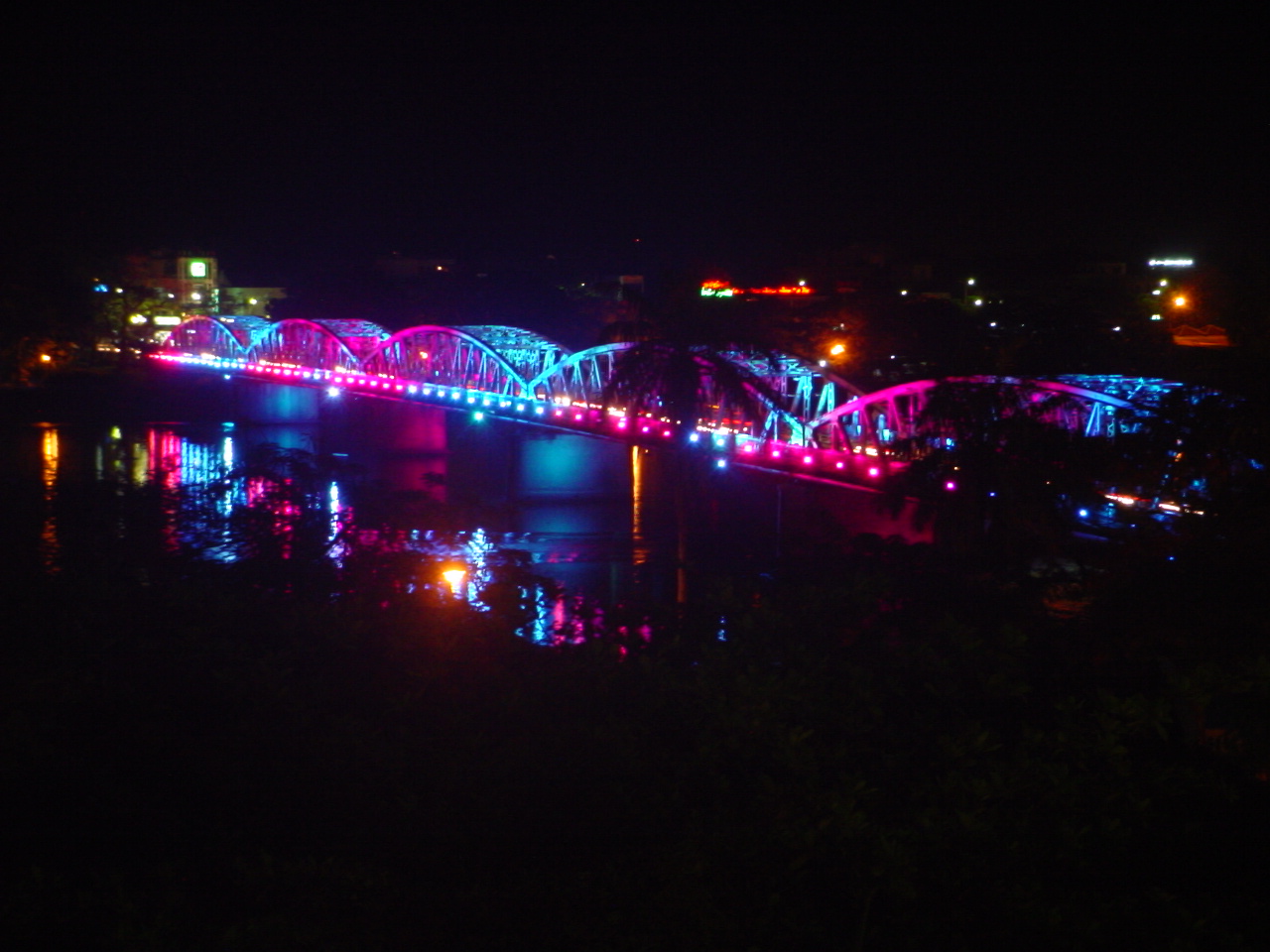
The romantically-named Perfume River (not quite so pleasantly fragrant in reality) runs through the city, and is bridged by the attractively-lit steel construction of the Truong Tien Bridge, dating to 1899. The colours changed every few seconds so it wasn’t very easy to photograph at night! This is the view from the hotel bar.
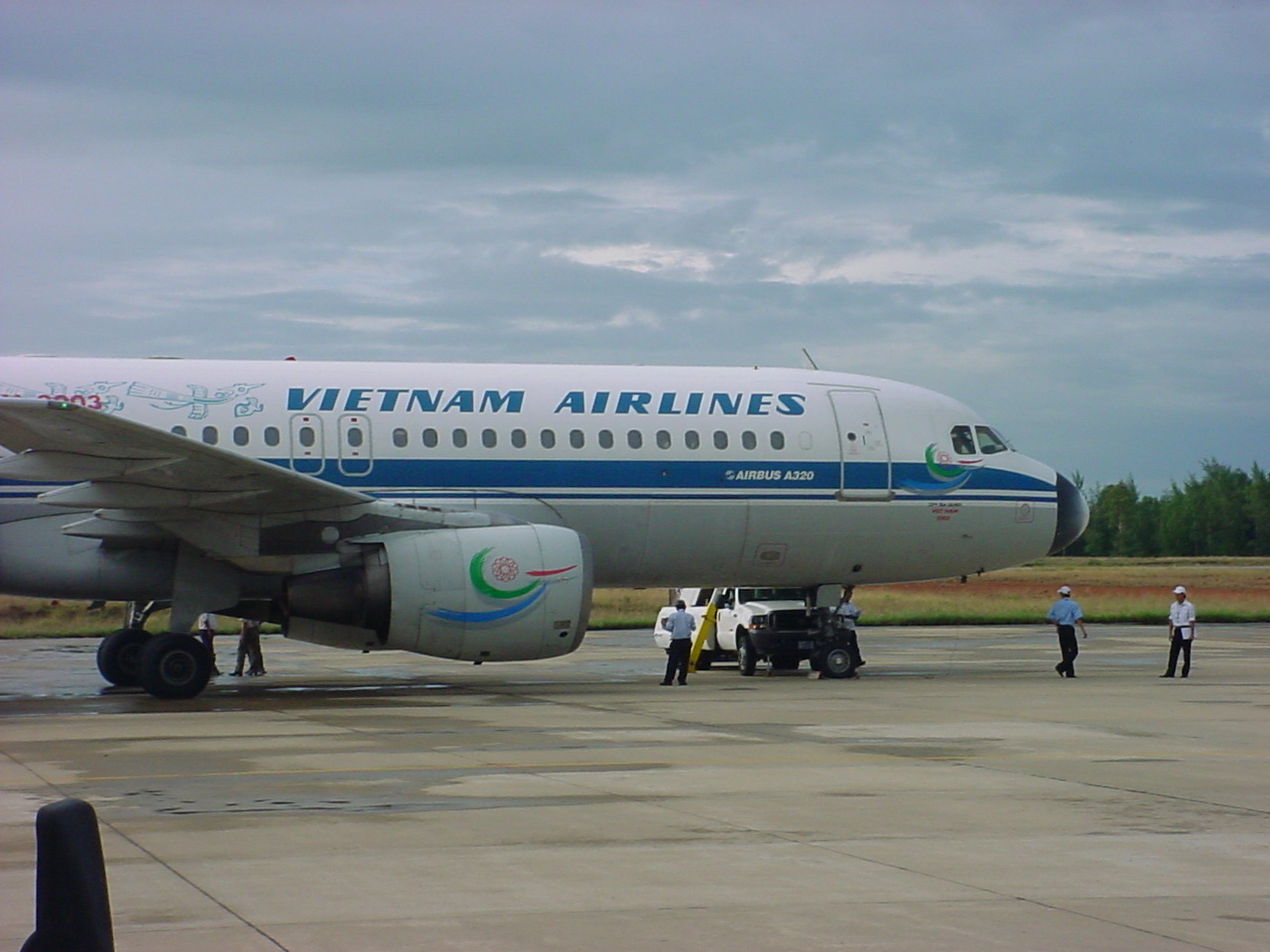
Our ride back to Ho Chi Minh City, which even in 2005 must have been one of the last aircraft to sport the old-style livery, which had been phased out since 1998.
Created 2006 | Updated 2026


Leave a Reply