Thành phố Hồ Chí Minh
Bustling metropolis and cultural centre
Ho Chi Minh City was known as Saigon until its fall/liberation (depending on your point of view) in April 1975 following the end of the American War. The city centre, District 1, is still unofficially referred to as Saigon by the locals and retains many French colonial buildings, amongst the more modern boom of construction. The city is named for the founder of the Democratic Republic of Vietnam, and leader of the North during the American War, until his death in 1969. Ho Chi Minh City is the largest in Vietnam with over 14 million inhabitants, and is the nation’s commercial centre, leaving politics to be handled up north in the capital, Hanoi.
I visited HCMC several times over a period of a few years in the mid-2000s, including two Christmas trips, while my parents were living and working in Vietnam. The city is very noisy and busy, with rivers of thousands of motorbikes and scooters to be navigated each time I wanted to cross a road – just keep a steady pace, and you’ll be fine. There weren’t many cars during my first trip in 2005, but plenty by the time of my last trip in 2008, further clogging up the roads. A metro system has since been built to help keep people moving. I always enjoyed the year-round heat, cheap beer and vibrant nightlife, in this chaotic home-from-home.
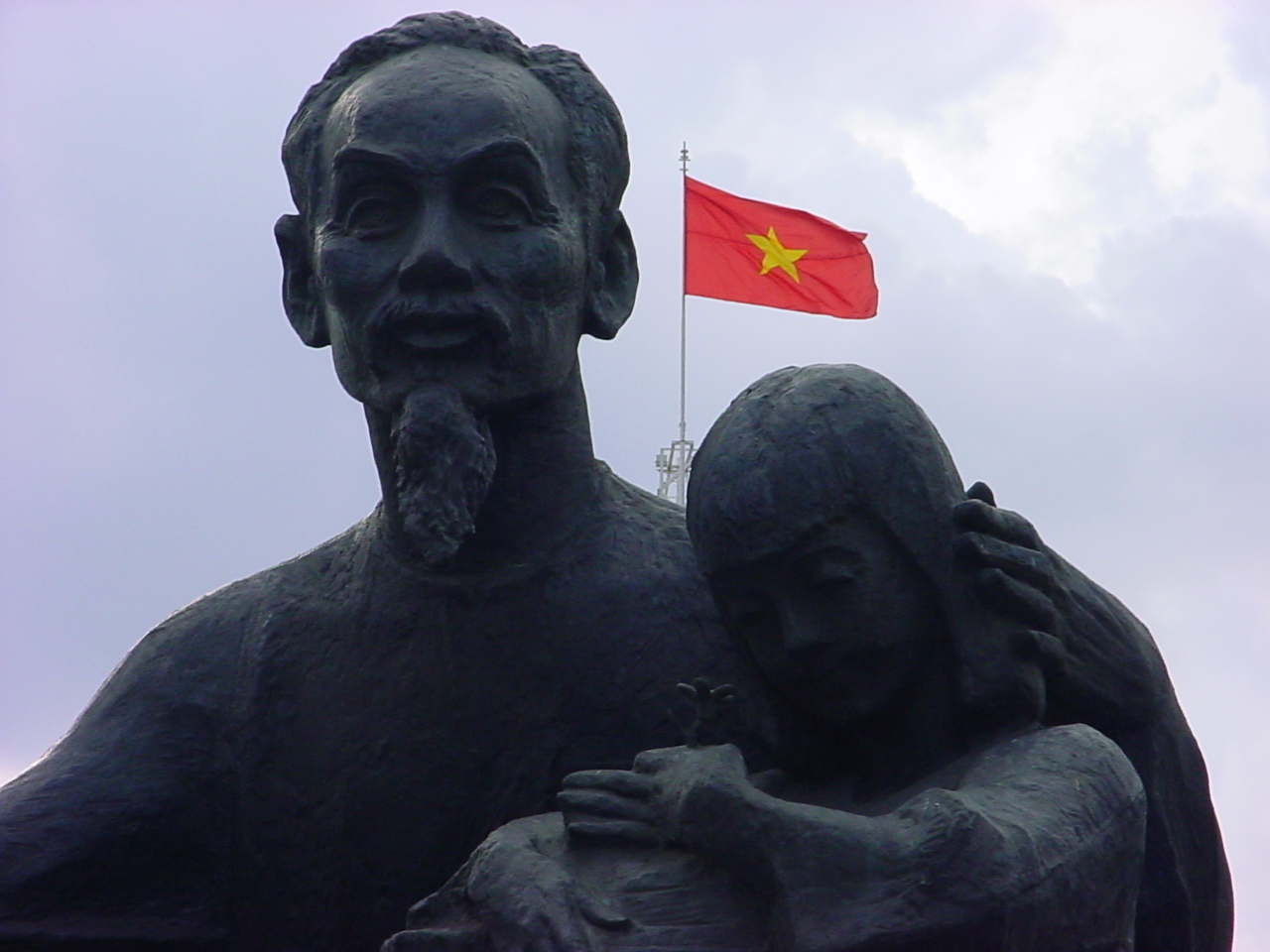
Close view of the statue of Ho Chi Minh in front of HCMC City Hall, with a young girl and the national flag behind. Since my last visit, this seated statue has been replaced with a standing figure of Uncle Ho waving at the people.
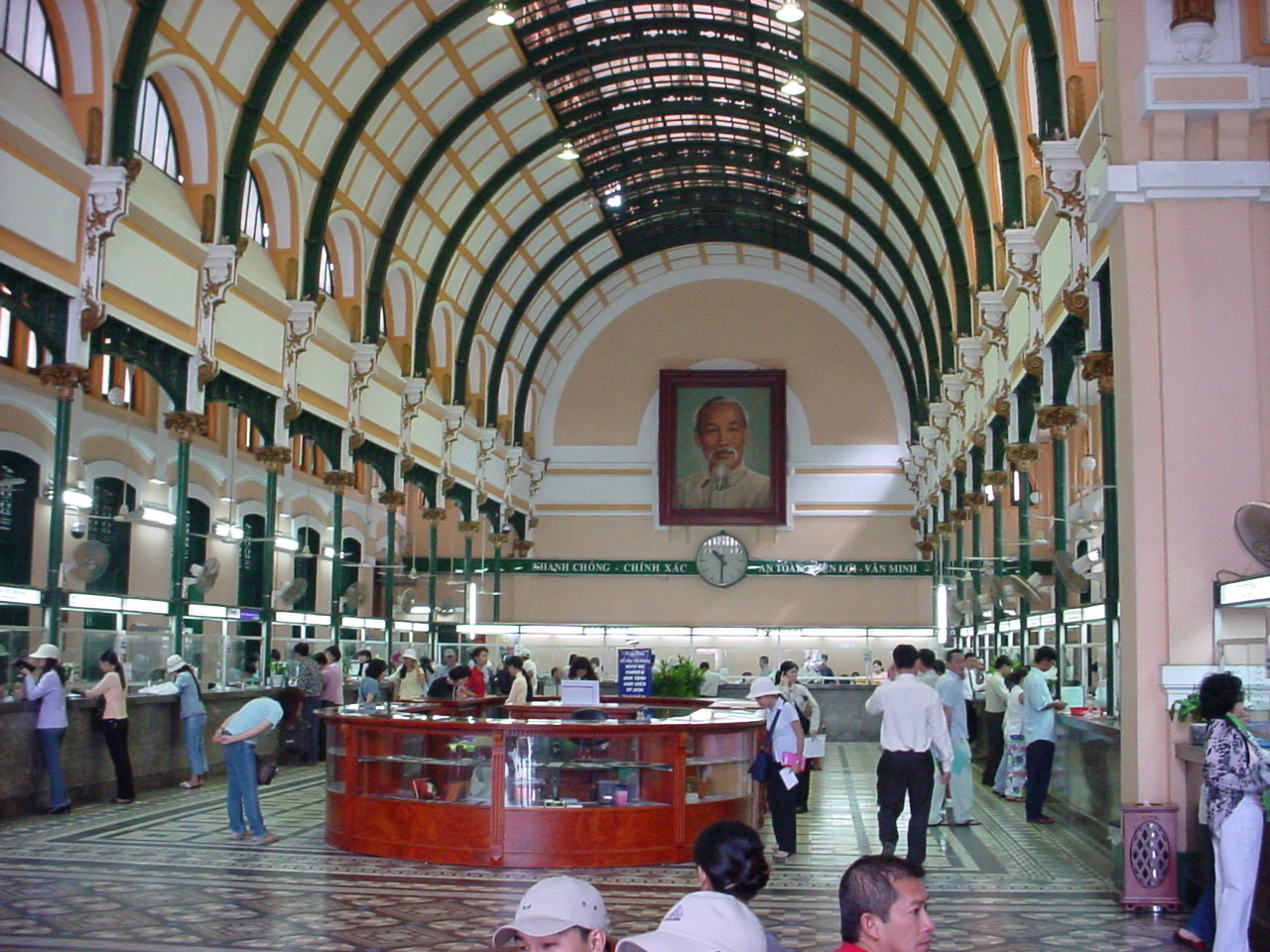
Uncle Ho, as he is affectionally known, is ubiquitous in his appearance in public buildings, with the Saigon Central Post Office being no exception. Another example of French colonial architecture, it was completed in 1891 and hasn’t changed much inside since then.
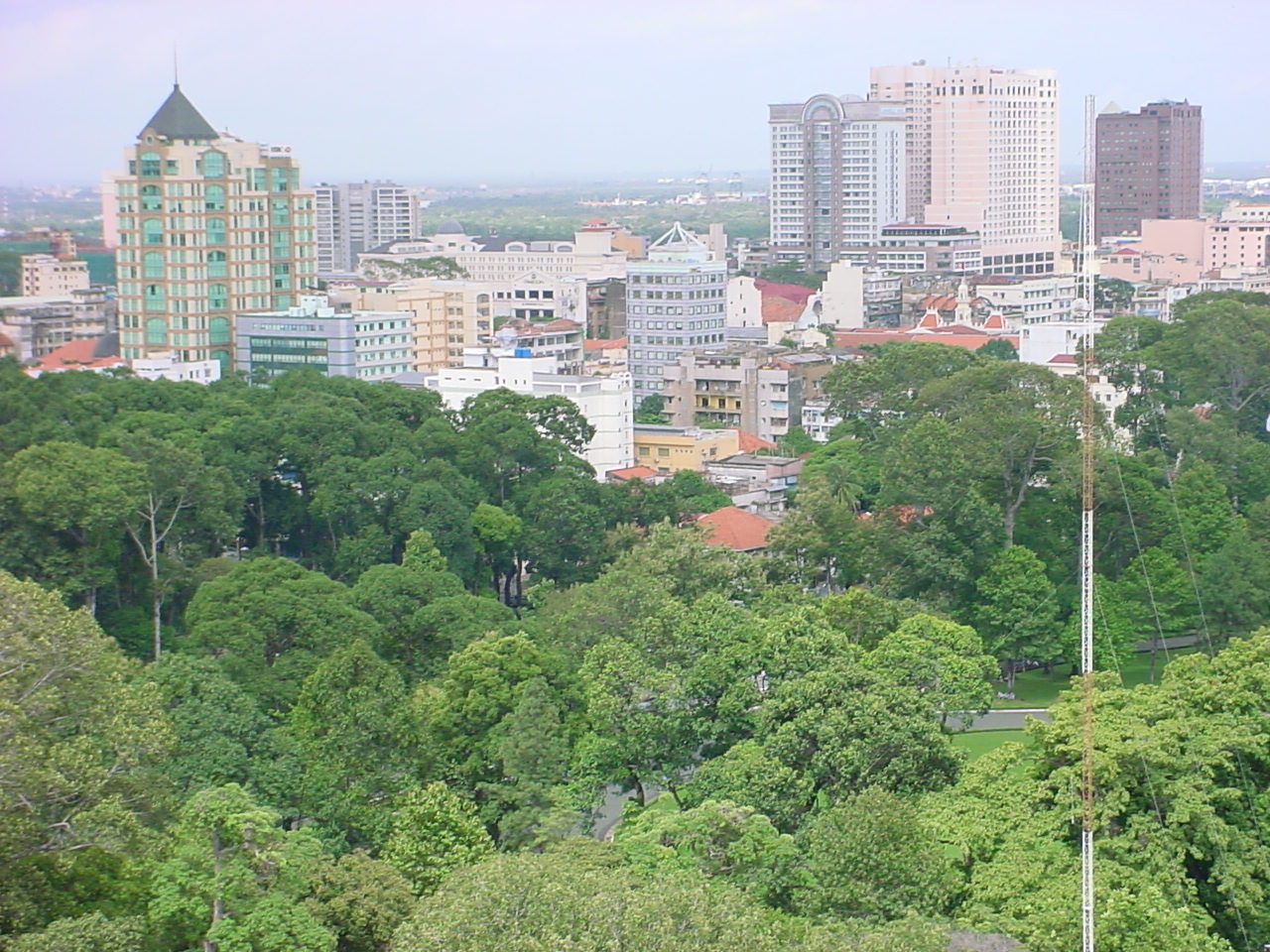
The view from the top of the Indochine Park Tower on the edge of District 3, looking across the Reunification Palace park towards the cluster of hotel and office buildings before the Saigon River. This picture was taken in 2005, and I expect the view has changed beyond recognition since then.
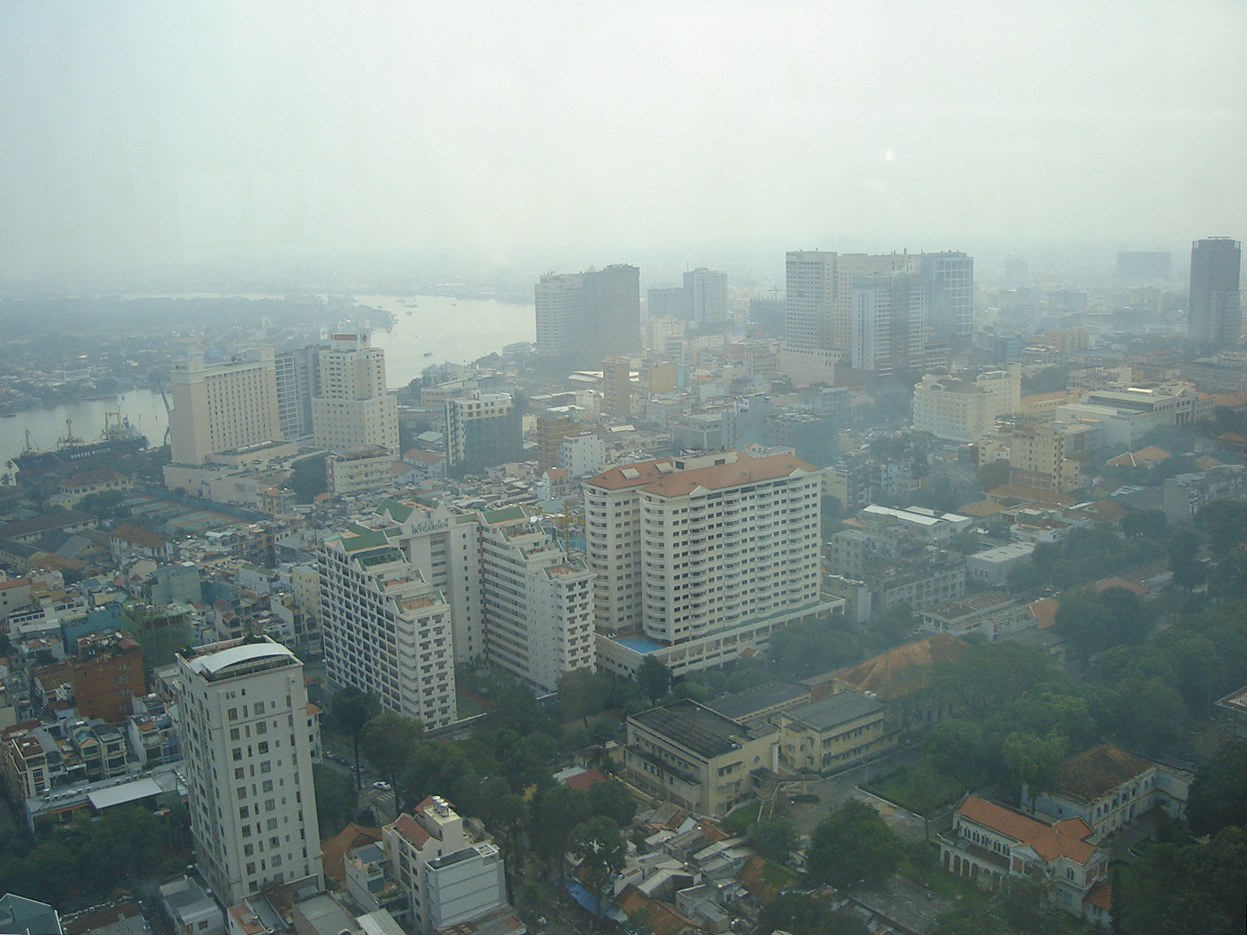
Another aerial view, this time from the top of the Saigon Trade Centre and also in 2005, with the Saigon River clearly visible to the south. The red-roofed apartments in the centre are Norfolk Mansion, where we would sometimes play mah-jong.
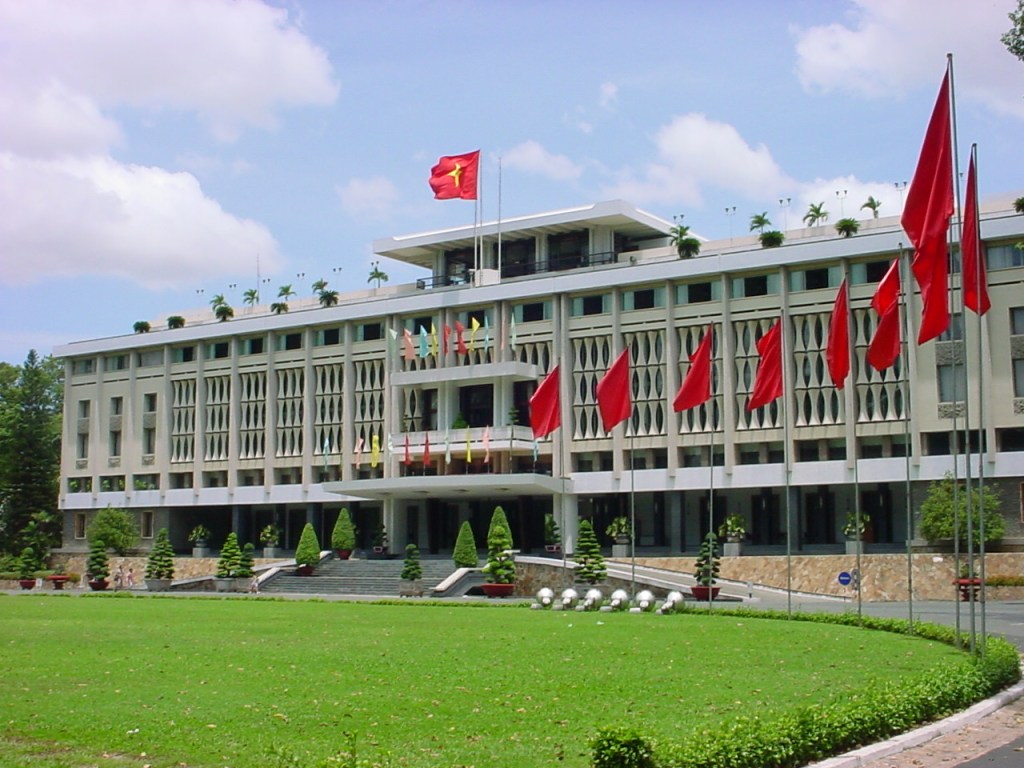
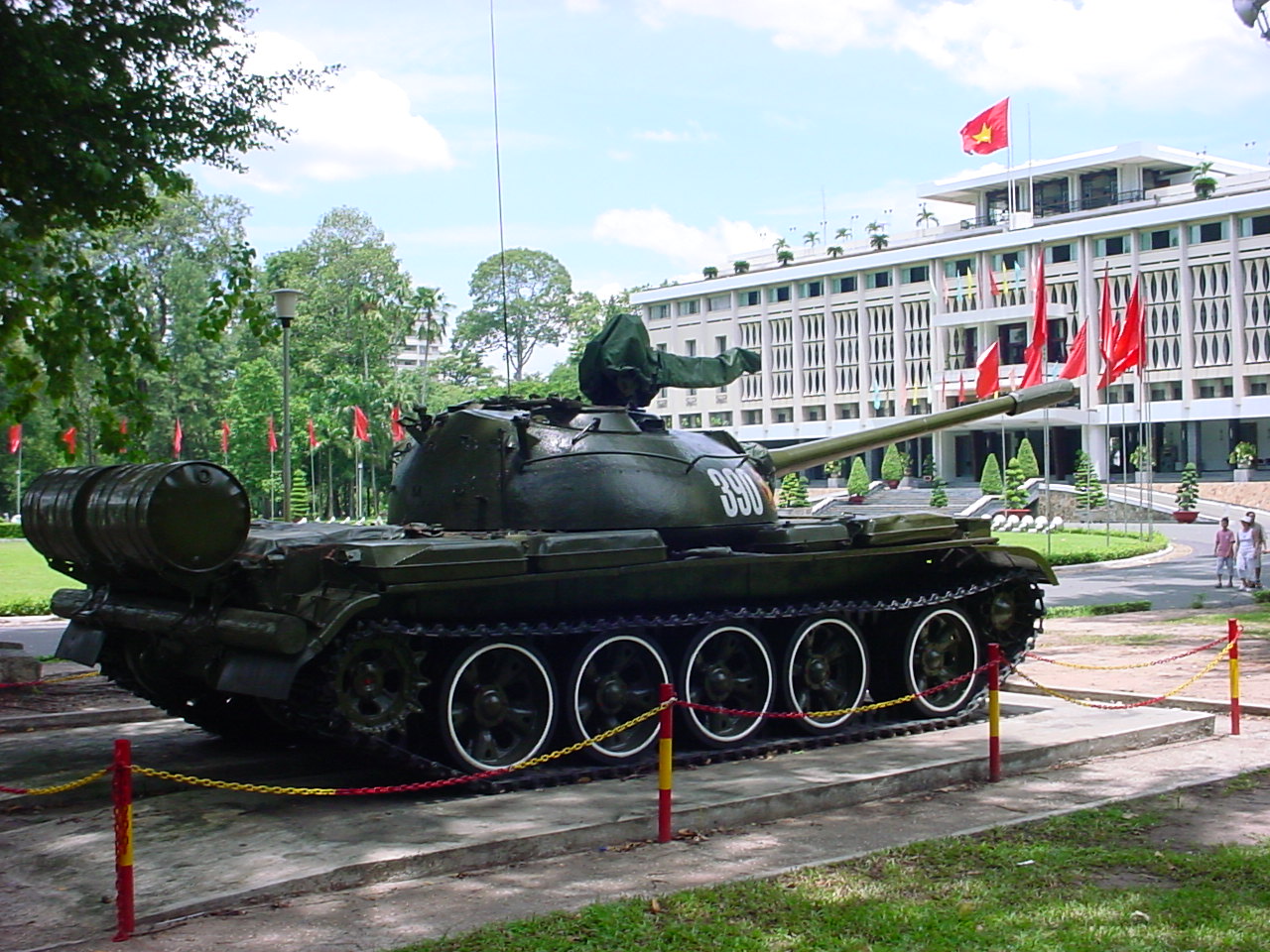
Reunification Hall, also known as Independence Palace, was the seat of government of South Vietnam from its construction in 1966 until the fall of Saigon on 30th April 1975, when the very tank pictured crashed through the gates and drove up the lawn to complete the liberation. The palace is a prominent example of Vietnamese modern architecture, inspired by bamboo.
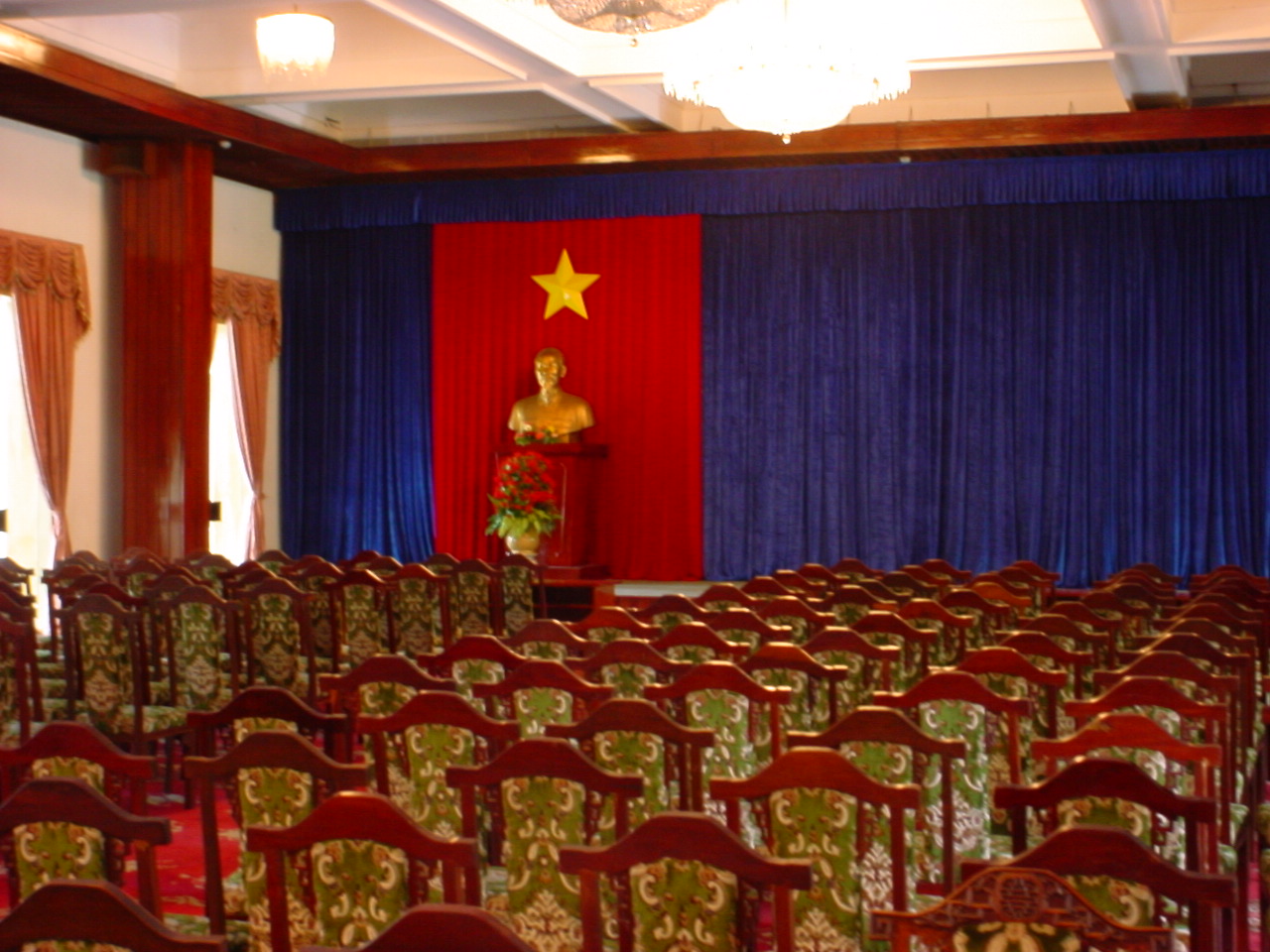
Inside the palace, a bust of Ho Chi Minh oversees one of the many conference rooms, under the Vietnamese star.
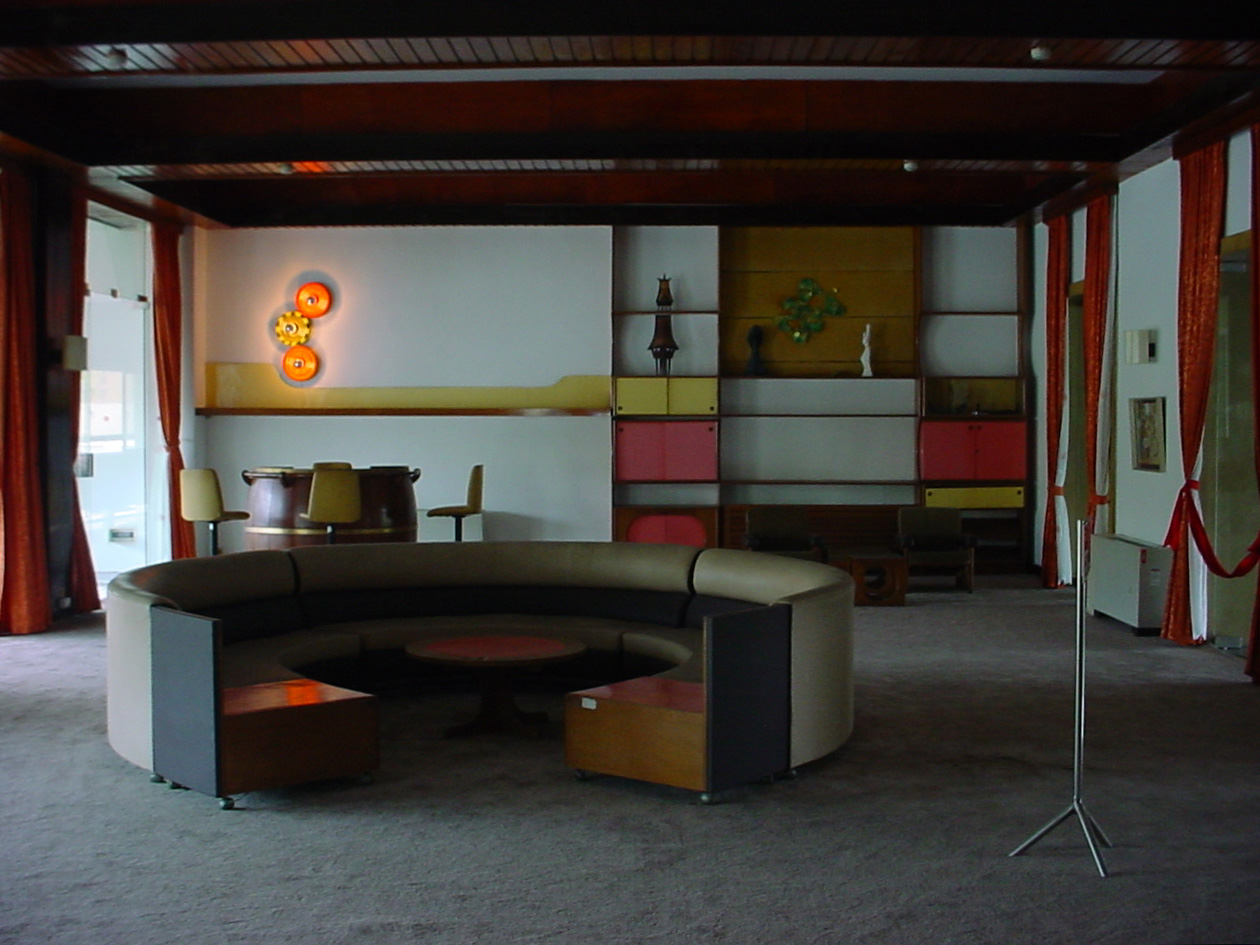
The décor has not been updated since the 1960s, and remains very much of its time. Groovy, baby!
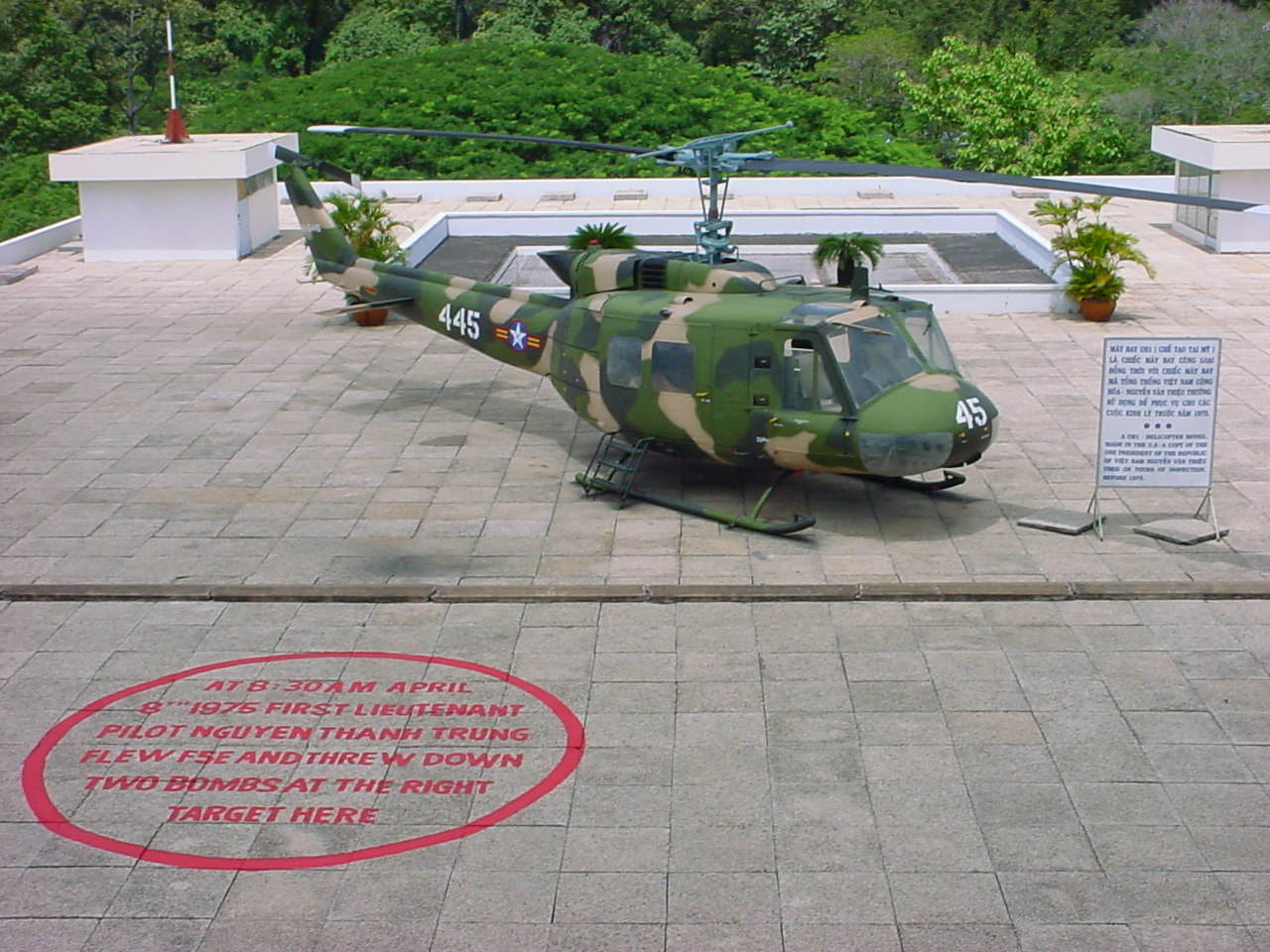
An American helicopter remains on the roof of the palace, just in case a speedy escape is required. The red circle marks where the palace roof was bombed by a lone pilot in the run-up to the liberation of 1975.
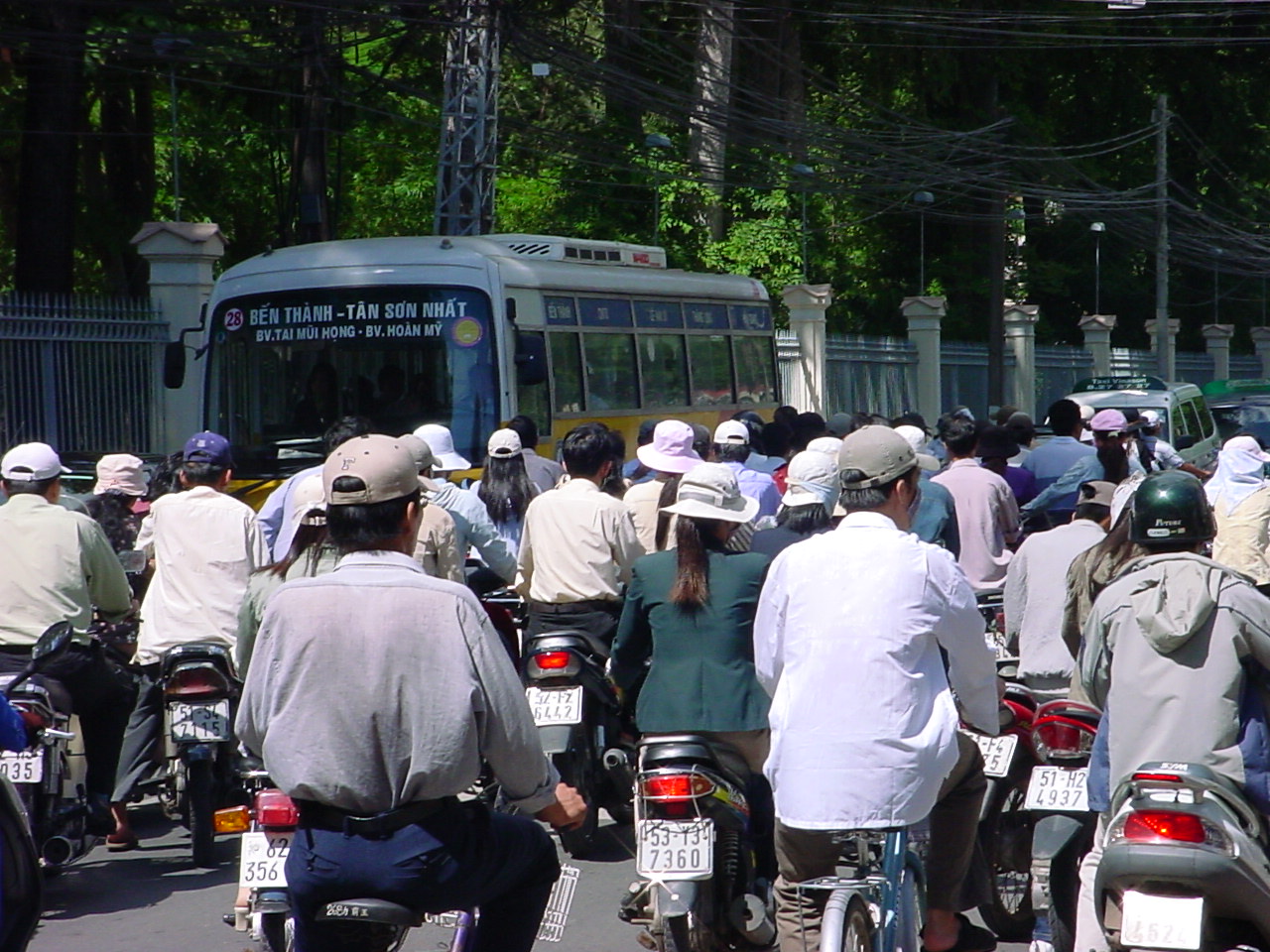
The constant thrum of motorbikes is the background noise of HCMC, with well over three million swarming the streets during my early visits. A helmet law was introduced latterly, and overnight, with remarkable organisation, suddenly everyone was wearing helmets. The bus battling against the current is heading to Tan Son Nhat, the international airport and former American air force base.
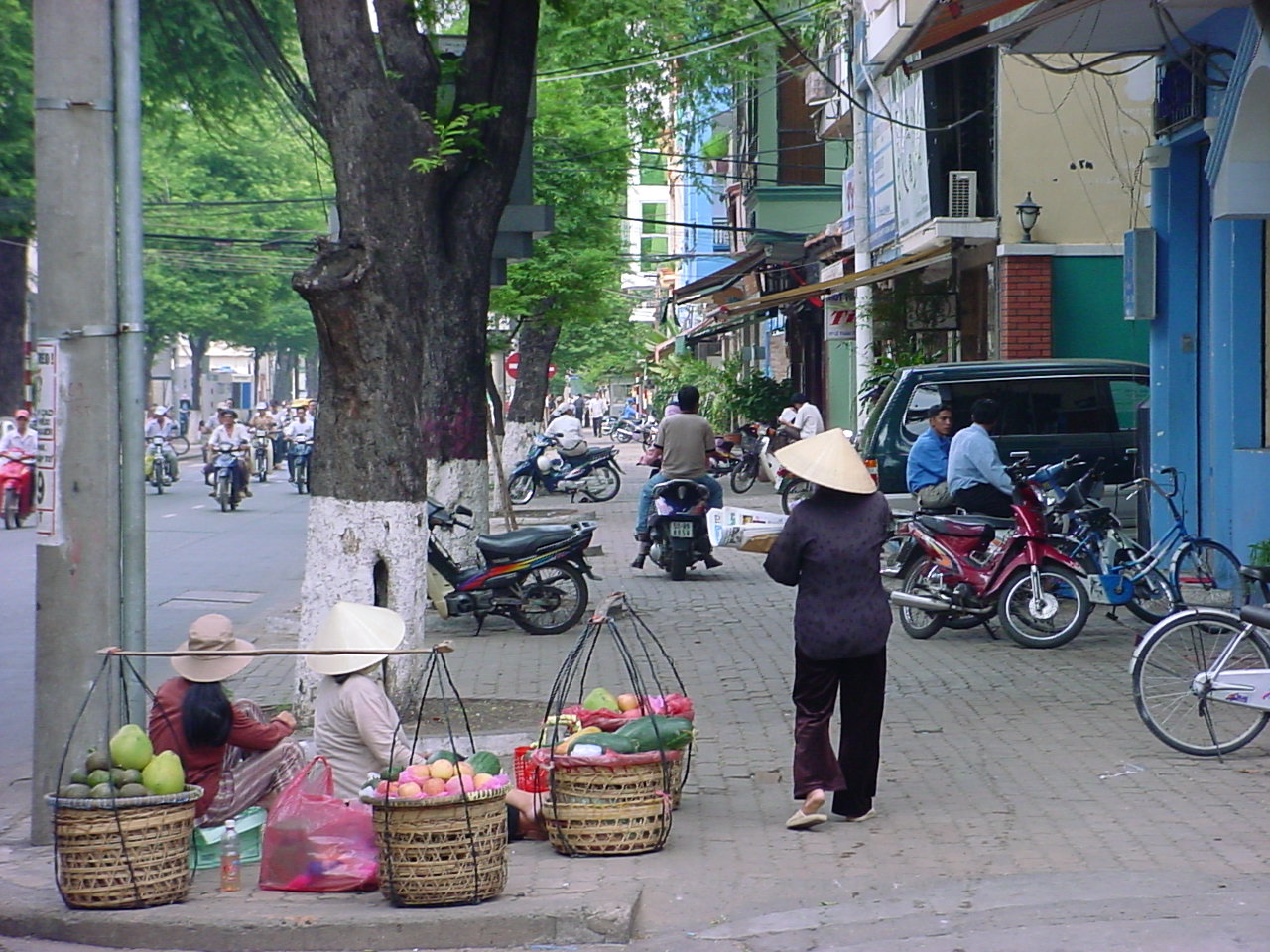
A typical street scene around central Saigon, with vendors sitting on the pavement sporting the traditional Vietnamese conical hat, the nón lá.
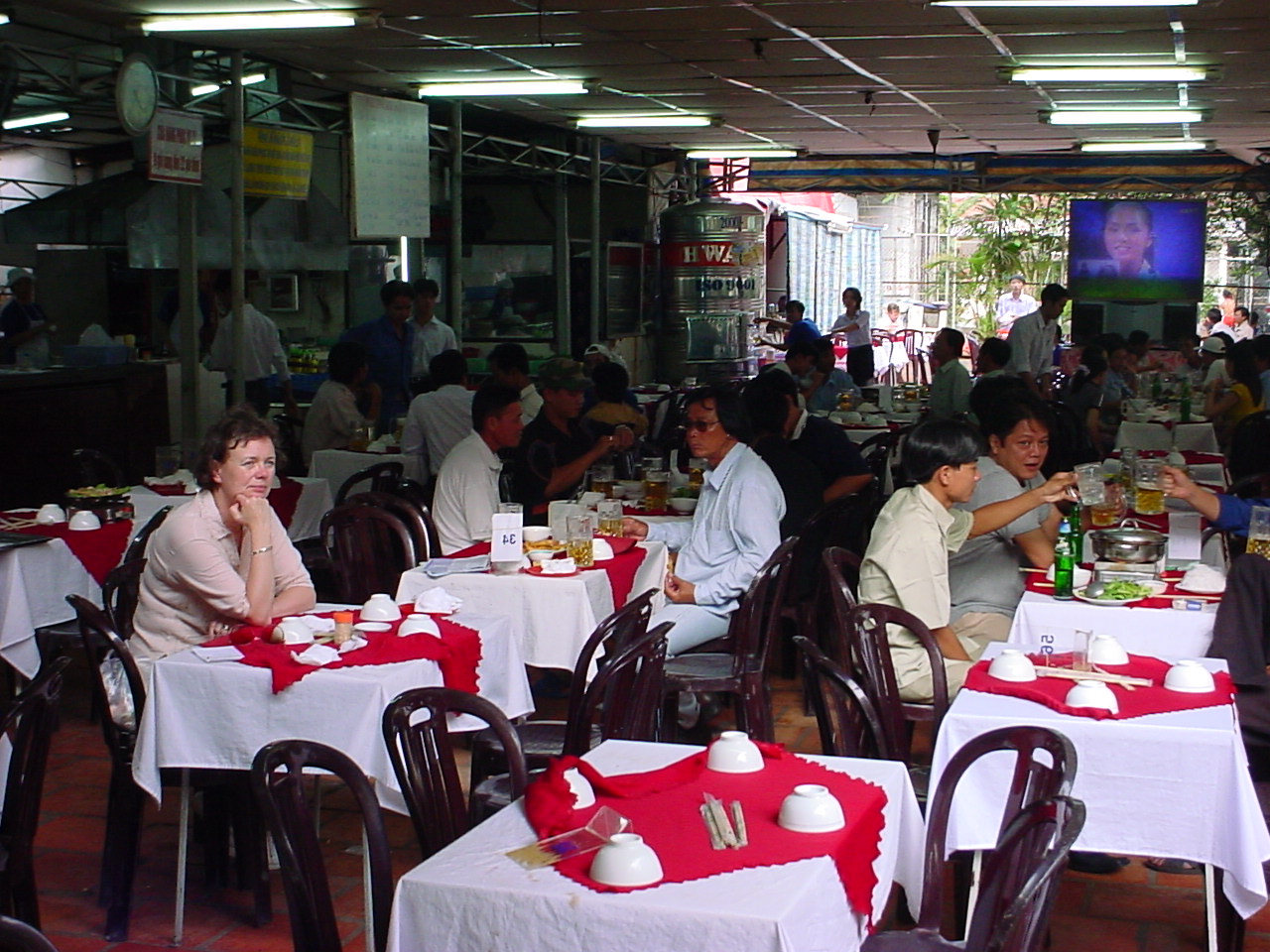
Another typical Vietnamese scene, a bia hơi (fresh beer) where a two thousand litre tank of the good stuff is freshly brewed daily, visible in the background. One chap’s sole job was to pull pints all day while others would serve them up with grilled prawns and noodles. Fantastic in the tropical heat, especially with the large chunk of ice they’d sometimes throw in.
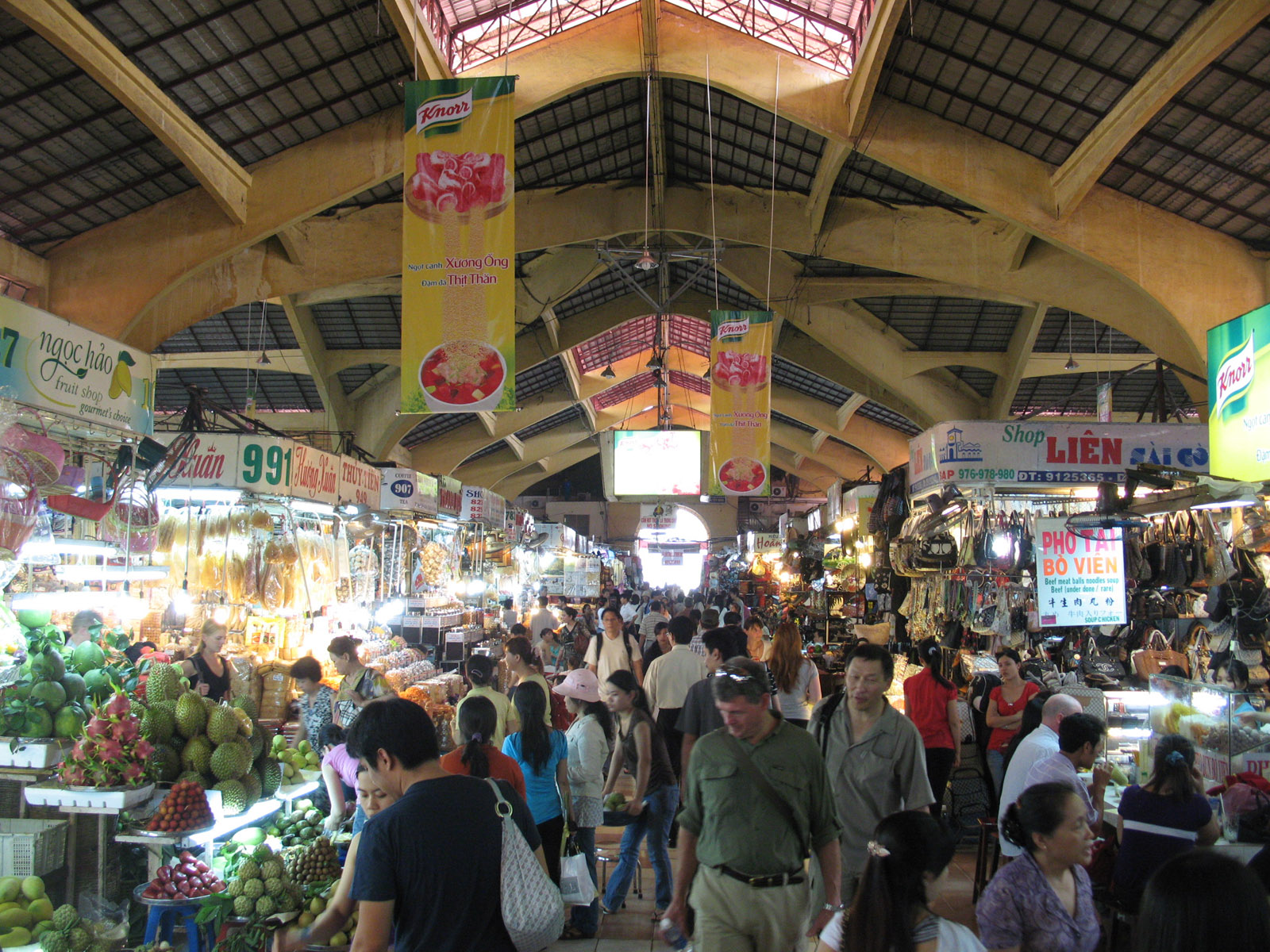
Another famous city institution, Ben Thanh Market has been touting wares since 1912 and is popular with locals and tourists alike. Just a few streets behind is the possibly even more popular backpacker district of Bùi Viện.
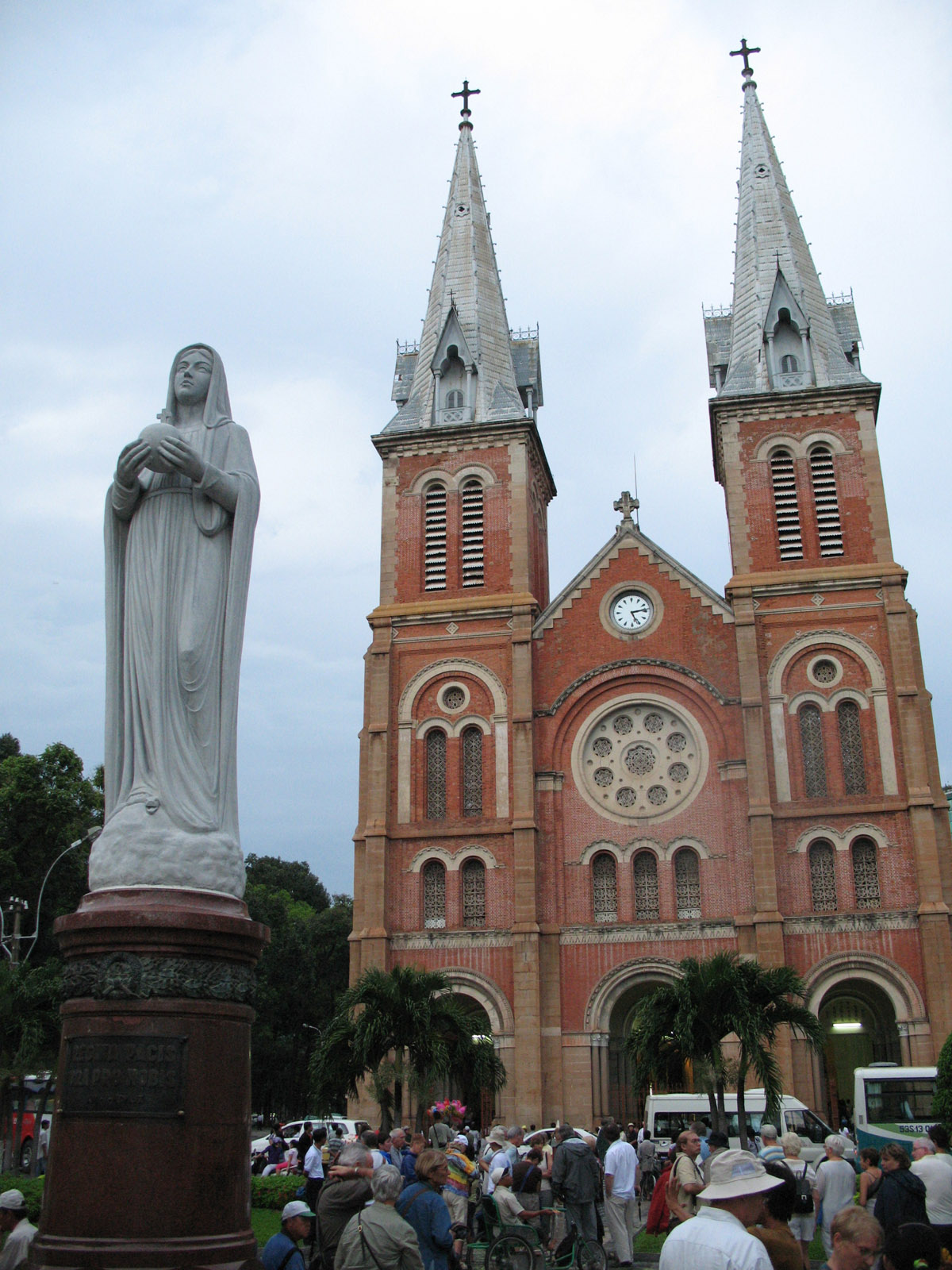
Notre Dame Cathedral Basilica of Saigon is the centre of the city’s Catholic faith, and was completed by the French in 1880. The statue outside is of the Virgin Mary.
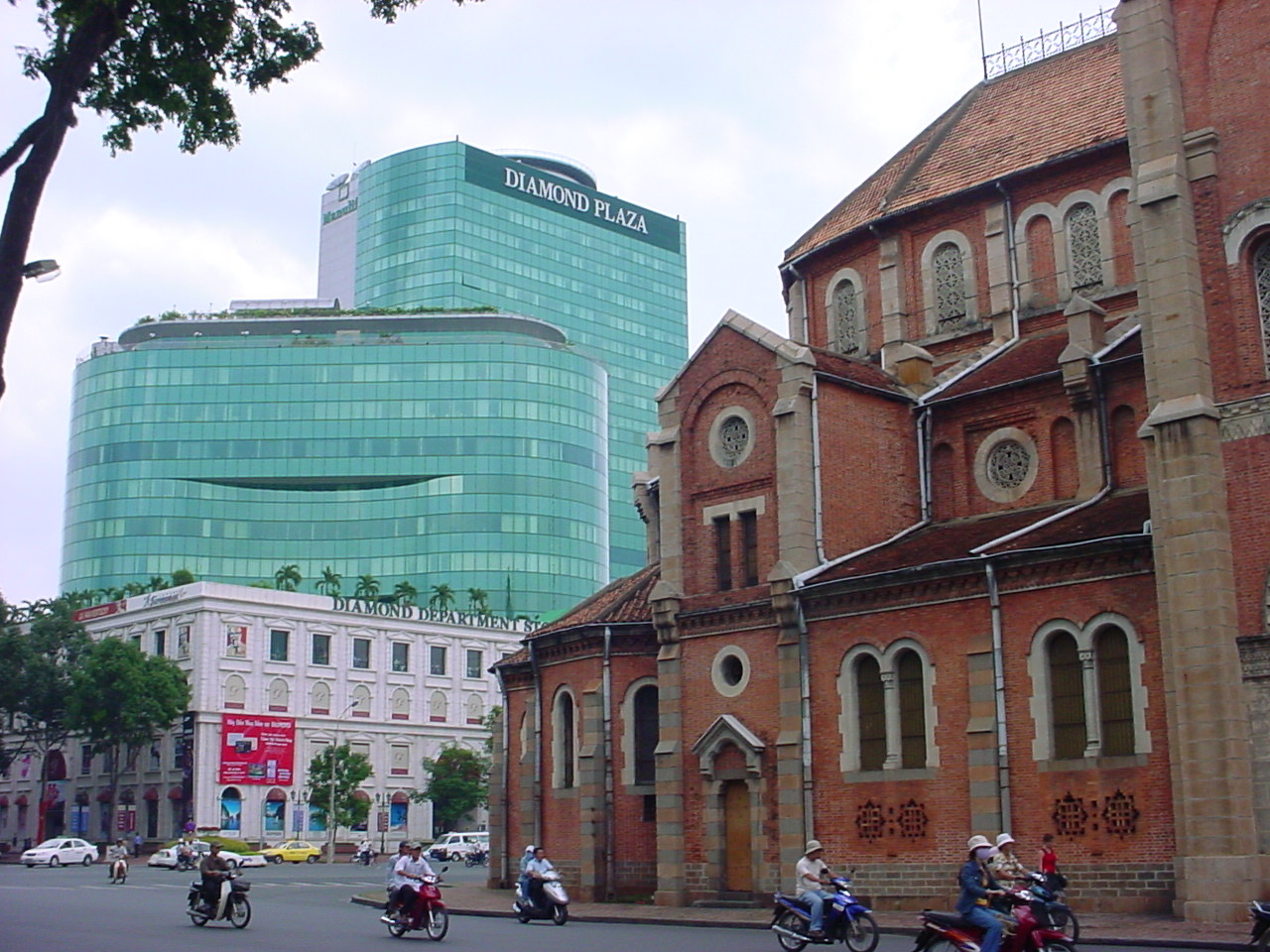
Overlooking the south of the cathedral is another place of worship, this one devoted to capitalism in the form of Diamond Plaza department store and corporate offices. It opened in 1999, only a few years after the end of the American embargo and was a clear symbol of progress.
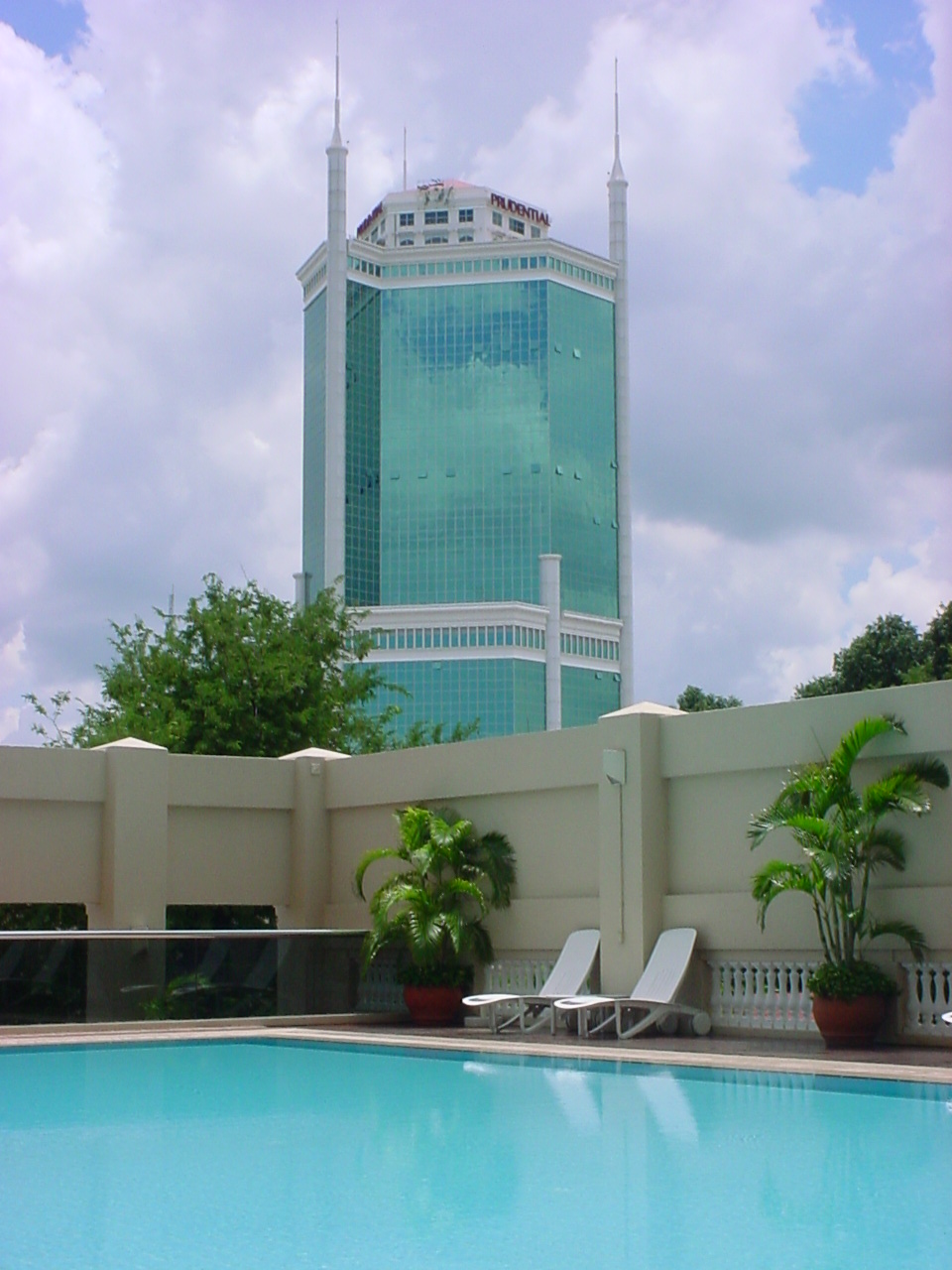
A further monument to commerce is the Saigon Trade Center, as seen from Norfolk Mansion following the morning’s mah-jong. It was the tallest building in the city from its completion in 1997 until 2010, and has a Western restaurant at the top which serves a tasty burger, plus a Vietnamese restaurant which serves local fare for one-tenth of the price.
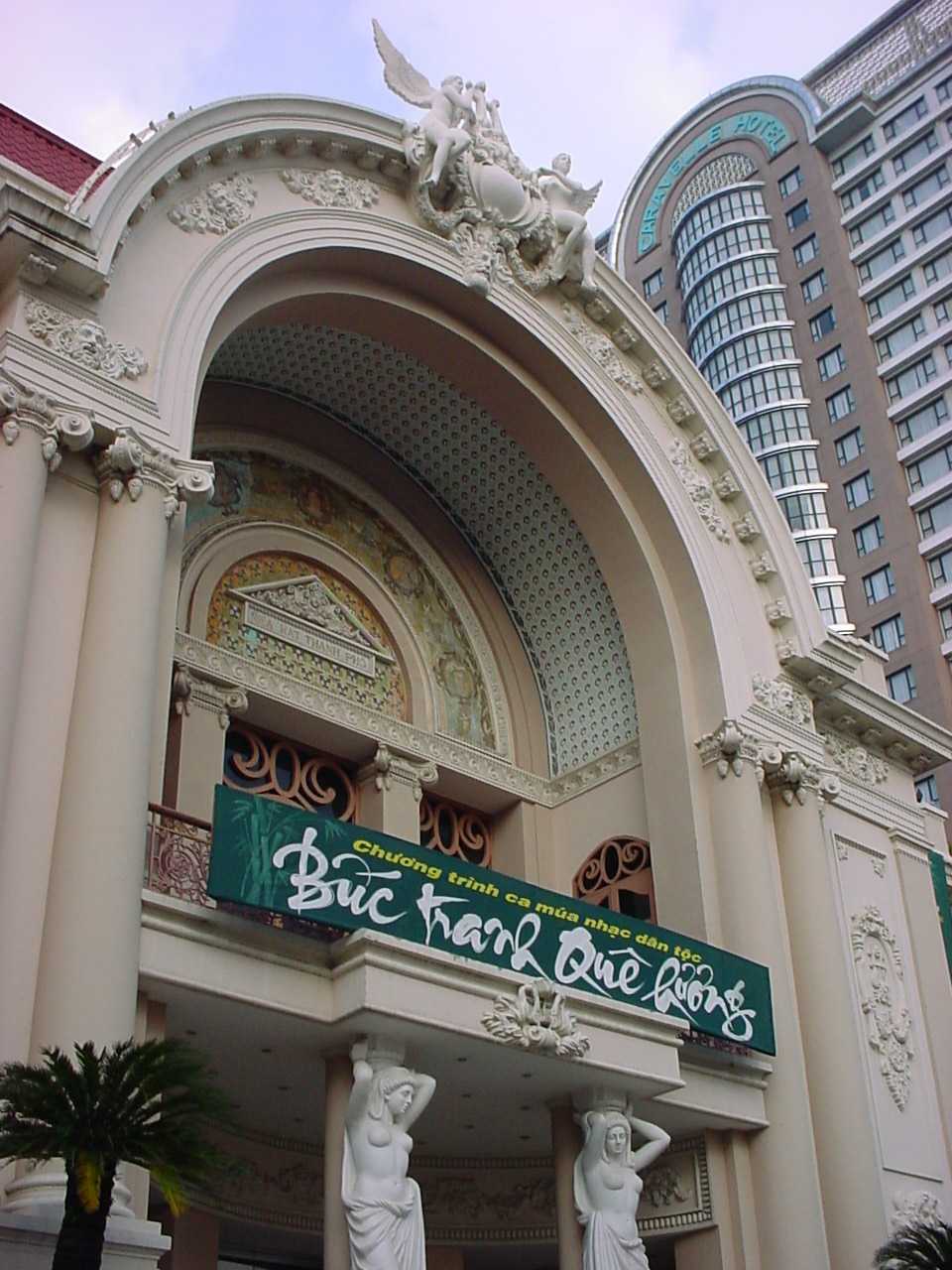
Saigon Opera House is another fine example of French colonial architecture, influenced by the Petit Palais in Paris, and delighting audiences since 1900. The Caravelle Hotel’s arch to the right pleasingly mirrors the opera house’s form. It was the lodging of most of the British and American journalists during the war in the late 1960s to early 1970s, but the tower is a more recent addition.
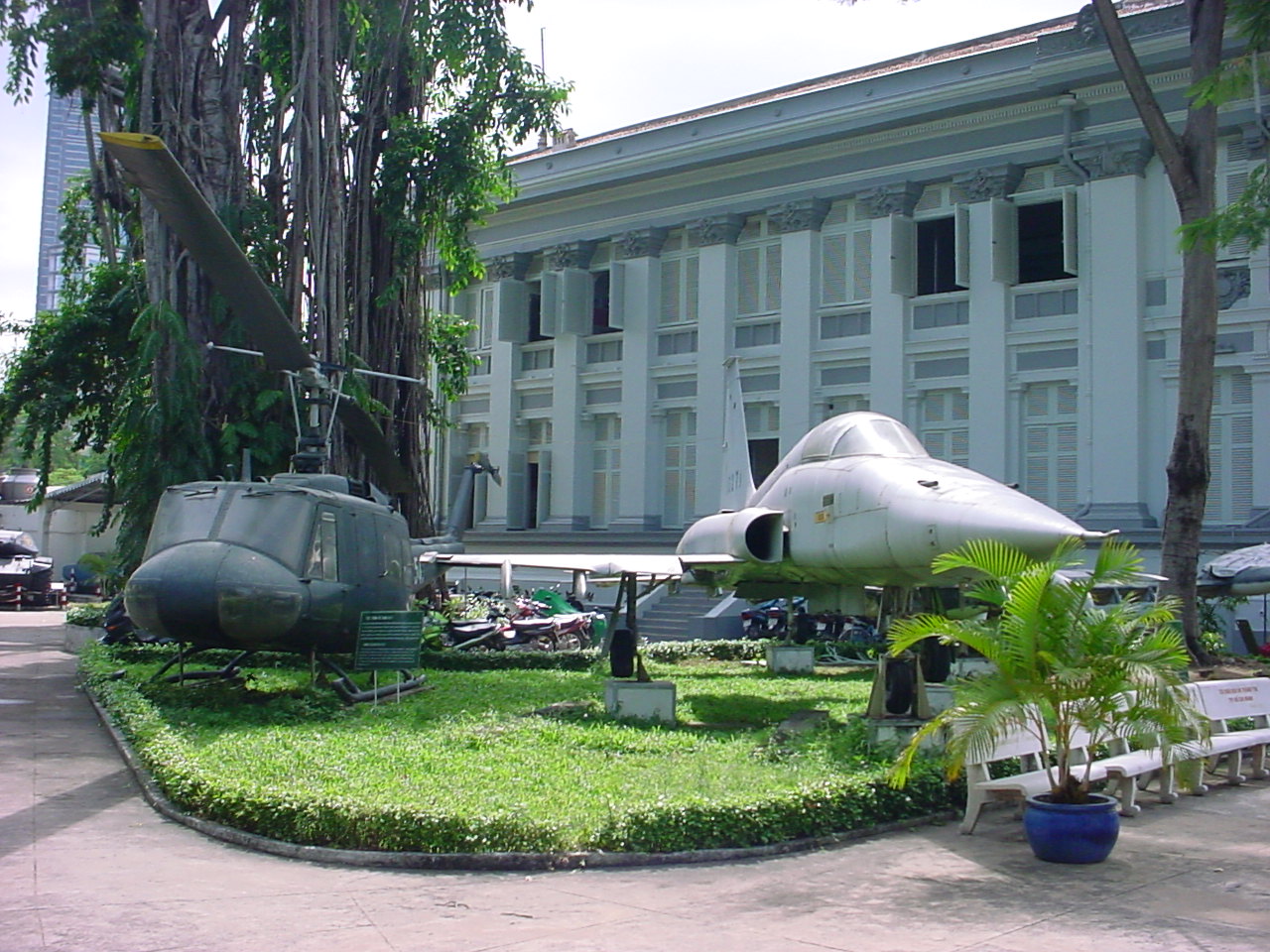
Any museum worth its salt in Vietnam will sport captured or abandoned American military hardware as an exterior exhibit, with the Ho Chi Minh City Museum certainly playing its part. This is an example of a Bell Huey helicopter as can be seen in all Vietnam War movies, and an F-5 jet.
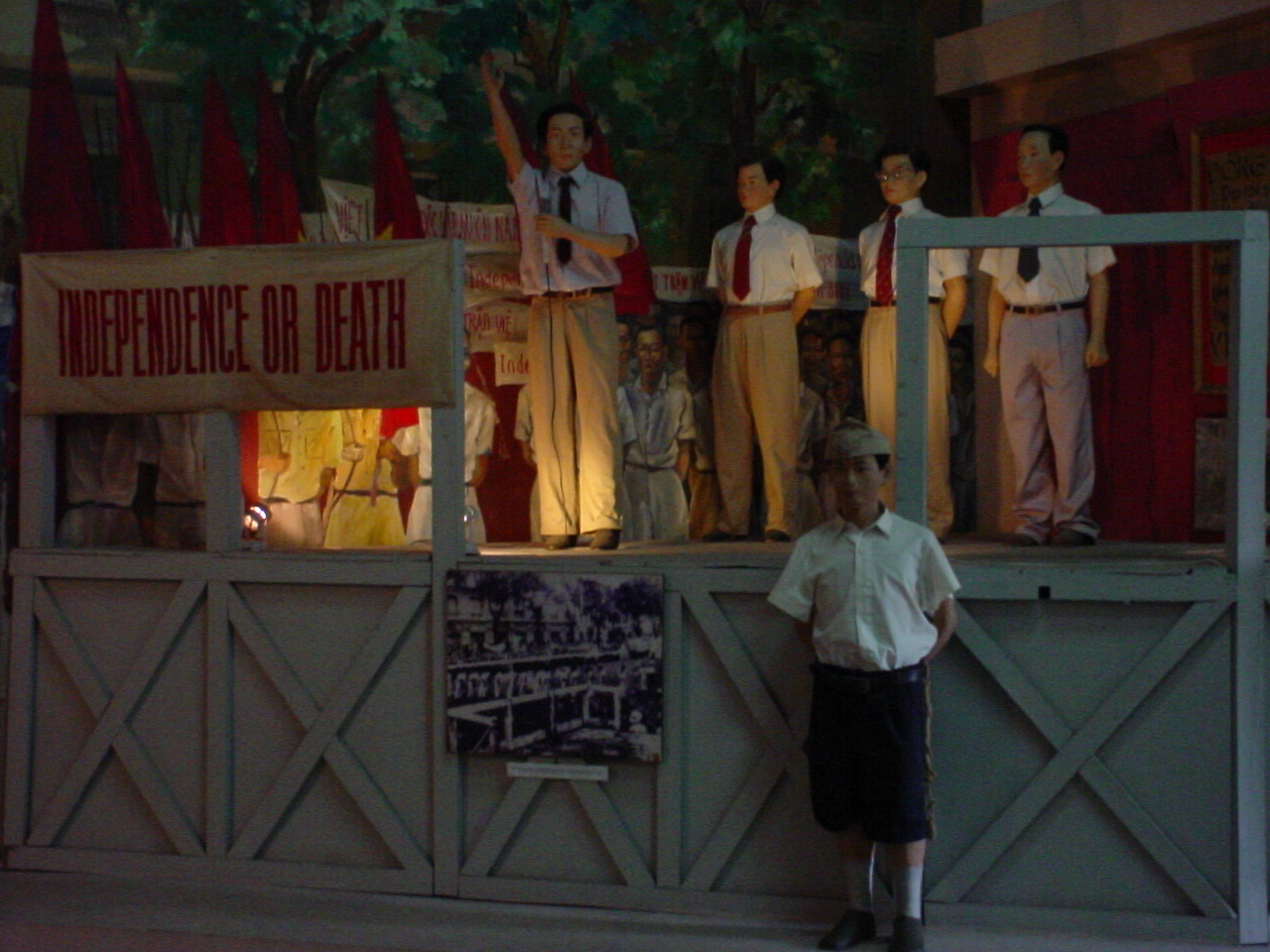
An example of one of the exhibits inside the City Museum. Vietnamese revolutionaries certainly didn’t mince their words.
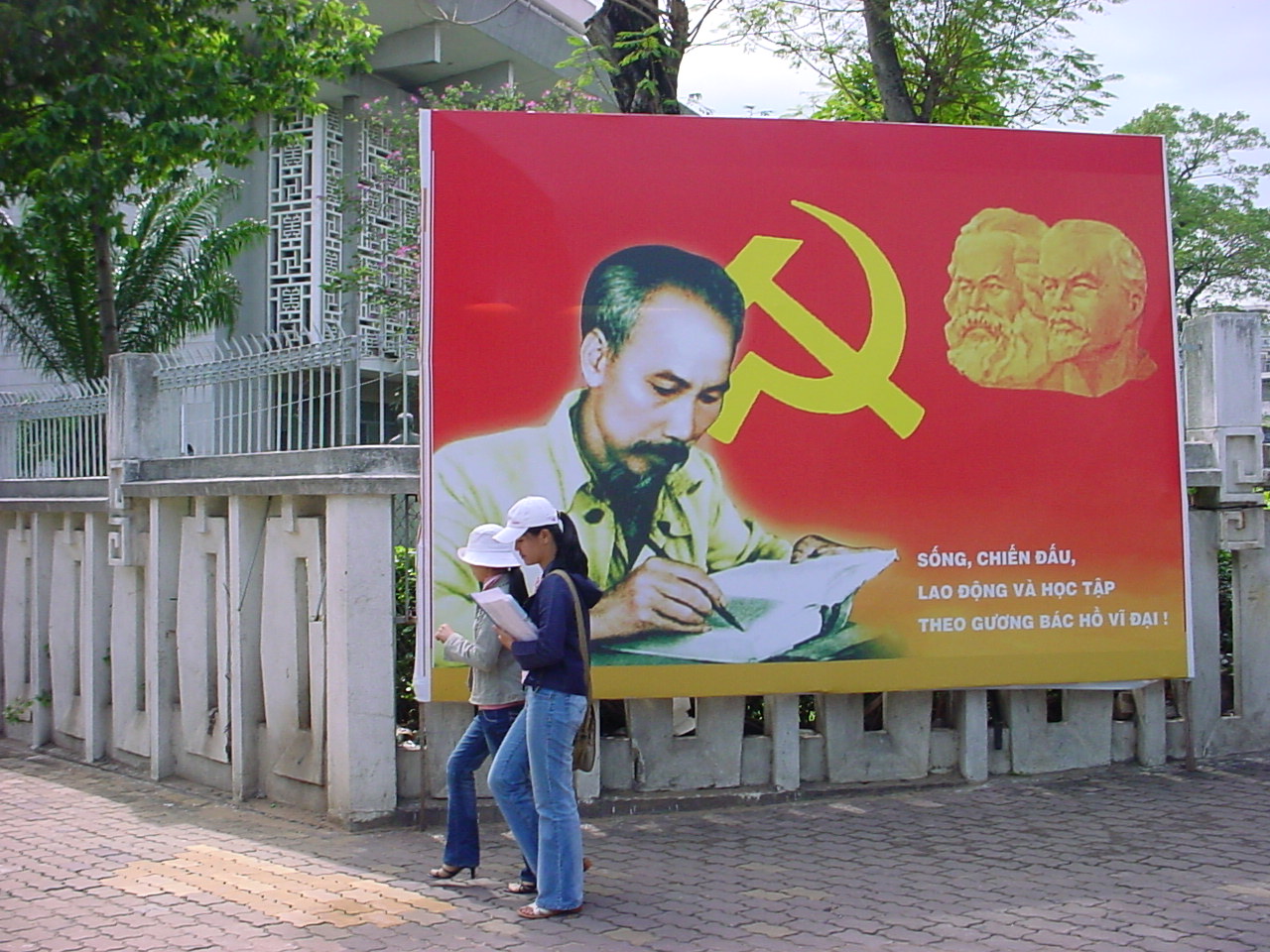
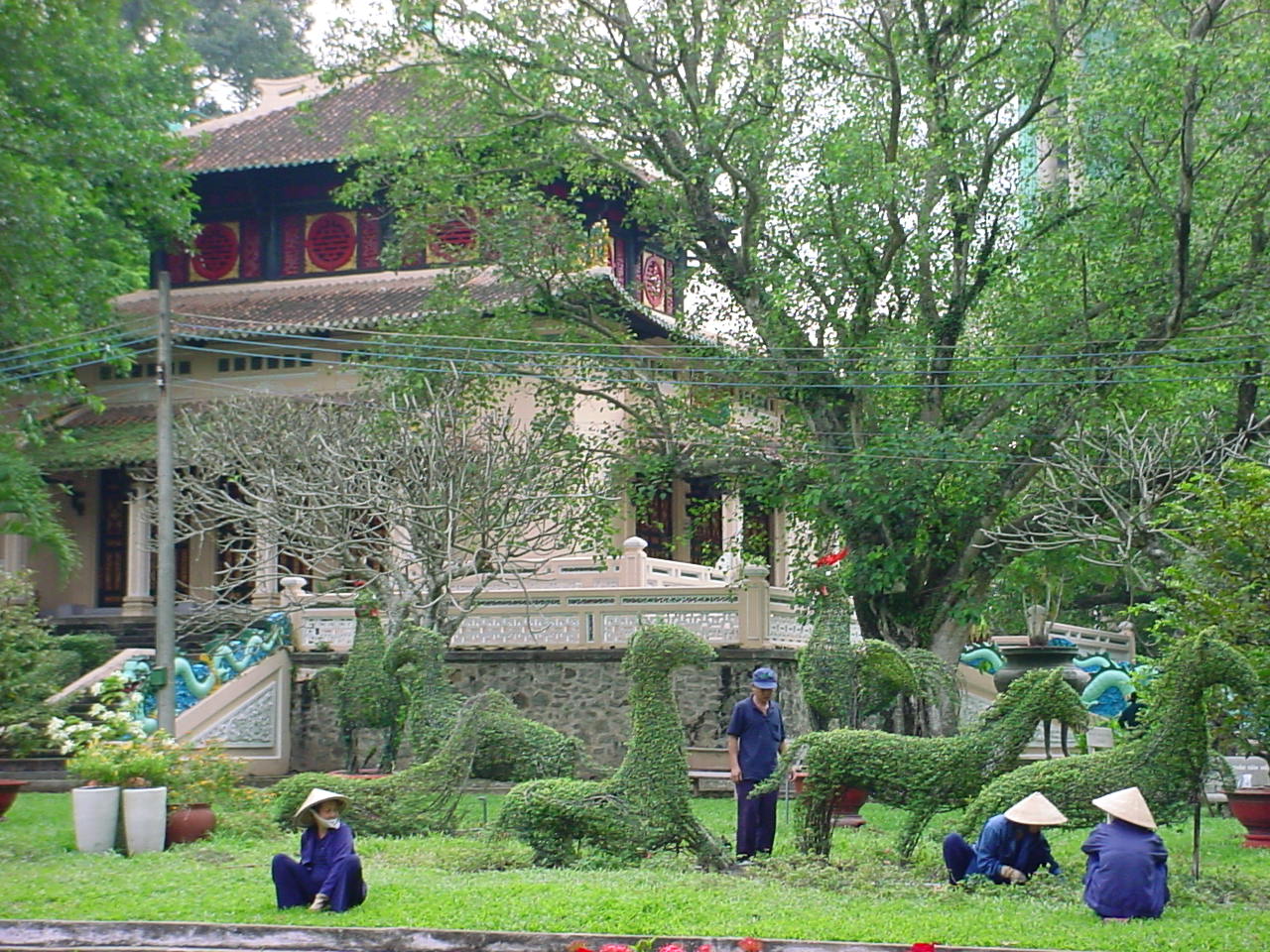
Over to Saigon Zoo and Botanical Gardens next, which was being very well tended by a team of hatted gardeners. The zoo hosts real animals as well as topiary fauna.
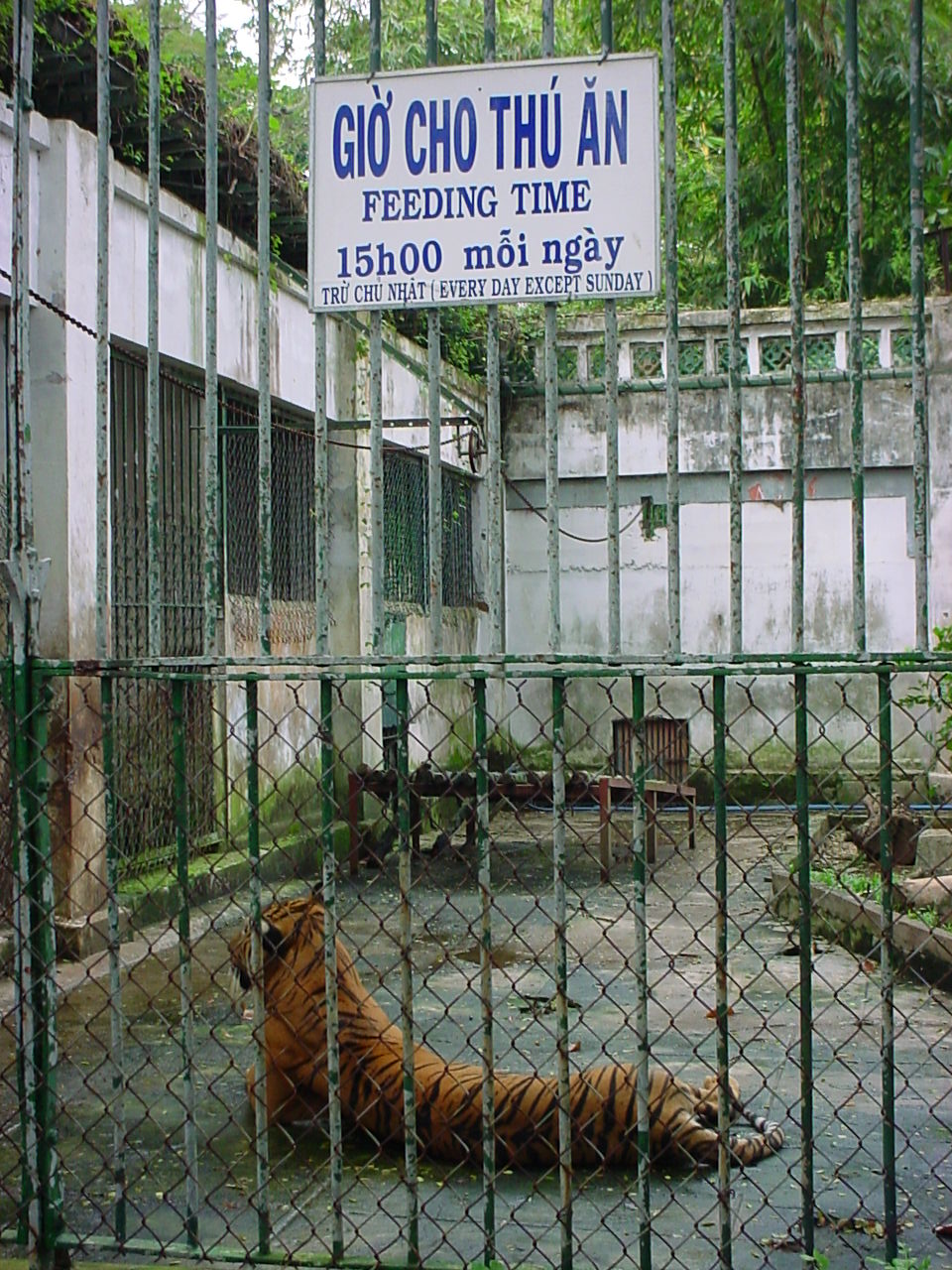
Feeding time at the city zoo didn’t leave much to the imagination – instead of getting a nice side of beef or bowl of milk, these tigers were lucky enough to have live bunny rabbits thrown through the bars by the zookeepers. Not for the faint of heart, or for people who have a pet called Flopsy.
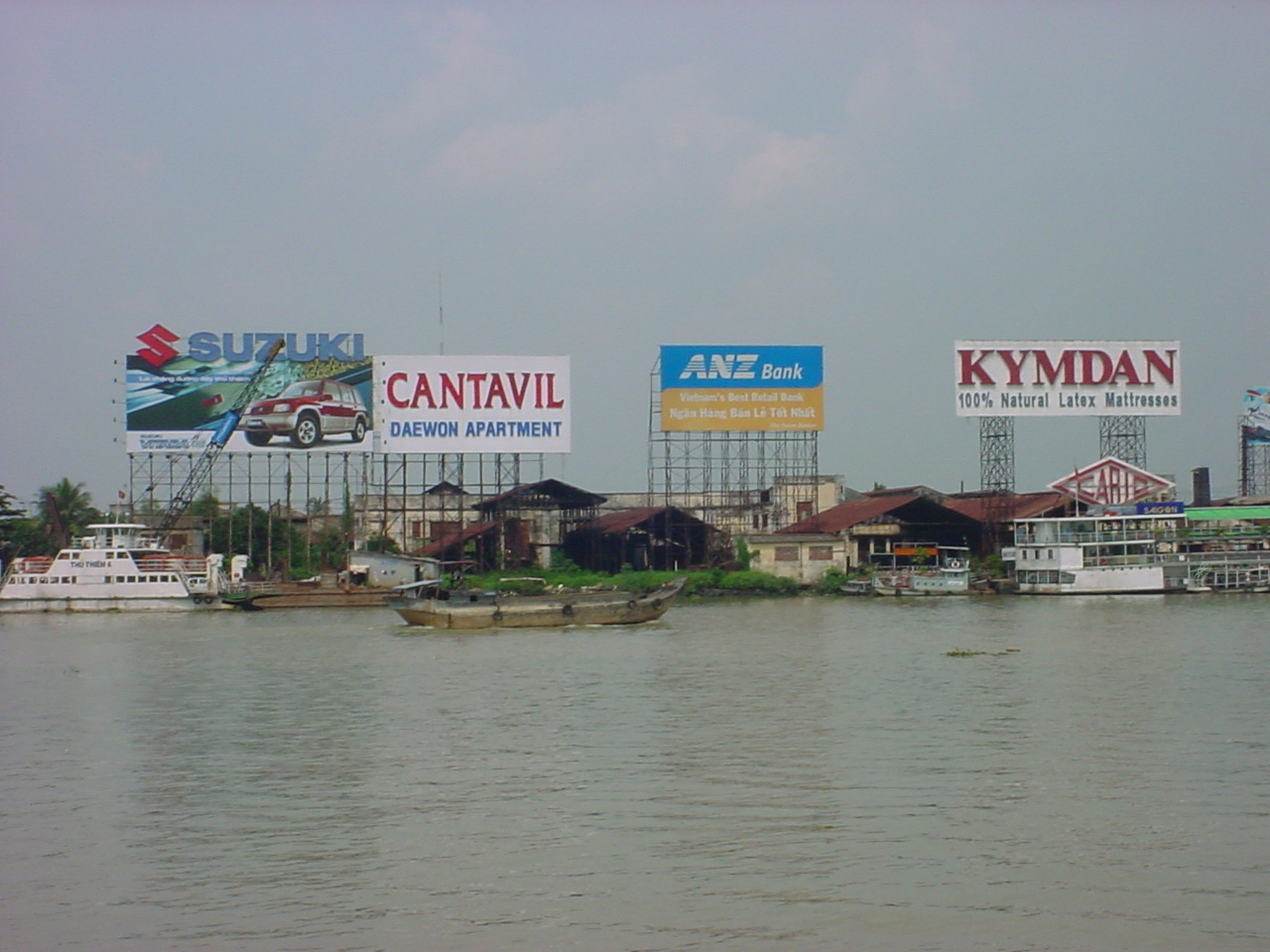
The Saigon River was perpetually swollen and sporting drifting vegetation on its way to the Mekong Delta, but during my visits it had very few bridge crossings, leading to the opposite side being sparsely developed, save for billboards.
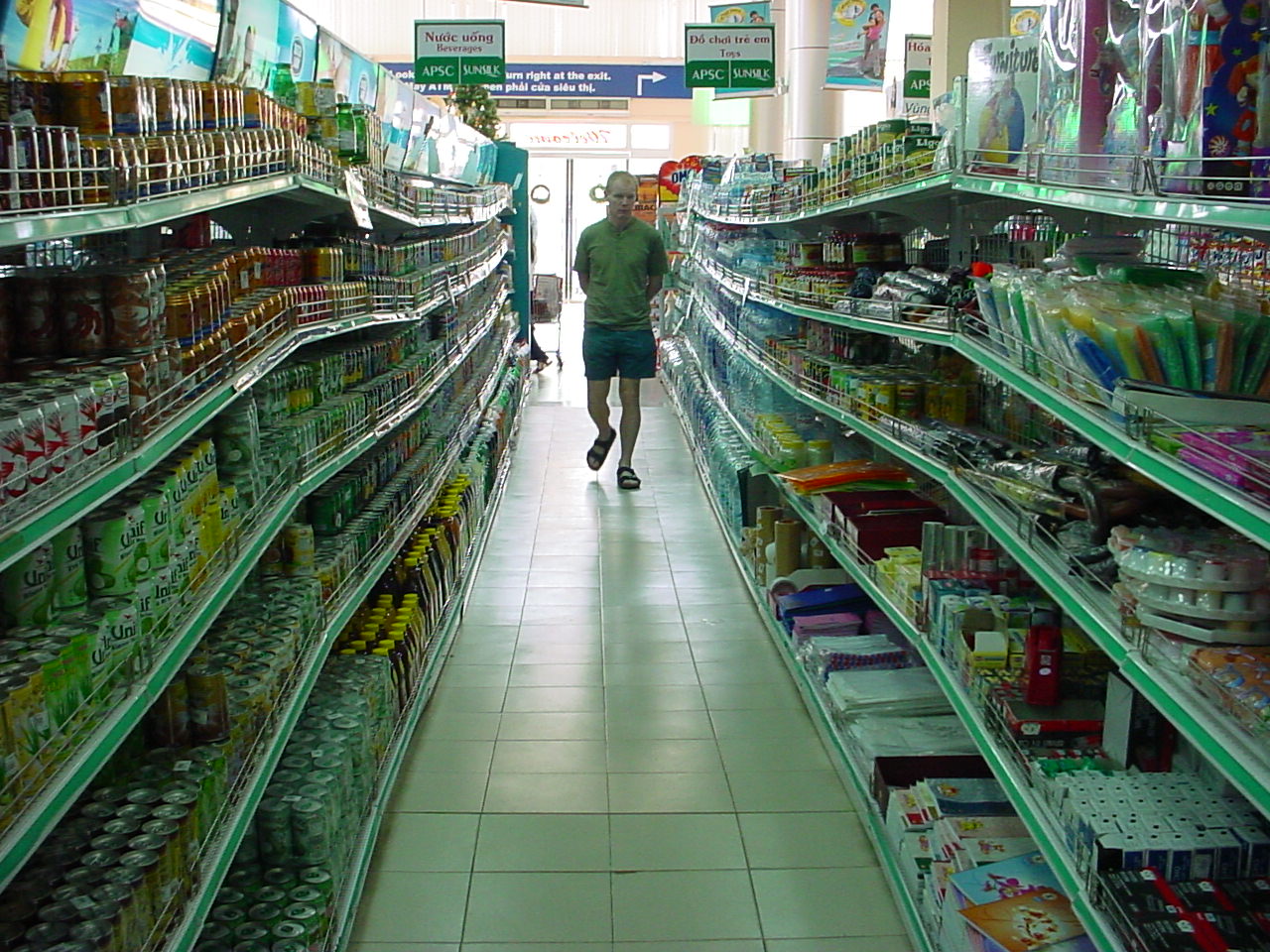
The high level of groundwater was very apparent at An Phú supermarket, where the entire establishment was struggling with severe subsidence. This is the edge of the BP Compound, with residences built for expats of that company.
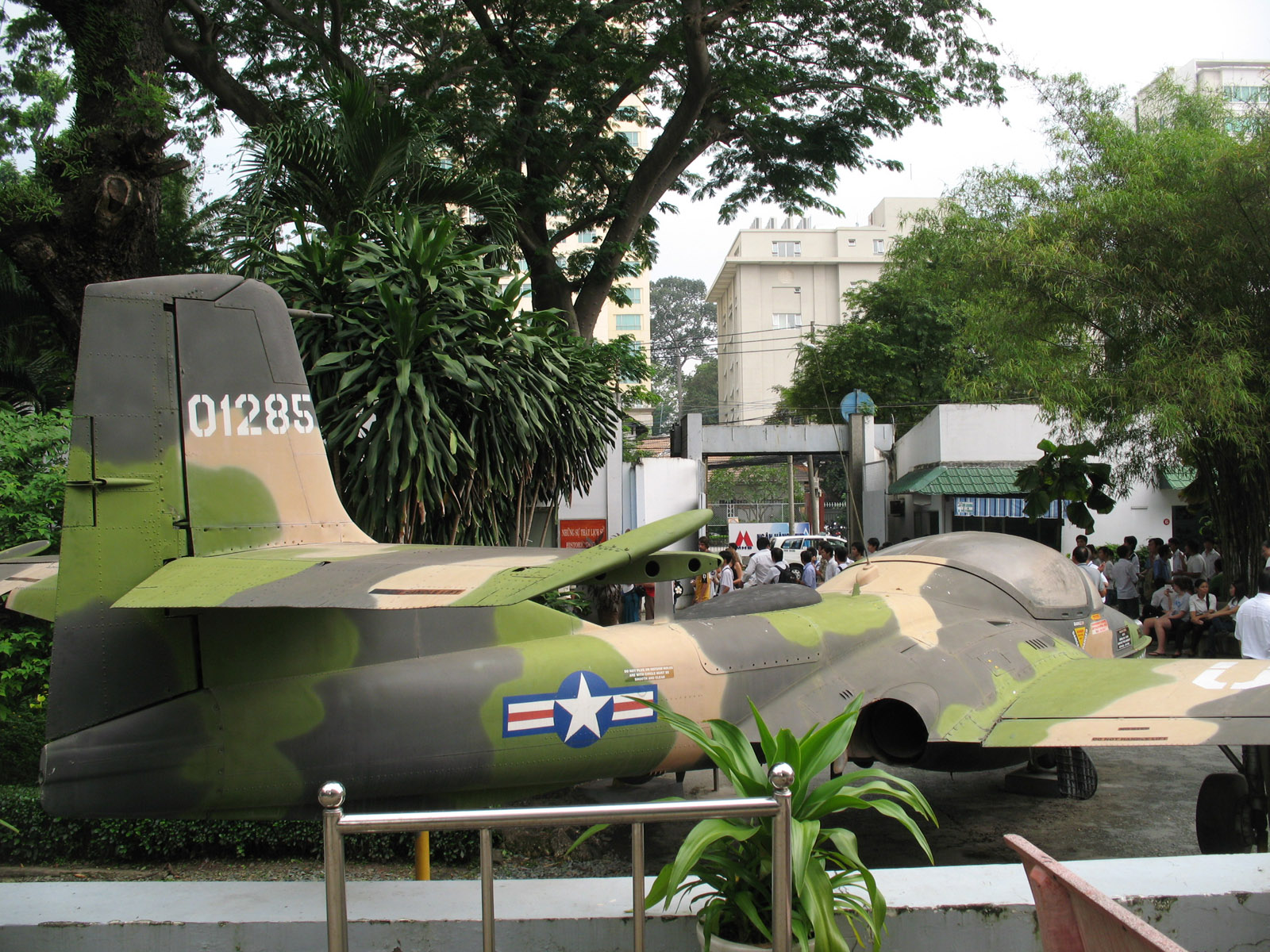
Finally, one of HCMC’s top attractions is the War Remnants Museum, featuring plenty of decrepit military hardware of course, but also some more disturbing exhibits such as a guillotine used as recently as 1960, and bottled babies horrifically deformed by Agent Orange. This was after the museum’s stance was softened, and its original name changed from The Museum of Chinese and American War Crimes.
Created 2006 | Updated 2026


Leave a Reply