Hà Nội
Political powerhouse of Vietnam and stronghold of the north
In the north of Vietnam, Hanoi is the centre of government and capital city of the country, although not as large as Ho Chi Minh City, one thousand miles to the south. With a population of around nine million in the city proper and a history stretching back over two thousand years, it also has a much more varied climate than its southern commercial counterpart, being notably cooler and drier in the winter time. During the American War, Hanoi was the capital of North Vietnam, until the reunification of the country in 1976, when it became the capital of Vietnam as it is today. During the war, American POWs were interred at what they nicknamed the “Hanoi Hilton”, the notorious Hỏa Lò Prison, which operated right up until 1993.
We were in Hanoi just for a couple of nights as part of our Southeast Asia tour of 2006, staying in a cheap hotel in the Old Quarter. The city felt much more Vietnamese to me than HCMC, despite its nickname ‘Paris of the East’ it seemed to have less French influence, but the night time street food was excellent, including the cobra stir-fry. Had we spent more time we would have seen more of the city during daylight hours, as opposed to the inside of bars and nightclubs, and would certainly have headed out to Ha Long Bay, but that will just have to wait until next time! I also regret that we didn’t visit Train Street, but in the pre-Insta days of 2006, we simply didn’t know about it and it apparently wasn’t on the tourist trail.
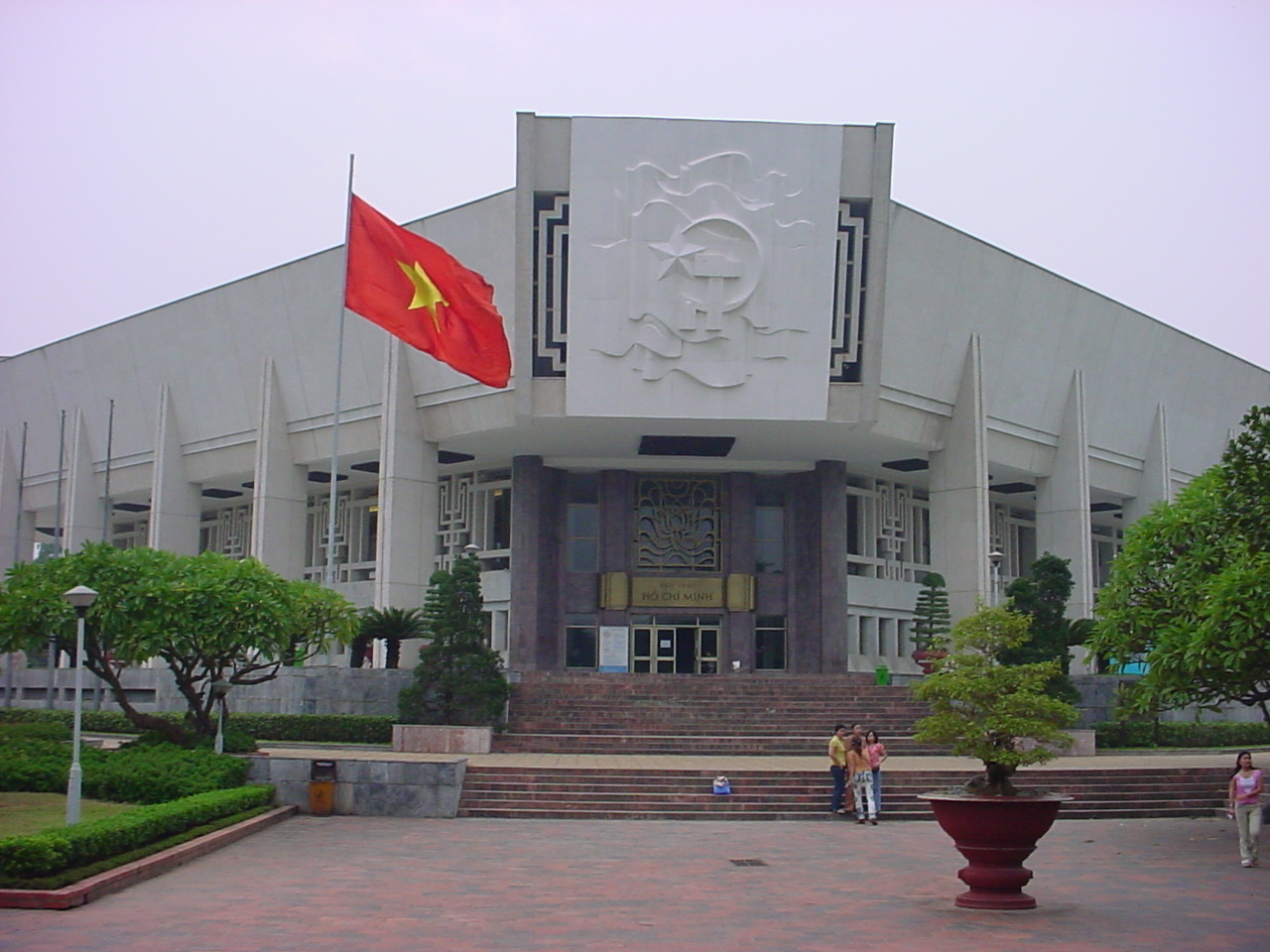
The Ho Chi Minh Museum, a grand edifice which revealed none of its secrets to us, on account of being closed. October seems not to be a good month for visiting Hanoi tourist attractions!
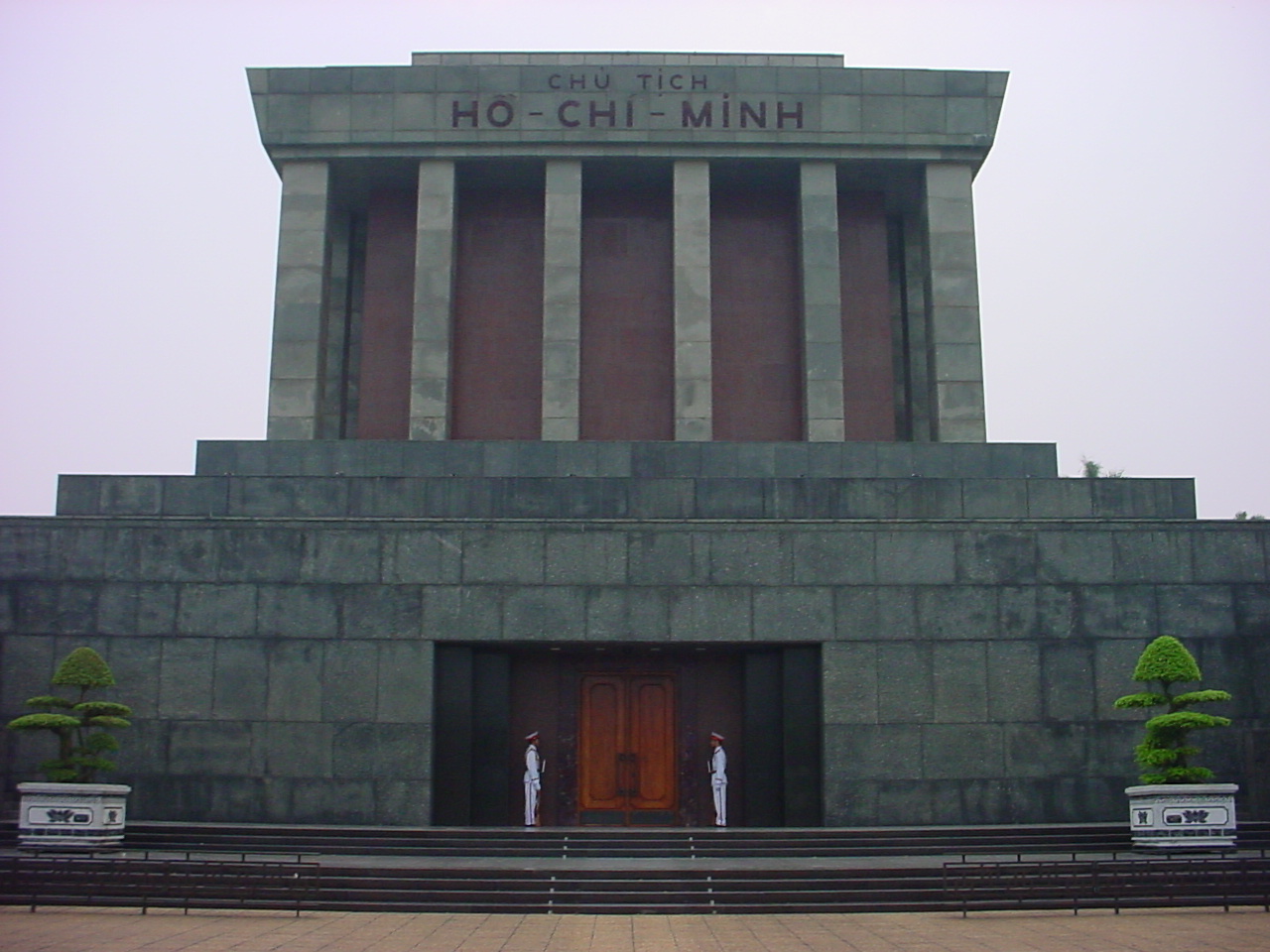
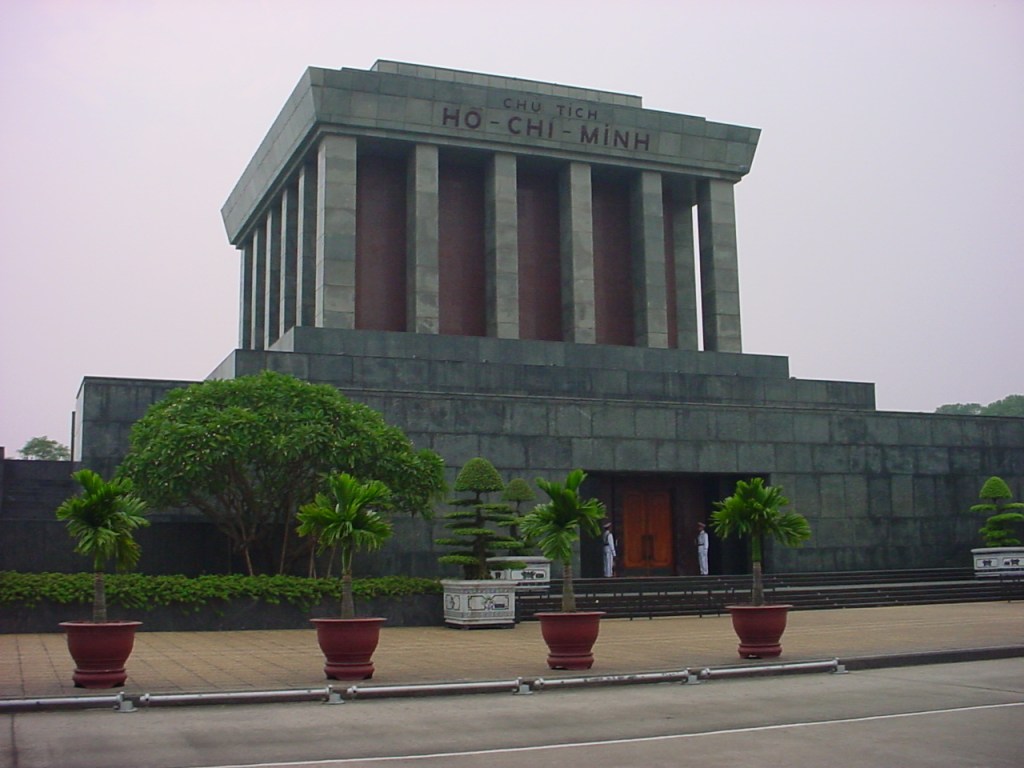
Most unfortunately, Uncle Ho himself was out of town when we stopped by – he had been sent off to Russia for his annual embalming treatment, hence his mausoleum was closed. We had also missed seeing Lenin in Moscow a couple of years earlier, whose own mausoleum inspired that of Ho Chi Minh, but I did get to see Chairman Mao in Beijing in 1989.
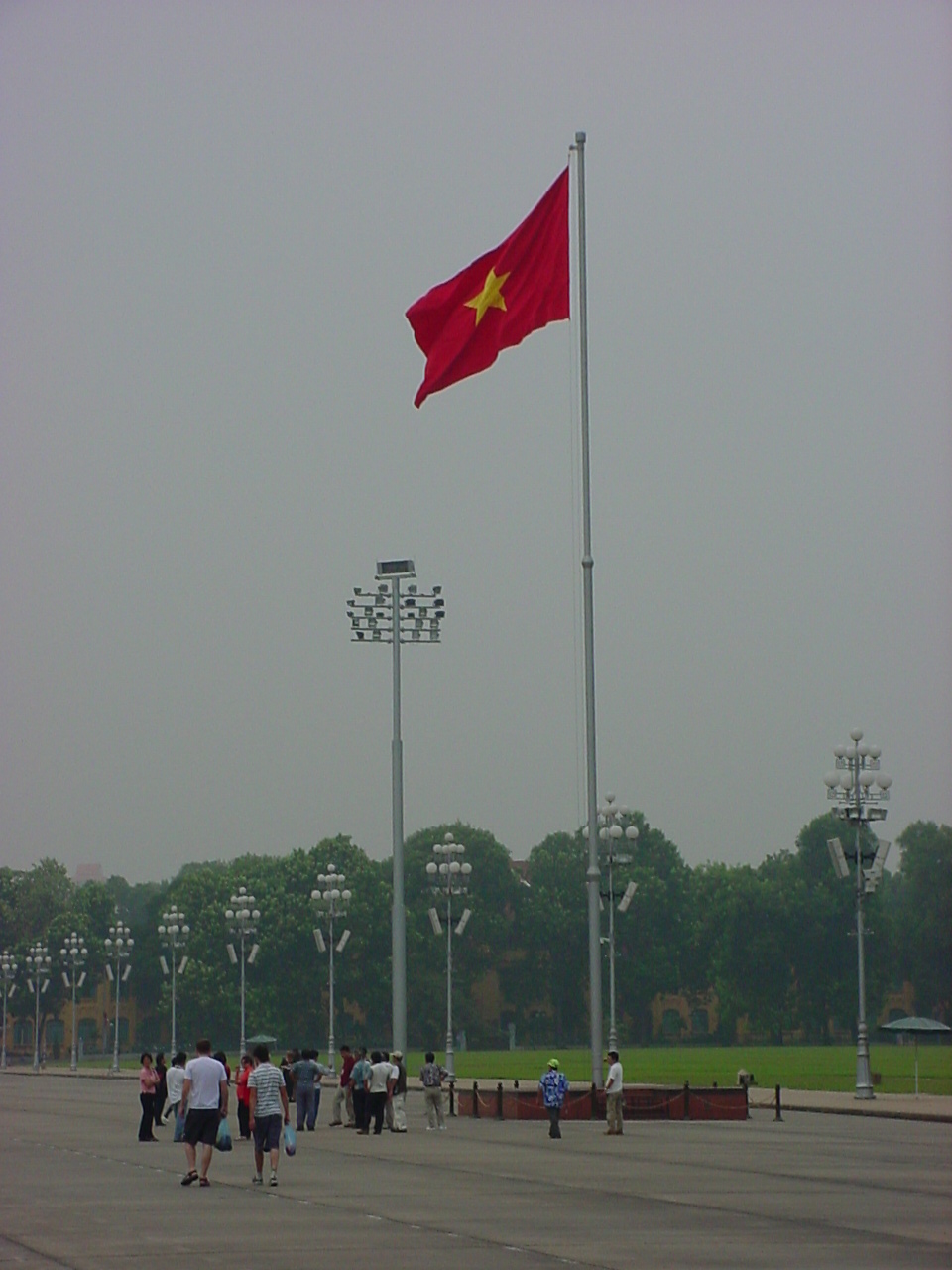
Ho Chi Minh’s Mausoleum faces the enormous Ba Dinh Square, laid out for parades and sporting a gigantic national flag. It reminded me a little of Tiananmen Square in China.
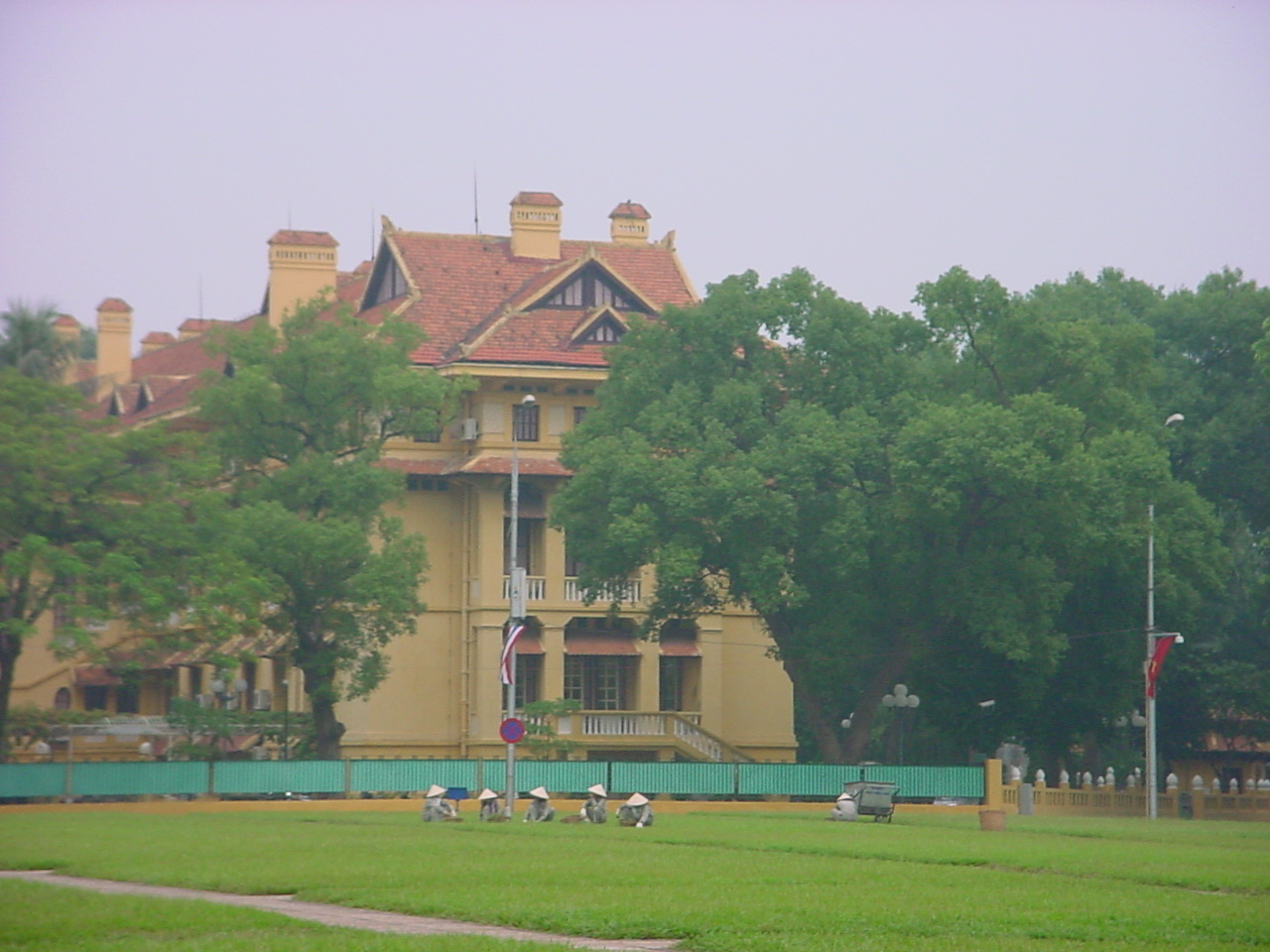
Across Ba Dinh Square sits the Ministry of Foreign Affairs, which caught my eye as being quite a European-looking construction, juxtaposed by the non la wearing workers on the lawn.
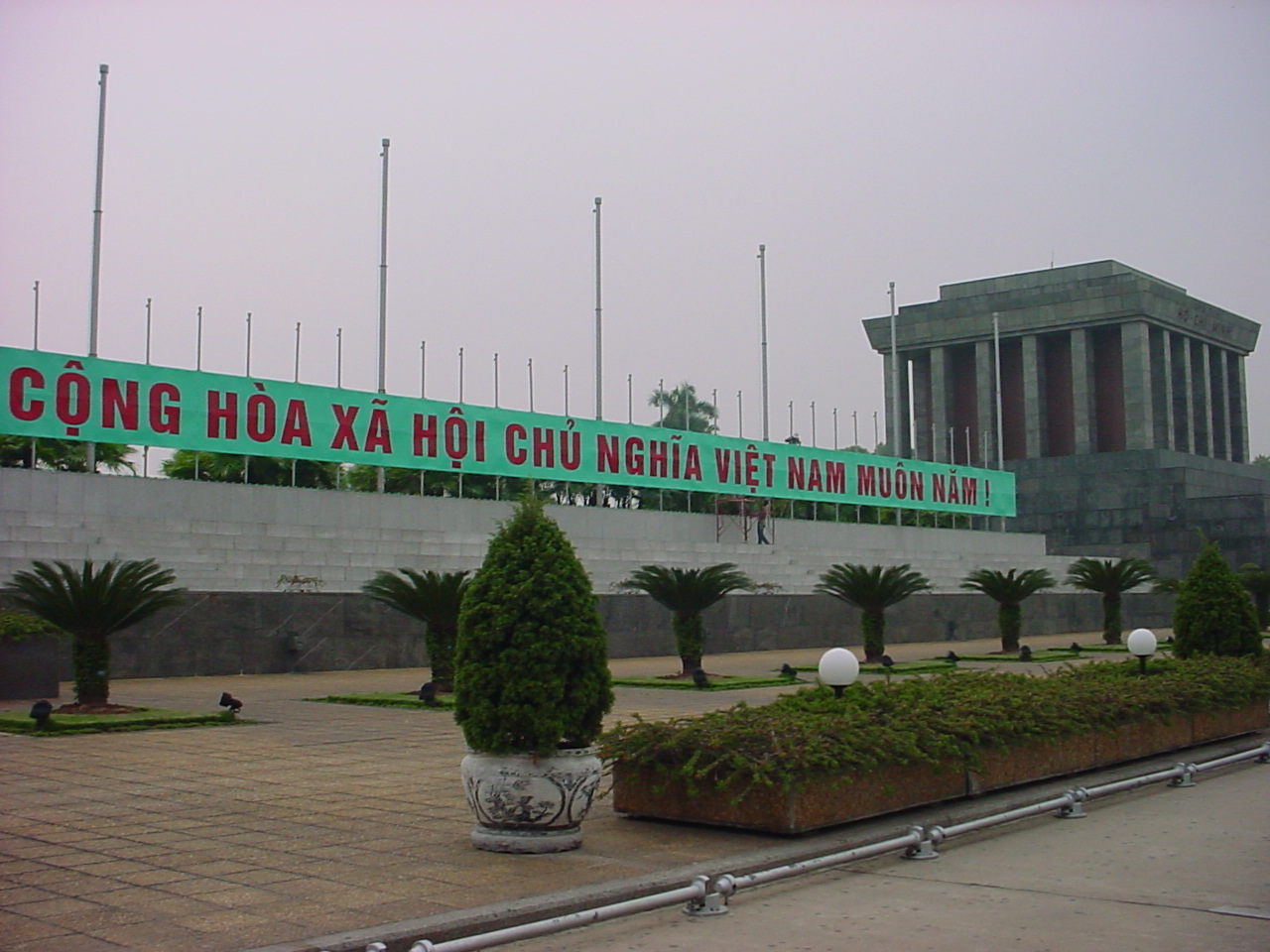
Unfortunately I’ve missed the first word in this announcement next to the Mausoleum, but the whole message reads Nước Cộng Hòa Xã Hội Chủ Nghĩa Việt Nam Muôn Năm, or ‘Long Live the Socialist Republic of Vietnam’.
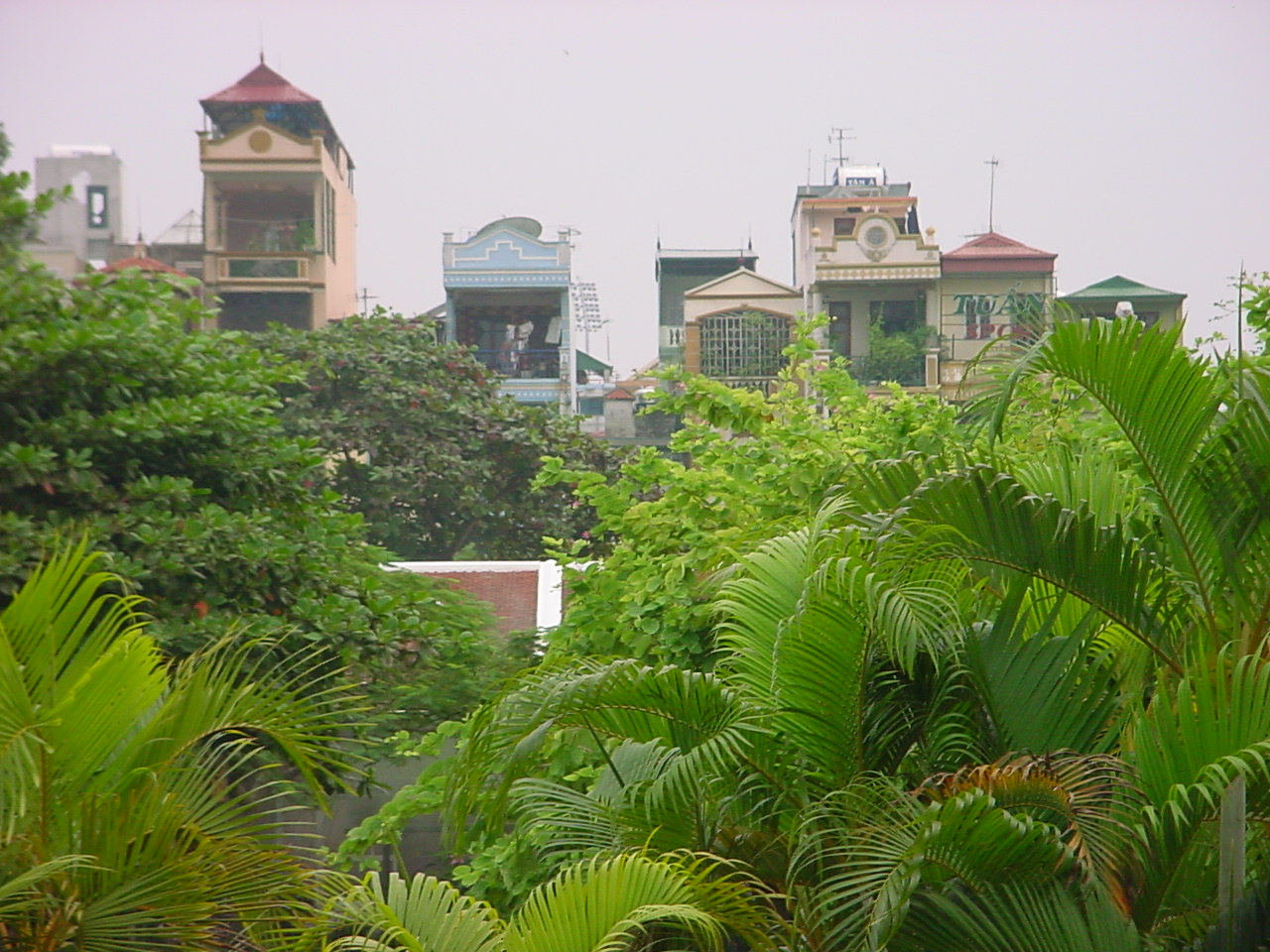
A shot of typically narrow Vietnamese housing and foliage, opposite the Ho Chi Minh Museum.
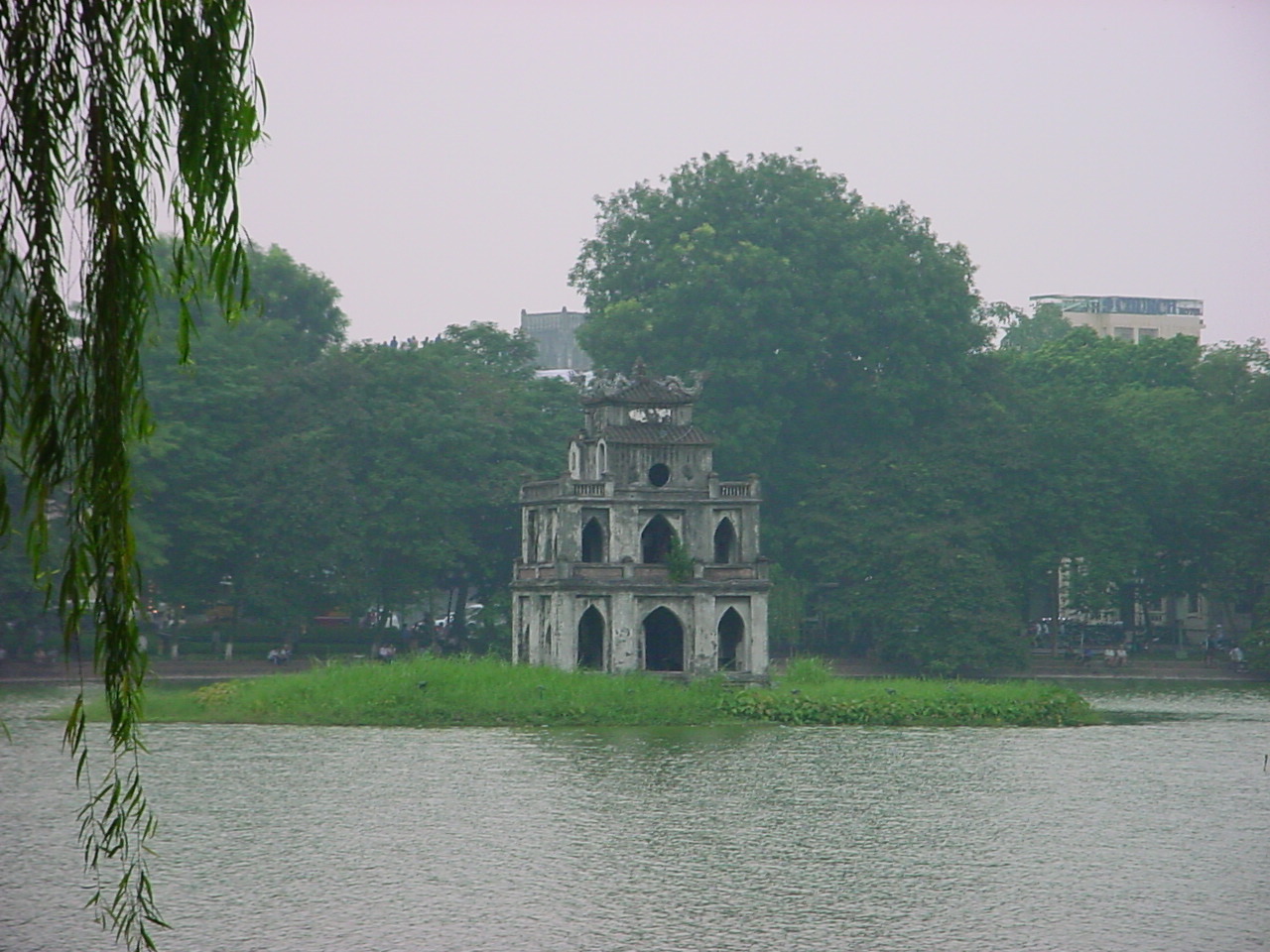
Over to the Old Quarter now, and Hoan Kiem Lake has formed its centrepiece since at least the 15th century. The small island at its southern end features Thap Rua, ‘Turtle Tower’. No child of the 1980s can walk past without thinking of heroes in a half-shell.
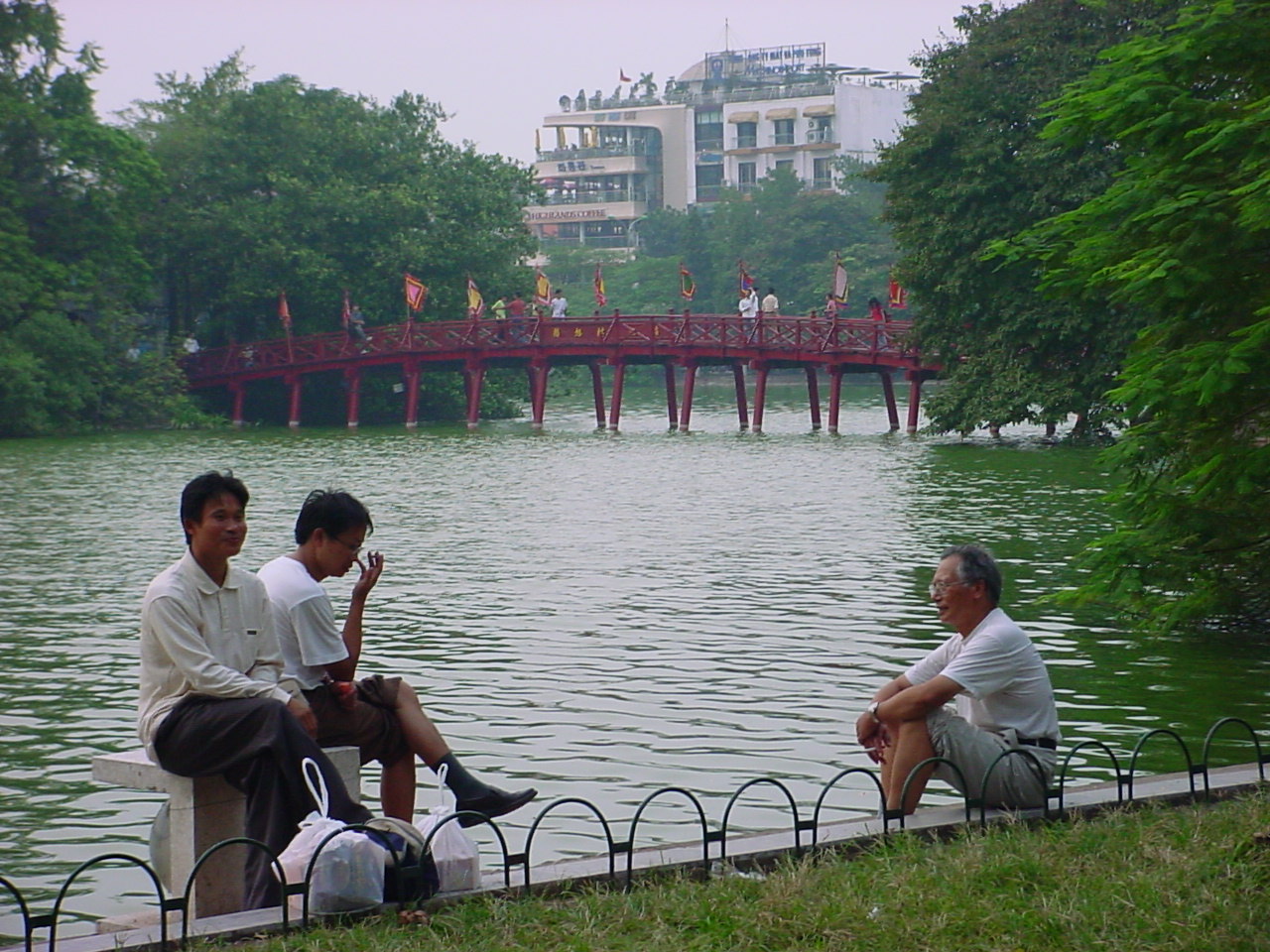
Thê Húc Bridge on Hoan Kiem lake reminded me of willow pattern plates. It dates back to 1865 but has been rebuilt a couple of times since then.
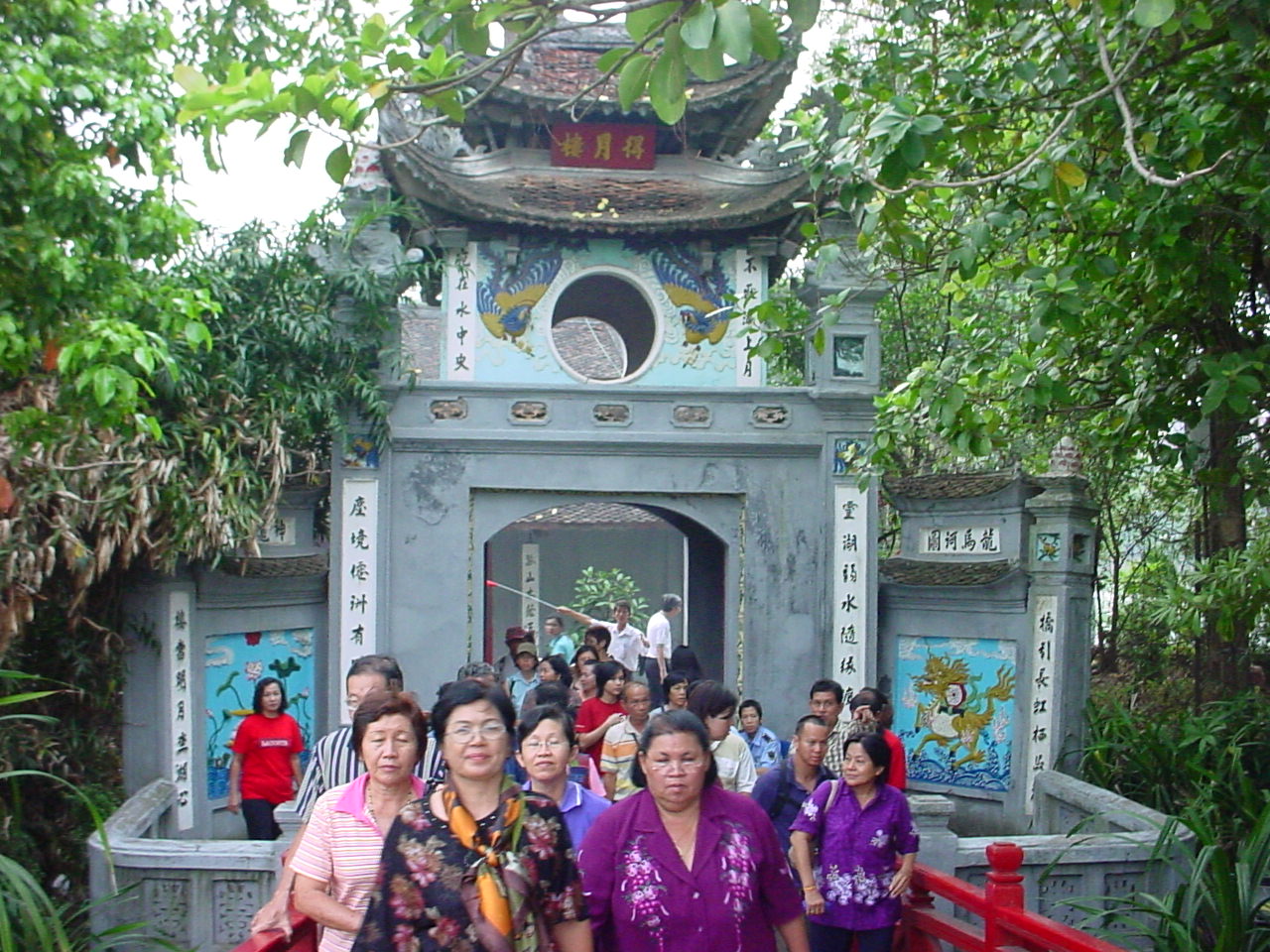
The entrance to Thê Húc Bridge, heading over to Turtle Island and Ngoc Son Temple. The bridge collapsed in 1952 due to the weight of visitors to the temple.
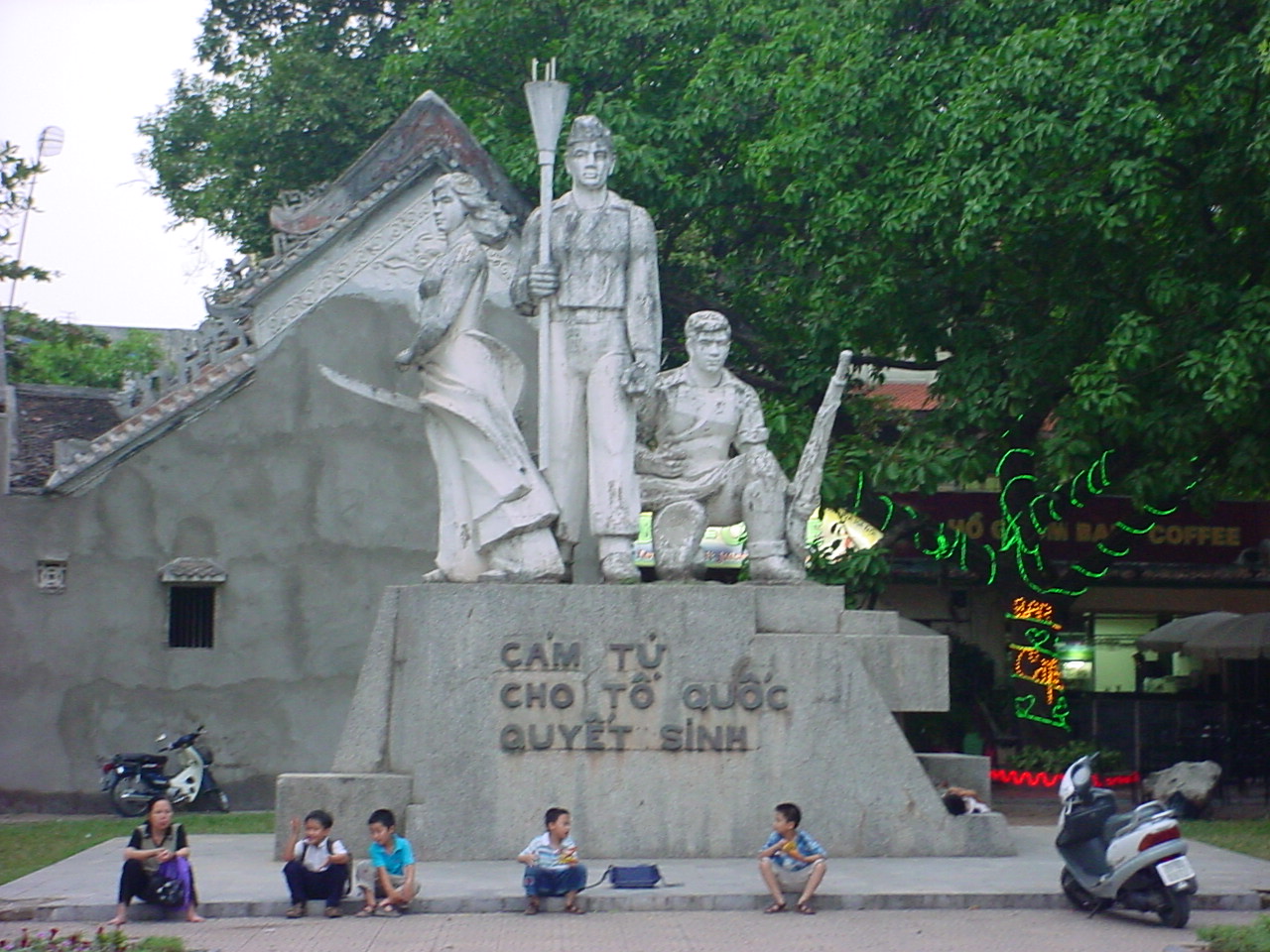
The Martyrs’ Monument stands opposite Thê Húc Bridge, and commemorates the young Vietnamese soldiers who died for Vietnam’s independence. The text ‘Cẩm tú cho tổ quốc quyết sinh’ translates as ‘A beautiful flower for the nation, determined to fight to the death’.
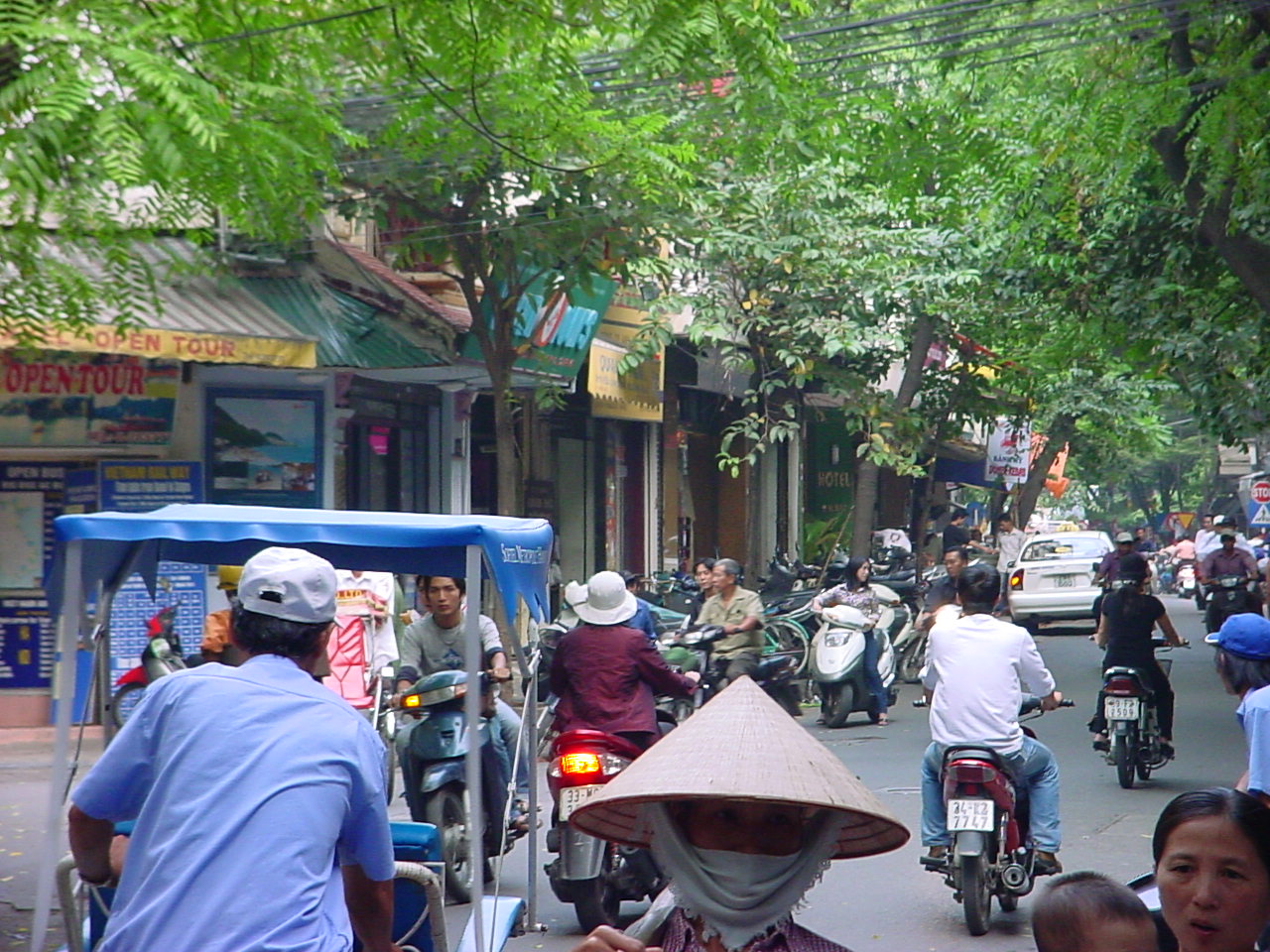
The Old Quarter of Hanoi is close by and busy, but the city doesn’t have the entirely frantic and overcrowded feel of Ho Chi Minh City.
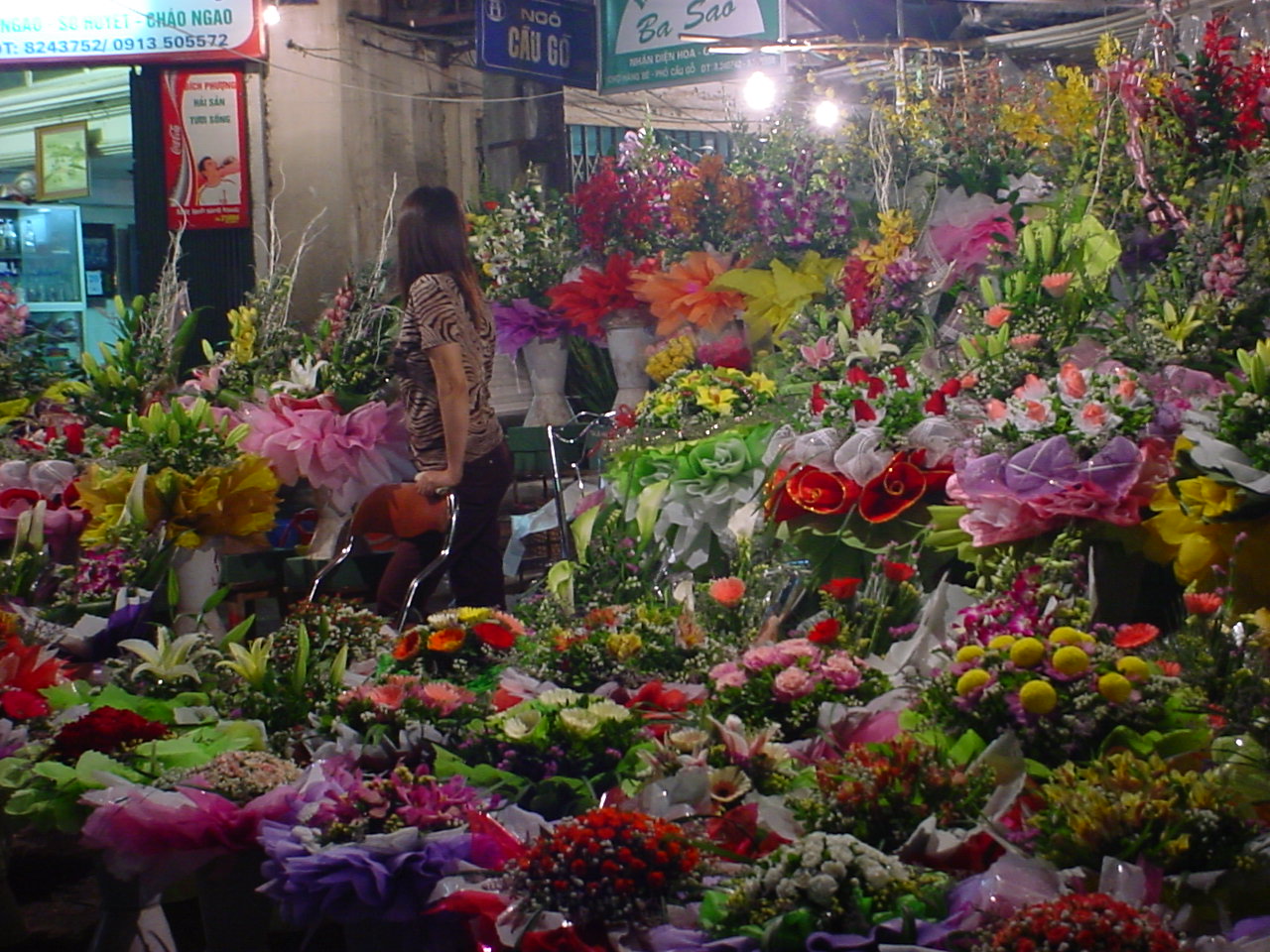
A late night flower market makes an impressive display in the Old Quarter of Hanoi.
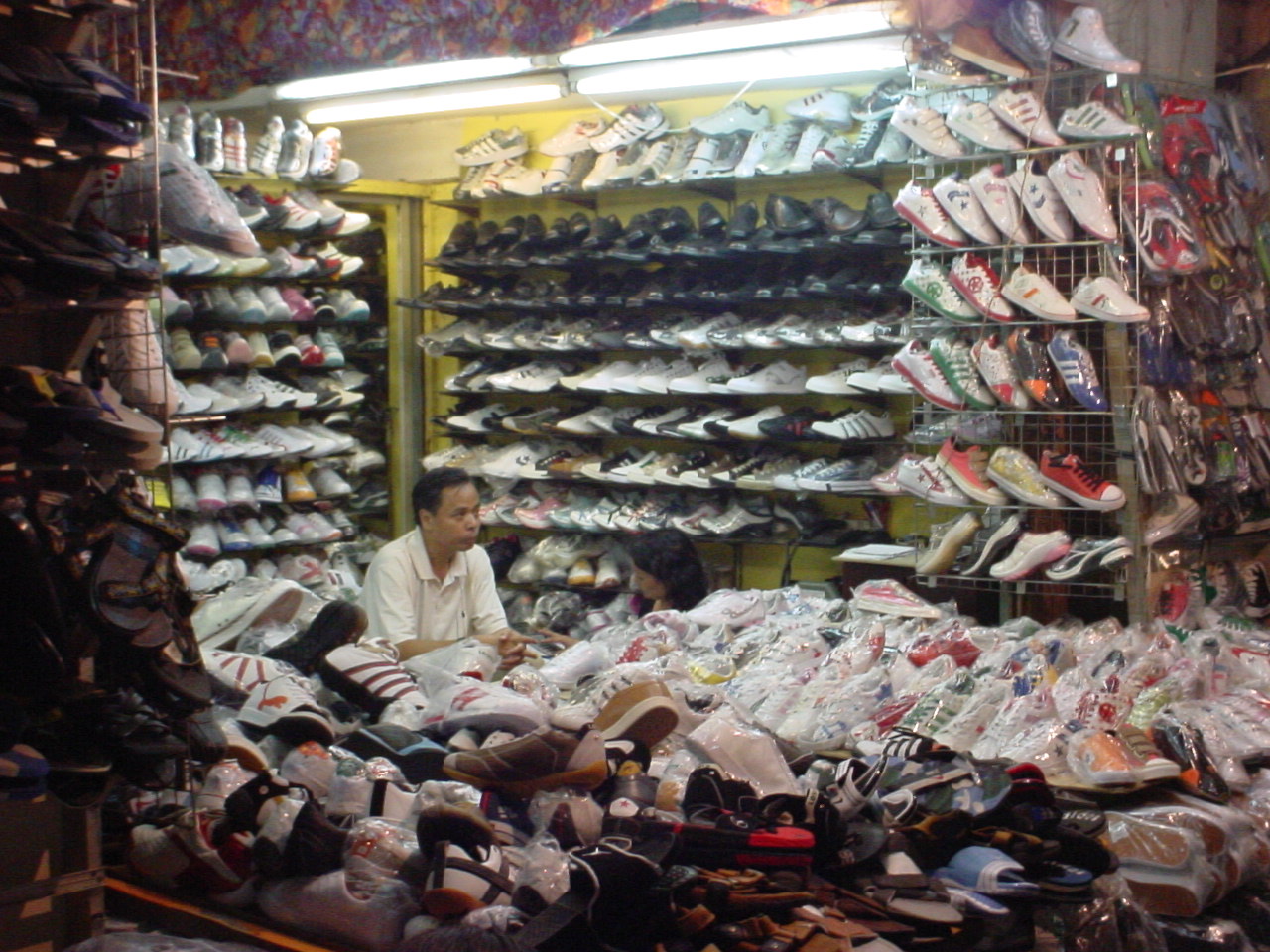
A late night shoe seller makes a similar effort to display his wares.
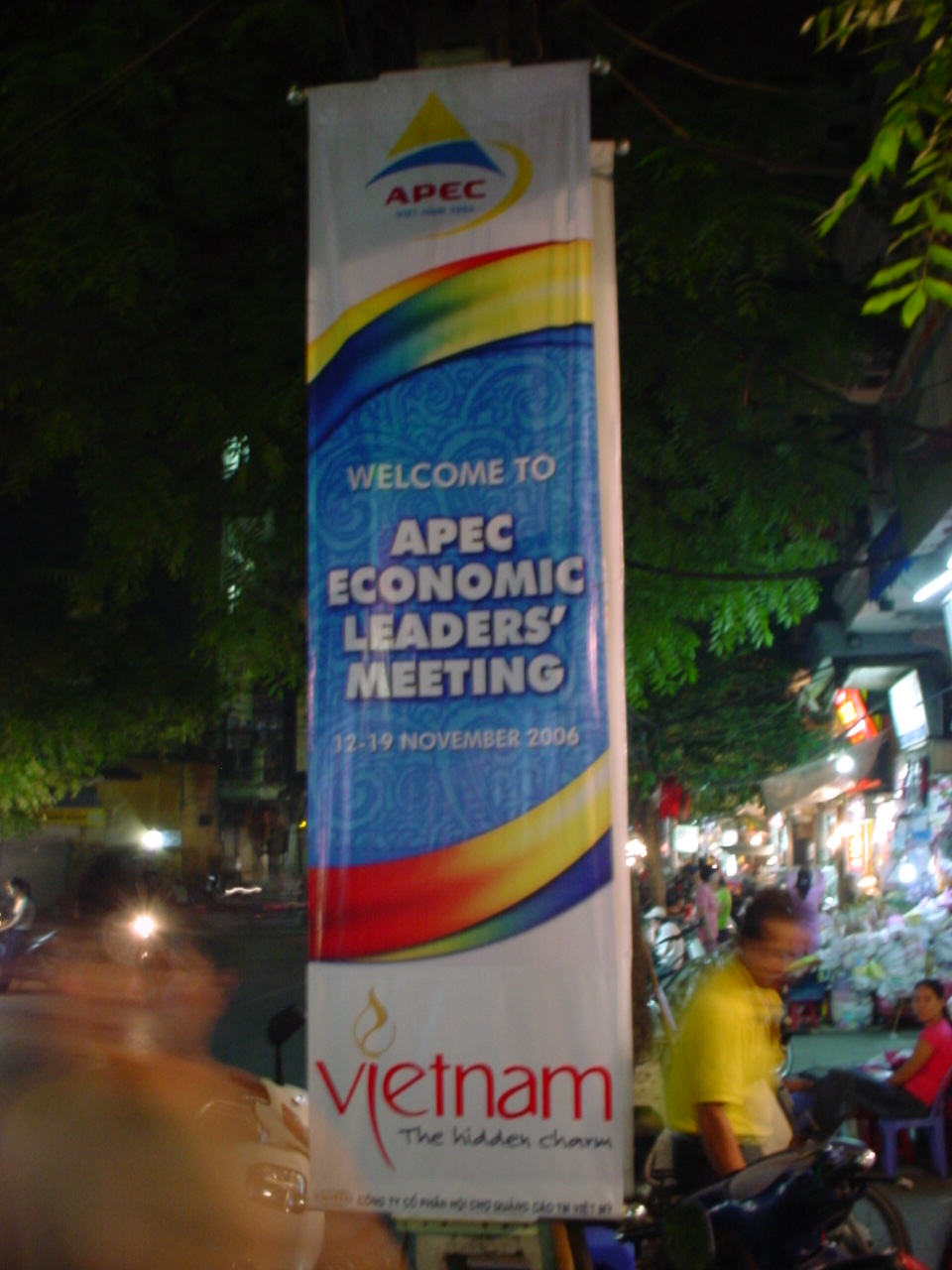
The APEC summit was taking place during our visit (Asia Pacific Economic Cooperation) with the effect of delaying our entry to the country on account of photocopied visa-on-arrival letters being temporarily unacceptable. Seven hours and some couriering at the Cambodian border eventually saw us permitted access. I’m sure it was easier for George W Bush to get in, as he was in town too.
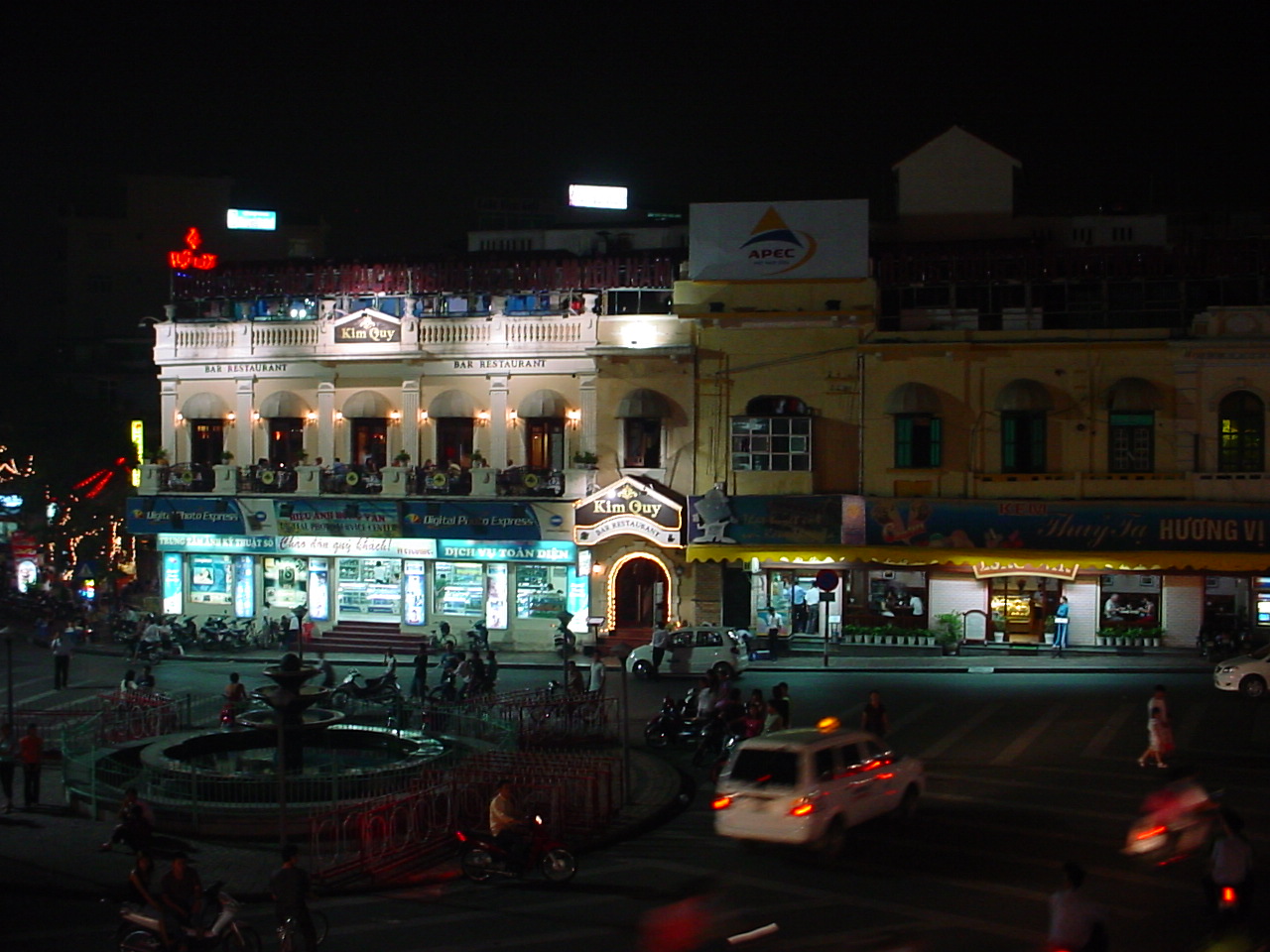
Kim Quy restaurant was a Hanoi institution in the Old Quarter at the north end of Hoan Kiem Lake. It has unfortunately since closed down.
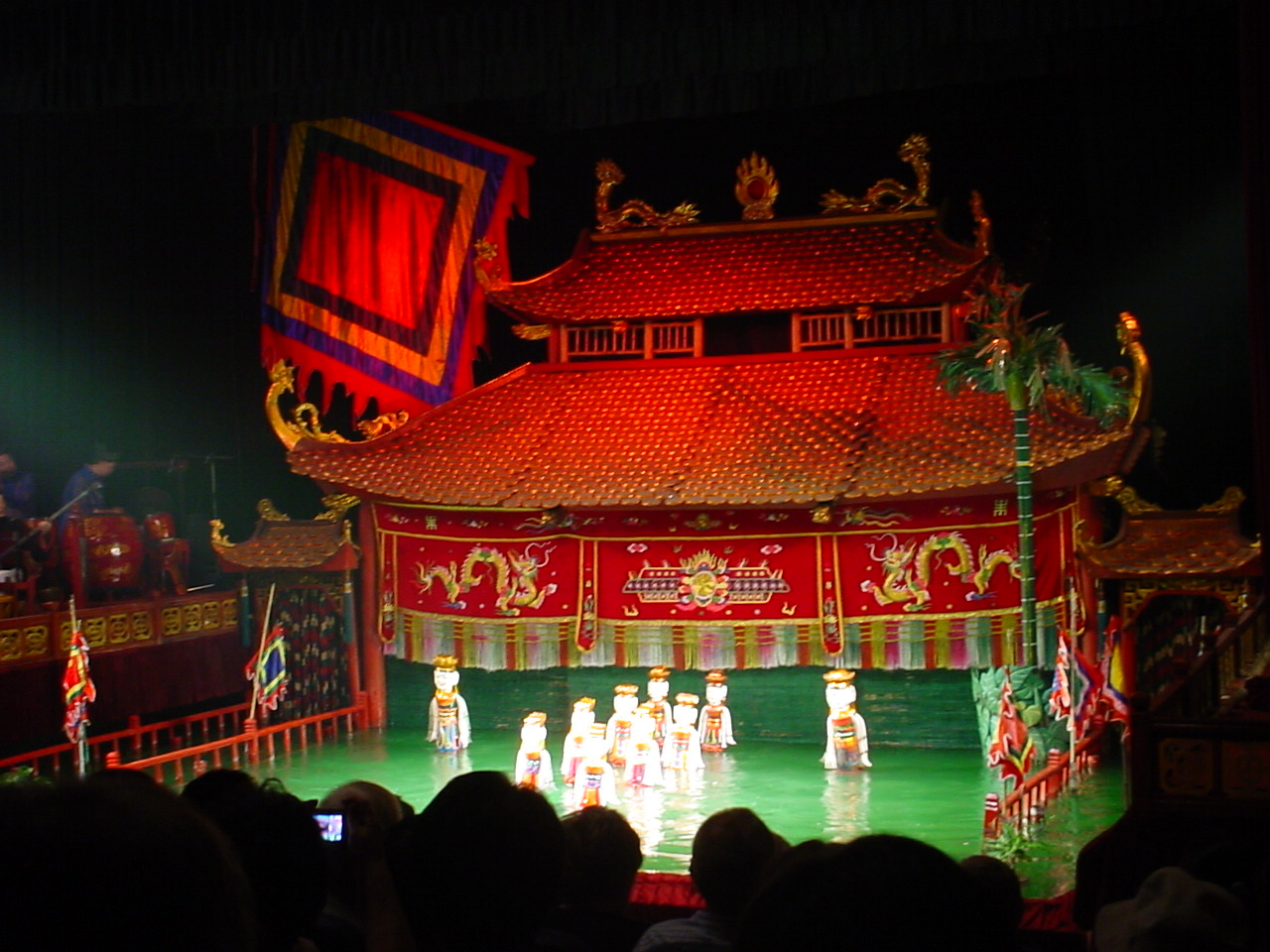
A long-standing traditional part of Vietnamese culture is water puppetry: controlled by puppeteers behind the curtain, they perform to song and story. We caught this show at Thang Long Water Puppet Theatre. I had very little idea what was going on, but it was interesting to see and worth the fifty pence entrance fee.
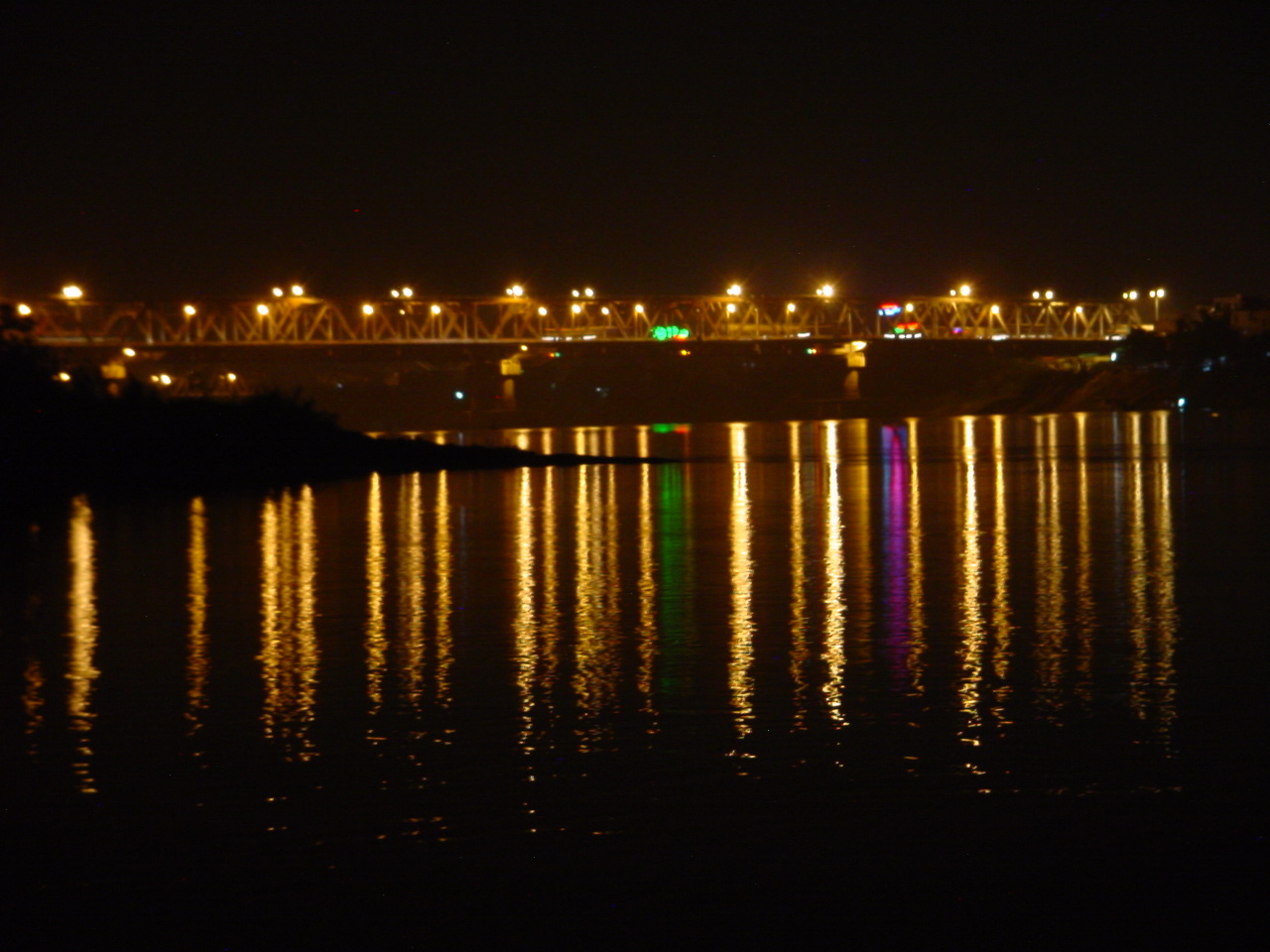
The Chuong Duong bridge crosses the Red River, this picture was taken from a boat pub fairly late at night. The Red River flows from its source in Yunnan, China, and forms part of the border between China and Vietnam.
Created 2006 | Updated 2026


Leave a Reply